2026 Legislative Session
The 2026 regular session begins on Monday, January 12, 2026. It is a short session, lasting up to 60-days, with an expected end date of Thursday, March 12, 2026. Prefiling for the 2026 session began on Monday, December 1, 2025. Stay tuned to OSPI Special Education Bill Tracker for regular updates on the status of bills impacting special education and to see when they are up for public hearings or passage votes.
If you have questions about anything legislature related, please contact OSPI Special Education with the subject line "Legislative Session".
The Special Education Advisory Council (SEAC) Meeting (registration required)
The Washington State Special Education Advisory Council (SEAC) will conduct an in-person meeting on February 10-11, 2026, 8:30 am–4:30 pm. The in-person location is the Washington Office of Superintendent of Public Instruction and registration is required. The meeting is open to members of the public interested in Washington special education services. The agenda will be posted the week prior to the meeting.
Public Comment will begin at 11:30 am on Tuesday, February 10. Public Comment is scheduled for 30 minutes. Each public comment will be restricted to three minutes and only allowed during this designated timeframe. If you want to email your comment to be read at the meeting, please send it to the SEAC email address no later than the close of business on February 2.
Please register here.
Learning Standards Initial Adoption
The Washington State K–12 Learning Standards for Mathematics are in the initial adoption phase of the learning standards revision process, and the updated standards have been published to OSPI’s website. School districts and teachers can begin implementation efforts of the initial standards at their own pace and are encouraged to provide feedback and suggested revisions based on district and classroom use. During the initial adoption phase, feedback can be provided to OSPI via the Initial Adoption Math Feedback Survey. The feedback collected during this phase will be used to inform additional revisions prior to final adoption. For more information please review the December 4, 2025 Bulletin.
OSPI remains steadfastly committed to inclusionary practices that provide all learners, including those with extensive support needs, with general education instruction in grade level curriculum tied to grade level learning standards. During implementation of these initial standards, our team hopes that Washington educators and families will continue to find our Inclusionary Practices webpage to be a valuable resource. Visit this page to find our robust guidance, partner resources, and research supporting inclusionary practices and outcomes for all students. This page continues to grow, and features practical tools that include:
Follow the 4-step process in this guide to write inclusive IEPs and provide effective instruction in general education settings for any student receiving special education services.
Bust common myths about inclusion, including myths related to early childhood special education, using decades of research that consistently show robust benefits from inclusionary practices.
Use these tools, grounded in Universal Design for Learning (UDL), to design and provide instruction using accessible, inclusive, and appropriately challenging units for all students, including students with significant cognitive disabilities.
Connect with a large network of Washington state technical assistance and professional development providers who can support districts to implement inclusionary practices.
School-based Medicaid Professional Learning Community
The Office of Superintendent of Public Instruction, in partnership with the Washington State Health Care Authority, is launching a School Based Medicaid Professional Learning Community (PLC) made up of four virtual sessions. The PLC is designed to support schools and partners in understanding how Medicaid can serve as a reliable and sustainable funding source for multi-tiered systems of support (MTSS) aligned student health and behavioral health services.
The first session, Medicaid 101 and Participation Models, will be held January 14, 2026, from 2:00 to 3:30 pm. Additional sessions will run through June 2026 and will focus on staffing and readiness, real world integration models, and long-term sustainability and reinvestment planning.
This PLC is open to school districts, ESD and Tribal schools, school and district leadership, school staff, managed care organizations, community-based organizations, community members, and state and regional partners. Registration is required to attend.
To register, visit the pdEnroller event page. NOTICE: There are no clock hours for this event.
For additional information and dates, please see the attached flyer.
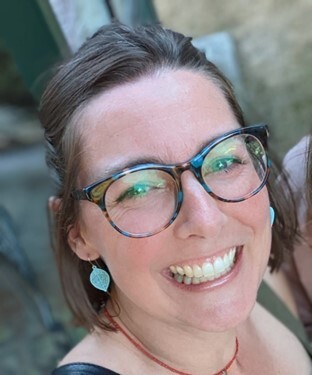
Meet Dani Hoffman, Our New 619/Early Childhood Special Education (ECSE) Coordinator!
What were you doing prior to OSPI?
Prior to joining OSPI, I was a Senior Coordinator Disabilities Consultant at Puget Sound Education Services District supporting ECEAP and Head Start staff across King and Pierce Counties in providing inclusive programming. I spent over 10 years as an early educator before moving into coaching and consulting roles for the past 7 years, and cherish my experiences working with children, families, educators, school districts, and community partners at every step. While I was born and raised in Wyoming, 2026 marks our 20th year in Seattle!
What excites you the most about joining the team?
I believe strongly that our youngest learners have the most to teach us, and by investing in them, we all stand to benefit. I have also always held the belief that when we create educational spaces designed for those furthest removed from opportunity, everyone benefits. I strive to challenge the status quo in an effort to reimagine what is possible for children, families, and educators and I deeply value learning from those around me. As the Section 619 ECSE Coordinator, I look forward to continuing to advocate for our earliest learners with disabilities at a systems level so that they have the visibility, access and supports they deserve in order to be thriving members of their community.
What do you enjoy doing in your free time?
I am a ravenous gardener whose entire year revolves around what is growing, what needs to be planted, and what needs to be harvested. It is not unusual to see dirt under my fingernails, and I am known for offering unsolicited “fun facts” about plants. I love a good book, a tasty meal, and an ocean view. I have a sweet senior pup named Lulu, whom I am absolutely obsessed with. She shares my affinity for long walks, sunbathing, and snacks. I love going on adventures with my partner James, and we can often be found hosting gatherings for our friends, cooking together, watching hockey or baseball (go M’s & Kraken!) or playing video games.
|
Click here for this month’s Program Improvement updates on the following topics:
- New Special Education Parent Survey – Spring 2026 (updated)
- OSPI Special Education Data, Fiscal, and Program Office Hours
Click here for this month’s Fiscal & Data updates
- Excess Cost
- Secondary IEP Transition Components (Indicator B-13) Data Application (Newly Updated Resources)
- Consent Received to Share Student Information with State Transition Agencies
- 2026 CEDARS Statewide Webinars – Register and Attend
- OSPI Special Education Data, Fiscal, and Program Office Hours
- Safety Net Updates
The Special Education Division receives a number of questions each year about how school closures affect the delivery of special education and related services. This compilation of guidance summarizes key considerations related to school closures due to weather-related incidents, collective bargaining, and infectious disease outbreaks.
Tip of the Month: School Closures
|