|
|
Volume 12, Issue 7, August 2026 - Special Issue
Back to School: Keep it Fresh, Procure it Local
|
|
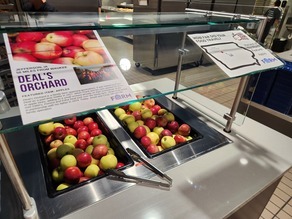
For many, August means road trips, sports camps, and the last days of summer. For those working in schools, August is when things start to ramp up, including for individuals and organizations working to get local food from the farm to the school tray. Whether your school is just starting to procure local food or looking to expand its offerings, there are countless ways to source and serve local foods, and it takes teamwork— schools, farms, distributors, and many other partners—to make it happen. As you return this fall, consider these strategies to help your farm to school community expand the use of local foods in school meals.
The journey from farm to cafeteria can look different for every school. School food authorities (SFAs) can require that unprocessed agricultural products be ‘local’ in solicitations or give additional credit to local, unprocessed agricultural products when evaluating bids in response to a solicitation. School garden managers can collaborate with kitchen staff to provide fruits and vegetables grown on campus for school meals, including the salad bar. Schools can partner with food hubs or gleaning organizations to buy or source end-of-harvest products that they can freeze for use in the winter months. These strategies bring together various partners acting as a team and result in nutritious, high-quality local foods on the school tray.
It’s partnerships and strategies like these that are propelling the American farm to school movement forward. According to the 2023 Farm to School Census (Census), 74 percent of SFAs engaged in some form of farm to school activity in the U.S., reaching more than 34 million students. Of the SFAs that participate in farm to school, 63 percent reported serving local food products in their school meals, which is the highest level of engagement reported since the U.S. Department of Agriculture (USDA) launched the Census more than a decade ago.
lder text.
|
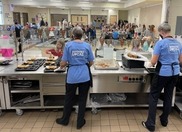
Over this same period, the USDA’s Patrick Leahy Farm to School Grant Program has helped many communities cultivate and scale up their local procurement efforts. For instance, the Growe Foundation in Colorado received a fiscal year (FY) 2026 grant to build a garden educator model to offer high-quality, garden-based instruction to students. They are also integrating garden-grown and locally sourced foods into school meals! In Alabama, Elmore County School District was awarded a FY 2026 grant to extend the availability of local food products in school meals throughout the year by developing a local food processing hub. The project aims to address the limited transportation and cold storage capacity faced by many Alabama schools and farmers alike. Once established, the processing hub will serve as a central facility, washing, blanching, cooling, sealing, and freezing fresh Alabama-grown products for year-round use.
These projects highlight just a couple of ways farm to school programs take many shapes and sizes and deliver real food to students nationwide. They also bring a shared sense of purpose to communities and build stronger community ties.
Regardless of whether your community is just beginning to build your farm to school program or looking for new ways to bring local food to students, we want to applaud you on your efforts and encourage you to go further this school year. This issue focuses on resources that can help you make local foods more readily available in school meals, benefiting students, producers, and your local community.
Keep reading to get started!
|
|
|
 |
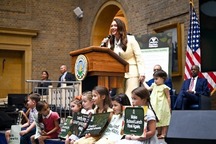
USDA Announces Harvest to Hallways Initiative to Invest in Child Nutrition Programs
Yesterday, the U.S. Department of Agriculture (USDA) launched the Harvest to Hallways initiative, a campaign to improve school meals and strengthen the connection between U.S. agriculture and children. Announced by U.S. Secretary of Agriculture Brooke L. Rollins and U.S. Secretary of Health and Human Services Robert F. Kennedy Jr., the sweeping new efforts connect more American farmers with local schools, invest in school kitchen infrastructure, and give states and school districts new tools to serve healthier, more nutrient-dense meals to America’s children.
Harvest to Hallways includes several major actions:
• Expanding Local Procurement: USDA will host targeted outreach and webinars to help schools implement local purchasing strategies, bringing more fresh, local foods into schools. See the Events section for more information on the upcoming webinars.
• Investing in School Kitchens: USDA will make a new $50 million investment in school cafeteria infrastructure, including cold storage and stoves, food safety improvements, and School Breakfast Programs. The investment builds on the recently awarded National School Lunch Program Equipment Assistance Grants totaling $20 million.
• Bringing More Local Food to Schools: USDA will make up to $25 million in additional Patrick Leahy Farm to School Grants, improving access to locally grown foods and agricultural education in schools. The investment builds on the previously awarded FY 2026 Farm to School Grants totaling $20 million. The third cohort of Farm to School Grants will be awarded in the coming months.
• Accelerating Healthier Meals: USDA and HHS will promote broader state adoption of the Pledge for Healthier School Meals, which encourages nutrition practices in alignment with the Dietary Guidelines for Americans, 2025–2030.
• Investing in School Meal Nutrition Research: HHS will invest $30 million in research to identify practical, cost-effective ways to improve the nutritional quality of school meals and help schools put healthier meals on students’ trays.
Together, these steps aim to make America’s children healthier, strengthen school kitchens, and build lasting links between farmers and the communities they nourish.
Learn more at our website.
|
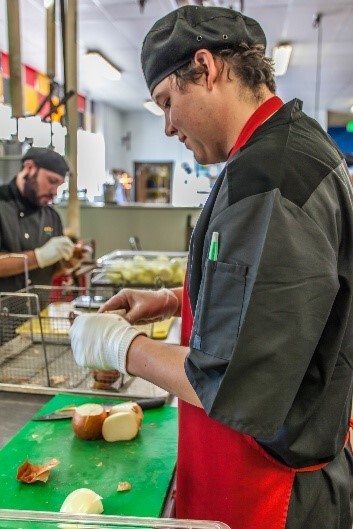
Resources for Procuring Local Foods in School Year 2026-2027 Memo
The Resources for Procuring Local Foods in School Year 2026–2027 memorandum reminds all child nutrition program operators of the tools available to support buying local foods. It highlights key policy guidance, fact sheets, webinars, and technical assistance resources, including the Farm to School Census and The Dirt e newsletter. Overall, it provides a comprehensive set of materials to help operators strengthen their local procurement efforts and is a great memo for supporting your procurement journey.
|
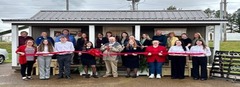
More Exciting Local Procurement Examples
The Dirt provides innovative examples of Patrick Leahy Farm to School Grantees making local foods more readily available on school menus across the U.S. Explore recent issues for practical local procurement strategies and inspiration!
• Local Beef in Schools – ‘Beefing Up’ Education: Farm to School at Gibson County High School highlights Gibson County High School (GCHS) in western Tennessee. GCHS reshaped its agricultural education program offering a hands-on beef production and marketing program. Annually, 150 students take responsibility for decision-making and hands-on aspects of daily livestock care, herd management, transportation for processing, and beef sales, including to their own school for inclusion in the meal program.
• Farm to School in Rural Communities – Taking the Time to Do it Right – Farm to School in Rural Montana showcases Hardin School District’s efforts to overcome common challenges to local procurement in rural communities. Hardin partnered with a local food bank to streamline local food ordering and distribution, installed a high tunnel and greenhouse on district property, and established a production farm and food forest.
• Local School Food Markets – Local School Food Markets: Turning Excitement into Action shares how efforts from two USDA FNA cooperative agreement recipients’, the National Center for Appropriate Technology (NCAT), and the Urban School Food Alliance (USFA), are closing the gap between producers and schools. NCAT hosted in-person connector events to kickstart school food buyer and producer relationships and is developing a best practice guide for these events. USFA created easy-to-use procurement tools to assist schools with food purchasing, including local foods. Learn more at our Cooperative Agreement webpage.
Hungry for more? Click the links above to read the full articles or check out The Dirt: Farm to School e-Newsletter archive for more local procurement stories.
|
|
|

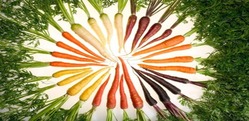
Local Procurement 101: A Refresher for the 2026-2027 School Year
Are you passionate about serving your students the best school meals? This fall, as schools across the U.S. chop vegetables, fire up ovens, and try new recipes in preparation for this year's class of students, join the USDA Food and Nutrition Administration (FNA) as part of the Harvest to Hallways Initiative for an energizing webinar that will inspire and empower you to incorporate local foods into your school menus. We'll explore local procurement strategies, the geographic preference option, and USDA farm to school resources.
Discover practical, actionable tips for sourcing and serving local foods, and bringing fresh, real ingredients to your students' trays. Whether you're new to local procurement or a seasoned pro looking for a refresher and new inspiration, this webinar is your chance to explore the many ways you can serve local foods and prepare for a delicious, nutritious school year. Local Procurement 101 will be offered twice, covering the same content in each session. State agencies, school food authorities, and others are welcome to register for either session. Choose the date and time that works best for you - both webinars will feature identical material.
|
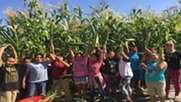
Intertribal Agricultural Council's Farm to School Webinar Series
Under a cooperative agreement with the USDA Food and Nutrition Administration (FNA), the Intertribal Agriculture Council (IAC) is hosting a farm to school webinar series that highlights the experiences and practical knowledge of those leading local and regional farm to school efforts across Indian Country. Each session focuses on real world practice, community insight, regulatory context, and the lived expertise of practitioners who are advancing Indigenous food sovereignty through school nutrition pathways. Speakers from the IAC, National Farm to School Network, USDA FNA, and Tribal producers from different regions will be present. To join this series, register below.
|
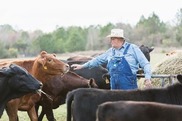
Local Beef Webinar
The USDA Food and Nutrition Administration hosted a webinar on local beef with guest speakers from the USDA Food Safety and Inspection Service and Maconaquah Community Schools in Indiana. The webinar covered effective strategies for incorporating local beef into school meal programs, regulatory requirements for safely processing and serving local meat, and showcased a successful student-led meat program from the Maconaquah school. Guest speakers participated in a live panel and Q&A session, and shared helpful resources, tools, and tips to support school food authorities in implementing or enhancing local beef initiatives.
|
|
|

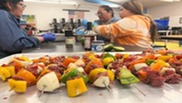
Incorporating Local Beef into Child Nutrition Programs Memo
The USDA Food and Nutrition Administration recently published Incorporating Local Beef into Child Nutrition Program Meals in support of the USDA Plan to Fortify the American Beef Industry and the Dietary Guidelines for Americans, 2025-2030. The memorandum is a helpful tool for Child Nutrition Program (CNP) operators and ranchers interested in incorporating local beef into CNP meals. It briefly summarizes strategies and existing USDA guidance and resources available to support this work. Topics include buyer-seller connections, procurement, funding resources, food safety, and crediting resources.
|
Using Federal Funds to Purchase Local Foods
The memorandum Using Federal Funds to Purchase Local Foods reminds schools, sponsors, and institutions participating in all Child Nutrition Programs of the many ways they can purchase local foods to serve in Program meals as well as other strategies for sourcing local food. Whether you’re new to local sourcing or practiced at local sourcing and looking to expand your strategies, this is a great memo for thinking through a broad range of possibilities.
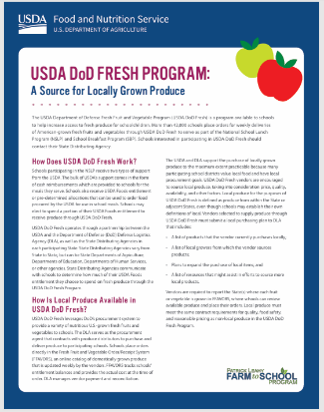
USDA DoD Fresh Program: A Source for Locally Grown Produce Fact Sheet
The USDA DoD Fresh Program: A Source for Locally Grown Produce Fact Sheet details how the USDA Department of Defense Fresh Fruit and Vegetable Program (USDA DoD Fresh) helps increase access to fresh local produce for schools. USDA DoD Fresh operates through a partnership between the USDA and the DoD Defense Logistics Agency, as well as the State distributing agencies in each participating state.
USDA DoD Fresh vendors are encouraged to source local products, when possible, and are required to identify the State of Origin for each product in the Fresh Fruits and Vegetables Order Receipt System (FFAVORS).
|
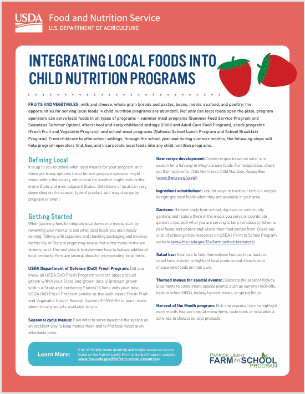
Fact Sheet: Integrating Local Foods into Child Nutrition
Defining local foods can vary from community-to-community and program-to-program. The Integrating Local Foods into Child Nutrition Programs Fact Sheet walks through the steps of starting a farm to school program, from developing a plan to tips for building sustainability into your program from the start.
|
|
 |
Dig in! 2023 Census Findings: Explore the State of Farm to School and Ideas on Procuring Local Food
Question: Do you know where you can go to find out what schools in your State have been doing farm to school the longest? What about which schools served fresh local vegetables on a weekly basis? Would you like to know which school food authorities (SFAs) sold or donated fruits and vegetables harvested from their school gardens to the cafeteria to use for school meals?
You can get answers to all these questions, and more, using the 2023 Farm to School Census (Census)! Conduct market research on schools in your State, find out what schools of comparable student population are doing in the farm to school space and see where you can grow.
Dig into the Census and you’ll find:
• National- and State-level summaries;
• Individual responses from SFAs near you – searchable by either State or zip code;
• Deeper datasets with responses from 2023, 2019, 2015, and 2013, in .xlsx or .csv formats;
• Infographics using 2023 responses that can help tell the story of farm to school in your State.
Get familiar with this versatile dataset, because we will be coming back soon with the 2027 Census.
|
Farm to School Stickers
We’re heading back to school! Schools are serving local foods, launching school garden projects, and teaching agriculture and food education in classrooms. Do you need resources to help your school or district celebrate farm to school? Whether you are conducting taste tests, piloting new local foods on the menu, or planning a farmer visit, stickers can help you make the activity a success and spread the word about farm to school. Stickers are free and come in rolls of 200 stickers per roll.
Requests are accepted from the following entities:
• Schools participating in the National School Lunch and School Breakfast Programs
• Child care institutions and facilities that participate in the Child and Adult Care Food Program
• Summer meal sites that participate in the Summer Food Service Program
• State agencies administering Child Nutrition Programs
• State Departments of Agriculture
USDA will consider all requests for stickers as long as supplies last.
|
|
|
|
|
|