|
|
Volume 11, Issue 5, Summer 2025
Taking the Time to Do it Right - Farm to School in Rural Montana
|
|
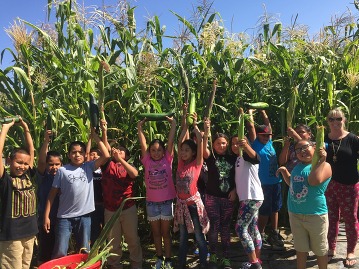
The Hardin School District is accustomed to the challenges that come with being in a remote area. Surrounded by vast expanses of prairie dotted with sugar beet fields and cattle ranches, Hardin, Montana, is home to just under 4,000 people, sits north of the Crow Agency Reservation, and is miles from the glow of a big city. When everything is spread out this way, some things take longer, and those who live and work there understand the importance of patience and preparation.
In 2020, the Hardin School District was awarded a USDA Farm to School Grant to address a challenge familiar to many rural school districts. When seeking local foods for their school meal program, the district found that producers, food hubs, and even larger distributors will deliver to the nearest big city, which, is 50 miles away, "but not a step further," says Marlo Spreng, the district's Director of Nutrition. Therefore, the district's plan was to use the grant to develop a campus garden to grow traditional foods relevant to the citizens of Crow Nation onsite as well as to develop a new farm to school curriculum that included hands-on education and apprenticeships. When the COVID-19 pandemic arrived, it turned out that the bridges they had been building within the community before receiving the grant, and the greater emphasis on raising food within Big Horn County, would pay dividends as the challenges sourcing food only got worse, says Elle Ross, the district's Farm to School Director. The Pandemic further exposed the region's fragile supply chain network, as numerous disruptions impacted the region. Put simply, "we weren't getting the products [we needed]," says Ross.
|
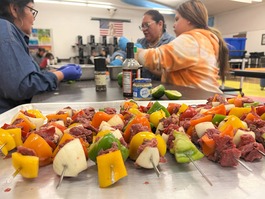
In response to these obstacles, Spreng and Ross Saw an opportunity to partner with another buyer interested in fresh local food: Hardin Helping Hands Food Bank. The food bank and school district decided to work together, placing joint food orders with vendors to increase their purchasing power. The food bank also agreed to receive and deliver the school system's orders, solving the district's transportation challenges and opening a world of new possibilities. Soon, the district began purchasing local beef, bison, and produce, and serving it on cafeteria trays.
This quick pivot was the result of a long journey, with an entire community pulling in the same direction, and having resources at the right time. In 2015, staff at this district, which primarily serves Native students, began exploring healthier, locally raised, and indigenous food options for their school meals. As first steps, they created a vision, fostered partnerships, secured full-buy-in from school district administrators, and focused on long-term sustainability. Their thoughtful groundwork proved to be a recipe for success.
|
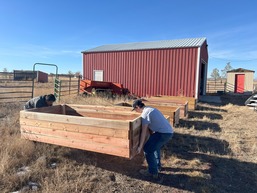
"Partnerships are the way to go," says Ross. The USDA Farm to School Grant helped the district leverage its relationships to solve a major local sourcing and delivery challenge for the district with creativity and innovation. It also provided the district with resources to build on their earlier plans and start envisioning next steps for the future. They used grant funding to install a high tunnel and greenhouse on district property, expand their agricultural education and youth engagement curriculum, and engage experts from their community in helping to develop their architectural dream: a production farm and food forest.
Hardin's farm to school program has become a permanent fixture in the school district and the cafeteria and has established itself as a model for rural communities. The school district has a department dedicated to farm to school and lots of excitement and buy-in from the community, all of which support the program's longevity. Spreng explains it is now a common occurrence to hear students say, "Miss Elle, look! I have beets on my tray!" According to Spreng, the level of connection within the district, the cultural relevance of their work, their embeddedness in the community, and patience and persistence were the essential ingredients for their success. "We have so much appreciation of our wonderful superintendent and our [school] board that supports the ideas we have and our concentration on nutrition and agricultural education for the students." Spreng and Ross reiterate that reaching this point was a lengthy process and advancing further will require more time. "It's going to take time. We will do it slower, but we're going to do it right."
|
|
|
 |
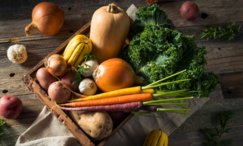
Just in time for Farm to School Month, the Patrick Leahy Farm to School Program invites the farm to school community to apply for the fiscal year (FY) 2026 Farm to School Grant Program (Grant Program).
The FY 2026 Grant Program offers more funding than ever before — up to $500,000 per applicant! It’s also easier than ever for interested organizations to apply thanks to streamlined application templates, a consolidated program objective, and additional instructions for completing Federal forms.
USDA Food and Nutrition Service’s (FNS) Farm to School Team encourages interested applicants to view the full opportunity on Grants.gov. Remember to start your registration process early to prepare to apply through Grants.gov. Complete applications must be submitted by 11:59 PM Eastern Time on Friday, December 5, 2025.
For additional resources, continue checking the Resources for Grant Applicants webpage throughout the application window. Resources will also be highlighted in The Dirt.
Have you read the RFA and still have questions? Reach out to the FNS Farm to School Team at SM.FN.FarmToSchool@usda.gov!
|
HHS, FDA and USDA Address the Health Risks of Ultra-Processed Foods
On July 23, 2025, leadership from the U.S. Department of Health and Human Services and USDA convened to discuss the acceleration of Federal efforts to address growing concerns around ultra-processed foods and the current epidemic of diet-related chronic disease that is plaguing America. The agencies announced a joint Request for Information (RFI) to gather information and data to help establish a Federally recognized, uniform definition for ultra-processed foods. Comments must be submitted by September 23, 2025. For more information, please see the announcement.
USDA Encourages States to Embrace Experimentation in Meal Products
On June 2, 2025, FNS sent a memo to all State Child Nutrition Program Directors, reminding them of USDA Secretary Brooke Rollins' goal of empowering States as laboratories of innovation. The letter encourages States to explore ways to minimize harmful food additives within their own capacity, prior to the Federally mandated phase out of such additives announced by the Food and Drug Administration. State agencies are encouraged to direct any relevant questions to their appropriate FNS Regional Office.
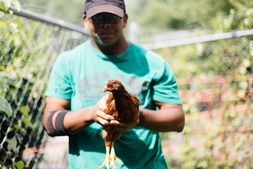
USDA Foods Support American Farmers and Healthy School Meals
The USDA Foods for School Program (USDA Foods) supports American farmers and improves our children's health by providing nutritious, unprocessed or minimally processed, 100% American-grown foods to be served to kids through USDA's child nutrition programs. This directly aligns with USDA Secretary Rollins' commitments to connecting America's farmers to the nutrition programs and strengthening strategies to encourage healthy choices, healthy outcomes, and healthy families. USDA Foods also support child nutrition program operators in meeting meal pattern requirements, including the Buy American requirement.
With these goals in mind, FNS is pleased to announce the release of guidance that clarifies requirements for schools and supports maximum use of USDA foods in program meals.
|
|
|


Small Business Innovation Research and Small Business Technology Programs Phase II
Attention awardees of the Phase I SBIR/SSTR programs: You are invited to apply for a Phase II grant. This includes resubmissions from Phase I awardees who were previously not selected for a Phase II grant.
USDA National Institute of Food and Agriculture's SBIR/STTR programs focus on supporting small businesses in transforming scientific discovery into products and services with potential commercial benefit.
The goal of SBIR/STTR Phase II is to continue research and development while increasing the focus on commercialization.
The deadline for applications is September 23, 2025.
|
|
|


USDA AMS Launches New Tool Kit to Help Food Hub Professionals Manage the "Many Hats" of Their Role
This summer, USDA Agriculture Marketing Service (AMS) relaunched its toolkit dedicated to food hub management. The new resource guide, Many Hats: A Food Hub Operator's Toolkit, is a dynamic and insightful resource for both food hub operators and those curious about food hub operations. The opportunities and challenges of food hub management are brought to life by insights from prior AMS surveys and lessons learned, as told by food hub professionals through a series of podcasts. Make sure to check it out.
|
 |
|
Farm to School Stickers Available
October is right around the corner, which means Farm to School Month is coming soon! Do you need resources for your celebration? Whether you are conducting taste tests, piloting new local foods on the menu, or planning a farmer visit, stickers can help you make the activity a success and spread the word about farm to school. Stickers are free and come in rolls of 200 stickers per roll.
Requests will be accepted from the following entities:
- Child nutrition program operators
- Schools participating in the National School Lunch and School Breakfast Program
- Child care institutions and facilities that participate in the Child and Adult Care Food Program
- Summer meal sites that participate in the Summer Food Service Program
- State agencies administering the child nutrition programs
- State Departments of Agriculture
USDA will consider all requests for stickers, as long as supplies last.
|
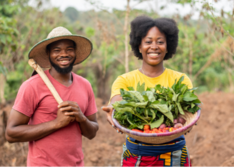
Data Guidelines for Produce in Regional Food Systems Now Available
Are you a small producer, food hub, marketing cooperative, or other local and regional vendor interested in the wholesale market? As part of a cooperative agreement between the USDA AMS and the International Center for Food Ontology Operability Data and Semantics (IC-FOODS), the Data Guidelines for Produce Markets in Regional Food Systems provides a voluntary standardized format and templates for small producers and other local food vendors to share product information. The goal of the guidelines is to simplify and reduce transaction costs and work towards more consistent regional market data. The guidelines leverage existing traceability standards, naming conventions, pack sizes, and product attribute definitions for local and regional production systems. To download the template and read more about the guidelines, please visit the IC-FOODS project website.
|
Find Out What's "Growing-On" with the AMS Food and Agriculture Mapper
Interested in local food systems data? Check out the Food and Agriculture Mapper and Explorer (FAME)! FAME, funded through an AMS cooperative research agreement, is an open-access resource designed to increase the accessibility of local and regional food systems data for Federal grant applicants, farmers, food entrepreneurs, and researchers. FAME brings together data from dozens of publicly available datasets to make it easy for food systems practitioners to search and visualize up-to-date information about U.S. local and regional food systems for program design, business planning, grant writing, advocacy, or simply to learn more about the state of local food systems in an area.
|
|
|
|
|
|