|
If your email program has trouble displaying this email or images, view as a webpage.
|
|
|
Back to TOP
 FDA Officials Strengthen Connections with Regulatory Counterparts in the People’s Republic of China
A high-ranking FDA delegation met in June in Beijing with senior officials from the People’s Republic of China (PRC) who oversee medical products and others who monitor food safety in the country.
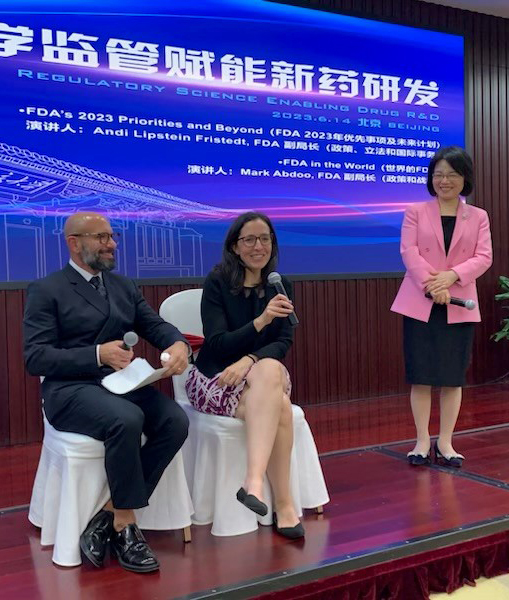
It was part of a broader visit by the FDA delegation led by Andi Lipstein Fristedt, Deputy Commissioner for Policy, Legislation, and International Affairs, and Mark Abdoo, Associate Commissioner for Global Policy and Strategy, that included a roundtable with industry and speeches at one of the leading universities in China.
The meetings with the PRC’s National Medical Products Administration, or NMPA, and the China National Center for Food Safety Risk Assessment, or CFSA, were the first senior level face-to-face meetings with PRC government agencies since the COVID-19 outbreak.
Drugs, cosmetics, and medical devices were once overseen by the China Food and Drug Administration but on March 17, 2018, China’s National People’s Congress announced a sweeping restructuring of PRC administrative bodies, including the creation of NMPA to oversee these product lines, as a vice-ministerial level body under the State Administration for Market Regulation.
The FDA has long enjoyed cordial relations with the PRC’s medical product regulators. Annual meetings between senior agency leaders have historically alternated between host countries since an agreement in 2007. Although the last high-level, face-to-face meeting between the FDA and NMPA was in May 2019 in Beijing, the two agencies have continued to collaborate virtually.
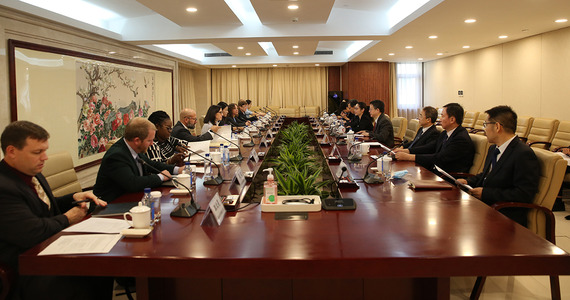 FDA delegation meets with NMPA at its office in Beijing.
At the June 15 meeting, the senior leaders reviewed their 2022 work plan accomplishments and confirmed support for their ongoing activities outlined in the 2023 work plan. These annual work plans help to organize the expected collaborations between FDA product center experts and NMPA officials throughout the year to ensure that appropriate resources are dedicated to these continuing engagements.
In addition to reviewing the work plans, the FDA thanked the NMPA for its help this spring when the FDA was looking for a way to mitigate an ongoing shortage of the cancer drug cisplatin. The NMPA provided information on a domestic PRC-based cisplatin manufacturer and this information was shared with the drug shortage staff in the Center for Drug Evaluation and Research to consider when deciding if FDA should authorize the product for import to the United States.
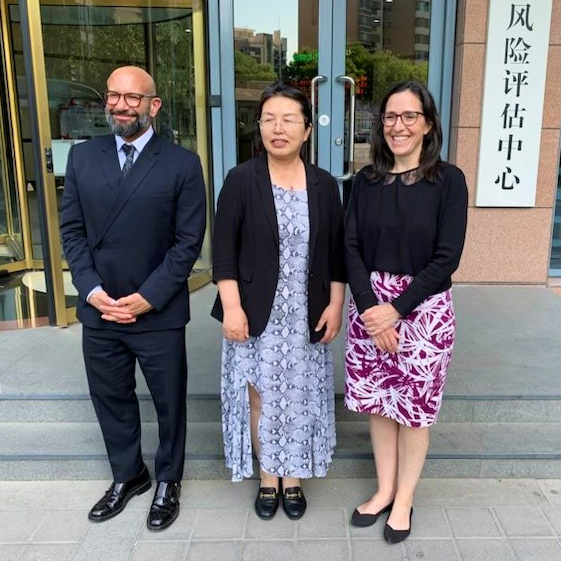 Mark Abdoo (left), Andi Fristedt (right), and CFSA’s Director General Dr. Ning Li (center).
Separately, the FDA delegation also visited CFSA’s office to discuss potential cooperation and be briefed on CFSA’s food safety activities, which included reviews of PRC Food Safety Law and National Food Safety Standards; CFSA’s national, provincial, and municipal lab infrastructure including whole genome sequencing capabilities; CFSA’s foodborne disease surveillance and public notification system; and CFSA’s applied nutrition data collection efforts and national nutrition campaigns for the public.
The FDA and CFSA signed a memorandum of understanding in 2013 that provides a framework to facilitate the development of projects of mutual interest. The FDA has historically facilitated food safety training between CFSA and the Joint Institute for Food Safety and Applied Nutrition (a joint venture between the FDA and the University of Maryland), and from 2016 to 2019, the FDA and CFSA regularly met while attending the China International Food Safety and Quality annual conference. Last month was the first in-person meeting between the two agencies since November 2019.
Abdoo and Fristedt with Ruiping Xiao, Dean of Peking University’s College of Future Technology.
Abdoo and Fristedt Talk FDA Reforms and User Fees at Peking University
Another highlight for the delegation was its visit to Beijing’s prestigious Peking University (PKU). FDA staff have been traveling to PKU to conduct lectures on such topics as quality management, risk and science-based management, and good manufacturing practice since the university’s International Pharmaceutical Engineering Management (IPEM) program was established in 2005. Students are typically middle and senior level pharmaceutical company managers and government regulatory officials who seek IPEM’s 12-month certificate in quality systems so they can go on to become leaders in government and the private sector. As part of the FDA’s ongoing collaboration with IPEM, in 2017-2018 IPEM students and staff translated 88 FDA guidance and technical documents into Chinese and made them freely available to the public.
Both Abdoo and Fristedt spoke at PKU and fielded questions on various technical topics during a panel discussion with a smaller group of attendees. Abdoo’s speech touched on why the FDA maintains a foreign footprint, including its foreign offices in China and elsewhere, while Fristedt provided an overview of the FDA’s user fee programs and recent FDA reforms enacted by Congress.
In her remarks, Fristedt noted that when the FDA implemented its first user fee program, the agency took steps to ensure its integrity to prevent it from being perceived as a pay-to-play program, where those who pay would have too much control over the regulator. By putting in place these protections, that meant the agency’s decisions continued to be based on science and were consistent with legal and regulatory standards, she said. “Included in this approach was establishing a culture of transparency and a system of internal oversight, giving the staff the ability to speak their minds and challenge decisions all the way to the Commissioner, and the means for stakeholders — both industry and public interest groups — to challenge the agency, including in the courts.”
FDA Holds Roundtable Discussion with AmCham China
While in Beijing, the U.S. delegation participated in two roundtable discussions at the U.S. Embassy with members of the American Chamber of Commerce China (AmCham). One of the discussions was with AmCham’s Agriculture, Food, and Beverage (AFB) Group, the other with its Health Cooperation Program (HCP) Group. Since most of the participants represent U.S. companies marketing in China, the conversation focused on the challenges they face in the PRC market and with PRC regulators. The FDA, on the other hand, primarily focuses on PRC companies, educating them on how to comply with FDA regulations to ensure that products they export to the United States are safe, effective, and of high quality. Nevertheless, there was important common ground between the FDA and the AmCham members on such subjects as supply chain challenges and opportunities to support international standards harmonization.
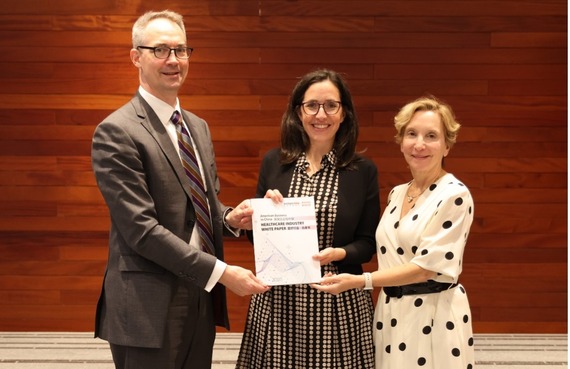 AmCham China President Michael Hart and Roberta Lipson, CEO of New Frontier Health United Family Health care provide white paper to Andi Fristedt.
The AFB Group asked for an update on the PRC’s new facility registration rule, Decree 248. This rule requires that foreign competent authorities, including the FDA, transmit applications for registration of U.S. establishments exporting certain food products to the PRC. The General Administration of Customs of the People’s Republic of China (GACC) set a deadline of June 30 for foreign competent authorities to finalize the interim facility registrations that were submitted prior to January 1, 2023. The FDA participants said the agency was working closely with our interagency partners at the Office of the U.S. Trade Representative (USTR), the U.S. Department of Agriculture (USDA), and with partner regulators in other countries to persuade GACC to postpone the deadline. The FDA participants also explained that the agency was actively processing the queue of GACC-required facility registration applications in the China Import Food Enterprises Registration (CIFER) system. At the time of this article the FDA has not been made aware of any trade disruptions caused by the June 30, 2023, deadline. FDA officials also said they have been working closely with USDA and USTR on a long-term arrangement to support U.S. firms seeking GACC registration.
At the end of the roundtables, Michael Hart, President of AmCham China, and Roberta Lipson, the chief executive officer of New Frontier Health United Family Healthcare, presented Fristedt and Abdoo with a bound copy of the organization’s “2023 American Business in China Healthcare Industry White Paper.”
FDA Winds Up China Trip at DIA China Conference
The trip culminated in a series of FDA presentations at DIA China — the Drug Information Association's conference in Suzhou, China, that attracted more than 2,000 people who were drawn by the “novelty” of in-person meetings following the COVID-19 pandemic. The conference kicked off with ICH Day, focused on various issues related to the International Council for Harmonisation of Technical Requirements for Pharmaceuticals for Human Use, where Fristedt discussed the FDA’s Patient Focused Drug Development program during the day's plenary session. The following day, Abdoo provided remarks at DIA’s opening session, where he talked briefly about the FDA’s history of foreign engagement, noting that the first PRC delegation met with the FDA in the United States in 1979.
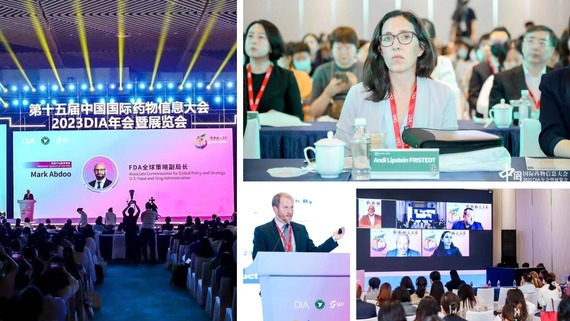 Left: Mark Abdoo speaking at opening session for DIA China Conference. Upper right: Andi Fristedt in attendance. Lower right: Participants in FDA Townhall. Bottom center: Jonathan Chapman speaking at panel session.
As is typical at major meetings, FDA officials also presented on more technical topics: CNO Supervisory Consumer Safety Officer Marcus Ray talked about the FDA’s good clinical practice inspections, while International Policy Analyst Jonathan Chapman discussed the Center for Drug Evaluation and Research's Knowledge-aided Assessment & Structured Application (KASA) drug review program on a panel with officials from NMPA and Japan's Pharmaceuticals and Medical Devices Agency. The KASA system focuses on the chemistry, manufacturing, and controls portion of a product submission. These have typically been in narrative form. Use of KASA moves from narrative information to structured data and a systematic approach for risk assessment powered by IT tools to best capture/manage knowledge.
The FDA’s final session at DIA was an FDA Townhall, which included updates on generic drugs and the Office of Generic Drug’s global efforts to support generic drug accessibility, the challenges and best practices associated with biologic manufacturing, and current updates on the FDA’s facility inspections. China Office Director Vanessa Shaw-Dore, who kicked off the session with opening remarks, noted that although the FDA’s number of inspections in the PRC were necessarily lower during the pandemic, FDA investigators permanently stationed in the country still continued to perform inspections throughout that period.
US, India Conduct Law Enforcement Operation Targeting Illicit Medical Products
Regulatory and law enforcement agencies from the United States — with observation by the Government of India’s Directorate of Revenue Intelligence — conducted a special enforcement operation in June 2023 targeting illicit medical products that had been shipped using the international mail system. Operation Broader Sword, as they called it, stopped more than 500 shipments of illicit and potentially dangerous, unapproved prescription drugs, combination medical devices, and synthetic drug precursors from reaching U.S. consumers. The U.S. agencies carrying out Broader Sword included the Food and Drug Administration, U.S. Customs and Border Protection (CBP), Homeland Security Investigations, Drug Enforcement Administration, and the U.S. Postal Inspection Service.
The operation targeted packages entering the United States from India between June 12-23 through international mail facilities in Chicago’s O'Hare International Airport and New York’s John F. Kennedy International Airport. During the operation, investigators examined more than 1,500 shipments originating in India, identifying hundreds of illegal products, including medications intended to treat or mitigate serious diseases. Many shipments were determined to have included opioid and other controlled substance drug products. The intelligence gathered in the operation is an added boon — the Government of India will receive information on the seized products to advance its regulatory efforts.
Broader Sword was conceived by FDA India Office (INO) Director Sarah McMullen and FDA Office of Regulatory Affairs Deputy Director for Enforcement and Import Operations John Verbeten. McMullen and Verbeten worked closely with Hugh Austin, the CBP Attaché at Embassy New Delhi, and after a few planning calls the operation took shape.
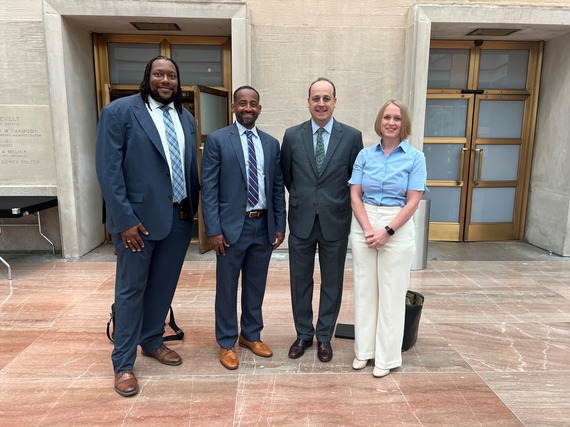 L to R: Justin Green, FDA Assistant Commissioner for Criminal Investigations; Michael Shoaseged, Senior Advisor at FDA Office of Criminal Investigations; Barr Weiner, OGPS Senior Advisor; and Sarah McMullen, FDA India Office Director — at the fourth annual meeting of the India-U.S. Counternarcotics Working Group in Washington, D.C.
“Being able to leverage in-country U.S. expertise and collaborative relationships among several stakeholders led to the seamless planning and execution of this extensive operation,” said McMullen. The INO Director highlighted Operation Broader Sword in Washington, D.C., in mid-July at the fourth annual meeting of the India-U.S. Counternarcotics Working Group, a bilateral, whole-of-governments effort to address concerns associated with narcotic production, distribution, trafficking, and use/misuse.
Broader Sword built upon the success of Operation Broadsword, which also targeted mail parcels containing illicit medical products from India and involved the participation of Indian government officials as observers. Conducted in 2020 at O'Hare Airport’s international mail facilities, Broadsword similarly prevented shipments of illicit and potentially dangerous unapproved prescription drugs and combination medical devices from reaching consumers. The operation yielded valuable leads on individuals and points of origin that facilitated additional law enforcement efforts in India and the United States.
Prior to the two law enforcement collaborations with India, the FDA participated with the United Kingdom in Operation Lascar, the agency’s first bilateral initiative focused on the movement of illicit FDA-regulated products. The pilot operation was launched in 2017 in response to illicit products being shipped to the United States from and through the U.K. Lascar eventually comprised a series of five initiatives that led to more than 80 new FDA criminal investigations, as well as the identification of over 3,000 violative shipments of illicit medicines destined for the United States.
The whole-of-governments approach employed by Lascar involved multiple countries — and their respective authorities across several government sectors — coordinating efforts. The most recent Lascar initiative involved the FDA’s Office of Criminal Investigations, CBP, the U.S. Patent and Trademark Office, the U.S. Embassy in London, and the U.K.’s HM Revenue & Customs, Border Force, and Intellectual Property Office.
See more from OGPS and FDA on illicit products and enforcement:
The WHO Member State Mechanism: Thoughts on Its Present and Future | FDA
FDA’s Top Cop: Adapting to Challenges of Globalization and E-commerce | FDA
Operation Lascar | FDA
Using A Whole-Of-Governments Approach to Combating Illicit Health Products | FDA
FDA’s Mutual Recognition Agreement with Swissmedic Enters Into Force
 As of July 27, 2023, the U.S. and Switzerland could begin to rely on each other’s factual findings from a good manufacturing practice (GMP) inspection of a pharmaceutical manufacturing facility.
The FDA, the U.S. Office of the Trade Representative, and the Swiss Confederation signed an Agreement on Mutual Recognition (MRA) on January 12, opening the door for the FDA and the Swiss Agency for Therapeutic Products (Swissmedic) to utilize each other’s GMP inspections. But the agreement couldn’t enter into force, i.e., become operational, until the FDA had determined that Swissmedic is capable of conducting inspections that meet U.S. requirements, and Swissmedic had made a similar determination with respect to the FDA.
Both agencies have now completed those determinations based on the criteria and procedures outlined in the MRA and recognized each other under the MRA. As a result, the MRA went into effect on July 26 and entered into force on July 27.
In addition to covering good manufacturing practice inspections of facilities making human drugs, the MRA with Swissmedic also includes veterinary drugs.
The MRA with Swissmedic becomes the third operational MRA to enter into force. MRAs are also in effect with the European Union and the United Kingdom.
“MRAs are an effective tool in today’s global pharmaceutical market, allowing the FDA to work more efficiently and maximize its resources” said Mark Abdoo, the FDA’s Associate Commissioner for Global Policy and Strategy.
Over 250 pharmaceutical companies are based in Switzerland, ranging from startups all the way to multinationals, according to Swissmedic, which has issued manufacturing licenses to approximately 370 sites across the country.
“Sharing information will help the FDA and Swissmedic avoid the duplication of drug inspections, lower inspection costs, and enable regulators to devote more resources to other parts of the world,” Abdoo said.
Frequently Asked Questions: Mutual Recognition Agreements
Mutual Recognition Agreements
FDA Expands Mutual Recognition Agreement with European Union
The FDA and the European Union (EU) announced on May 31 that they were expanding the scope of the U.S.-EU Mutual Recognition Agreement (MRA) Sectoral Annex for Pharmaceutical Good Manufacturing Practices (GMP) to include inspections of manufacturing facilities making veterinary pharmaceuticals (also called “animal drugs”).
While the MRA entered into force in 2017, it initially included only human pharmaceuticals.
An MRA is an agreement between two or more countries to recognize a specific process or procedure of the other country. The FDA’s MRA with the EU allows regulatory authorities in the EU to rely on the results of inspections of manufacturing sites for pharmaceutical products in their respective territories.

Currently, the FDA has recognized 16 European Union Member States as having the capability, capacity, and procedures to carry out routine GMP inspections that meet the FDA’s requirements for animal drugs. The Member States are: Austria, Belgium, Bulgaria, Denmark, Estonia, Finland, France, Greece, Hungary, Ireland, Luxembourg, Netherlands, Poland, Portugal, Slovenia, and Spain. At the same time, the EU has also recognized the FDA as an equivalent authority for GMP inspections of sites manufacturing animal drugs.
Teams from the European Commission and FDA are working closely with the regulatory authorities in the 11 other Member States to assess their capability.
The FDA took a variety of steps in preparation for the expanded MRA. This included sharing information with the EU about the FDA’s Center for Veterinary Medicines’ oversight of animal drug manufacturing in the U.S.; observing EU audits of individual member states including observations of inspections conducted by EU member state inspections; and conducting assessments of some EU member states’ regulatory frameworks.
FDA Signs Confidentiality Commitment with Indonesia, Eye on Shrimp RPA
On July 10, the U.S. Food and Drug Administration (FDA) signed a confidentiality commitment (CC) with the Fish Quarantine and Inspection Agency (FQIA) of the Ministry of Marine Affairs and Fisheries (MMAF) of the Republic of Indonesia.
The CC will allow the two agencies to exchange information about seafood facilities, but most notably shrimp farms, processors, feed mills, and hatcheries — including confidential information such as inspection records, sample findings, and other nonpublic documents. Exchanging information about the shrimp supply chain will help the FDA’s regulatory prioritization and decision-making. Moreover, it is an important step in preparing Indonesia for participation in a three-country pilot program designed to ensure the safety of shrimp exported to the United States.
In FY 2021, 2022 and 2023, Congress mandated that the FDA develop and implement options for regulating shrimp imports, including imports from the three largest exporting countries by volume over the previous three calendar years. Currently, these countries are India, Indonesia, and Ecuador, respectively.
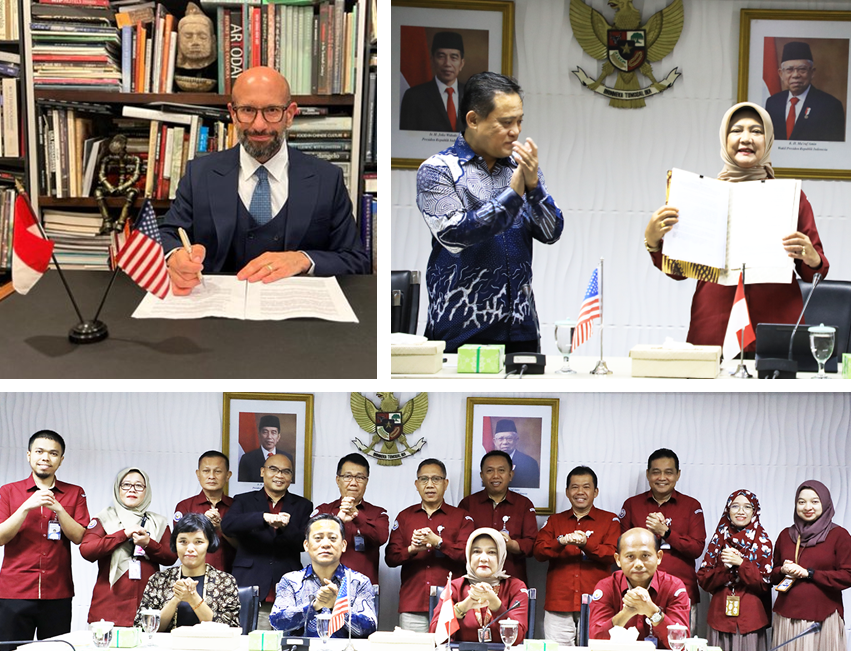 Clockwise from top left: FDA Associate Commissioner Mark Abdoo signing the CC from Washington D.C.; USDA/FAS Agricultural Counselor Rey Sentella with FQIA Director General Pamuji Lestari holding the signed CC; Sentella (in blue) with delegation of FQIA officials in Indonesia.
The FDA is preparing to evaluate the effectiveness of using a new form of arrangement — a Regulatory Partnership — in these countries. The partnership aims to leverage commodity-specific oversight systems — in this case, involving imported aquacultured shrimp — along with data and information, to strengthen food safety before and at the port of entry.
Mark Abdoo, FDA Associate Commissioner for Global Policy and Strategy, signed the CC on behalf of the FDA. Dr. Pamuji Lestari, Director General of FQIA, signed the CC on behalf of FQIA. A virtual ceremony was held to commemorate the signing by the two agencies’ officials. Mr. Rey Santella, Agricultural Counselor from the U.S. Department of Agriculture’s Foreign Agricultural Service (USDA/FAS) office in Indonesia, represented the U.S. government in person at the gathering of the FQIA signing in Jakarta.
“This partnership will be mutually beneficial to both our countries,” Abdoo said from Washington, D.C., during the virtual signing ceremony with FQIA. “Together, as partners, this confidentiality commitment will help us both determine how we can most effectively collaborate to enhance our regulatory efforts on shrimp safety. We look forward to more activities together in the future.”
The FDA and MMAF have already enjoyed a long history of effective collaboration, with additional positive growth in this relationship over the last year. In June, the FDA conducted training in Indonesia for FQIA staff on how to sample water from shrimp ponds for identification of microorganisms using whole genome sequencing technology. The genetic sequence isolate data can then be uploaded to the public GenomeTrakr database (housed by the National Center for Biotechnology Information at the National Institutes of Health) for sharing with participating authorities and research institutions from around the globe. More isolates related to shrimp uploaded to GenomeTrakr means quicker traceback in the event of a foodborne illness outbreak in shrimp.
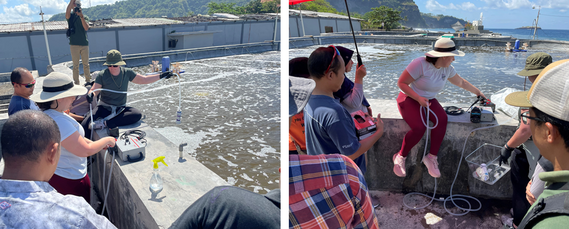 June 2023: The FDA provided training to FQIA staff on sampling shrimp pond water for subsequent whole genome sequencing analysis for microorganisms.
|
|
|
Back to TOP
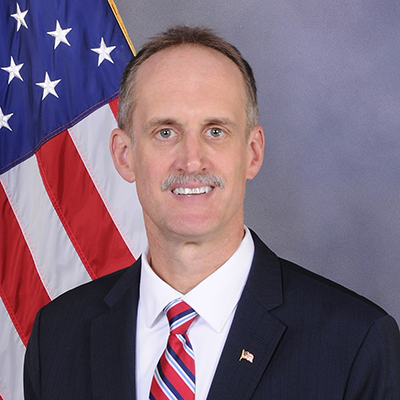
 Doug Shaffer Named as Associate Director in OGPS
Douglas (Doug) Shaffer, M.D., B.S. Pharm, has been selected to serve as an Associate Director in the Immediate Office of the Office of Global Policy and Strategy and as a Senior Advisor to Associate Commissioner Mark Abdoo on a variety of policy matters.
In an email to OGPS staff on June 28, 2023, Abdoo said that Shaffer will be the OGPS lead for interagency initiatives such as the President's Emergency Plan for AIDS Relief (PEPFAR), the President’s Malaria Initiative, U.S. efforts on the Global Health Security Agenda, “and other strategic activities we are working on in the global context, the success of which requires resilient medical product supply chains and equitable access to quality medical products.”
Dr. Shaffer came to OGPS on detail in July 2022 and has been a key leader in considering how best to help in standing up the African Medicines Agency (AMA), dedicated to improving access to quality, safe, and effective medical products in Africa.
He is no stranger to Africa, having served in a variety of government positions spanning 12 countries and has led complex interagency programs at the U.S. Departments of Health and Human Services (HHS), State, and Army. He witnessed how PEPFAR brought lifesaving treatment to and changed the trajectory of HIV in Africa through the power of antiretrovirals (ARVs).
Shaffer’s extensive government career spans over 26 years with more than half that time overseas in Kenya and Rwanda. He divides his time into three buckets: Pre-PEPFAR, PEPFAR, and Post-PEPFAR global health diplomacy.
Pre-PEPFAR, Shaffer taught medicine and helped establish Kenya’s second Institutional Review Board/Independent Ethics Committee at Moi Teaching and Referral Hospital, which was registered with HHS’ Office for Human Research Protections, thus allowing the institution to apply for and receive HHS-sponsored research funding. The experience gave him the opportunity to work with a talented team doing qualitative research that helped develop policies around participating in pre-PEPFAR clinical trials, outlining participant preferences and commitments to post-trial access to ARVs.
Shaffer left the FDA in 2004 to join the first U.S. embassy PEPFAR team in Kenya. "I was in Africa at a time when HIV/AIDS was feared as a death sentence and hospitals were overflowing with illness and sadness. Access to ARVs was a game changer and attenuated both disease and stigma,” Shaffer said.
Living mostly in the tea fields and plantations of rural Kenya, he worked on a program with the primary goal of advancing HIV vaccine candidates through clinical trials. “It was a remarkable time from working with the embassy team on rolling out the emergency response with the Government of Kenya, to opening up HIV prevention, care, and treatment programs in more rural settings where I lived,” he said.
Shaffer spent a few years in Rwanda, working from the U.S. Embassy in Kigali. His work there largely focused on PEPFAR but also supported the President’s Malaria Initiative along with field epidemiology and laboratory training. The period was characterized by government-to-government program transitions, where he and his colleagues were handing over grants and cooperative agreements largely implemented by U.S. academic institutions to the Rwandan Ministry of Health. "The time period coincided with the 20th anniversary of Rwanda’s genocide,” he said. “Seeing the Ministry of Health assume primary oversight of many health programs funded by the U.S. government seemed symbolic.”
The post-PEPFAR period, dominated in large part by COVID-19, meant for Shaffer a transition to more policy work and global health diplomacy in Kenya on behalf of HHS. The shift gave him a unique opportunity to do interagency work more broadly beyond the traditional health agencies and to collaborate with economic, political, and foreign commercial teams. He served as the U.S. embassy’s initial COVID-19 coordinator covering two areas: working with the Kenyan Ministry of Health on its response and coordinating across the embassy with the MED Unit [its medical division] and other sections.
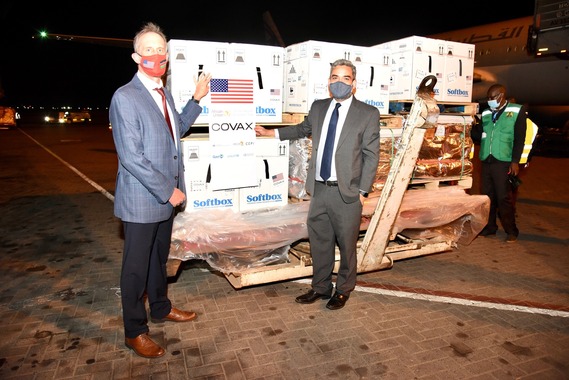 As HHS/OGA Health Attache to Kenya, Doug (on left) meets a U.S. COVAX shipment of vaccines arriving at the Nairobi airport in the middle of the night. (Photo courtesy U.S. Embassy Nairobi.)
Lessons learned early from the pandemic continue to guide many policy and programmatic activities today — for example, the State Department's newly formed Global Health Security and Diplomacy Bureau, he said. "It is an exciting and important time within OGPS as we engage more on critical regulatory bodies such as the AMA,” said Shaffer.
Although he has returned stateside, his early work on the ground in Africa continues through HIV prevention, care and treatment services, and clinical trials. “It was an incredible, life-changing opportunity to live both in Kenya and Rwanda,” he said.
He remains friends with many Kenyan health care providers who helped turn the tide of the HIV epidemic, considering them — like many across Africa involved in PEPFAR — “heroes to their patients, communities and villages, and countries.”
Dr. Shaffer graduated from the West Virginia University Schools of Pharmacy and Medicine with active licensures (Pharmacy and Medicine) and American Board of Internal Medicine certification. He completed clinical research training at the National Institutes of Health while obtaining a Master of Health Sciences in Clinical Research degree from Duke University. He is a member of the Alpha Omega Alpha Honor Medical Society and Fellow of the American College of Physicians and Royal College of Physicians.
Gregory Smith Becomes Deputy Director of FDA India Office
As of June, Greg Smith has taken on the role of deputy director of the India Office in the FDA’s Office of Global Policy and Strategy (OGPS). His professional experience includes clinical trials management, risk evaluation and mitigation strategies, postmarketing, and surveillance initiatives for a global contract research organization.
His FDA career spans over 12 years working as a project manager in CVM’s Office of New Animal Drug Evaluation and as the director of the Special Projects Staff in the Office of Executive Programs. He specialized in complex and mission-critical scientific, regulatory, legislative, and operational issues including user fee negotiations, supply chain assessment, legislative implementation, organization-wide governance, and portfolio management.
For a year prior to becoming deputy director, he served as an international relations specialist for foods in India. Smith has a bachelor’s degree in communications and public relations from the University of Maryland, College Park.
Dr. Ryan Newkirk Joins OGPS as Science Advisor, with Secondment to WHO
Ryan Newkirk, Ph.D., joined OGPS’ Office of Trade and Global Partnerships in June as a senior science advisor. In August, he will fill a unique role for the agency by doing a secondment at the World Health Organization’s (WHO) Department of Nutrition and Food Safety in Geneva. Eligible U.S. government employees may be seconded, that is, detailed or transferred to certain international organizations in which the United States participates. Employees on secondment are considered a staff member of the international organization during the period of the detail/transfer and are under the technical and administrative supervision of that organization.
Dr. Newkirk’s appointment is the first secondment at a multilateral institution for OGPS since the office was created in 2019. While seconded, he will work within the WHO to strengthen global oversight of food products by advancing regulatory approaches that are aligned with international standards and grounded in a thorough understanding of science and risk principles.
Dr. Newkirk joined the FDA in 2013 as a policy analyst with the Food Defense and Emergency Coordination Staff, which is part of the Office of Analytics and Outreach within the Center for Food Safety and Applied Nutrition. In 2016, he became senior advisor to that group. During his time with the FDA, Dr. Newkirk has worked on a number of agency efforts, many involving multidisciplinary groups, intra-agency projects, interdepartmental/federal policy, international activities, and public stakeholder engagement. He recently co-led the FDA’s infant formula supply chain activities. Prior to this, he was an FDA co-lead in drafting and finalizing National Security Council-led policy to protect and strengthen the resilience of the U.S. food supply. He led the Food Safety Modernization Act “Mitigation Strategies to Protect Food Against Intentional Adulteration” rule-writing work group and was a co-lead for the group writing the rule’s guidance for industry.
Over the course of 20 years, Dr. Newkirk has built his career in public health and emergency response, with a particular focus on food safety and food defense in the past 10 years. Prior to joining the FDA, he held a food safety fellow postdoctoral position with the U. S. Department of Agriculture’s Food Safety and Inspection Service. Before joining federal service, he worked in academia at the University of Minnesota-Twin Cities and Saint Louis University. He completed his doctorate in epidemiology at the University of Minnesota School of Public Health and completed his master’s degree in infectious disease epidemiology at Saint Louis University School of Public Health.
Dr. Jacquin Jones Moves from CDER to Join the FDA India Office

Jaquin (Jackie) Jones, Ph.D., joined the India Office as an international relations specialist for foods, currently working stateside until her deployment to New Delhi. She joined FDA in 2014 as a regulatory health project manager in the Center for Drug Evaluation and Research’s (CDER's) Office of Hematology and Oncology Products. She later worked on policy and standards development projects as a policy lead and project manager in CDER’s Office of Policy for Pharmaceutical Quality and as the outreach program lead and consumer safety officer in CDER’s Office of Compounding Quality and Compliance.
Before joining FDA, Dr. Jones worked for over 12 years in clinical research on oncology, medical-surgical, and radiological projects at the National Institutes of Health. Dr Jones retired from the Public Health Service Commissioned Corps this past May and had a wide range of experience in various regulatory, nursing and leadership positions during her 30 years of uniformed service and international deployment roles.
Dr. Jones holds a doctorate in health sciences with a global health concentration, a Master of Science in nursing informatics, and a Bachelor of Science in nursing.
|
Jessica Stewart Joins OGPS as Program and Policy Advisor

Jessica Stewart joins the OGPS Immediate Office as a policy and program advisor to Associate Commissioner Mark Abdoo. She starts on July 30. Stewart comes to us from the Department of Health and Human Services’ (HHS) Office of Global Affairs (OGA), where she was their director for agency coordination (among the HHS operating and staff divisions as well as interagency on crosscutting activities and policies that support HHS’ global strategy). As part of that role, she was responsible for finding solutions to global issues for the department, leading the HHS international arrangement clearance process, and engaging with the U.S. Congress and U.S. Government Accountability Office (GAO) on global issues.
Among her many accomplishments, Stewart established the HHS foreign embassy briefings, and the creation of comparability pay at HHS for staff overseas. Previously, she held a variety of roles within OGA — including covering Asia-Pacific collaborations. She was a part of the HHS Public Engagement Team to address the water crisis in Flint, Michigan. She even did an extended assignment to Rwanda where she was the acting deputy PEPFAR coordinator and responsible for the timely completion of the Rwanda Country Operational Plan.
Prior to her time with OGA, Stewart worked on HHS’ budget in the department's Office of the Assistant Secretary for Administration, domestic response to H1N1 influenza in the HHS Office of the Assistant Secretary for Preparedness and Response, and project management at the National Institutes of Health. Before joining federal service, she worked at Clinton Memorial Hospital, Sparrow Hospital, and the Sparrow Foundation in Michigan. She graduated from Michigan State University with degrees in economics and international relations.
|
Maria Kuecken Becomes Permanent Public Health Advisor with OGPS

Maria Kuecken begins her position with the Office of Trade and Global Partnerships (OTGP) as a public health advisor on July 30 after completing a 120-day detail as part of the FDA’s 2022-2023 leadership development program. She will support OTGP’s trade portfolio in the areas of Technical Barriers to Trade and Good Regulatory Practices.
Kuecken comes to OGPS from the Office of Economics and Analysis in the Office of Policy, Legislation, and International Affairs, where she had worked as a senior economist since 2017, conducting numerous regulatory impact analyses of FDA regulations and developing economic analyses of high-priority policy issues.
Kuecken holds a B.A. in economics and international affairs from Florida State University and separate master’s degrees in economics and the economics of globalization from the University of Paris 1 Panthéon-Sorbonne.
|
REMINDER: Katherine Serrano
 |
|
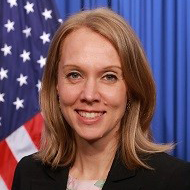
On August 1, Katherine (Katie) Serrano takes on the role of director for the FDA Europe Office, after 5 1/2 years as the director of the FDA Latin America Office. She replaces Ritu Nalubola, who is now deputy director of the Office of Policy, Legislation, and International Affairs. |
|
|
|
Back to TOP
 FDA Provides Training on GAP and GMP to Growers and Processors of Indian Spices, Herbs, and Medicinal Plants
In June 2023, growers and producers of spices, herbs, and medicinal plants had the opportunity to attend a collaborative training program on both Good Agricultural Practices (GAP) for growing spices and Good Manufacturing Practices (GMP) targeted to the production and processing of spices and related crops.
This was the first time the FDA’s GMP training in India was specifically focused on the unique needs of the processors of these botanical crops — an important emphasis, since Indian-grown spices and herbs often end up in the marketplace as FDA-regulated products, such as culinary seasonings and dietary supplements/Ayurvedic formulas.
The training program was co-hosted by the FDA India Office, the Center for Food Safety and Applied Nutrition's (CFSAN) Office of Food Safety, the Joint Institute for Food Safety and Applied Nutrition (JIFSAN, which is jointly administered by the FDA and the University of Maryland), and India’s Spices Board, part of the Government of India’s Ministry of Commerce and Industry. Offered in two cities — Guwahati, Assam and Thodupuzha, Kerala. The second location was in the heart of one of India’s significant centers of spice trade and commerce, making access to the training more convenient for the local growers and processors to participate.
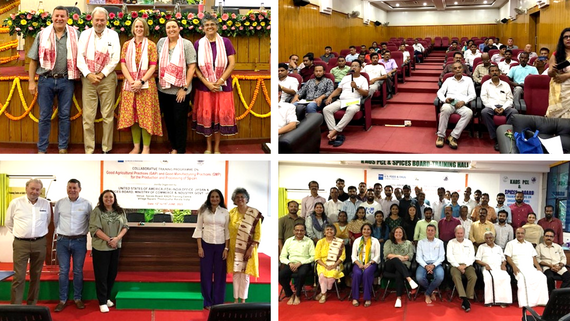 [Top row] At the GAP training in Guwahati, left: Facilitators/trainers Juan Silva, Jim Rushing, Sarah McMullen, Cindy Ford, and Pankaja Panda wearing traditional scarfs. Right: Participants. [Bottom row] At the training in Thodupuza, left: Facilitators/trainers Jim Rushing, Juan Silva, Cindy Ford, Aparna Tatavarthy, and Pankaja Panda. Right: Participants.
Good Agricultural Practices (GAP)
GAP training for growers (processors were welcomed and encouraged to attend, too) focuses on implementing practices to prevent the contamination of agricultural crops from human and animal pathogens, chemical contaminants such as pesticides and heavy metals, and allergens.
During the two-day GAP training, participants learned about spice safety from farm to table. The nine foundational rules for implementing the Food Safety Modernization Act (FSMA) — of which GAP is a part — was presented by FDA instructors. Subject experts from JIFSAN presented the technical portion of the training, which consisted of the following topics:
- Introduction to the GAP Program, Spices, and Food Safety Hazards.
- Food Borne Diseases.
- Personal Hygiene.
- Protecting Source Plants in the Field.
- Maintaining Cleanliness During Drying.
- Maintaining Cleanliness During Packing.
- Developing a Food Safety Plan for Your Farm.
To reinforce their learning, on the second day of each training, the respective participants visited a spice farm in their area. The farm in Guwahati had turmeric and black pepper growing among other crops (pineapple, lemon, banana, coconut) in a multi-cropping pattern. This serves as a space-saver and helps to increase soil fertility, benefiting the environment and providing cost savings to the grower. The spice farm in Thodupuzha had nutmeg and black pepper growing among rubber and areca nut trees; the trees are needed because black pepper is a vine and benefits from strong support to climb tall and remain healthy.
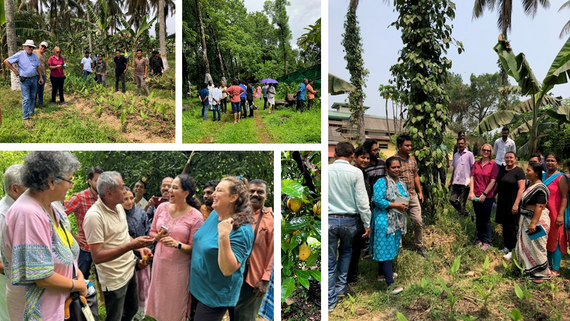 Clockwise from upper left: Multi-cropping of spice plants with fruit trees and plants. Course participants discuss good agriculture practices with farmer Jose Mathew. Gathering around a black pepper vine that is using a tree for support. Yellow nutmeg fruits. Pankaja Panda with farmer Mathew showing Aparna Tatavarthy and Cindy Ford the inside of a nutmeg fruit — the red seed.
Incidentally, the visit to the Guwahati farm just so happened to be on World Food Safety Day, June 7. The U.S. Embassy India created a short You Tube video showing scenes of the training participants’ visit to the spice farm, which underscored the importance of the United States and India working together to provide training to growers and processors to help encourage production of safer spices.
Good Manufacturing Practices (GMP)
GMP training for processors has the same overall focus as GAP training, but instead, the technical focus for this part of the course was geared toward considerations characteristic to a spice processing or manufacturing facility, versus those of a spice farm.
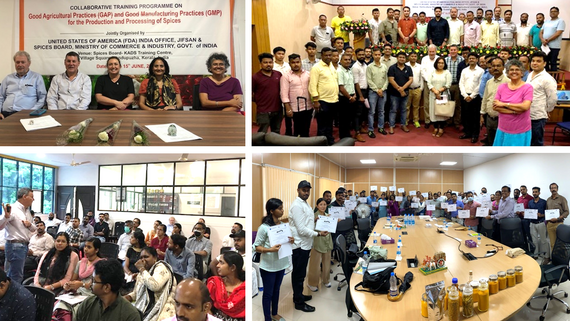 Top row, left to right: Jim Rushing, Juan Silva, Cindy Ford, Aparna Tatavarthy and Pankaja Panda at the GMP training in Thodupuzha. The participating processors, Spices Board officials, FDA Staff, and JIFSAN instructors. Bottom row, left to right: Instructor Jim Silva interacting with participants. Participants with certificates for completing the training.
During the two-day GMP training, students learned about spice safety through the Preventive Controls (PC) Rule. The PC information, which takes a risk-based approach, was presented by FDA instructors, while JIFSAN instructors presented on traditional food facility sanitation GMPs from a spice perspective, covering the following topics:
- Introduction, Hazards in the Spices Processing Environment.
- Good Manufacturing Practices Overview.
- Importance of Worker Training.
- Focus on Pest Control.
- Focus on Cleaning and Sanitation.
- Introduction to Food Safety Preventive Controls.
- Process Controls and Validation.
- Pathogen Control and Microbial Reduction Processes.
- Other Preventive Controls.
- Developing a Food Safety Plan for Your Facility.
To reinforce their learning, on the second day of each training the course participants in Guwahati and Thodupuzha visited a spice processor in their area. The two spice companies both processed turmeric, black pepper, and red chilies. Although the visitors all wore protective gear, including face masks, the pungent aroma of spices filled the air, which made for a difficult visit for those who were not used to the overpowering fumes from the processing of spices…and for a very memorable visit, too.
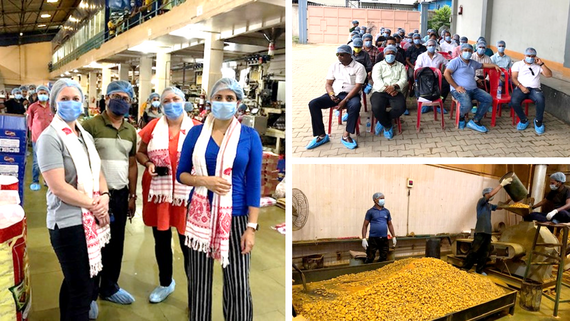 Clockwise from upper right: Course participants ready to enter a spice facility near Guwahati. Processing of turmeric (cleaning is the first step). Sarah McMullen, Dr. Barman, Cindy Ford, and Aparna Tatavarthy pose during the tour of the inside the facility.
Of special note, the participants and instructors were honored to have the U.S. Consul General of Kolkata, Melinda Pavek, at the Guwahati GMP course inauguration ceremony and for the visit to the processing facility. Pavek was delighted to meet the processors and gave each one her business card. She very much enjoyed the visit, having previously worked in supply chain management!
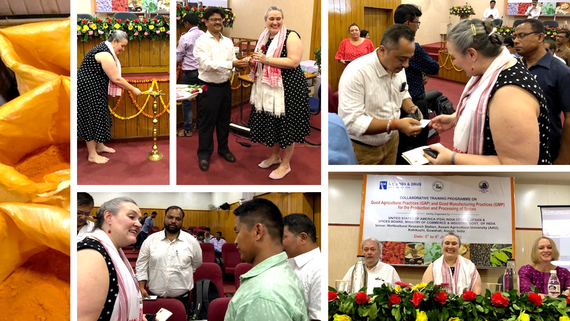 Counsel General of Kolkata Melinda Plavek enjoyed the opening events of the training course: She lit the lamp of wisdom; was welcomed with a customary greeting rose by Dr. Barman of the Spices Board; exchanged business cards and chatted with spices processors. Plavek sitting between Jim Rushing and Sarah McMullen.
People Coming Together
At each of the two trainings, there were approximately 100 growers and processors from seven of India’s northeastern states (Assam, Arunachal Pradesh, Nagaland, Meghalaya, Mizoram, Sikkim, and Tripura), West Bengal, and Kerala, plus 20 officers from the Spices Board and faculty from the Aromatic and Medicinal Plants Research Station (AMPRS). The AMPRS, located near Thodupuzha, is an extension program of the state agriculture university that is tasked with conducting research on tropical and medicinal plants. The bioactive compounds in these plants are used for botanical product development — including products for human healthcare, as well as for pest and disease control in crops.
The training was facilitated by: Dr. Sarah McMullen, Director (FDA India Office); Cindy Ford, Acting International Relations Specialist (FDA India Office); Dr. Pankaja Panda, Senior Technical Advisor for Food (FDA India Office); Dr. Aparna Tatavarthy, Microbiologist (CFSAN Office of Food Safety); and Dr. James Rushing and Dr. Juan Silva (JIFSAN).
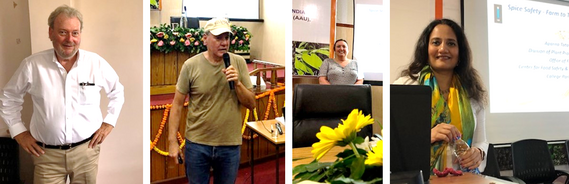 [Left to right] Jim Rushing, Juan Silva, Cindy Ford, Aparna Tatavarthy.
For Further Reading:
LAO hosts Good Regulatory Practices Webinar on Pharmaceuticals
The FDA’s Latin America Office (LAO) hosted a webinar on good regulatory practices (GRPs) on June 15 in collaboration with the Latin America Federation of Pharmaceutical Industry (FIFARMA) and the Brazilian Regulatory Health Agency (ANVISA).
More than 450 people representing 14 regulatory agencies across Latin American and the Caribbean and industry from 29 countries, participated in the webinar. This was LAO’s first event on this topic to focus on the implementation of good regulatory practices for the oversight of pharmaceutical products.
Since regulatory practices vary from country to country, it was important for both industry and regulators to participate at the same time so they could hear the challenges they each confront and why there is a need to establish a more cohesive, regulatory process, according to LAO international regulatory analyst Patty Pineda, who participated in the webinar.
FIFARMA represents 16 research-based pharmaceutical companies and 11 local associations in Latin America and the Caribbean. ANVISA is responsible for the regulation and approval of pharmaceutical drugs, and the regulation of the food industry and sanitary standards in Brazil.
Good regulatory practices represent the core administrative procedures that help governments to achieve a more coherent regulatory system and produce regulations that are more transparent, efficient, effective, and equitable. These practices include consulting with the public about pending regulatory changes, using evidence-based analyses to inform policy choices, and making the most of government-wide coordination to achieve coherent policy implementation.
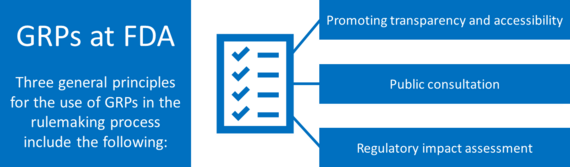 LAO staff served as the moderator for the event. Kristan Callahan and Maria Kuecken from OGPS’ Office of Trade and Global Policy discussed general GRP principles, the FDA’s rulemaking process, developing draft regulations, and conducting regulatory impact analyses. ANVISA’s Natalia Costa, from that agency's International Affairs Office, presented on Brazil’s new legislation known as RDC 741, which sets the framework for considering authorizations by other medical device regulators. Regulation must still follow, however.
Maria Antonieta Roman and Cammilla Gomes from FIFARMA outlined their organization’s role engaging with stakeholders and staying abreast of regulatory activities across the region and how they might impact the pharmaceutical industry. They reminded attendees of why having effective regulatory systems is important and that “GRPs are not what a regulator does, but how a regulator does it.”
“GRPs are not what a regulator does,
but how a regulator does it.”
The webinar included translation options in English, Spanish, and Portuguese, to ensure attendees had equitable access to the presented information.
Promoting good regulatory practices is an area of major interest for OGPS. Two years ago, OGPS hosted a webinar for regulators, with most of the participants from Africa and Latin America.
Last month’s event was promoted via email distribution lists including local regulatory authorities, Pan American Health Organization contacts, and FIFARMA informed industry representatives. LAO officials have already received positive feedback from attendees and interest in future regional collaborations.
White House Launches New Office of Pandemic Preparedness and Response Policy
The White House announced recently the creation of the new Office of Pandemic Preparedness and Response Policy (OPPR). This will be a permanent office in the Executive Office of the President charged with leading, coordinating, and implementing actions related to preparedness for, and response to, known and unknown biological threats or pathogens that could lead to a pandemic or to significant public health-related disruptions in the United States. The OPPR will take over the duties of the COVID-19 Response Team and mpox (monkeypox) Team at the White House and will continue to coordinate and develop policies related to pandemic preparedness and response.
To helm the office, President Biden has selected retired Major General Paul Friedrichs, M.D., to serve as both inaugural OPPR Director and Principal Advisor on Pandemic Preparedness and Response, beginning August 7, 2023. Dr. Friedrichs is currently Special Assistant to the President and Senior Director for Global Health Security and Biodefense at the National Security Council. A board-certified physician, he previously served as Joint Staff Surgeon at the Pentagon, where he coordinated all issues related to health services, provided medical advice to the Chairman of the Joint Chiefs of Staff, and served as medical adviser to the Department of Defense (DOD) COVID-19 Task Force.
 Maj. Gen. Paul Friedrichs (retired), M.D., new Director of the Office of Pandemic Preparedness and Response Policy and Principal Advisor on Pandemic Preparedness and Response.
Dr. Friedrichs oversaw the DOD global patient evacuation system, supporting international medical care as well as numerous interagency domestic and global disaster responses. He also led the DOD Task Force, which developed plans for high-reliability medical principles across the Department and established the Air Force’s first medical analytics capabilities. As the U.S. representative to the North Atlantic Treaty Organization Committee of Military Medical Chiefs, Dr. Friedrichs has worked closely with many of the United States’ closest allies and partners throughout the pandemic and in facilitating medical support to the Ukrainian military.
Under his leadership, the Office of Pandemic Preparedness and Response Policy will:
-
Coordinate the Administration’s domestic response to public health threats that have pandemic potential, or may cause significant disruption, and strengthen domestic pandemic preparedness. This includes ongoing work to address potential public health outbreaks and threats from COVID-19, mpox, polio, avian and human influenza, and RSV.
-
Drive and coordinate federal science and technology efforts related to pandemic preparedness. Specifically, OPPR will oversee efforts to develop, manufacture, and procure the next generation of medical countermeasures, including leveraging emerging technologies and working with the Department of Health and Human Services on next-generation vaccines and treatments for COVID-19 and other public health threats.
-
Continue to leverage the investments in COVID-19 vaccines, tests, and treatments that were made during the height of the pandemic for wide distribution to the public. By leveraging these investments, OPPR will drive future progress in combating COVID-19 and other public health threats.
- Develop and provide periodic reports to Congress. As required by statute, OPPR will develop and provide to Congress a biennial Preparedness Review and Report and Preparedness Outlook Report every five years.
FDA Europe Office Welcomes HHS Secretary as Launch of EU-US Health Task Force Seeks to Expand Cooperation
On May 17, U.S. Department of Health and Human Services (HHS) Secretary Xavier Becerra was welcomed to the U.S. Mission to the European Union (USEU) in Brussels, Belgium, by then FDA Europe Office Director Ritu Nalubola and Deputy Shannon Thor. During their visit to the Mission, Secretary Becerra and his wife, Dr. Carolina Reyes, had the opportunity to meet USEU Ambassador Mark Gitenstein and his wife Libby Gitenstein.
Later that day, the Secretary met with European Commissioner for Health and Food Safety Stella Kyriakides to launch a new task force designed to expand their transatlantic partnership on significant health issues.
The EU-U.S. Health Task Force will focus on three strands: priorities in the area of cancer, global health threats, and strengthening the global health architecture. Along with Department level officials, FDA Europe Office participated in Task Force discussions.
Technical working groups are already being established to address issues within these topics.
“We know that our health at home is connected to the health of people everywhere. This Task Force will build on our existing work together and allow us to take on new challenges, including cancer and other global health issues,” Becerra said.
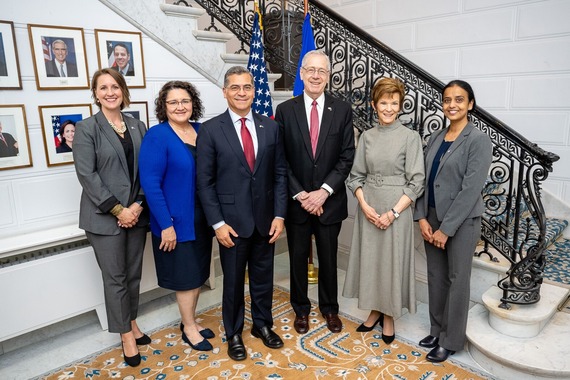 Left to right: FDA Europe Office Deputy Director Shannon Thor, Dr. Carolina Reyes, HHS Secretary Xavier Becerra, USEU Ambassador Mark Gitenstein, Libby Gitenstein, and then FDA Europe Office Director Ritu Nalubola.
Within the context of Europe’s Beating Cancer Plan and the U.S. Cancer Moonshot initiative, the Task Force has established two of the expert working groups that will address various aspects of cancer, one focusing on lung cancer, the other focusing on childhood/young adult cancer. Finding common ground will be key to establishing a new structured dialogue that addresses both cancer policies and research collaborations. The chairs of these two working groups already met virtually on May 10. “I firmly believe that the EU and U.S. working together can bring about significant change for cancer patients and their families,” said Kyriakides.
Discussions on global health threats focus on current and emerging threats such as avian influenza, Marburg disease, and antimicrobial resistance — as well as improving the understanding of conditions caused by COVID-19 and their impact on health, societies, and economies. During their meeting, Becerra and Kyriakides also discussed potential cooperation between the European Health Emergency Preparedness and Response Authority and HHS's Administration for Strategic Preparedness and Response regarding secure supply chains and vaccination programs.
The two health authorities share a commitment to the success of the Pandemic Agreement currently under negotiation at the World Health Organization.
The health challenges of women and girls was also mentioned — both authorities stressing that women’s rights are core values of democracies — and that they are committed to promoting sexual and reproductive health and rights.
ICYMI: FDA Medical Device Export Documents Transitioning to Electronic Format
The FDA’s Center for Devices and Radiological Health (CDRH) will be transitioning to an electronic version of all export documents (certificates and letters) it issues, including the Certificate to Foreign Government, Certificate of Exportability Section 801(a) or Section 802, Non-Clinical Research Use Only Certificate, the Certificate to Foreign Government for Device Not Exported from the United States, and the Export Permit Letter.
Starting January 2, 2024, all export documents will be issued electronically, and paper certificates/letters will no longer be issued or mailed. The change from paper to electronic certificates will improve efficiency in issuing certificates, reduce the time it takes to receive export certificates, and decrease environmental burden.
The upcoming change was announced on July 10, 2023, in a CDRH Letter to Industry and by the Office of Global Policy and Strategy in a Dear International Colleague Letter.
All certificate and letter requests received on or before December 15, 2023, will be issued as paper. Requests received after December 16, 2023, will be issued as paper if the review is completed prior to January 2, 2024.
Manufacturers exporting human medical devices/products from the U.S. are often asked by foreign customers or foreign governments to supply an "export certificate" for products regulated by the FDA. Such certificates may provide information concerning a product’s regulatory or marketing status.
The FDA does not require export certificates to export human medical devices/products to foreign countries. Rather, these documents are intended for use by the importing countries when considering whether to license the product in question for sale in that country.
The electronic certificates (e-certificates) for human medical devices/products will be issued as downloadable Portable Document Format files (PDFs) through the CDRH Export Certification Application and Tracking System (CECATS).
How will this affect the process for submitting a request for a certificate?
The process for certificate submissions will not change. Firms will continue to use CECATS to submit certificate applications.
After January 2, 2024, how will a firm be able to request and access an export certificate electronically?
When an electronic certificate is approved, the applicant will receive an email notification containing instructions on how to access and download the e-certificate. The recipient will be able to access the e-certificate at any time via CECATS.
How can a firm or foreign government validate the authenticity of the certificates?
Foreign governments will be able to verify the authenticity of a manufacturer’s export certificate through the FURLS Export Certificate Validator (FECV) database. The FDA will add a unique Quick Response (QR) code to the e-certificate. Foreign governments can reach the FECV site by scanning the QR code on the e-certificate. The e-certificate is then verified by entering the unique certificate number on the FECV website. The agency anticipates this will enable faster exportation processing from the United States to the importing country.
Will this change the content of the export certificate?
There will be no other changes to the format or content of the certificate. The only change to the appearance of the export certificate will be the addition of the QR code.
If you have any further questions regarding this procedural change, please contact the Center for Devices and Radiological Health at cdrhcecats@fda.hhs.gov.
For more information:
|
|
|
Back to TOP
 Recent communications from OGPS to our international stakeholders (list does not include twice-weekly FDA Roundup summaries), May 24 through July 10.
|
|
|
Back to TOP

|
September 12-13
|
Food Safety Partnership Annual Meeting with SENASICA and COFEPRIS
|
|
September 17
|
World Patient Safety Day
|
|
September 29
|
World Heart Day
|
|
|
Read thought-provoking pieces covering international topics in
From A Global Perspective. |
|
Please follow @FDA_Global. |
|
|
Subscribe to Global Update
Don't miss out on future issues of Global Update or other international news from OGPS. To sign up, click "Manage Subscriptions" in the below footer then follow the prompts and select the "International Programs" box.
|
|
|
|
|