
We write to provide some updates prior to the Summer break
Updated Child Protection Policy (in line with KCSIE 2025 and EYFS 2025)
We will soon be drafting an updated safeguarding and child protection policy, which will be shared with all schools. Along with the policy, we will also be providing quiz materials focusing on the requirements of Keeping Children Safe in Education (KCSIE) 2025 to ensure everyone is up to date with the latest guidelines. This will be communicated to all schools no later than the week ending 22nd August 2024.
Section 11 Safeguarding Audit
We're pleased to announce that we will be launching the new Section 11 electronic safeguarding audit this Autumn. This will be easier for schools to complete and support schools in assuring themselves and others of their safeguarding arrangements.
We understand that this may require some adjustments (from the previous Excel version), so we will be offering additional time for completion. Schools will have until the end of the Autumn term to finalise this audit. Until then, please refrain from using the previous template as it will no longer be applicable.
Hate-Related Incident Reporting
An updated electronic Hate Incident Reporting Form will be available for use by all schools and educational settings across Shropshire from September 2025.
This revised form has been developed collaboratively with input from West Mercia Police, Victim Support, local authority colleagues and representatives from local schools and settings. It is designed to simplify the reporting process and ensure a more coordinated response to hate-related incidents.
The primary aim of the new form is to support the collection of intelligence on hate-related incidents occurring within schools, colleges and settings. This information will help identify trends and enable early intervention, allowing Police and Victim Support teams to offer timely and targeted support to schools, colleges and settings where it is most needed.
By streamlining the process, we aim to make it easier for schools to report concerns and access the support they need to maintain a safe and inclusive learning environment for all.
2025/26 - Training opportunities
Lastly, please note there is a comprehensive list of safeguarding training opportunities for schools on the SLG Early Years and Schools Safeguarding Training and Consultancies | Shropshire Learning Gateway. This will ensure that everyone has access to the necessary resources and training to maintain the highest standards of safeguarding.
Thank you for your continued cooperation and dedication to safeguarding the welfare of our students. If you have any questions or need further assistance, please do not hesitate to get in touch.
Have a lovely Summer break
John Rowe, Emma Harding, Jane Parsons, Charlotte Percival
|

1. Legionella – School Holiday Periods - Flushing of infrequently used outlets – showers, taps WCs.
As part of the suite of measures provided under the School’s Shropshire Council commissioned Legionella risk assessment and monitoring, local building managers/staff are required to flush through any water outlets that are not used at least once per week, for a suggested 2 - 3 minutes on a weekly basis. Flushing should be conducted by personnel deemed to have basic Legionella Awareness and must be done in a manner so as not to create aerosols. These weekly checks should be documented. (The frequency and numbers of outlets to be flushed is determined by building occupancy at varying times, for example, during holiday periods, this would be expected to be increased).
Why?
- Stagnation of water leads to conditions which encourage the Legionella bacterium to grow quickly. Stagnant water tends to be warm and dirty, ideal for high numbers of micro-organisms. This procedure is to be implemented whenever stagnation occurs (e.g. an infrequently used shower or tap; a room which is currently un-occupied; part or all of a building that is temporarily un-occupied).
Where?
- Infrequently used showers and taps are defined as outlets used less than once a week. You should identify these outlets on your site (and document and record the flushing of these within the site logbook )– template attached.
When?
- All infrequently used showers & outlets are to be operated for a suggested 2-3 minutes at least once per week.
How?
- Identify the infrequently used showers & taps as discussed above.
- Run the hot and cold taps at full flow for time suggested.
- Flush all WCs with lids closed following system shutdowns and holiday periods of over one week’s duration should be included when flushing all other water outlets.
- Ensure that this exercise is conducted at least once every week.
- In the case of showers this should be done creating as little aerosol as possible. This can be done by immersing the shower head in a bucket of water before turning the shower on or where possible, removing the shower head, dropping the hose down to ground level. An alternative method is to drop the shower house and tape a bag over the shower head with a corner snipped off. This will stop the aerosols production from the shower head and allow the water to run out in a more controlled manner.
- Maintain a simple record that you have implemented the flushing regime – attached is a basic example. Photocopy the form and use copies for record keeping.
- Following plant shutdowns and holiday periods of over one week’s duration (where weekly flushing to all outlets has not been carried out), thermal disinfection should be undertaken by raising the temperature at the calorifier to 60oC for more than one hour (depending on the size of the water system) and running each outlet for five minutes, working back from the most remote outlet to the water heater. All hot outlets must reach 60oC for at least 5 minutes during the thermal disinfection process. Cold outlets shall be run with the respective hot outlet. Maintaining the weekly flushing of all outlets over any shutdowns or holiday periods removes the requirement for thermal disinfection.
Monthly monitoring by Grahams
- Please can you do everything possible to make arrangements to enable Grahams to access the school to complete their monthly monitoring through the months of July and August. If they are unable to access the school there will be a missing month in the temperature records and this will also result in any scheduled works being delayed.
For more information – Gavin Curley, Statutory Compliance Officer - Asbestos & Legionella, Property Services Group (PSG) - Contact 01743 253157
2. Refurbishment or construction work over the Summer Holidays – Construction Design & Management Regulations 2015
CDM applies to all building and construction work and includes new build, demolition, refurbishment, extensions, conversions, repair, and maintenance.
The CDM 2015 Regulations place an increased responsibility on clients (those responsible for commissioning work) to ensure that the construction/refurbishment project is set up and carried out in a way that adequately controls risks to health and safety.
For many Head Teachers, School Business Managers and School Governors, the implications of Construction Design & Management Regulations 2015 will be unfamiliar. The management of contractors for major construction work in schools is usually not directly managed by members of staff at the school. However, they may need to manage the school site differently during construction works including the security of the school site and the entrances and exits for pupils and visitors.
It is important that school staff know that access to their school is controlled by the principal contractor when construction and maintenance work is being undertaken. Staff are effectively visitors to the site and must report to the principal contractor and sign in and out. Access will be restricted for areas where the work is taking place.
Head teachers should explain temporary signing-in arrangements to staff before end of term where ideally, there should be no access to staff for the duration of projects.
Any refurbishment within a school (unless the building is post 2000) should be subject to an enhanced project specific ASBESTOS SURVEY over and above the standard management survey already held by the school.
Your Building Surveyor/Consultant can advise on all the above and more information is available here from the HSE - https://www.hse.gov.uk/construction/cdm/2015/commercial-clients.htm
3. Hot Work – Application of heat to structures, plant, pipework etc.
The Summer holidays are traditionally a high-risk period for schools as a variety of contractor activity is likely, which may include hot work.
15% of all workplace fires are caused by hot work and these can cause significant disruption. Hot work fires are preventable when the risks associated with this type of work are carefully managed.
Hot Work Policy
- Shropshire Council has its own Hot Work Policy – details below for all Shropshire Council schools.
- Non-Shropshire Council maintained schools are politely reminded of the importance of managing risk in this area where contractors attend site to undertake repairs or projects requiring application or the generation of heat/sparks. Non-Shropshire Council maintained schools are advised to speak to their Insurers about managing this risk.
Shropshire Council Maintained Schools - Hot Work Policy and Awareness Training Update
- The above policy is available via Shropshire Learning Gateway.
- Hot working refers to temporary work activities (by contractors) that involve the application or the generation of heat/sparks during their execution.
- Such activities include cutting, welding, brazing, grinding soldering and the use of blowlamps. Hot Work, in the main, is associated with the application of heat either directly to, or adjacent to plant, pipes, buildings, roof structures etc. These processes create a significant fire risk and must be formally managed.
-
This means that in most situations the premise/school must issue contractors with a daily Hot Work Permit, as explained in the policy.
- Failure to follow the controls identified in the policy has potential to invalidate the Council’s Buildings Insurance.
Hot Work Awareness Training
- Hot Work awareness training is available via Leap into Learning.
- The awareness session is aimed at staff responsible for managing contractors on site and would be appropriate for Head Teachers, Business Managers, Site Managers/staff etc.
- The aim of the training is to highlight the risk associated with hot works and explain how to manage and issue Shropshire Council Hot Work Permits to contractors.
4. Asbestos Management Plan – Reminder
Where schools contain known asbestos containing materials (ACMs) as identified in the property’s Asbestos Register/Survey, schools are reminded of the need to manage the risk associated with these ACM’s both in and out of term time (with Summer Holidays near). Any Summer refurbishment work will likely require an enhanced and additional asbestos survey relevant to the area – known as a refurbishment survey.
-
Please complete/review the template attached(revised March 2025) and keep a copy of this with your Asbestos Register. The document allows the school to illustrate how it is managing the risks associated with managing ACMs.
- Use the template signing in sheet for contractors contained in this template – Not the tabular A4 sheet historically used. (Print off numerous blanks of this template signing in sheet (in colour) and place in front of register)
- Visually check accessible ACMs identified in your registers for damage and record on the template given in the attached. Mainly looking here at samples in high traffic areas where damage or disturbance is possible. Samples should be checked annually by the asbestos contractor undertaking the annual re-assessment and these interim local checks are advised.
- Ensure staff receive asbestos awareness training and relevant school staff have a good knowledge of the contents of the Asbestos Register. Responsible Persons (Heads) and other staff depending on their roles require regular asbestos awareness training. Contact the H&S Team for more information.
- Ensure signing in procedures for contractors includes presentation of the Asbestos Register – think about out of school hours and holiday periods and how this achieved. Any contractor likely to disturb the fabric of the building must see and sign this register.
- For more information – Gavin Curley, Statutory Compliance Officer - Asbestos & Legionella, Property Services Group (PSG) - Contact 01743 253157
|

To support the transfer of secondary school headline data, we would be grateful if secondary colleagues could use the attached templates.
These have been amended for this year to streamline the process.
KS4 Template
KS5 Template
Thank you for your assistance.
When complete, these should be returned to emma.price@shropshire.gov.uk
|

Please could the attached be shared with staff in maintained schools. This is particularly important as we are about to start the peak holiday season but also due to the financial impact for some staff if they are re-enrolled and not aware.
Maria Evans
HR Admin & Payroll Manager - Enabling Services
01743 252780
|

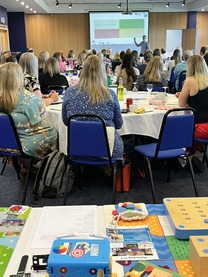
Thank you to everyone who attended the our first Inclusive Practice Conference last Friday at Shrewsbury Town.
|
 |
|
It was terrific to see the event so well attended and thank you to everyone who took part in providing workshops and presentations.
If you didn't have an opportunity to complete the evaluation, you may do so here. We would value your feedback to inform future events.
|
Exploring a Primary Teacher Degree Apprenticeship
You may have seen that the DfE have recently updated their guidance about the teacher degree apprenticeship (TDA) which is a new route into the teaching profession. Successful candidates will gain an undergraduate degree and qualified teacher status (QTS) while working as an apprentice in a school. Wolverhampton University are exploring the potential to offer a Primary Education Teacher Degree Apprenticeship with QTS and are looking to gain feedback from schools to assess levels of interest for this type of programme in the local area. They are asking for 5 minutes of your time to answer a few questions so that they can review if there is demand for the primary teacher degree apprenticeship (TDA) as a new route to teacher training. Please see the link to the form below:
If you have any questions you can contact Emma Luckhurst, Head of Primary Education at Wolverhampton University - Emma.Luckhurst@wlv.ac.uk
Further details about the TDA are on the Get into Teaching Website:
I would like to invite you or representatives from your schools to join our Children and Young Peoples Asthma Clinical Network Education subgroup, who have been tasked with reviewing the current Asthma Friendly School Scheme process and accreditation criteria.
This is part of the work we are undertaking to support the delivery of the National CYP Asthma Care Bundle which is a framework that sets out the blueprint of evidence-based interventions to help children, young people, families and carers, to control and reduce the risk of asthma attacks and to prevent avoidable harm.
We would really like to work in collaboration with schools to review and relaunch this scheme, with the view to making it more accessible and user friendly for all.
We have set up the first meeting which will take place on 23rd September at 3.00pm over Teams. If you would like your school to attend please contact Helen.white12@nhs.net. If you can’t attend this particular meeting, but would still like to join the group then please contact helen.white12@nhs.net and we will add you to the distribution list.
It would also be useful to know if there is a particular time of day or day of the week which would best work for any future meetings, so that we can ensure schools get the opportunity to be involved in this piece of work.
Many thanks
Helen White
Development and Service Redesign Manager
NHS Shropshire, Telford and Wrekin

I'm pleased to announce that the initiative that the majority of Shropshire schools were involved in, is back. Still promoted by Shropshire Council but now managed and supervised by 'TrustEd Schools' and 'Empower Multi-Academy Trust'. West Mercia Police are continuing their support and involvement too.
For the few schools that may not be familiar with the initiative, it is a security/safety/safeguarding process, established in 1996. It includes an accreditation for which schools receive a certificate and a striking sign, all of which is part of promoting a pro-active approach to looking-after staff, pupils/students and visitors.
Recently, all schools should have received an email inviting them to commit to a Safer School package of their preference. There are five options, each with its respective cost. All options enable a school to maintain or achieve Safer School accreditation.
Both Empower MAT and TrustEd Schools are operating on a non-profit making basis.
Thank you to the schools that have already committed their involvement, and I look forward to working with you. The plan is to resume Safer Schools this Autumn, 2025.
Thank you
Ian Bartlett
Crime Prevention Officer
TrustEd Schools and Empower Multi-Academy Trust.
|
 |
|
Richard Smith is providing a range of courses in the Autumn term.
1. KCSIE annual online safety update for DSLs: Tuesday 16th September 9.30 - 11.00: £79 (online)
2. KCSIE annual online safety update for DSLs: Tuesday 16th September 1.30 - 3.00: £79 (online)
3. Computing Coordinator Update (Autumn): Wednesday 1st October 1.30 - 3.00: £79 (online)
4. Computing Coordinator Update (Autumn): Wednesday 1st October 4.00 - 5.30: £79 (online)
5. Internet Safety briefing for Governors: Wednesday 15th October 5.30 - 6.30: £79 (online)
Click here for a booking form
|
|