Message from Executive Director Ben Cannon
Greetings and happy holidays! This has been a year of change and complexity, and through it all, the postsecondary education and workforce system continues to spark hope, innovation, and prosperity for Oregonians and their communities. In the coming year, we are looking forward to partnering on Governor Kotek's recently-announced Prosperity Roadmap, an economic development strategy for Oregon that includes an emphasis on fostering workforce development opportunities for living-wage jobs.
Our recent Strategic Plan is also driving our work at HECC for increased responsiveness to meet Oregon's workforce and community needs, intentional actions to foster equity and belonging for all, and an increased focus on postsecondary education's role in economic development. You can read about some of the implementation of our Strategic Plan here.
I am particularly excited that we are launching a process to consider updates to our state postsecondary education attainment goal, starting with a collaborative process with state and national partners described in this newsletter. The 40-40-20 goal, which has been a foundation to our statewide work since the HECC was first formed, was set for 2025 and beyond, and we are delving into what a new goal could mean for Oregon. State goals not only help us measure progress; they can also help states galvanize support and serve as a north star to guide education policies and investments to better serve our state for years to come.
In addition to other updates in this newsletter, we share news of two leadership appointments on our executive team here at the HECC. I am excited for the leadership of Kerry Thomas, now serving as interim director of the Office of Student Access and Completion (OSAC), and Julia Pontoni, who will soon be leading the Future Ready Oregon program among her other leadership roles as director of the Office of Workforce Investments (OWI). I look forward to the continued great work of these teams. I also want to take this opportunity to thank two outgoing HECC directors who have made incredible impacts in these roles. Juan Báez-Arévalo, the previous OSAC director, served the HECC for over a decade as director of our financial aid and access programs at OSAC and previously as director of our private postsecondary programs. Jennifer Purcell has led the historic Future Ready Oregon education and workforce investment for three years, and will be leaving the Future Ready program director position in the beginning of the new year. I am thankful that we can build on their extensive contributions to Oregon and Oregonians.
Thank you for staying engaged, as always, and warm wishes for a wonderful new year.
Legislative Timeline
Legislature Prepares for Potential Budget Cuts in 2026 Legislative Session
Higher education and workforce training face the potential of state budget reductions to the current biennial budget during the 2026 legislative session. In October, the Legislative Fiscal Office (LFO) asked the HECC and other state agencies to submit an approach to making 2.5 and five percent reductions to our 2025-27 budget. The HECC's assignment was to model and present the impacts of cuts for the Legislature's possible consideration during the February 2026 session. Since the HECC responded to this exercise, there has been a more favorable state revenue forecast; however, there is one additional revenue forecast that will be made in February, which the Legislature will use as a basis for their budget decisions.
As requested, HECC provided budget reduction options to LFO and presented these to the Joint Interim Committee on Ways and Means Subcommittee on Education with other agencies on November 18, 2025. The HECC emphasized that cuts would be deeply challenging at a time when many institutions are already grappling with budget shortfalls. As a $4.4 billion agency that dedicates almost all of its funding to colleges, universities, workforce organizations, and students, the modeled cuts would inevitably impact access, opportunity, and support for learners seeking postsecondary education and training. The HECC response to the LFO request, including the introductory letter, is available here.
Strategic Planning for 2027 Session
The HECC is responsible for advising the Oregon Legislature and the Governor on higher education policy and for developing budget recommendations for public postsecondary education and workforce training in Oregon. During each legislative session and continually, we work closely with many of our partners on the legislative and budget development process. You can learn more about the typical budget development timeline on our public website.
The HECC staff play a key role in developing the legislative concepts (LCs) and policy option packages (POPs), which HECC ultimately pursues during legislative sessions. The HECC is already in the early stages of planning for 2027 legislative concepts and budget proposals, having started an internal idea generation and collection period. More information will be available in early 2026, when the Governor's office usually releases agency expectations for policy and budget proposals, and HECC begins the process of sharing draft concepts with partners.
Shortly after the start of the new year, the HECC will develop a list of proposals for further consideration and engagement with external partners, leading into a period of final consideration over the summer and fall.
Oregon Joins Multi-State Collaborative and Launches Process to Redesign State Postsecondary Education Goal
The HECC has started a collaborative process to develop a proposal for a new approach to Oregon’s postsecondary educational attainment goals, aiming for a new draft goal for consideration by June 2026. We are excited to announce that in November, Oregon joined 12 other states in Lumina Foundation’s State Attainment Collaborative effort to help Oregon update its state postsecondary attainment goal. Oregon’s active engagement in this multi-state effort will help us learn and benefit from the latest developments in this work across the nation.
For more than a decade, Oregon has been working toward two state education goals: the ambitious statewide 40-40-20 goal for young adults, and the more recently adopted adult attainment goal, focused on credential attainment. In addition, there are numerous other goals in Oregon statute for the HECC related to economic, workforce, cultural, civic, and community goals. The HECC and partners plan to revisit current statutory goals, and to develop a proposal to replace Oregon’s current 40-40-20 education attainment goal, which has an end date of 2025.
As part of Lumina Foundation’s State Attainment Collaborative, we will be working with education, business, civic, nonprofit, and policy leaders from across Oregon and other participating states — Arkansas, Illinois, Indiana, Maryland, Missouri, Nevada, Ohio, Pennsylvania, Tennessee, Utah, Washington and West Virginia. Together, as this group considers state goals, they are exploring what makes a credential truly valuable, and how a goal can drive policies and programs to better support today’s learners.
In addition to benefiting from the multi-state collaborative, the HECC has recently convened an Oregon steering committee to advise staff on Oregon’s new goal. The committee includes representatives from the Oregon Legislature, community colleges, universities, K-12 education, workforce partners, economic development leaders, business and community leaders, partner agencies, and others.
Julia Pontoni, director of the HECC Office of Workforce Investments, says, “We are excited to benefit from national partners as well as state and community experts in this initial phase of planning and collecting input. Thank you to Lumina and to the steering committee members who are stepping up to collaborate on this exciting work. Drawing from many diverse perspectives will be so important to designing a meaningful goal that drives positive results for Oregon."
Tentative Timeline and Processes: The Steering Committee and Lumina work recently started and will continue through the winter and spring 2026 as the HECC works toward a proposal. As the project advances, the HECC will share opportunities for public input and engagement, including public meetings of the HECC where public comment is always welcomed. The HECC and the Workforce and Talent Development Board would likely consider endorsement of any new goal in June 2026, and any statutory changes, if proposed, would be submitted for legislative consideration in the 2027 Legislative Session.
Total Fall Enrollment Across All Public Institutions Shows Increase
Oregon saw a 3.7 Percent Increase at Community Colleges and a 0.6 Decrease at Public Universities, Resulting in a Combined 1.5 Percent Increase Across All Public Institutions
We are pleased to report that the total number of students enrolled at Oregon community colleges and public universities rose 1.5 percent overall in fall 2025 compared to 2024, with differences by sector and institution. The HECC Office of Research and Data collects fall fourth-week enrollment data from Oregon institutions and reports the fall enrollment snapshot under our Featured Research page to keep partners informed on recent enrollment trends.
Please note that while the fall fourth week reflects our most recent statewide enrollment data, this data reflects a snapshot in time for fall term, so it does not reflect the final enrollment total for the full academic year. The HECC also reports enrollment data for the full academic year through its data dashboards.
In the fourth week of fall term, the number of learners at community colleges was 94,898, and is higher in 2025 than in 2024, rising 3.7 percent. Enrollment rose at ten of the 17 colleges. Statewide enrollment has risen since fall 2022, gaining significant ground against the large drop in enrollment that followed the COVID-19 pandemic. The number of students is now 14.5 percent lower than in fall 2019.
At Oregon's seven public universities, the number of public university learners was 100,205 this fall, slightly lower in 2025 than in 2024, falling 0.6 percent. This slight decline compares to slight increases since fall 2021 but is consistent with generally stable enrollment over the past decade. Enrollment rose at three of the seven universities. The number of admitted university undergraduates is 0.1 percent lower in 2025 than in 2024; the number of admitted graduate students is 1.1 percent lower. With the number of students 1.1 percent lower in 2025 than in 2019, enrollment at universities remains close to pre-pandemic levels.
The data featured here is headcount enrollment; the summary also has full time equivalent student data and information on enrollment by institution.
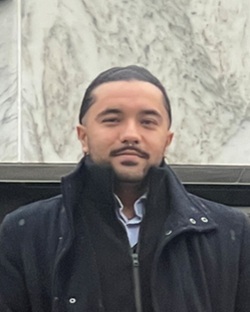
Welcome to Commissioner Davis-Boucher
We are pleased to welcome Commissioner Demetrius Davis-Boucher, whose nomination by Governor Kotek was confirmed by the Oregon Senate in November. Commissioner Davis-Boucher serves in the university student position on the Commission.
Demetrius Davis-Boucher is a first-generation college student at Southern Oregon University, majoring in Business Administration and minoring in Digital Cinema. Demetrius has served on SOU’s Tuition Advisory Committee and as co-chair of the Native American Student Union (NASU), and he currently serves as vice president of the Black Student Union and Treasurer of NASU. He has a professional background in hospitality, human resources, and business development, and works as a resident assistant with university housing. Demetrius’s civic engagement includes federal political campaign volunteering, City Halls participation, and Native American Tribal Heritage Celebrations and Restoration Powwows.
The university student position was previously held by Natalie Arnot. The HECC thanks former Commissioner Arnot for her dedicated service.
|
Transfer Updates
Commission Approves Transfer Vision and Report
The HECC and public institutions, through the Transfer Council, are working together to streamline the transfer of credits between Oregon’s 17 community colleges and seven public universities. In December, the Commission approved and submitted to the Oregon Legislature its annual report on postsecondary transfer, available here.
Also at its December Commission meeting, the HECC approved a public-facing vision statement for transfer that is intended to guide the next phase of transfer work in Oregon and affirm the HECC’s commitment to a seamless student-centered transfer system. In addition to the vision statement, the Commission reviewed a proposed four-phase work plan to operationalize this vision. The largest focus area is centered on improving statewide alignment, which will require legislative action in 2027 to achieve.
Our Vision
-
We imagine an Oregon where transferring between colleges is simple, clear, and fair for every student. A strong transfer system should:
- Let students transfer credits without losing time or progress toward their bachelor’s degree
- Lower costs by preventing students from having to retake classes
- Make sure all public colleges and universities treat transfer credits consistently
- Give students and families clear, easy-to-find information about how transfer works
- Align common courses and general education requirements so transfer paths are easier to follow
- Build trust and confidence between students and institutions
New Transfer Agreements
We are pleased to announce that ten courses were recently approved for Common Course Numbering (CCN) in Biology, Chemistry, and Spanish. These were added to the three History courses approved in June of this year. With recent approvals, Oregon now has a total of 50 common lower division courses that are aligned and approved for Common Course Numbering to help students transfer credits between all public institutions in Oregon.
- Institutions can find details on these agreements, including effective dates and catalog requirements, on our CCN web page. New courses added in 2025 include:
We are also pleased to announce the recent approval of a new Major Transfer Map (MTM) in Communication. With the recent approvals, Oregon now has nine major-specific transfer degrees that transfer coursework to count toward a bachelor’s degree in a specific major.
- Institutions can find details on these agreements, including effective dates and catalog requirements, on our MTM web page.
Students can learn how to take advantage of active agreements under Tools for Transfer here. Students can easily identify available CCN courses in catalogs because they all end in a Z.
Save the Date for the Oregon Talent Summit on May 19, 2026
We are excited to announce that the Oregon Talent Summit, hosted by the Workforce and Talent Development Board (WTDB) in collaboration with HECC, will be held on May 19, 2026, at the Salem Convention Center. Please save the date and share this with your networks to encourage statewide participation. You can also join the Oregon Talent Summit mailing list, available on the WTDB website, to stay informed on this event.
Since 2018, the Talent Summit has been a cornerstone event for shaping and advancing Oregon’s workforce and education strategies, bringing together leaders from business, education, community-based organizations, state agencies, policymakers, and others from across the state. This upcoming Summit will be a valuable opportunity to:
- Explore emerging trends in workforce development and education,
- Identify shared challenges and opportunities across regions and sectors,
- Define actionable strategies to strengthen Oregon’s talent ecosystem, and
- Share perspectives from employers, educators, community organizations, and public agencies.
We encourage you to participate and share your voice and perspective to help shape a resilient, equitable workforce system for all Oregonians! More details on the agenda, speakers, and registration will be shared in future updates.

Kerry Thomas Appointed to Serve as Interim Director of HECC Office of Student Access and Completion
Kerry Thomas, current program manager of Future Ready Oregon, has been appointed as the interim director of the HECC Office of Student Access and Completion (OSAC), starting Monday, December 1, 2025. The interim assignment is expected to last approximately six months, during which the HECC will conduct a search for the permanent director.
As Future Ready Oregon program manager, Kerry Thomas has helped to lead this historic program. She has set up systems to encourage the development and support of new partners, navigate complex rules and reporting requirements, and has helped recruit, train, and support a cadre of talented professionals. Kerry Thomas came to HECC several years ago from Oregon State University (OSU), where she served in multiple roles, including head academic advisor, first-year experience coordinator, and academic intervention lead for OSU’s Student Advising Office. She joined the HECC first as an OSAC college and career access coordinator, and moved to the HECC Office of Workforce Investments to become a workforce program analyst before her Future Ready role.
Ramona Rodamaker, deputy director of the HECC, says, “We are thankful that Kerry Thomas is willing to serve in this important interim director position. With knowledge of financial aid, strong relationships with OSAC staff and partners, and strong leadership skills, Kerry is well qualified for this important role, and we are confident that OSAC will continue to excel during this transition.”
|

Julia Pontoni, Director of the HECC Office of Workforce Investments, will also lead Future Ready Oregon starting in 2026
Julia Pontoni, Director of HECC’s Office of Workforce Investments, has been appointed to lead the Future Ready Oregon work, bringing the Future Ready team into the Office of Workforce Investments (OWI) beginning in January 2026. As director of OWI, Julia Pontoni leads programs and investments that ensure job-seeking Oregonians statewide have the knowledge, skills, and work-related training they need to secure self-sufficiency wage jobs and meet the needs of Oregon employers. She previously held several other positions at the HECC focused on STEM education, adult educational attainment, and transfer between community college and university. Before joining the HECC, she worked in Washington, D.C. for eight years, most of which she spent as a staffer in the U.S. House of Representatives; she also worked at the National Head Start Association and for the U.S. Department of State.
Ramona Rodamaker says, “In addition to work as director of OWI, Julia Pontoni has been engaged in Future Ready since it began, has positive relationships with industry leaders, as well as the state’s employment and training providers. She is uniquely positioned to lead the Future Ready activity in 2026, and to weave the best practices from this historic investment into HECC’s other workforce, education, and training systems moving forward.”
|
Current and Future Students are Encouraged to Apply Now for 2026-27 Scholarships and Grants at OregonStudentAid.gov
Applications are open for public grants and more than 600 private scholarships, including a number of new scholarship funds
In a recent press release, the HECC encourages all Oregonians pursuing postsecondary education in 2026-27 to apply for grants and scholarships through the state website, OregonStudentAid.gov. In November, the HECC Office of Student Access and Completion (OSAC) officially opened the OSAC Scholarship Application for the next academic year. The State of Oregon has made accessing scholarships easy for Oregon students with its central site for more than 600 scholarships. Through the application, students can apply for many awards at one time.
Explore more than 600 scholarships, including newly added funds, in the full scholarship catalog here. Those who submit their scholarship application by the early bird deadline of February 17, 2026, will have the chance to win a $1,000 scholarship, and the final deadline is March 2, 2026.
New and returning students are also encouraged to complete the key forms that determine eligibility for need-based aid: the Free Application for Federal Student Aid (FAFSA) or the Oregon Student Aid Application (ORSAA), which are open for the 2026-27 academic year. Many scholarships, if they are need-based, also require FAFSA or ORSAA completion.
We are pleased to report that in addition to the hundreds of ongoing scholarships, there are numerous new scholarship funds available to students. Read the November OSAC newsletter for a summary of the new scholarships available. New funds include scholarships for students in specific fields such as health sciences, veterinary education, STEM fields, natural sciences, education, and more. They also include funds focused on students with certain backgrounds including first-generation students, learners who are returning to postsecondary education after an absence, students overcoming significant hurdles, and students from specific Oregon schools or regions.
Join a webinar to get help with the application process: OSAC offers a number of resources for students, families, educators, and community members to help with the financial aid process and with college and career planning.
Future Ready Oregon Grants Support a Breadth of Services Led by Community-Based Organizations
Community-based organizations (CBOs) are key partners in Oregon's implementation of the historic Future Ready Oregon investment, offering a breadth of innovative services that support Oregon’s diverse learners and workers. Some of their many activities were featured in the latest issue of HECC’s Future Ready Oregon newsletter; we are pleased to share highlights here.
Forty-four CBOs have received one or more Future Ready Oregon grant awards from the HECC, representing a combined total of $48.8 million – more than any other organizational type. Additionally, many of HECC’s other Future Ready Oregon grantees collaborate with CBOs on their grant-funded initiatives.
CBO grantees such as Centro Cultural de Washington County advocate for communities as they engage and collaborate with other organizations within the ecosystem. CBOs such as Northeast Oregon Network conduct outreach, recruit community participants for workforce education and training programs, and provide enrollment supports and advising services. Others such as Oregon TRIO Association support career awareness, exploration, and advancement opportunities.
With their in-depth connections to communities, a number of HECC’s CBO grantees, such as Hacienda CDC, focus on developing bilingual, bicultural curriculum and programs. Some CBOs conduct training directly, including earn-and-learn, non-credit, and hands-on opportunities. Others coordinate registered apprenticeships and bring training opportunities to communities through, for example, mobile delivery. Finally, CBO grantees also support participant retention in education and employment through services that include stipends, wages for work experience, wraparound services, culturally responsive programming, and strategies for career advancement. Read more about CBO project examples in the full update here.
Upcoming HECC Reports
The HECC has numerous ongoing legislative reports that are due at the end of the calendar year, and we will report on those in 2026 newsletters. This includes a report on Future Ready Oregon and on Credit for Prior Learning.
In addition to ongoing legislatively-required reports, a budget note in the agency's 2025-2027 budget bill directed the HECC to develop a report on the issue of cost efficiency at public college and universities. After reviewing developing drafts at public meetings this fall and consulting with partners, we expect that the Commission will approve and submit this report in early 2026.
Recent HECC Reports
Transfer Report
The HECC has released its annual report on postsecondary transfer, available here. ORS 350.395 through 350.432 directs the HECC, in collaboration with Oregon's community colleges and public universities, to simplify transfer pathways and improve statewide alignment of coursework. The 2025 Postsecondary Transfer Report details progress on aligning curricula through Core Transfer Maps (CTMs), Major Transfer Maps (MTMs), and Common Course Numbering (CCN).
Administrative Rules report
The HECC has published its annual report on Oregon Administrative Rules, available here. ORS 183.403 directs state agencies to provide a report to the Legislative Assembly that details the number of permanent rules that the agency has adopted, amended, or repealed, and describes the need for any temporary rules that were adopted, amended, or suspended during the preceding calendar year. In 2025, the HECC permanently adopted, amended, or repealed 44 rules and temporarily adopted, amended, or suspended seven rules.
Key Performance Metrics Report
For each executive branch agency, the Legislature approves key performance metrics (KPMs) related to the agency’s mission. The HECC has 16 KPMs that address the factors underlying the state’s educational attainment goals. They include college going, affordability, outcomes, and attainment of postsecondary education and training. The Office of Research and Data calculates these measures and tracks their progress. We will report in more detail on these metrics in a future issue of this newsletter.
Report to the Oregon Legislature: Higher Education Employees, 2025
The HECC has released its annual report on employment at Oregon's public higher education institutions, available here. Each year, HECC conducts a review of employment at Oregon's seven public universities and 17 community colleges. The report includes the total number of employees, average salaries, student-to-employee ratios, eligibility for health care and other benefits, and other employment data for full- and part-time employees in three categories: administrators/managers, classified/professional non-teaching staff, and faculty. This year's report shows five-year trends, and, for the first time, includes data on student employees.
Report to the Oregon Legislature: Tuition Equity, Nonresident Veteran and Dependent Fee Remission, and Qualified Veteran Dependent Waivers at Oregon Public Universities, 2025
The HECC has released its annual report on tuition remission programs at Oregon public universities, available here. This report examines the participation in, and the financial impact on universities of, three tuition remission programs serving overlapping groups of Oregonians: the Tuition Equity program, the Nonresident Veteran and Dependent fee remission program, and the Qualified Veteran Dependent full tuition waiver program. Together, these three programs have served an increasing number of students over the past decade, with 1,571 students benefiting in 2023-24 (about 2 percent of Oregon students). Read other findings in the full report.
Report to the Oregon Legislature: Oregon Conservation Corps Annual Report, 2025
The HECC has released its annual report on the Oregon Conservation Corps program, available here. The Oregon Conservation Corps (OCC) is a youth-focused wildfire risk reduction and workforce development initiative that has been operating for nearly four years. OCC engages youth from underserved communities in fire fuels mitigation efforts while providing job training and relevant certifications. From July 2024 through June 2025, the Oregon Conservation Corps program served 428 youth participants, and disbursed $11.3 million in grant funds. Read other findings in the full report.
Academic Program Updates
New Programs
At recent public meetings (October 8 and November 6), the HECC approved the following new academic programs and/or new program locations at the public community colleges (CC) and universities. View details in Commission materials here.
Community College Program Approvals:
- Treasure Valley CC Facilities Maintenance Specialist, Associate of Applied Science (AAS); Treasure Valley CC: Advanced Energy Systems, Associate of Applied Science (AAS)
- Columbia Gorge CC: Integrated Agriculture Science and Technology, Associate of Applied Science (AAS)
- Chemeketa CC: Emergency Medical Services, Associate of Applied Science (AAS); Chemeketa CC: Emergency Services, Less-Than One-Year Certificate of Completion (CC0)
Public University Programs Approvals:
- Oregon State University: OSU Bachelor of Science in Computer Science – Applied (BS); OSU Bachelor of Arts + Bachelor of Science in Sports Business (BA+BS); OSU Bachelor of Science in Data Science (BS)
Notices of Application for Proposed Community College BAS degrees
At the December 11 meeting of the HECC, the HECC received notices of application for Bachelor of Applied Science (BAS), Education degrees from five community colleges. These submissions are Phase Two of a three-phase program review process described on the HECC website here. Notifications of Notices of Application were submitted by: Columbia Gorge Community College, Chemeketa Community College, Linn-Benton Community College, Rogue Community College, and Treasure Valley Community College.
|