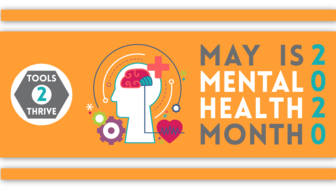
 Every May is Mental Health Awareness Month, and with the COVID-19 pandemic this year it’s even more important to take care of our own mental health and support those around us.
For many, the pandemic has meant worry about their health, their community, those most at risk and the future. At the same time, many people are feeling isolated, with social distancing keeping friends and families apart. For people who may already have been facing challenges to their mental health, this added stress and anxiety may be that much more harmful.
You can read the press release at the DHS Website.
Go to Mental Health America for more information Mental Health Month.
The Minnesota Department of Human Services, Behavioral Health Division has recently launched a new 1115 Substance Use Disorder System Reform Demonstration Project webpage.
The webpage includes:
- An overview of the project
- CMS goals and objectives
- Information on how to enroll
- Updates on trainings
In March 2018, DHS submitted its substance use disorder (SUD) demonstration request to CMS as part of SUD reforms enacted by the state legislature in 2016. Minnesota’s demonstration request received approval from CMS in late June, 2019; however, the state is not eligible for federal funds until approval of an implementation plan required by CMS. The Minnesota Substance Use Disorder Section 1115 Waiver Implementation Plan was submitted to CMS in September, 2019 and DHS is awaiting approval.
Qualified providers electing to participate will be required to deliver services in accordance with ASAM standards and maintain patient referral arrangements to ensure access to a full continuum of SUD treatment services including medication-assisted treatment.
Find out more at the 1115 Substance Use Disorder System Reform Demonstration Project webpage.
Building resilience in our families and communities, improving trauma-informed care and promoting community health norms was the topic of an online training, April 21, 2020, hosted by the Behavioral Health Division of DHS.
The morning session focused on learning and engaging in the spirit and science of HOPE (Healthy Outcomes from Positive Experiences). During the afternoon session, participants worked on developing personal and organizational action plans based on changing norms and putting HOPE into action.
Speakers included Dr. Robert Sege, MN, PHD, director, Center for Community-Engaged Medicine, and Dr. Jeffrey Linkenbach, MS, EdD, director, The Montana Institute.
365 people participated during the event from many different community sectors, including treatment centers, adult and children’s mental health providers, school staff, and more, plus staff from over 40 counties, three state departments and four health services.
“WOW! What a great day! Thanks you so much for what was shared and your commitment to your work in this area.”—training participant feedback
 The Behavioral Health Division is continuing to work to support policy changes to allow providers the flexibility needed to continue needed services while helping protect the health of staff and clients.
Under the Governor’s Emergency Executive Order 20-12, the Minnesota Department of Human Services has temporary authority to waive or modify requirements during the COVID-19 pandemic. Waivers or modifications to state requirements have included:
For a complete list of waivers and modifications, see the DHS website.
In addition, the Behavioral Health Division is offering some grantees flexibilities that it wouldn’t otherwise provide. For more information about these grantee flexibility changes and about behavioral health waivers and modifications, go to the Alcohol, drugs and addictions, Children’s mental health, or Adult mental health COVID-19 pages.
The Behavioral Health Monthly newsletter comes from the Behavioral Health Division at the Minnesota Department of Human Services. We welcome your feedback!
For more information about Behavioral Health Services in Minnesota, visit:
Children’s mental health / Adult mental health / Substance use disorder
Change what emails you receive now from DHS
|