IN THIS ISSUE
- Pine Log returns
- Wild sandhill beetles
- Big on black walnuts
- Marking Moody's 25th
- Odd eagle is actually OK
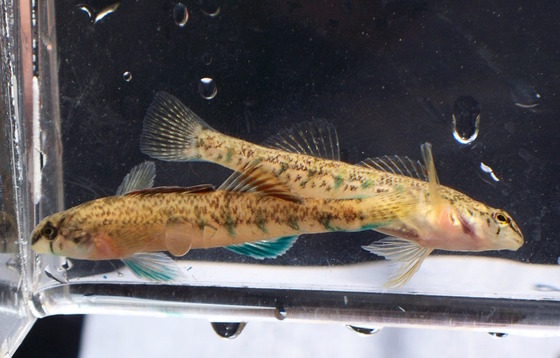 Cherokee darters, one of the federally listed species found at Pine Log (Brett Albanese/GaDNR)
DNR and partners announced an agreement last week to re-establish Pine Log Wildlife Management Area and protect over 14,000 acres that made up most of the former northwest Georgia WMA prized for outdoor recreation, rare wildlife and imperiled habitats.
DNR Commissioner Walter Rabon said the pending acquisition has been one of the agency’s top conservation priorities. He also thanked supporters including Aubrey Corp. – the Neel family-based business that owns the land – local governments, state legislators and others.
“Over the last four years, we never lost sight of the goal to acquire Pine Log and permanently secure it for public recreation and wildlife conservation,” Rabon said. “But we also made it to this point because the Neels and Bartow and Cherokee County leaders, along with many others, shared that focus and perseverance.”
The newly named The Neel Family-Pine Log WMA will cover 14,640 acres in Bartow and Cherokee counties, the largest contiguous tract of private forest in north Georgia. The property harbors over 30 species and habitats considered conservation priorities in Georgia’s State Wildlife Action Plan, from Cherokee darters to white fringeless orchids and ridgeline stands of montane longleaf pine.
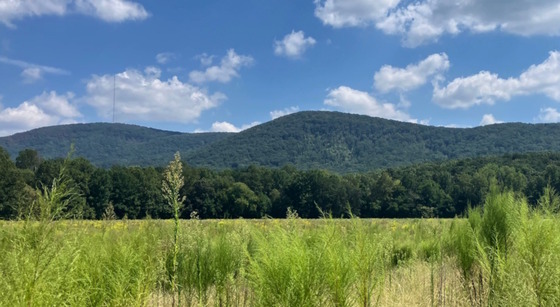 DNR plans to open The Neel Family-Pine Log WMA to the public in spring 2027 (Brent Womack/GaDNR)
Only an hour from Atlanta and part of a fast-developing area, the WMA will again serve as a haven for hunters, anglers, hikers and birders, while providing a wildland link connecting the Appalachian Mountains to the Dugdown conservation corridor that spans west Georgia to reach Talladega National Forest in Alabama.
Aubrey representatives Jim Ramseur and Samantha Wheeler with Ramseur Real Estate Advisors said the agreement “reflects the strength of partnerships at every level” and the vision and leadership of former Aubrey President Bob Neel, “whose desire was to continue the family’s legacy and preserve the greenspace … for future generations to enjoy.”
DNR leased Pine Log as a WMA from 1977 until 2023. The plan is to re-open it to the public in spring 2027, in time for turkey season.
LICENSES = WMA ACCESS + WILDLIFE SUPPORT
Want to explore The Neel Family-Pine Log WMA when it opens next spring or other DNR lands and waters now? Buy a hunting or fishing license or a lands pass. Licenses offer the best deal for wildlife. For each license bought, Georgia wildlife work receives that fee plus up to as much as $45 in federal excise taxes paid by hunters and anglers.
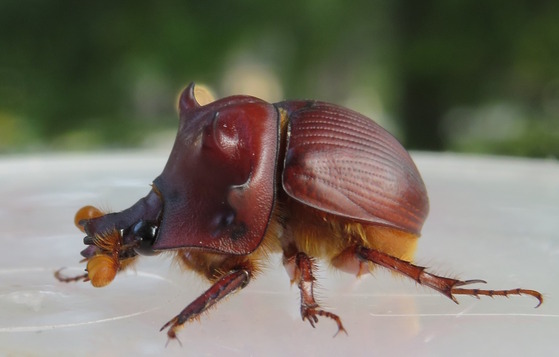 In sandy soils, burrows of the earth-boring scarab beetle can reach 11 feet deep (Dirk Stevenson)
By DIRK STEVENSON
Georgia’s river dunes are deep sand ridges that occur on the northeast sides of major streams in the Coastal Plain. The ridges, formed 15,000-30,000 years ago, are composed of droughty, coarse and excessively well-drained sands from 10-30 feet deep.
Early naturalists called these habitats “deserts in the rain.” Despite high annual rainfall, the soil has little water-holding capacity and most rainwater is lost via rapid percolation. The sand is acidic and nutrient-poor. It’s a tough place for flora and fauna to make a living.
Yet there are many odd specialists here, plant and animal, and unsurprisingly a number of the animal endemics live underground for much of their lives.
This year, DNR’s Wildlife Conservation Section supported field surveys for rare and poorly known insects – identified as species of greatest conservation need in the State Wildlife Action Plan – at Alligator Creek and Ohoopee Dunes wildlife management areas, among other sites. As part of this effort, coleopterist Roy Morris and I targeted a number of beetles endemic to aeolian dune sandhills.
The results included new sites and noteworthy records for species, plus some sensational and unexpected “by-catch.” …
Read this blog post for more on the unique beetles that spice Georgia’s dunes.
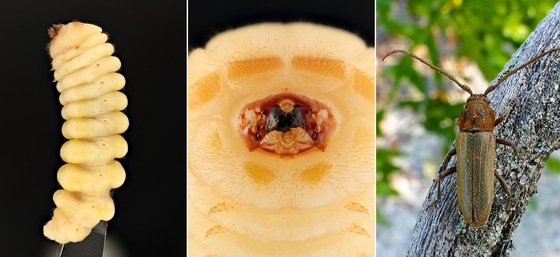 Ohoopee Dunes Crossidius beetle: larva, mouthparts, adult (Gorring Research Group/Florida State; adult/Giff Beaton)
EXPLORING SANDHILLS
DNR has protected many outstanding examples of aeolian dune sandhills, which – now flush with the colors of late-summer wildflowers such as blazing stars, summer farewell, asters and mints – are prime for October hikes. Sites to see include:
Learn more about WMAs, including details on hunting seasons and access.
Dirk Stevenson is a zoologist and owner of Altamaha Environmental Consulting.
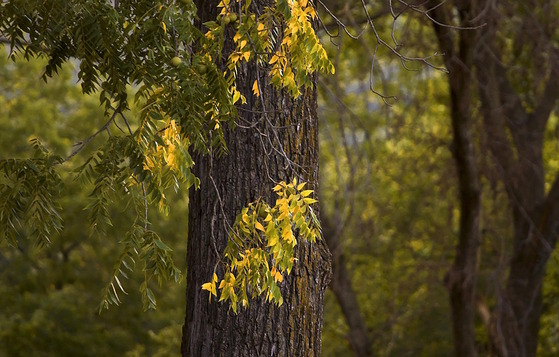 Black walnut trees, prized for their wood, beauty and nuts (Carol Von Canon)
By TERRY W. JOHNSON
I am a big fan of black walnut. In fact, I think so highly of this tree, some four decades ago my wife and I brought a black walnut sapling from her family home in Alabama and planted it in our Georgia backyard. Since then we have been vainly awaiting the tree to produce its first crop of nuts.
I hadn't given this much thought until last fall, when I stopped along a dirt road bordered by hardwoods to enjoy the golden yellow foliage of a black walnut tree.
When I got out of my car, I found a dozen or so frost-covered black walnuts scattered beneath the tree: They were the first black walnuts I had seen in years.
I am sure many of the folks who had driven past them didn’t realize what they were.
But both the meat they held and the tree that produced them are highly valued. ...
Read Terry’s column for an intriguing look at these native trees.
Terry W. Johnson is a retired DNR program manager and a wildlife biologist. Check out past columns and his blog. Permission is required to reprint a column.
In 2001, The Nature Conservancy and Georgia DNR teamed up – with support from others – to acquire and conserve the brunt of Moody Forest, now a natural and wildlife management area. DNR’s Shan Cammack was there at the start.
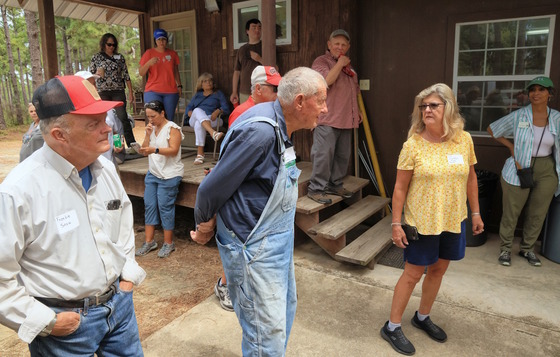 Moody family members and other supporters celebrate Moody Forest's 25th last month (Alan Cressler)
By SHAN CAMMACK
Moody Forest in southeast Georgia’s Appling County holds a lot of stories for a lot of folks.
There’s the Moody family, which cared for the land for generations. Uncle Jake Moody promised to “never cut a stick of wood unless it was absolutely necessary.”
There are the environmentalists who worked tirelessly to protect and preserve Moody’s unique ecosystems. There are the seasonal prescribed fire crews that helped with burns to restore and manage woodlands at Moody and across the region. These young people come to live on the property for a short time and then drift apart to many different walks of life. I like to think each carries a piece of Moody Forest with them.
And there are the visitors who travel to Moody to enjoy hunting, hiking, birding and environmental education in the longleaf pine uplands and the Altamaha River floodplain.
I have been a part of Moody Forest since The Nature Conservancy bought the first important 3,500-acre piece in 2001. I helped write the 50-year plan aimed at managing the property near Baxley. It was my first foray into preparing the comprehensive document that reviews the soils, land-use history and current vegetation, then lays out management objectives, best use and desired ecological conditions.
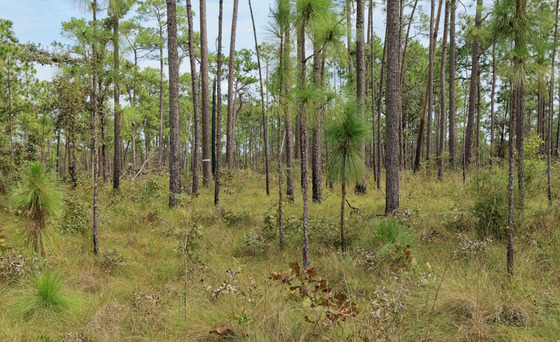 Prescribed fire has been key to managing longleaf pine habitats at Moody. (Alan Cressler)
Because Moody Forest is home to one of the larger tracts of old-growth longleaf pine remaining in Georgia, fire management has been key. At the start, we were dealing with over 75 years of fire suppression that resulted in a significant accumulation of duff, or organic matter, at the base of the older pines. Although longleaf is a fire forest, we had to be very careful with those early prescribed burns to avoid damaging the trees. We gathered advice from many experts in the field, including the late great Leon Neel, who taught me patience in management saying, “You know, Shan, it takes 100 years to grow a 100-year-old longleaf pine tree.”
Jointly owned and managed by The Nature Conservancy and DNR, the WMA now covers over 4,600 acres and features a deep diversity of plants and animals. One of the flagship species and success stories is the federally threatened red-cockaded woodpecker. In 2001, Moody Forest had one solitary pair.
After considerable work to restore suitable habitat, including reintroducing fire, reducing the encroaching midstory hardwoods and encouraging the growth of native herbaceous groundcover, we were able to translocate some of the then-endangered woodpeckers from Fort Stewart.
While some of the first few birds took off and headed back to the base, some stayed and Moody now has 11 family groups. This year, those groups hatched 18 chicks, six of which were banded.
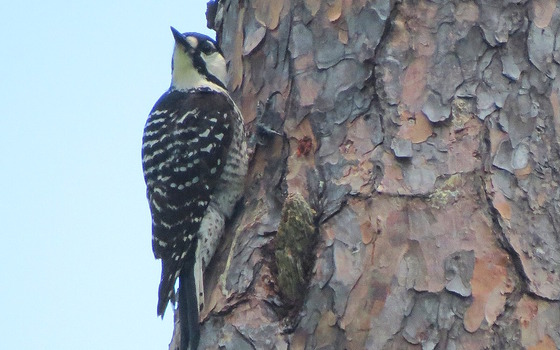 The area's red-cockaded woodpecker population has grown from one pair to 11 family groups. (Joe Burnam/GaDNR)
Moody Forest is an amazing place that protects a number of unique plants and animals. Beyond red-cockaded woodpeckers, that list includes gopher tortoises, eastern indigo snakes, Bachman’s sparrows, Henslow’s sparrows and northern bobwhite quail. It’s a great place to take a hike and see conservation in action.
Happy 25th anniversary, Moody Forest! You will always hold a special place in my heart.
For more, watch "Longleaf for the Long Run," which was filmed at Moody Forest.
Shan Cammack is fire management officer and a senior wildlife biologist at DNR’s Wildlife Conservation Section.
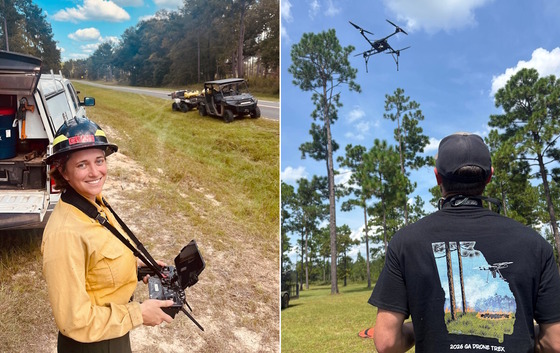 Georgia’s first Drone TREX (Training Exchange) drew a crowd to Seminole State Park last month and highlighted the increasing use of drone-based ignition systems to help prescribed fire crews effectively and safely burn more acres and manage smoke. At the park near Bainbridge, students and instructors from agencies such as DNR and Georgia Forestry Commission and partners like Tall Timbers and The Nature Conservancy covered topics from drone maintenance and mission planning to simulations and “stick time” flying drones (watch). The last day of the week-long training included fires ignited by drones, putting lessons into practice and conducting controlled burns on about 300 acres. For more: Drone applications in Georgia prescribed fire presentation (Georgia Forestry Commission).
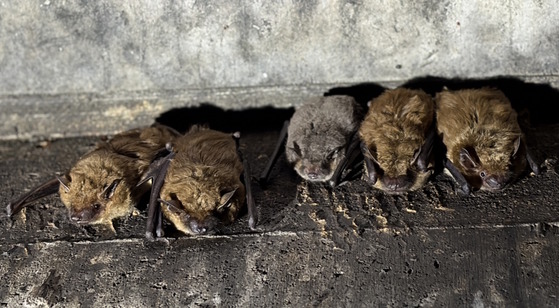 Big brown bats flank a federally endangered gray bat spotted during the bridge blitz. (GaDOT)
What’s a bridge blitz? For the Georgia Bat Working Group's first one, it was staff from DNR’s Small Mammal Team, the U.S. Fish and Wildlife Service, Georgia Department of Transportation and environmental firms spending two days checking for bats in over 100 bridges, culverts and other transportation structures – an all-hands-on-deck effort that hit some sites not surveyed before, discovered new roost locations and provided data that will help protect bats during road work.
If you need to exclude bats from a building, now is the time: Maternity season is over, pups are old enough to fly and it’s not too cold yet to risk trapping bats inside.
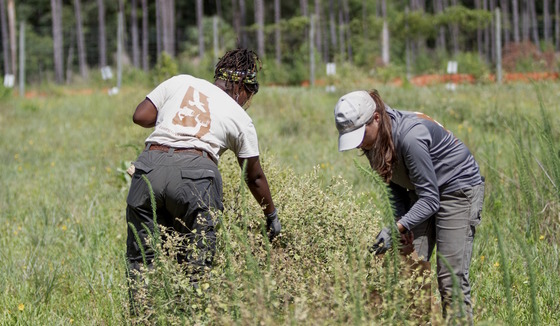 DNR's ShaAr Tyehimba, left, and Amaya Bragg tend native plants at Altama (Jonah Miller/GaDNR)
Not following DNR's Wildlife Resources Division on Instagram, LinkedIn and Facebook? That means you missed out on posts about the growth of Altama’s native plant nursery, tagging juvie lake sturgeon and where Georgia’s nesting swallow-tailed kites go for winter.
Reintroducing sicklefin redhorse into the upper Nottely River is on. Warm Springs National Fish Hatchery raised eggs collected by the Wildlife Conservation Section and partners, and 10,000 juvie sicklefins were recently stocked in the north Georgia river, with two more stockings and all aimed at helping rebuild the population of these state-endangered suckers.
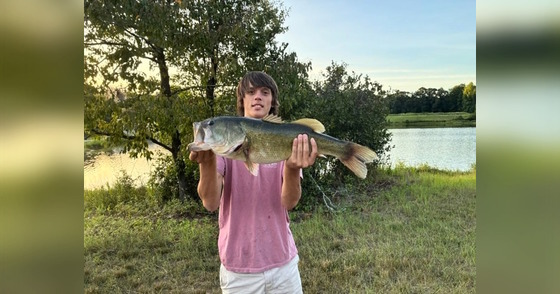 A big turn-of-the-season largemouth bass caught at McDuffie PFA (Special to GaDNR)
Quick hits:
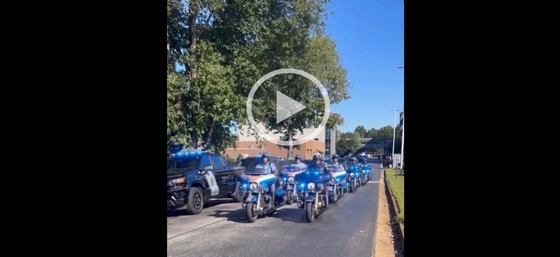 Video of law enforcement escort honoring DNR's Sgt. Cunningham (GBI)
Names in the news: DNR Sgt. Ben Cunningham, a 27-year employee of the agency’s Law Enforcement Division, died Sept. 24 after suffering what was likely a medical issue during a physical fitness program. Cunningham was an instructor at the state’s Game Warden Academy and oversaw wardens in four northwest Georgia counties. Todd Schneider retired from DNR’s Wildlife Conservation Section Oct. 1 after working for over 33 years as an ornithologist. Schneider’s career ranged from leading the Georgia Breeding Bird Atlas to researching Henslow’s sparrows, surveying Florida sandhill cranes and king rails, and handling hundreds of calls about wildlife (including the Parting Shot subject, below). During the National Association of Boating Law Administrators annual conference, DNR’s Cpl. Adam Kimbrough was chosen as both the Southern Region and Butch Potts National Boating Law Enforcement Officer of the Year, while game warden Hunter Carson was named Operation Dry Water Officer of the Year.
WHAT YOU MISSED ...
In the previous Georgia Wild:
- Hummers and spiders
- Guarding Georgia plants
- Tegus in the news (again)
- State's rare species updates
"Pine Log WMA is coming back," Georgia Outdoor News and others, including The Atlanta Journal-Constitution, Grice Connect, WBHF-FM (100.3, Cartersville)
"Ga. proposes first changes to state endangered species list in 20 years," WSB-FM (95.5, Atlanta). Also: Chatsworth Times and others.
"Concerns raised over new Endangered Species Act interpretations," Maine Public
"Oh, how lucky we are" (Ossabaw Island's Sandy West), The Bitter Southerner
"DNR accepting proposals for wildlife viewing grants," Coastal Courier and others
"Lights over Buc-ee’s interstate exit dimmer, but not for turtles," The Current
"UGA researcher catalogs viral diversity in sea turtle populations," UGA (study in Infection, Genetics and Evolution)
(+video) "Grovetown school alligator released," WRDW-TV (chs. 12, 26, Augusta)
"AI reveals novel nighttime feeding behaviors in right whales," Phys.org (study in PLOS.One)
"Grant applications open for Georgia top conservation teacher," Bryan County News and others
"Rookery and Roots Conservancy aims to protect wildlife near data center," The Current
"Impacts of plastic on wildlife in a wasteful world," The Wildlife Society
"Native habitat initiative unveiled along energy rights-of-way in Carrollton," The City Menus (Carrollton)
"Fish art contest opens for entries," WNEG-AM (630, Toccoa)
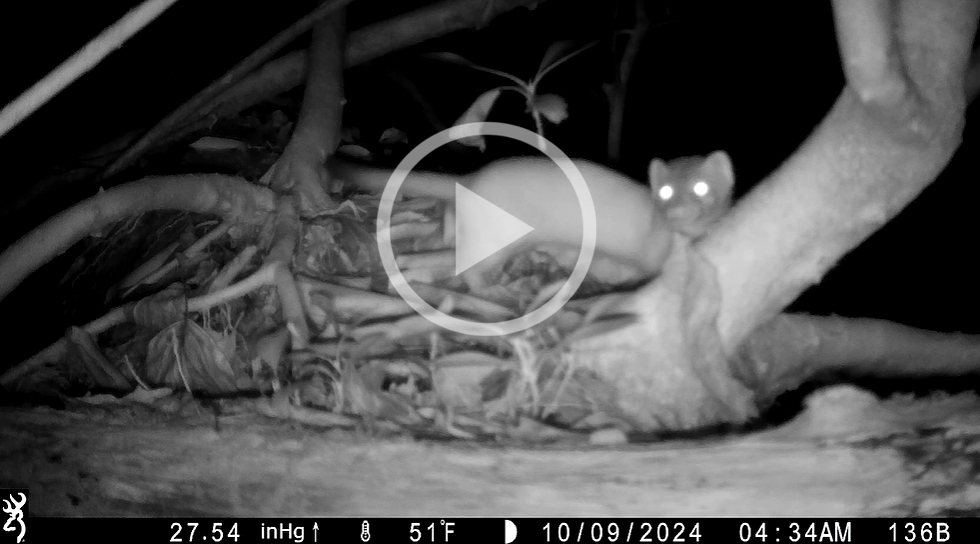 Weasel videoed by researchers' trail cam (Jenna Myers/UGA)
"UGA's new method of detecting weasels might help conserve them," Georgia Public Broadcasting (study in Wildlife Letters)
"'Birdnado' incoming,' massive tree swallow flock at wildlife refuge," U.S. Interior Department
"Georgia scientists snip fins to figure out if sea turtle males are in trouble," GPB
(audio) "The value of working forests," Our Wild Lives (The Wildlife Society)
Tree stand safety, DNR
Eastern spotted skunk caught on trail cam, DNR
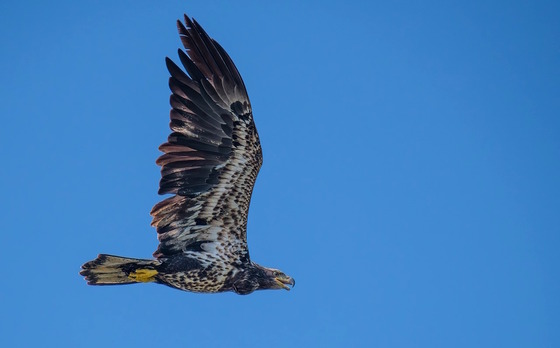 When photographer Ron Goldfarb photographed this young bald eagle flying by at Lake Allatoona, Goldfarb noticed what looked like swelling in the bird’s throat and emailed DNR’s Wildlife Conservation Section. Is something wrong or is this “just a meal on the way down?” he asked. Fortunately, it's the latter, ornithologist Todd Schneider said. While the enlargement looks tumor-like, it’s actually evidence that the bird has just eaten, Schneider wrote. “That's its crop where it temporarily stores food, which will then be slowly released to the stomach for digestion.”
CREDIT: Georgia Wild masthead/leaves swirling in Stamp Creek Falls on Pine Log (Alan Cressler)
Top
|