IN THIS ISSUE
- Webs of reward and risk
- Protecting Georgia plants
- Also: State species update | Tegus in the news | Rare Texan seen | Braves night
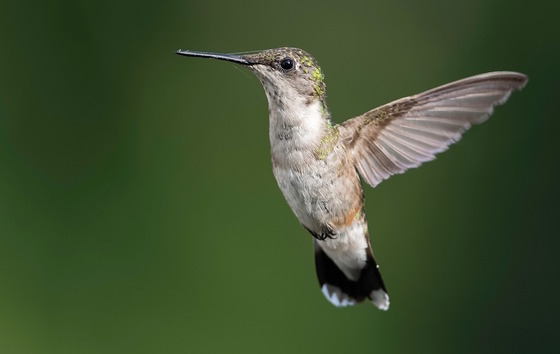 A ruby-throated hummingbird with spider web on its face and spider legs in its beak
By TERRY W. JOHNSON
Our backyards are home to a wide variety of animals. Some, like spiders, are creatures some of us try to avoid. Others, like ruby-throated hummingbirds, are so admired we go to great lengths to attract as many of them as possible.
Ironically, spiders play a key role in the life of ruby-throats. The thing that connects these two very different creatures becomes more common this time of year, even as hummingbirds become more scarce as they migrate south.
That bond is the spider's web. …
Read Terry’s column to see how spiders and webs benefit and endanger hummers.
Terry W. Johnson is a retired DNR program manager and a wildlife biologist. Check out past columns and his blog. Permission is required to reprint a column.
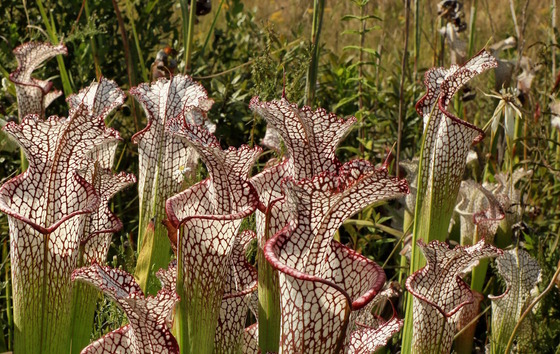 Whitetop pitcherplants are one of the species protected under the Wildflower Preservation Act (Alan Cressler)
A little-known state law is quietly providing needed protection for many of Georgia’s rarest plants.
The Georgia Wildflower Preservation Act was enacted in 1973, part of a wave of environmental legislation that peaked that year with passage of the federal Endangered Species Act and – on the state level – Georgia’s Endangered Wildlife Act.
In a nutshell, the Wildflower Preservation Act protects plant species that DNR considers at risk of extinction, although that protection is mainly on lands the state owns or leases, said Carlee Steppe, a DNR Wildlife Conservation Section botanist. However, the law also requires state permits for moving or selling these protected species even if they are collected on private property.
“Compared to other states, we have fairly strong protections for plants,” Steppe said. “The act provides a strong tool to protect species on state land while also giving us the ability to regulate poaching of plants on private property.”
She explained that growing awareness of the Wildflower Preservation Act has also expanded its impact and opened avenues into more funding to conserve plants. Examples include teaming with the Georgia Department of Transportation to move pink lady’s slipper orchids and pitcherplants out of the way of roadwork, because many state highway and interstate rights of way are state lands. Building such partnerships is something the law effectively promotes, Steppe said.
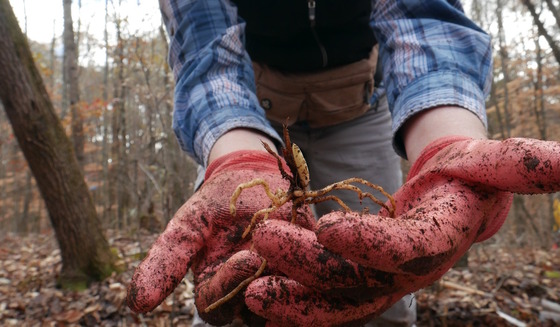 Transplanting pink lady's slipper orchids rescued from a road construction site (GaDNR)
Requests for permits involving state-protected plants are up, as well. Ten years ago, DNR issued three to four a year. This year, the botany team has handled about 70.
That said, many sellers of state-protected species are not aware of the law. The resulting interactions “are a learning moment for us all,” Steppe said, providing an opportunity for staff to explain the importance of the statute.
Meanwhile, the number of protected plants in Georgia is growing. Proposed changes to the state’s protected species list would bump the total from 155 to 208.
Yet, in a nod to surging interest in landscaping with native plants, the amendments would exempt 39 protected species from permit requirements if the plants are grown from pre-existing horticultural stock and not collected from the wild.
It's a tweak that points to the importance of plants, and underscores the Georgia law that has been helping protect them for over 50 years.
FOR MORE
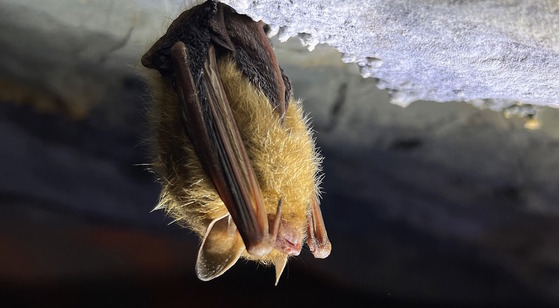 Tricolored bats are proposed for adding to the protected species list as endangered. (Trina Morris/GaDNR)
The public can comment on proposed changes to Georgia’s protected species list through Sept. 20. Public input is key to developing and implementing state regulations. The protected species list includes Georgia animal and plant species considered most in need of conservation. The changes would add and remove species, update scientific names, and match the status of species to their federal listing. They would also add an exception that allows for the sale of certain protected plant species grown in captivity. The deadline for comments is 4:30 p.m. Sept. 20. Learn more, including how to comment.
Speaking of rare plants, DNR Wildlife Conservation Section staff updating the status of state-threatened St. John's-wort populations and led by botany technician Genevieve Triplett found over 1,000 stems of Hypericum erythreae in a south Georgia pitcherplant bog. DNR, the landowners and other partners have been working to restore and manage the bog since 2006.
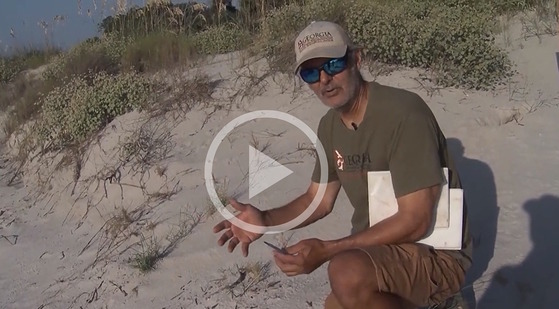
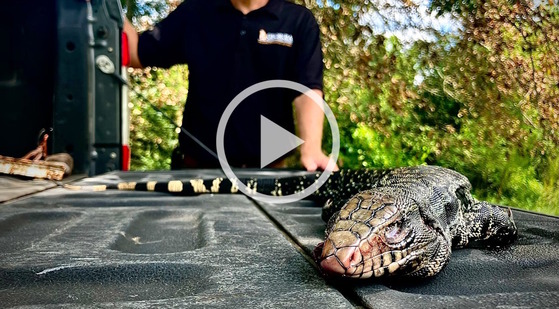 DNR's Jim Gillis with a euthanized tegu (Mark Davis/AJC). Image links to DNR video of Gillis with a live-trapped tegu.
Argentine black and white tegus in Tattnall and Toombs counties have been making headlines, with at least two more caught or killed last month. That bumped the year’s count to 14 in the southeast Georgia counties, and emphasizes the need for hunters and others in the area to be on the lookout for the big, invasive lizards , which will soon go into brumation for winter. Report tegus, dead or alive.
Fall bird migration is picking up steam in Georgia. Get out (with binoculars in hand), follow migration trends via BirdCast, track migrating red knots tagged in Georgia and South Carolina, and turn off outdoor lights (or close curtains on indoor lights) at night to avoid disrupting migrations.
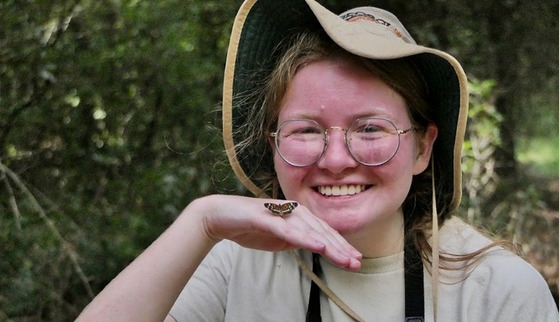 DNR's Alex Anne Jennings shows a Seminole Texan crescent butterfly seen at Piedmont NWR. (Linda May/GaDNR)
While summer butterfly counts on Piedmont National Wildlife Refuge have produced lower than normal numbers of late, possibly because of drought conditions, there have been bright spots. One documented by DNR’s terrestrial invertebrate team, which now leads the counts at Piedmont, was the recent sighting of a “Seminole” Texan crescent, a rarity in Georgia.
At Reed Bingham State Park, conservation work is paying off. A project teaming the south Georgia park's staff and Wildlife Conservation Section botanists is targeting hardwoods shading out hooded and yellow pitcherplants in a bog, while monitoring on a tract managed partly with prescribed fire turned up a Bachman’s sparrow, a State Wildlife Action Plan species that needs fire-maintained pinelands.
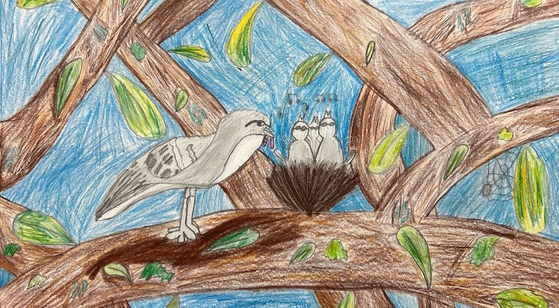 2025 poster contest award-winner of a mockingbird her feeding her chicks, drawn by Rayden Bellew of Covington
Quick hits:
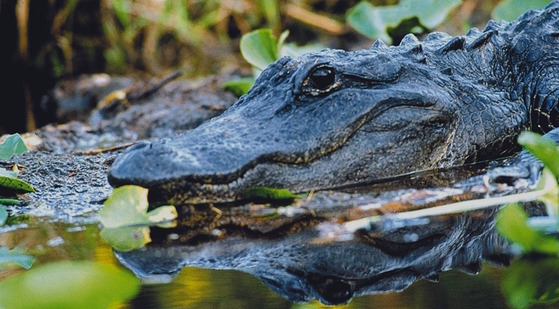 An American alligator at the newly renamed Okefenokee State Park (GaDNR)
Names in the news: Stephen C. Foster State Park has been renamed Okefenokee State Park. The change highlights the park’s location and syncs with the recent designation of the adjacent Okefenokee National Wildlife Refuge as a UNESCO World Heritage Site. DNR’s Law Enforcement Division chose Cpl. Blake Chafin, assigned to Gwinnett County, as the 2026 Game Warden of the Year and Game Warden 1st class Kyle Kervin of Jefferson County to receive the James R. Darnell Award as runner-up Warden of the Year.
WHAT YOU MISSED ...
In the previous Georgia Wild:
- How to free a manatee
- Wait! Spinies are still here
- A bird heard more than seen
Not a subscriber? Sign up now (it's free) and share with friends and family!
 DNR's Mark Dodd explains sea turtle nest monitoring on Ossabaw Island. (WSAV-TV)
"Loggerheads set new nesting record with over 4,000 nests," WSAV-TV (ch. 3, Savannah)
(audio) "Ga. scientists find a species not documented in 15 years," WABE-FM (90.1, Atlanta)
"Invasive tegu lizards spread in Georgia," WAGA-TV (ch. 5, Atlanta)
"From the Georgia Bight to the Big Screen," Shimmy Creative and Manomet Conservation Sciences. Also: the backstory.
"Dozens of threatened plant, animal species could gain state protection," Georgia Recorder. Related: "DNR opens public comment for protected species list changesDNR opens public comment for protected species list changes," WSB-TV (ch. 2, Atlanta) and others including CBS News, WNEG-FM (93.1, Toccoa), Georgia Outdoor News.
"Kids invited to participate in wildlife poster contest," WRDW-TV (chs. 12, 26, Augusta) and others
"U.S. House passes bill delaying start of new right whale rules," Maine Public
"Rare mussel found after more than 10 years with no sightings," WSB-TV (ch. 2, Atlanta)
(+video) "Georgia DNR speaks on alligator safety," WJBF-TV (ch. 6, Augusta)
(+video) "Manatees prompt boater caution around Tybee," WTOC-TV (ch. 11, Savannah)
"Dolly Parton helped save endangered bald eagles. Here’s how," Discover Wildlife
"Hunter ed courses available online, in person across Ga.," Grice Connect
"Whale calls can appear to outrun sound, without breaking theory of special relativity," Discover
"Southern road trips for bird and wildlife watchers," The Nature Conservancy
"Mystery of coiling snake embryos explained," Canadian Museum of Nature (study in Current Biology)
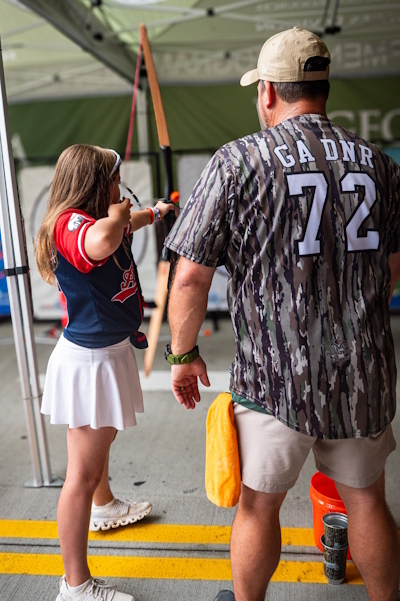
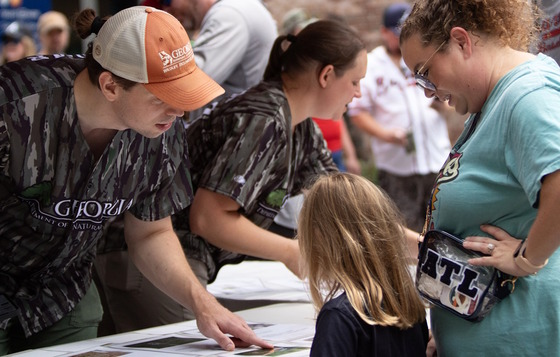 DNR's Devin Rambo and Tiffany Penland discuss native birds and aquatic insects with Braves Hunting & Fishing Night visitors at Truist Park Aug. 29. Below: Archery how-to with DNR's Calvin Cole (photos by Jonah Miller/GaDNR)
 |
|
For the second straight year, Hunting and Fishing Night with the Atlanta Braves hit a home run at Truist Park. DNR teamed with Georgia-based Realtree on Aug. 29 to treat fans to everything from a stocked mobile aquarium and try-your-hand archery practice to fish coloring fun and lots of see-touch-and-learn wildlife. Oh, and don’t forget that the first 15,000 fans in the stadium took home a Realtree APX® camo Braves jersey with the number and name of Atlanta Hall of Famer Chipper Jones. Add in DNR Commissioner Walter Rabon throwing out the first pitch and the Braves toppling the Colorado Rockies with a two-run double in the eighth inning and, yep, you could say it was a good day and night in Braves Country. |
Top
|