IN THIS ISSUE
- Bald redbirds
- Big Hammock's 50th
- A most robust redhorse
- Protected species list updates
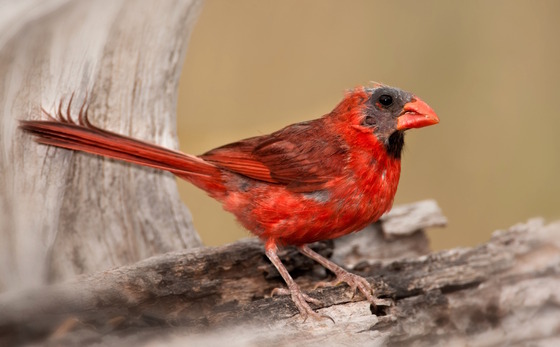 Redhead no more: a northern cardinal minus most of its head feathers (Adobe Stock)
By TERRY W. JOHNSON
Each year some very unusual northern cardinals are seen at feeders throughout Georgia. Although at a distance they look like any other cardinal, a closer look reveals that these birds are quite different.
They are bald.
And we’re not talking bald like bald eagles, whose white-feathered heads give the illusion from afar that they lack feathers.
The domes of these cardinals are almost as bare as a turkey vulture’s. …
Read Terry’s column for more on plumage-challenged cardinals.
Terry W. Johnson is a retired DNR program manager and a veteran naturalist. Check out past columns and his blog. Permission is required to reprint a column.
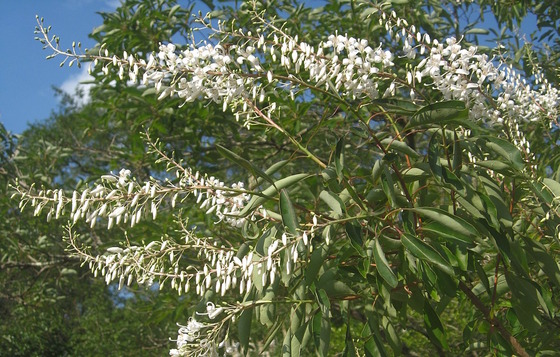 Rare Georgia plume in bloom at Big Hammock (Lisa Kruse/GaDNR)
By LISA KRUSE
Big Hammock is an ancient, isolated sand ridge that rises nearly 100 feet from the Altamaha River floodplain near Glennville.
It’s also one of Georgia’s amazing wild places.
As part of a same-named wildlife management area, Big Hammock is outstanding for its diverse natural communities. On the ridge, old-growth longleaf pine-and-oak scrub showcases lichens, grasses and scattered wildflowers on a white-sand canvas. The slopes descend through gnarled evergreen oak forest to pond cypress-tupelo strands. In between, sheltered mesic flats feature grand forests of white oak, spruce pine and hickory.
Another can’t-miss highlight is the largest known population of Georgia plume (Elliottia racemosa), a tree now found only in Georgia.
It’s no wonder that in 1976 the National Park Service dedicated 951 acres of Big Hammock as a National Natural Landmark. Fifty years later, DNR is celebrating the designation's golden anniversary and one of the state’s first conservation lands. ...
Read more about Big Hammock in this blog post by DNR senior botanist Lisa Kruse, including why you might want to visit the site this month.
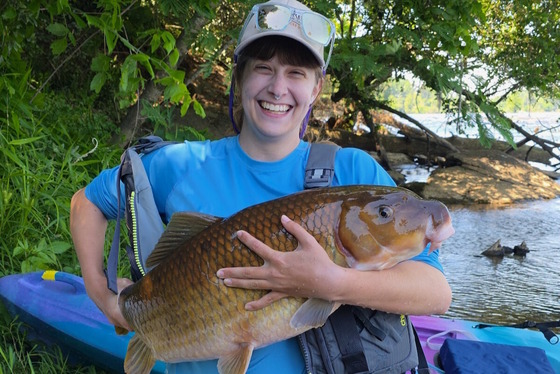 DNR's Gina Montibrown lifts the big robust redhorse to measure it before release. (Rachel Byrne/GaDNR)
There is no official record for robust redhorse. But since the chunky, bronze suckers were rediscovered in Georgia in 1991, there hasn’t been a bigger one than the whopper DNR caught and released on the Savannah River last month.
On May 14, Freshwater Biodiversity Program technicians Percy Knight, Rachel Byrne and Gina Montibrown were sampling for spawning robust redhorse at Augusta Shoals, a rocky stretch below a diversion dam near Augusta. This work with South and North Carolina and other partners is assessing populations of the rare species, plus spawning times and habitats.
Eyes grew wide when the pontoon’s electrofishing charge rolled the massive female to the surface. She weighed 20.8 pounds and measured just over 31 inches long.
The fish wasn’t aged, program manager Matthew Rowe said, but given the size “it could be over 30 years old.” The oldest robust redhorse on record is 27.
The catch also raised weight and length maximums for the state-protected fish.
Afterward, the hefty redhorse was eased back into the river, where she'll munch on more mollusks, crayfish and aquatic insects. And get even bigger.
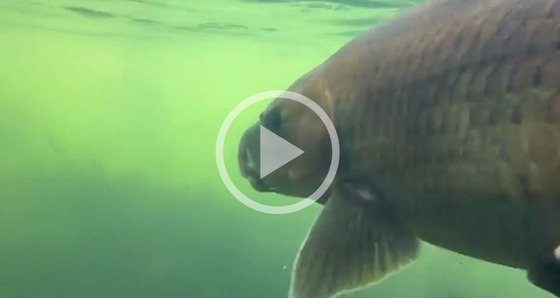 Returning the redhorse to the river (Percy Knight/GaDNR)
DID YOU KNOW?
- Adult robust redhorse can wander. In the lower Savannah and Ocmulgee rivers, they have been documented moving more than 60 miles.
- Robust redhorse are protected. Bowfishers should look for features – a long dorsal fin base, barbels and no big, fleshy lips – that help distinguish this rare species from carp.
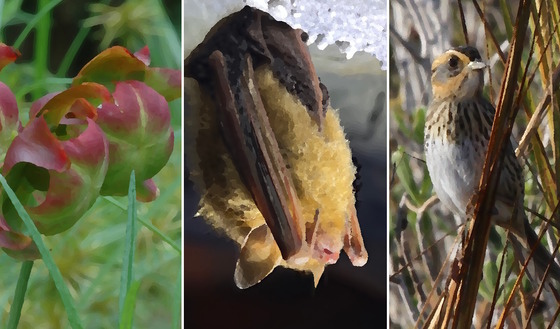 Among the proposed list updates: whitetop pitcherplant, tricolored bat and saltmarsh sparrow
In the first update of Georgia’s protected species list in 20 years, DNR is asking the public for suggestions on animals and plants to add, remove or change their conservation status.
The nominations process is open this month – until June 30. Details and a nomination form are online. But here’s an overview.
The list includes species protected under the Georgia Endangered Wildlife Act or Wildflower Preservation Act of 1973 (as outlined in Rule 391-4-10). These are Georgia plants and animals considered most in need of conservation.
The current lineup has not been comprehensively revised since 2006 and doesn’t reflect the latest information. An accurate list is key to conservation.
State-listing offers varied protections, differing between animals and plants. It also helps focus DNR efforts and encourages voluntary conservation of habitats.
Draft changes were developed using Georgia's 2025 State Wildlife Action Plan and teams. Project leader Katrina Morris said public input “will help ensure we provide protected status for the species in greatest need of conservation in our state.”
Nominate changes at georgiawildlife.com/protectedspecieslist after reviewing the proposed updates and Georgia Species of Greatest Conservation Need profiles.
FOR MORE
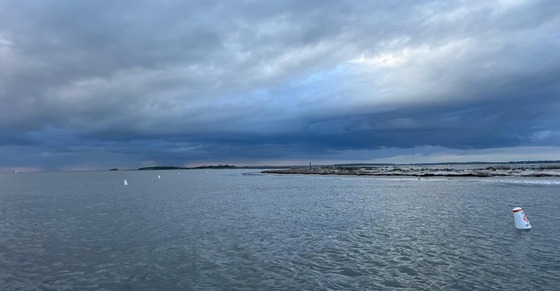 Buoys ward against boaters landing on Ogeechee Bar, a protected Bird Island (GaDNR)
Shorebird and seabird nesting is in full swing on Georgia’s “bird islands.” So is the deployment of buoys, signs and patrols to inform boaters about sites – from Ogeechee Bar to Brunswick Bird Island, Cumberland Dividings and others – that are seasonally closed to people and pets, safeguarding birds that nest and roost there from potentially deadly disturbances (“Dogs and Death in a Shorebird Colony,” June 2024). More on Bird Island Rule updates this year.
The two smallest tegus documented since DNR began monitoring Argentine black and white tegus in Toombs and Tattnall counties were reported last month. Georgia Southern University’s Dr. Lance McBrayer, who is helping DNR assess and respond to the invasive lizards in the region, estimated from photos of the tegus killed in Toombs they likely hatched in 2025, more evidence of a wild population. Related: "State warns of risks posed by tegus," Georgia Public Broadcasting.
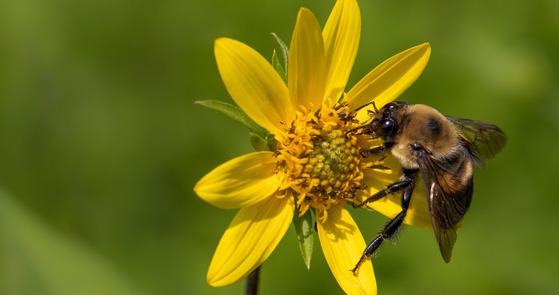 Bumble Bee Atlas covers four Southeastern states (Adobe Stock)
Hear that buzz? Training is available and volunteers are wanted for the Southeast Bumble Bee Atlas that is tracking bumble bees across Georgia and three adjacent states through August.
May might not always indicate how sea turtle nesting season will go, but last month totaled 869 loggerhead nests in Georgia. That easily tops a 10-year average of 614 nests for the month and suggests a big nesting year, according to DNR Sea Turtle Program Coordinator Mark Dodd. Daily updates.
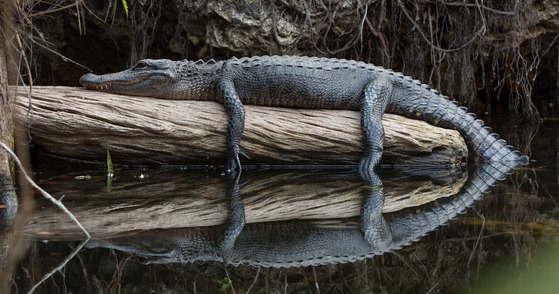 GatorWise practices help avoid conflicts between gators and people (Adobe Stock)
Sharing waterways with gators is nothing new in Georgia. Yet with alligator sightings increasing as summer nears, heeding basic practices – such as never feeding alligators and being responsible for people and pets in your care – are encouraged to help avoid problems. For more: GatorWise.
Aerial surveys of red knots counted nearly 6,000 of the federally threatened shorebirds in Georgia on May 19. Many of the knots were gorging on eggs from spawning horseshoe crabs before continuing their spring migration from South America to breeding grounds in the Arctic. Track red knots.
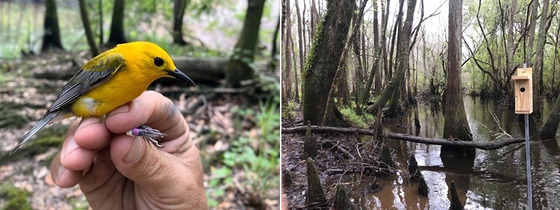 A banded prothonotary warbler and a bottomland nest box (GaDNR)
Quick hits:
- Although prothonotary warblers are in decline, DNR's Wildlife Conservation Section is working to restore the yellow “swamp canaries” by improving bottomland habitats, installing nest boxes on southwest Georgia wildlife management areas and banding nestlings for monitoring.
-
National Fishing and Boating Week offers two free fishing, no-license-needed Saturdays for Georgia residents on public waters in the state June 6 and 13.
- Help monitor wild turkeys by reporting sightings of hens, gobblers and poults through August as part of DNR's annual turkey poult survey.
- June is prime time to see fireflies statewide, serving as a warm-up to Georgia Firefly Day, which is celebrated July 2 with fervor in Fannin County.
-
The Dolphin Project, a nonprofit focused on dolphins in Georgia and southern South Carolina, has a new website and digital database of sightings and photos.
- If bears are active in your area, be BearWise and temporarily take down your bird feeders to spare the feeders and keep bears out of your yard.
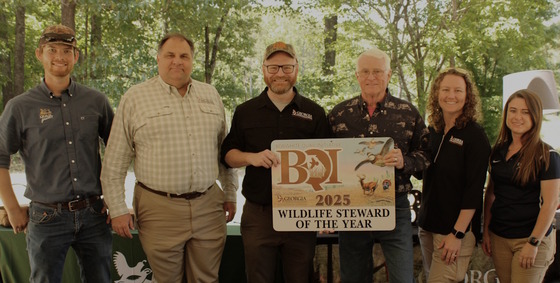 Honoring BQI 2025 Steward of Year John Denney, third from right (Miranda Gulsby/Quail Forever)
Names in the news: Bobwhite Quail Initiative staff and partners recently celebrated 2025 Wildlife Steward of the Year John Denney with an awards luncheon and tour of Denny’s Carroll County property, where the focus is improving wildlife habitat. The event was sponsored by Quail Forever, DNR, Georgia Conservancy and the West Georgia Soil and Water Conservation District. | DNR leaders received a donation from Rayonier for chainsaw kits that will help the agency respond when hurricanes and other weather disasters strike. Wildlife Resources Division Director Chris Harper said DNR values partnerships such as the one with Rayonier that champion conservation, public safety and communities.
WHAT YOU MISSED ...
In the previous Georgia Wild:
- A sage for the ages
- When fieldwork gets wild
- The search for frosted elfin
- Young raptors you need to see
"Music Wildlife Would Listen To," DNR Wildlife Resources Division
(audio) "Beachgoing Blacktip Sharks: Moving' North," Fish of the Week! podcast, U.S. Fish and Wildlife Service
"What Does Your Mom Do for Work?" DNR Wildlife Resources Division
Safe paddling tips, Georgia Conservancy
"Rich in Life Because ...," DNR Wildlife Resources Division
(+video) "Wildlife officials open nominations for Georgia protected species list," WSAV-TV (ch. 3, Savannah) and others, including WSB-TV (ch. 2, Atlanta), WALB-TV (ch. 10, Albany) and WNEG-FM (93.1, Toccoa).
"Large invasive reptiles spotted in south Georgia," WSB-TV (ch. 2, Atlanta) and others
"Federal review of whale speed rule concerns conservationists," WTOC-TV (ch. 11, Savannah)
"Extreme, unseen drought threatens Georgia's wildlife," Courthouse News Service
"509 snakes captured in southeastern U.S.; many had deadly infections," BBC Discover Wildlife (UGA study in Frontiers in Veterinary Science)
"Officials warn that smallmouth bass being illegally introduced into Allatoona," CBS News and others. Related: "Georgia boaters urged to stop invasive species," The Augusta Chronicle.
"Ga. wildlife haven forged by fire, peat nears UNESCO recognition," Inside Climate News
(+video) "Preserving wetlands and hidden ecosystems across Central Savannah River region," WFXG-TV (ch. 54, Augusta)
"Free-roaming cats carry hidden disease risks," The Wildlife Society (study in PLOS Pathogens)
"UGA researchers find win-win for wildlife and roads," Athens Banner-Herald
(+video) "Alligator removed from hotel lot on Jekyll," WSAV-TV (ch. 3, Savannah)
"DNR urges Georgians to stay GatorWise; here's how," WMAZ-TV (ch. 13, Macon)
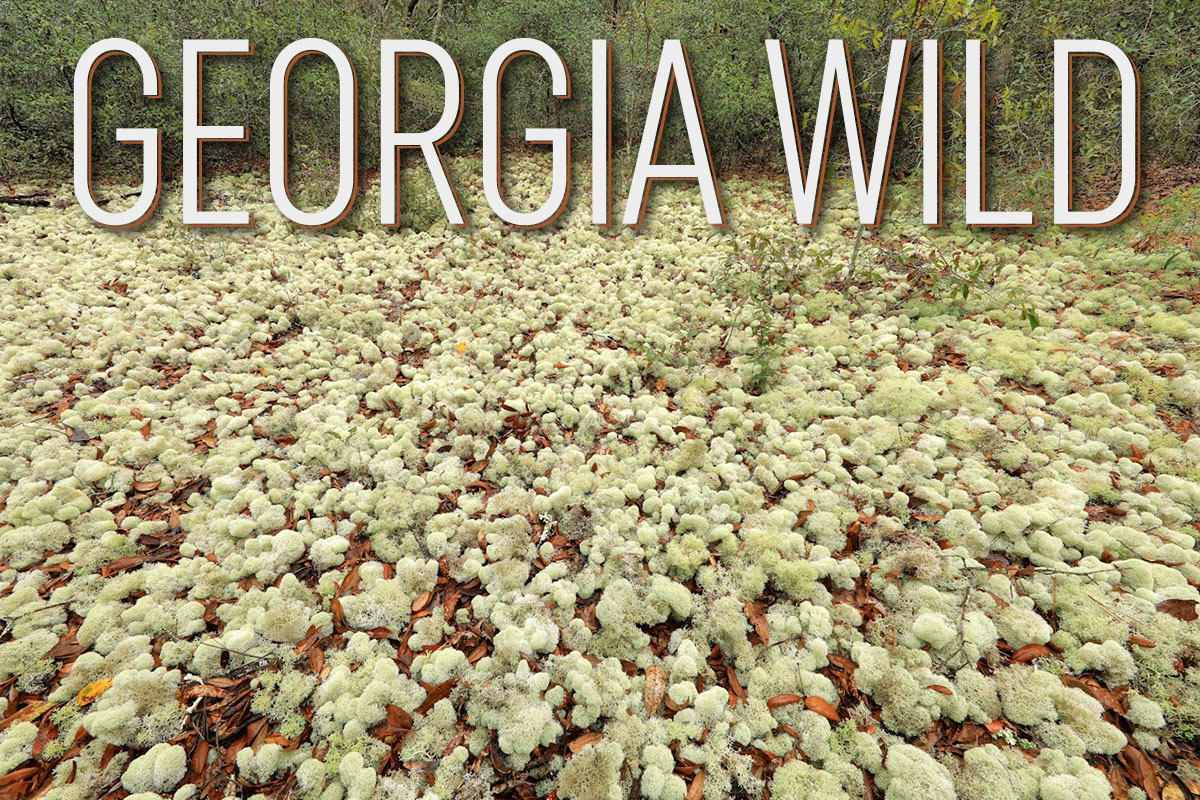
CREDIT: Georgia Wild masthead/Lichens bed on sand dune complex at Big Hammock (Alan Cressler)
Top
|