IN THIS ISSUE
- Tracking monarchs like never before
- Why cavities are critical come winter
- Drama at sea: whale rescue, calving update
- Add this WMA for state's rarest woodpeckers
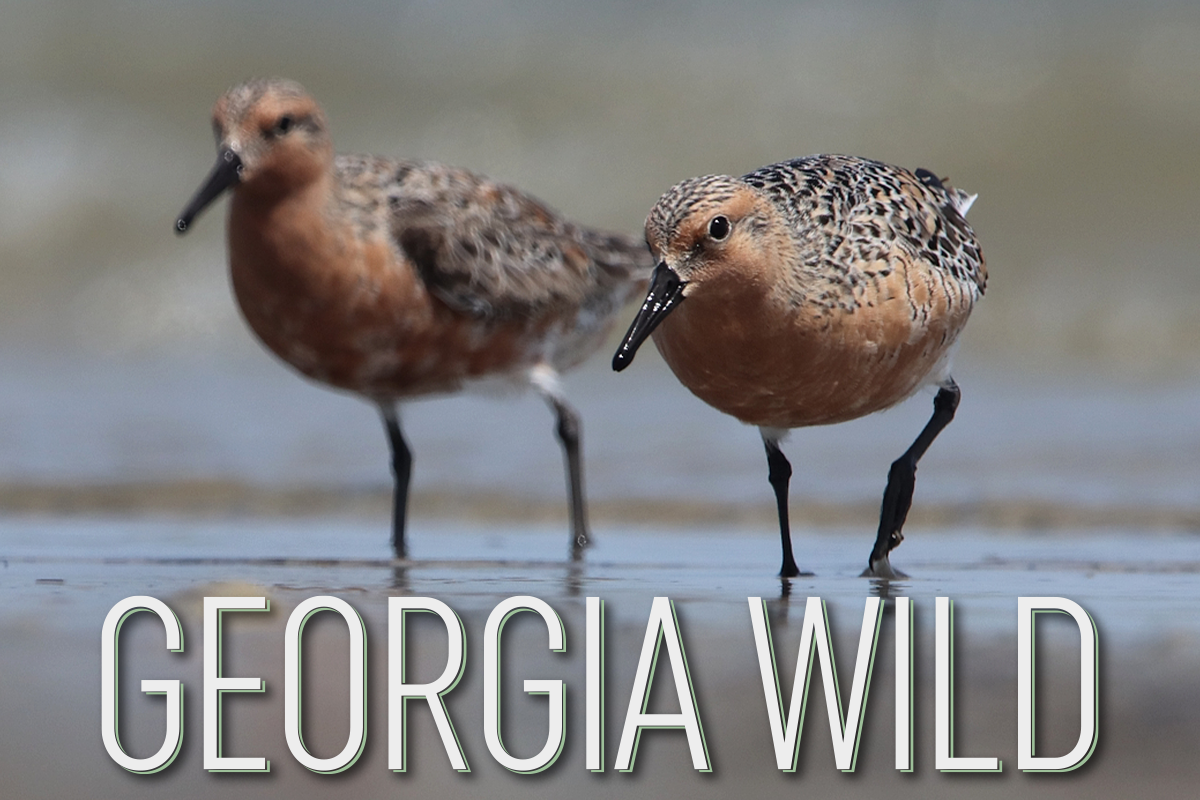
 One memorable tale: red knot *H7's marathon migrations, including through a hurricane (Baxter Beamer/DNR)
Before we turn the page on 2025, we want to know what was the most interesting thing you read in Georgia Wild this year. Rate the list of highlights using this quick survey. Even add other stories and topics you think should be included.
We look forward to hearing your thoughts. (Click the links per entry for details.)
 Monarch with a Bluetooth chip tracking tag (Sheldon Blackshire)
By MEG HEDEEN
For the first time ever, we’re getting a behind-the-wings look at the incredible journey monarch butterflies take to reach their wintering grounds in Mexico.
This past fall, hundreds of monarchs were fitted with tiny yet powerful tracking devices. Each contains a Bluetooth chip, allowing the butterfly’s location to be recorded whenever it comes within range of a Bluetooth signal. Miniature solar panels power the tags, enabling them to function far longer than traditional battery-powered trackers.
It may sound like a lot for a delicate butterfly to carry, but this tag created by Cellular Tracking Technologies weighs just 0.06 grams, roughly the same as a grain of rice. That’s about 10 percent of the monarch’s body weight.
Yet despite their size, these tags are revolutionizing how we study monarch migration. Previously, researchers used small sticker tags to track monarchs. While this method taught us a great deal about how far and fast monarchs can travel, it relied on people spotting and reporting the tags.
This fall marked a monumental leap forward in monarch research. Thanks to the Project Monarch app and the broader smart device network, we can now trace the full migration path of each tagged butterfly. For example, we can see that a monarch butterfly tagged in Harrisburg, Pennsylvania, on Sept. 23 followed the Appalachian Mountains south, flew across northern Georgia in the first days of October and reached its wintering site in Mexico by Nov. 9.
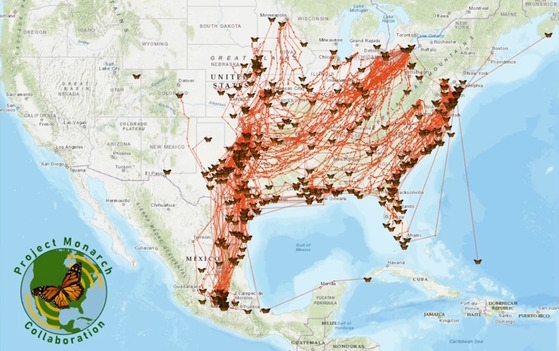 Monarch migrations tracked as of Nov. 20 (Cape May Point Arts and Science Center)
Want to know more? Download the free Project Monarch app from your device’s app store to view migration paths and help collect data. You can also report monarch sightings and nectar plant visits to the Xerces Society’s Monarch Nectar Plant Database to support regional conservation efforts.
Med Hedeen is a wildlife biologist at the U.S. Fish and Wildlife Service field office in Athens.
REPORT WINTER SIGHTINGS
On a related note, Monarchs Overwintering in the Southeastern States (MOVERS) is again asking the public to report monarchs spotted this winter in southeastern and Gulf states to Journey North or iNaturalist. Sightings – more than 6,300 have been reported since 2020 – can help scientists better understand this aspect of migration and how, or if, it affects the overall monarch population.
At Journey North, create a free account, learn how to report monarch sightings and submit observations November-March. Or, for the same time period, create a free account at iNaturalist and enter sightings using your web browser or phone app.
Want season updates? Join the iNaturalist monarch winter project.
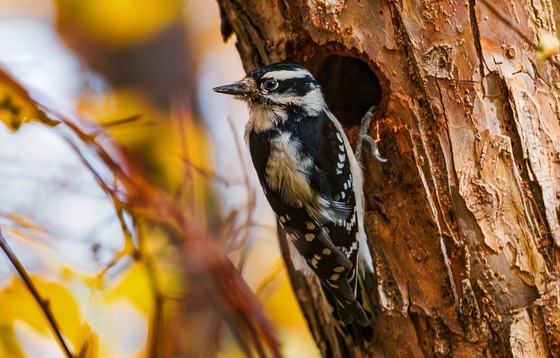 Downy woodpecker at a roosting cavity (Adobe Stock)
By TERRY W. JOHNSON
One of the things I like about living in Georgia is that during most winters we don’t have to deal with many days of extreme cold. However, when temperatures do plummet well below freezing, we can take refuge in our cozy, well-insulated homes.
But that luxury is not available to local wildlife. And extremely cold temperatures are particularly threatening to birds that roost in cavities. For these birds, the ability to find suitable roost sites where they can escape frigid winds and temperatures can determine whether or not they make it through the winter, or even that night.
In many areas, however, roosting cavities can be nearly impossible to find. …
Read Terry’s column to explore how critical cavities are and what you can do.
Terry W. Johnson is a retired DNR program manager and executive director of TERN, friends group of the Wildlife Conservation Section. Check out past columns and his blog. Permission is required to reprint a column.
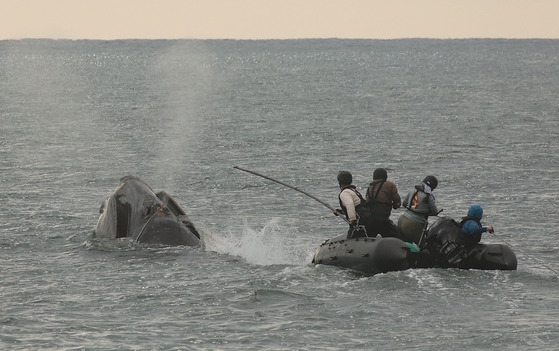 DNR and Florida FWC staff work to cut commercial fishing rope off Division on Dec. 4 (DNR/NOAA permit 24359)
A two-day effort to disentangle a North Atlantic right whale from commercial fishing rope off the Georgia coast cut off some 300 feet of line but the 3-year-old male still faces a grim outlook. The rescue by air and sea involving Georgia and Florida agencies, NOAA, Clearwater Marine Aquarium Research Institute and the Center for Coastal Studies played out miles off Jekyll and St. Simons islands Dec. 3-4. Despite hopes the whale, nicknamed Division (catalog No. 5217), could shed the rest of the line, he was seen off Nantucket, Massachusetts, Dec. 16 with the rope still in place.
Before that sighting, New England Aquarium scientists assessed Division's health as declining and said the rope embedded in his head was concerning. Center for Coastal Studies, based in Massachusetts, may try to remove more line if conditions allow. In July, the whale had been seen gear-free in Canada’s Gulf of St. Lawrence.
Entanglement in commercial fishing gear is a leading cause of death and injuries for these endangered whales. While disentanglements help individual whales, reducing the amount of line whales encounter in Northeastern waters is the long-term solution, and something a collaboration of agencies, fishermen and companies is working on. The line cut off Division was not from the Southeast.
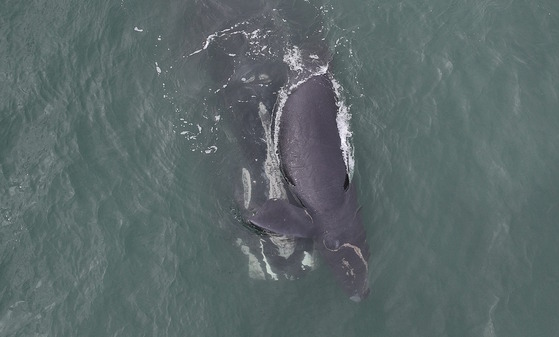 The calf of Harmonia lolls on mom (just under the surface ) off St. Simons Island (CMARI/NOAA permit 26919)
In a more upbeat update, the count of right whale calves this winter is up to seven in the Southeast, the species' only known calving grounds. The latest mom is catalog No. 3101 (Harmonia), seen off St. Simons with her third known calf Dec. 17.
The completed Stateline Forest project protects 10,345 acres on the Georgia-Alabama line, safeguarding “one of the most ecologically significant … landscapes in the Southeast,” according to The Conservation Fund. The nonprofit announced with project partners Dec. 15 that it had transferred the property, part of the larger Dugdown Mountain Corridor in northwest Georgia, to the respective state agencies – DNR in Georgia – to conserve and manage.
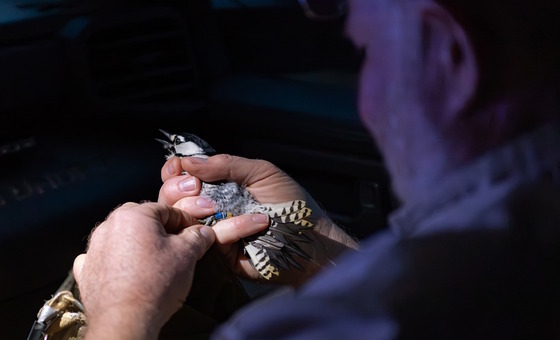 A red-cockaded woodpecker bound for Chickasawhatchee WMA (Ben Thesing/The Jones Center at Ichauway)
Seven pairs of red-cockaded woodpeckers were released early Thursday at DNR’s Chickasawhatchee Wildlife Management Area near Albany. Moving the federally threatened birds from two donor sites – Fort Stewart and The Jones Center at Ichauway – was the work of a deep conservation partnership and marked the species’ introduction to Chickasawhatchee, now the fifth state-owned WMA with red-cockaded woodpeckers.
Teachers and students statewide are encouraged take part in the 36th Give Wildlife a Chance Poster Contest. Focused this year on the different ways wildlife come into the world, the K-5 competition encourages appreciation of Georgia’s natural diversity – and offers prizes, too boot. Learn more. See previous winners.
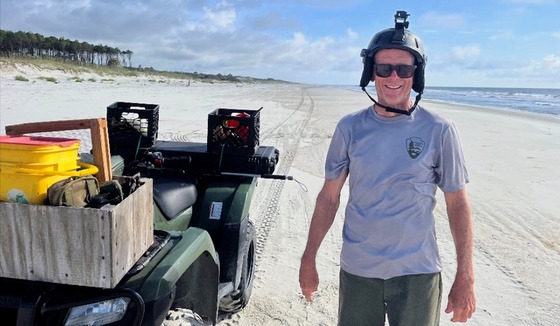 Doug Hoffman geared for sea turtle nest-predator control (Special to DNR)
The retirement of Cumberland Island National Seashore’s Doug Hoffman, a wildlife biologist storied for his work coordinating sea turtle nesting work and combating nest predators on Georgia’s largest barrier island, spurred this post on the Georgia Sea Turtle Cooperative's Facebook page. (If you’re wondering, it does reference the Hoffman Effect.)
With the 2026 Georgia General Assembly opening Jan. 12, the Georgia Conservancy will again offer regular updates on conservation legislation. Likewise, the Georgia Camo Coalition network will provide “camo alerts” on bills involving fishing, hunting and wildlife issues.
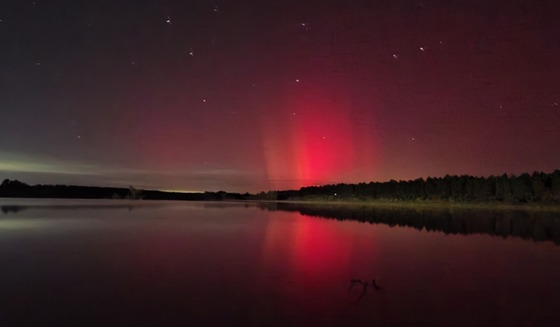 View of the aurora borealis from Paradise Public Fishing Area Nov. 11 (Vanessa Lane)
Quick hits:
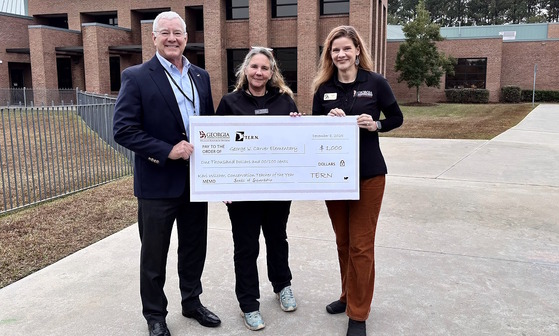 From left, TERN's Glenn Cook, teacher Kari Wilcher and DNR's Linda May at Carver Elementary (DNR)
Names in the news: A proposal by Bryan County teacher Kari Wilcher to increase biodiversity and ecosystem resilience on her school campus earned a $1,000 grant and honors as DNR’s 2025-26 Conservation Teacher of the Year. Wilcher is an outdoor educator at Dr. George Washington Carver Elementary in Richmond Hill. DNR has named Chris Harper director of the agency’s Wildlife Resources Division. Harper, an employee since 1999 and most recently assistant chief of Fisheries Management, succeeds Ted Will, who retires this month after 25 years with the division. DNR Commissioner Walter Rabon said Harper “brings a wealth of experience, leadership and dedication. … His extensive knowledge and steadfast commitment to conservation make him exceptionally qualified to lead the division.” A study by researcher Joyce Klaus and her husband Nathan, a senior DNR wildlife biologist, analyzed data from 1830 land lottery maps to redefine the historic distribution of American chestnuts in Georgia. Findings – such as the trees being less common in north Georgia and more common in the Piedmont than thought – could help with reintroducing chestnuts, a once common species decimated by non-native diseases. Bird Georgia’s new executive director is Adam Betuel, previously director of programs and conservation for the nonprofit.
WHAT YOU MISSED ...
In the previous Georgia Wild:
- Tortoise’s movie debut
- Update on wild tegus
- A beloved nut for birds
- Mussel crew gets gator shock
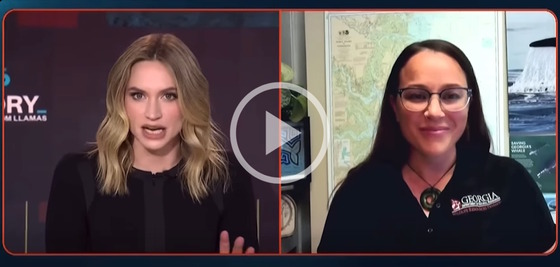 NBC's Ellison Barber, left, interviews DNR's Jessica Thompson on "Top Story with Tom Llamas"
"Top Story with Tom Llamas" (DNR's Jessica Thompson discusses disentangling a right whale with anchor Ellison Barber), NBC News (interview clip posted on Facebook by Georgia First Lady Marty Kemp)
"What's in your field backpack?" with botanist Justin Donahue, DNR
A glimpse of DNR's work conserving right whales, DNR
"Seal escapes killer whales by jumping on boat," Staten Island (N.Y.) Advance
"In two-day effort, team partially frees whale of fishing gear off Ga. coast," The Current. Also: Savannah Morning News, (video) WTOC-TV (Savannah), Atlanta Journal-Constitution, First Coast News (Jacksonville, Fla.) and others.
(+audio) "NOAA report shows whale entanglements up in 2024," Maine Public
"Two right whale calves spotted as season begins," WABE-FM (90.1, Atlanta). Related: "First right whale calf of season seen off S.C.," WSAV-TV (ch. 3, Savannah).
"Endangered whale seen in Ireland reappears off Mass.," WPRI-TV (ch. 12, Providence, Rhode Island)
"Do your part to help right whale population," The Brunswick News
"Georgians, keep your eyes on these butterflies," WXIA-TV (ch. 11, Atlanta). Also: WSB-FM (95.5, Atlanta) and others.
(+video) "Augusta University students create wildlife health guides for DNR," WRDW-TV (ch. 12, Augusta)
"DNR announces Harper as Wildlife Resources director," Grice Connect and others
"Dwindling turkey numbers in Georgia are 'a real concern,'" Georgia Recorder
"Hunters for the Hungry seeking venison donations," Statesboro Herald
(+video) "Local students take part in environmental learning with DNR," WRDW-TV (ch. 12, Augusta)
CREDIT: Georgia Wild masthead/red knots (Linda Nong/DNR)
Top
|