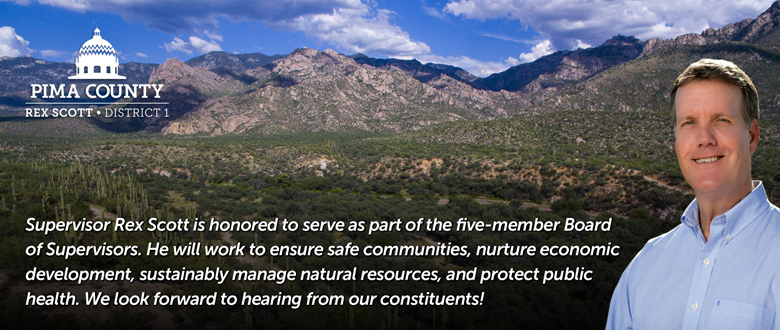
|
Good morning,
When I had the honor of serving as Chair of the Pima County Board of Supervisors, one of my priorities was strengthening collaboration between Pima County and the City of Tucson on issues that directly impact public safety and community well-being. That commitment led to the creation of the Metro Justice Working Groups, a coordinated effort bringing together County and City leadership, courts, law enforcement, health professionals, and service providers to improve how our systems respond to individuals involved in the justice system.
By bringing all stakeholders to the table, we were able to speak openly about challenges each part of the system faces and focus on constructive, solution-driven conversations rather than finger-pointing. During my years as a school administrator, I learned that the best solutions come when everyone is in the room together, working through problems face-to-face. Metro Justice was built on that same philosophy.
The Metro Justice Working Groups focused on four key areas: the Transition Center, Courts, Early Intervention and Diversion, and Data.
Transition Center: The Pima County Transition Center connects individuals leaving the Pima County jail with Justice Services navigators who help them access housing, transportation, treatment, food, and medical care. These services help stabilize individuals after release and reduce repeat arrests and missed court dates.
Deployments: The deployment model focuses on coordinated, multi-agency field operations between the City of Tucson, Pima County, law enforcement, outreach teams, and service providers. These deployments aim to address public safety concerns while connecting individuals experiencing homelessness, substance use, or behavioral health challenges with immediate services, shelter options, and long-term support.
Courts: Understanding how the court system operates is essential when looking at the justice system as a whole. While prosecution decisions fall outside the executive branch, collaboration with the courts helps us explore programs that address root causes, hold individuals accountable, and support recovery from trauma and addiction.
Data: Data sharing across justice, court, and health systems is complex, but it is essential for accountability and better outcomes. While privacy protections are important, identifying the data that can be responsibly shared helps ensure agencies are working together rather than in silos.
Through the Metro Justice Working Groups, we identified practical policy and system improvements, including strengthening the Transition Center, expanding diversion and specialty court programs, improving coordinated field deployments, and developing a unified data-sharing framework to track outcomes and improve accountability. This work reflects a shared belief that collaboration leads to smarter public safety strategies, better use of taxpayer dollars, and stronger outcomes for our community.
On November 18, 2025, Pima County and the City of Tucson held their first Joint Meeting, where Mayor Regina Romero and I presented the collaborative work underway between the City and County. The initial presentation highlighted the system gaps identified by the Metro Justice Working Groups.
Link to meeting
While identifying improvements is important, implementing them requires action by both governing bodies. Many of the recommendations must ultimately be approved by the Mayor and City Council and the Pima County Board of Supervisors. These efforts have been incorporated into two complementary initiatives: One Pima, which focuses primarily on County efforts, and Safe City Initiative, which focuses on City initiatives. While each has its own priorities, both plans work in coordination to address shared community challenges.
The second Joint Meeting, held on March 3, 2026, provided an update on the Metro Justice Working Groups’ recommendations. County Administrator Steve Holmes and Assistant City Manager Liz Morales outlined the priority actions identified by the groups, as well as how and by whom those actions will be implemented including expansion of hours at the Transition Center, additional data sharing, expanding early intervention and diversion models
Link to meeting
There is still much work ahead, but this is a strong start. The right people are at the table, sharing concerns, working through barriers, and developing real solutions to complex challenges. My team and I remain active members of the Metro Justice Working Group. Good governance means recognizing problems, rolling up our sleeves, and working together to solve them, and that is exactly what this group has come together to do.
Rex
Inside Pima County with Rex Scott
***
Subscribe to or follow to us on your favorite podcast platform so you don't miss our latest episodes!
 The Transportation Master Plan will address all 9,189 square miles of Pima County and include 2,200 miles of roadway, along with pedestrian, bicycle, transit, and paratransit infrastructure. By sharing your comments, concerns, and local knowledge, you can help improve mobility throughout the region.
Link to Website and Survey: Pima County Transportation Master Plan

 
Other great Pima County Newsletters!
Election Information
Ballots went out last week for the RTA Special Election. This election is an all vote-by-mail election. For more information regarding this election please visit: Pima Votes
UPDATED 2026 PRIMARY ELECTION DATE
The Arizona State Legislature has moved the 2026 Primary Election up two weeks. The new date is July 21, 2026. For a full list of election dates visit the Pima County Recorder's website at:
Catch Rex talking about Pima County issues that impact you!
Find more information:
|