|
Welcome to the Wisconsin Department of Natural Resources (DNR)'s Forest Management, Ecology and Research Newsletter, where we spotlight the work of the Division of Forestry’s Forest Economics and Ecology (FEE) section and the experts that make it happen.
This dedicated team of forest ecologists, hydrologists, silviculturists, geneticists and researchers applies their expertise to inform and support the sustainable management of Wisconsin’s urban and rural forests. From remote field research studies to tree nurseries to outreach and education opportunities, it’s all in a day’s work for the FEE section. Read on to learn more about the exciting work we do and remember to subscribe to receive email updates on the newsletter!
In this month’s newsletter:
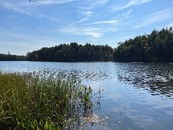
By Cierra Sirianni, DNR Forest Hydrology and BMP Specialist
In the fall of 2025, private, non-industrial forestland timber sales were monitored for the application and effectiveness of Wisconsin’s Forestry Best Management Practices (BMPs) for water quality. Wisconsin’s Department of Natural Resources (DNR), together with a dedicated team of volunteers, carefully checked how well private landowners followed the BMPs during timber harvests on their lands. This marks the fifth time, since the start of the BMP program in 1995, where all five landowner groups within the state have been included in BMP monitoring!
BMPs are a set of practices designed to protect water quality by making sure forest management activities like road building and tree harvesting do not harm nearby lakes, streams or wetlands. The Wisconsin DNR uses BMP monitoring as an opportunity to track ways to improve the BMPs and document successes in protecting water quality.
There are five types of water resources (lakes, streams, wetlands, dry washes and springs/seeps) that are evaluated during BMP monitoring. Riparian Management Zones (RMZs) – areas next to lakes or streams where forest management practices can be modified by foresters to provide shade, stabilize soil and protect water quality – were also monitored.
The teams also tracked several different elements of forestry work, such as how forest roads were built and maintained, the equipment used in the forests and the design of stream crossings. They noted small areas for improvement while celebrating many successes.
The results from BMP monitoring found that on the 36 randomly chosen timber sale sites examined in the field, 94.9% of BMPs were applied properly. The teams determined that the BMPs that were applied correctly were 100% effective at protecting water quality. BMPs were determined to be effective if they prevented erosion into waterways, rutting in the harvest area, and protected lakes, streams and wetlands from unnecessary disturbances. These high rates mean that when BMPs are used correctly, they help prevent degradation to water quality from forestry operations.
What makes the report even more interesting is the teamwork behind it. Volunteers – from state agencies to local forest experts – lent their time to check on sites, even when weather conditions were tough or there were large tracts of land to cover. Additionally, all of the private landowners volunteered their time to take part in BMP monitoring and allow the monitoring teams access to their property. BMP monitoring is a collaborative effort that fosters connections between forest landowners and natural resource managers. Everyone’s cooperation, hard work and dedication helps ensure that when forest management activities take place, water quality remains protected.
Check out the Forest Hydrology webpage for more information on forest hydrology and past BMP monitoring efforts!
|
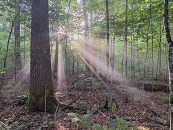
By Benjamin Hanten, DNR Forestry Research Technician, and Elena Razenkova, DNR Forestry Research Scientist
In the pre-dawn hours, technicians and volunteers fumbled for binoculars, cups of coffee, head nets and bug spray and then strode through a verdant forest of northern hardwoods in search of PVC pipe that marked the designated sampling locations for a new round of bird surveys as part of the Managed Old Growth Silviculture Study (MOSS). The woods buzzed with the hum of hungry mosquitos, the cheerful chirp of hundreds of red eyed vireos flitting amongst the treetops and the ethereal song of the hermit thrush as surveyors stood and recorded the movements and calls of the birds above.
In 1994, the Wisconsin DNR and U.S. Forest Service initiated MOSS to see if active management techniques that emulate forest disturbances could accelerate the development of old-growth characteristics in second-growth northern hardwoods. Old-growth forests consistently have highly complex structures, including vertical and horizontal vegetation structure, heterogeneous spatial arrangements, high levels of coarse woody debris, snags, trees with cavities, canopy layers and tree species diversity, all which influence the abundance and diversity of songbirds and other fauna.
|
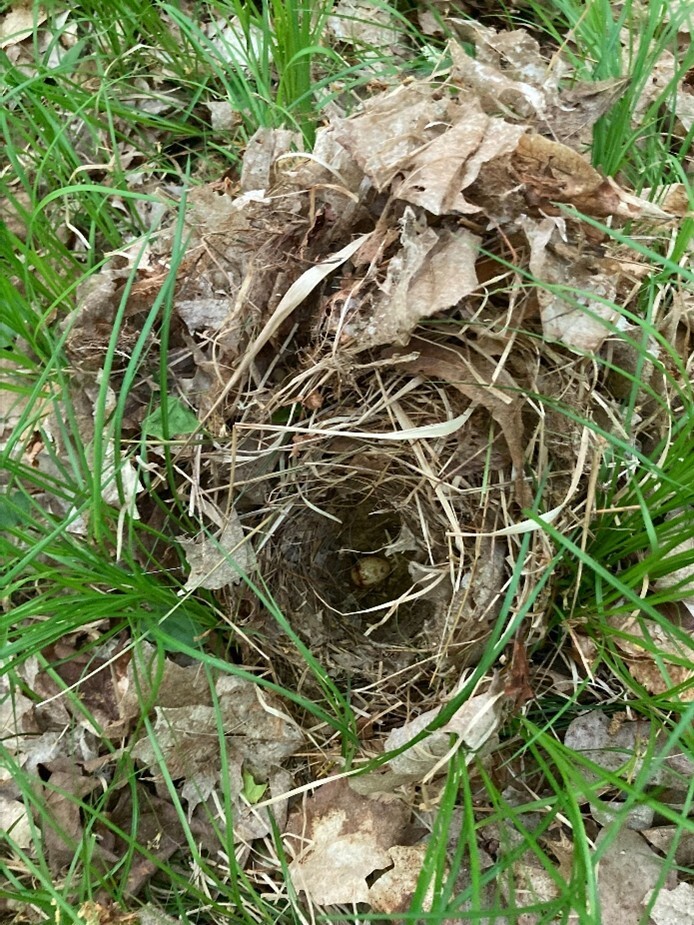 An ovenbird nest found during the point counts at Northern Highland-American Legion State Forest site. / Photo Credit: Wisconsin DNR
Birds are widely recognized as an indicator of ecosystem health and actively respond to changes in vegetation structure. Some birds are known to be associated with old-growth characteristics where they are most abundant. Others are priority species, but not necessarily dependent on old-growth forests, rather they are associated with complex forest structures.
Researchers first surveyed the bird species present just before and immediately after implementing canopy manipulations and coarse woody debris treatments in 2007 and 2008, and we are repeating these surveys 19 years later to see what’s changed. These bird surveys will help us determine if the management techniques that were implemented are working and creating habitat for a more diverse range of species, or bird species that require old growth characteristics.
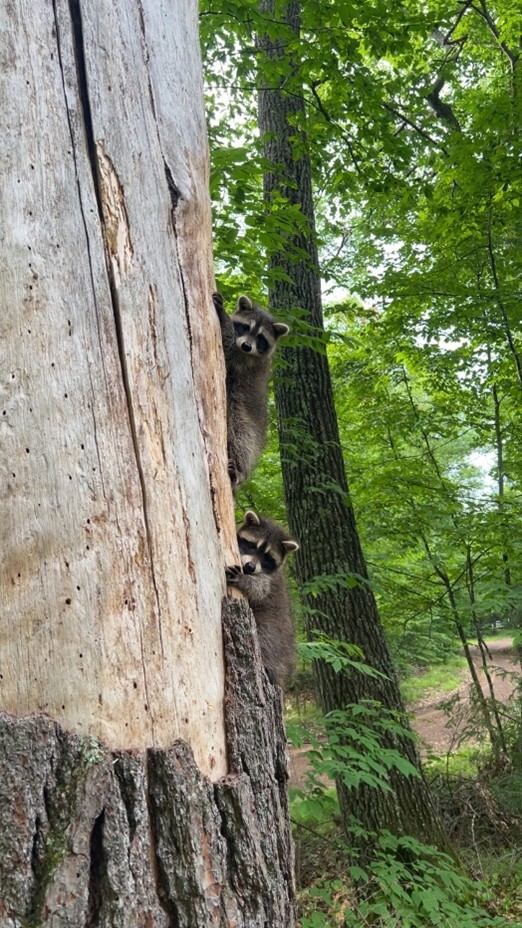 Baby raccoons climbing dead standing tree at Argonne Experimental Forest site. / Photo Credit: Wisconsin DNR
These surveys have been conducted at three MOSS sites including the Argonne Experimental Forest, the Northern Highland-American Legion State Forest and the Flambeau River State Forest. Two species which rely on old growth conditions, the Brown Creeper and Black throated Green Warblers, were observed during point counts this year. Birds are often called canaries in the coal mine, meaning sensitive to trouble. But they are also indicators of positive change and can help us better understand our management. Bird surveys recently wrapped up for this year, and we would like to express our appreciation to all our volunteers and staff, who have helped throughout the project to make these surveys possible.
Specials thanks to:
Our volunteers, who help with conducting bird surveys, sharing materials for training and re-establishing protocol: Colleen Matula, Mike Worland, Eric Margenau, Emilia Skogen, Anna Pidgeon
Wisconsin DNR: Eli Anoszko, Maggie Lorenz
To learn more about the MOSS and other studies, visit the DNR’s forestry research webpages.
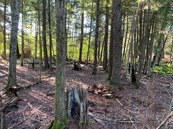
In humans, a pyrophobe is one with an irrational fear of fire whereas pyrophile typically refers to organisms which have evolved to rely on fire as part of their life cycle. These categories are also used to describe tree species and forest types in Wisconsin. Hemlock, which was historically considerably more abundant across forest types in northern Wisconsin, is often described as pyrophobic (fire intolerant) primarily due to thin bark and shallow rootedness. By contrast, red pine is our most fire-resistant species (pyrophilic) and has thick bark and high canopy base heights. Interestingly, despite their contrasting fire tolerance traits, hemlock and red pine often comingle in the same forest system. Recent fire history research has begun to provide ample evidence of low severity frequent fire in these systems generally leading us to ask if the basic traits used to describe fire tolerance characters in hemlock are accurate.
In a recent study, Jed Meunier and Elena Razenkova looked at stand dynamics, fire history and bark thickness across hemlock and red pine dominated stands in both northern and southern relict forests to understand if, or how, these factors change among regions and forests. They found no evidence of pine as pioneer species across forest types but rather pines were long lived and persisted in part due to regular, low-severity fires. What was surprising was that hemlock had thicker bark than red pine across all size classes and had greater relative bark thickness – meaning they allocate more carbon to bark as juveniles than red pine which is a pyrophilic trait and an important fire adaptation of trees in frequent fire systems. Evidence of frequent, low-severity fires was found in half of the hemlock dominated stands they sampled. The ability of hemlock to allocate carbon to bark thickness at young ages and small sizes coupled with shade tolerance may have been important for establishment and ascension into forest canopies in at least some situations.
In 1899, the architect of forestry in the U.S., Gifford Pinchot, wrote that “there is but little of all the vast forest area of this country which does not bear, either in actual scars and charcoal or in the manner and composition of its growth, the marks of fire and indeed it is more than probable that further investigation will greatly narrow the limits of those portions which may now seem to have been exempt.” This seems to apply to hemlock forests, which at least in some situations may have benefited from low-severity fires, rather than been simply harmed by fire.
|
By Scott O’Donnell, DNR Forest Genetics and Ecology Specialist
Tree species often interact with multiple pests and pathogens native to the environments throughout their range. Typically, tree species can resist and survive low levels of exposure to these threats due to prolonged exposure to native pests or pathogens and the long-term natural selection on a given species to combat or tolerate their attacks. However, the 20th and 21st centuries have seen a rapid increase in the introduction of non-native pests and pathogens that can circumvent the natural evolved defensive responses of North American tree species. When this occurs, the pest or pathogen can show rapid population growth, spread, and cause large-scale mortality events as they attack species without proper defense mechanisms. In the most extreme examples, the spread of a pest or pathogen can result in the complete ecological or physical loss of the targeted tree species in certain habitats or even throughout its entire range.
Introduced invasive species are to blame for several of the most catastrophic mortality events in North American tree species. Two modern examples of mass casualty events include the midcentury introduction and spread of chestnut blight and Dutch elm disease (DED) reducing American chestnut and American elm respectively, to a significantly diminished ecological role as a result of the loss of most canopy-height mature individuals.
However, there is still hope for these species. Scientists have been on the hunt for large mature individuals that have survived exposure to either chestnut blight or DED since these mass mortality events were recognized in the 1950s and 1960s. The hope is that the key to returning these species to the landscape resides in the genetics of these surviving individuals. As potential resistant individuals were discovered, breeding programs were established to hopefully develop a resistant seed source for future reforestation efforts for each species. The DNR and the U.S. Forest Service are now testing the results of these breeding programs as part of the Desired Regeneration through Assisted Migration (DREAM) project (see our February Newsletter for more information on this project!) to introduce assisted migration techniques to reforestation and silvicultural practices in northern Wisconsin.
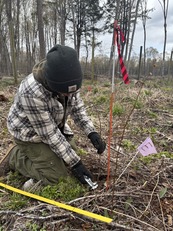
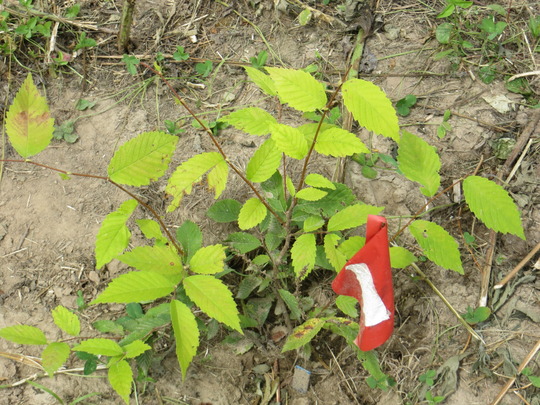
In early April, the DNR and our collaborators at the U.S. Forest Service successfully lifted bareroot American elm and American chestnut seedlings grown at the Wisconsin DNR Wilson State Nursery. The seedlings were planted in June 2026 at the Great Divide site in the Chequamegon-Nicolet National Forest and at Pine Popple State Natural Area in Florence County.
The American elm seedlings represent the ongoing efforts of Dutch elm disease (DED) resistance breeding program at the U.S. Forest Service Northern Research Station. The families included in this study are the result of years of tracking down, propagating, and breeding large survivor elms that show signs of resistance to DED from throughout the Great Lakes Region. The American chestnut families included are some of the last remaining pure, or non-hybrid, chestnut populations in the Midwest that have been maintained in orchards from before the initial spread of chestnut blight.
Including these species in the DREAM study not only allows us to test if they will survive winter in Wisconsin, but also whether they are successful under typical forest management best practices. This is an exciting first step in determining if DED resistant American elm or chestnut blight-resistant American chestnuts are good candidates for reforestation efforts throughout the state.
|
By Bob Smail, DNR Research Scientist
The Havenwoods State Forest is a unique greenspace with an interesting history situated in a highly urban setting on the north side of the City of Milwaukee. It is managed by Wisconsin DNR Parks staff who have worked with DNR foresters over the past few years to improve the property’s ecological function and benefits. This has involved a timber harvest, mowing, herbicide application, and replanting of species that will someday provide higher quality habitat and improved amenities for visitors. One forest amenity unique to urban settings is relief from heat islands that develop due to high densities of impervious surfaces, like concrete. The question, however, is how much cooling benefit does the Havenwoods State Forest provide?
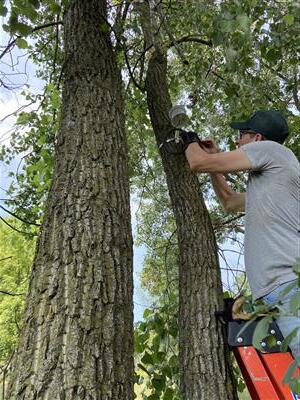
In 2024, Forest Economics and Ecology section research scientists and Urban Forestry staff set out to begin answering this question by installing 28 heat and humidity sensors across Havenwoods and in the surrounding neighborhood. The sensors were installed across a variety of landcover types including closed canopy forests, open canopy forests, prairies, riparian areas, and the Havenwoods parking lot. And with the help of the Milwaukee Forestry Department, six sensors were installed in street trees in the neighborhoods around the park. These sensors were accompanied by a small meteorological station installed near the State Forest Headquarters building which is used to collect baseline data.
There are two primary goals for this project. The first is to quantify the difference in heat and humidity across the different landcover types. The second is to quantify how heat and humidity change in the long-term as the treated open forest areas mature. While it will be some time before results from the long-term study can be quantified, preliminary data from the landcover comparison shows interesting results.
When looking at a two-week period at the beginning of August 2025, the data showed that the closed forest had the coolest high daytime temperatures, regularly reading 3-7 degrees Fahrenheit cooler than other landcover types. By comparison, the residential areas with high densities of heat-holding impervious surfaces and buildings regularly recorded the highest nighttime temperatures reading 3-7 degrees Fahrenheit warmer than other landcover types. Preliminary data did confirm other research showing that the forested landcover was usually more humid than other areas. This could potentially mean that despite the cooler temperatures in the forest, these areas may not feel any more comfortable because of the higher humidity. However, when the temperature and humidity were combined into a heat index, or “feels like” temperature the forested areas were still significantly cooler than other landcover types. While intriguing, these results are still preliminary and should be taken with some caution.
In addition to weather data, DNR research staff have learned a great deal about the challenges of conducting fieldwork in a setting that is both greenspace and urban. Some of these lessons involved dead batteries, curious squirrels, and perching birds. Most surprising was the flooding of Lincoln Creek during the historic Aug. 9, 2025, storms that knocked out a sensor 12 feet up in a tree. Fortunately, there has been little to no vandalism by human visitors. With improved knowledge and better methods, DNR scientists are looking forward to collecting and analyzing this data for some time.
|
More DNR Forestry News
Division of Forestry News
Forest Health News
Forest Products News
Private Forestry News
Reforestation News
Urban Forestry News
Wildland Forestry News
Love this newsletter? Forward it to a friend! To subscribe for the newsletters, visit our sign-up page.
|