|
Welcome to the Wisconsin Department of Natural Resources (DNR)'s Forest Management, Ecology and Research Newsletter, where we spotlight the work of the Division of Forestry’s Forest Economics and Ecology (FEE) section and the experts that make it happen.
This dedicated team of forest ecologists, hydrologists, silviculturists, geneticists and researchers applies their expertise to inform and support the sustainable management of Wisconsin’s urban and rural forests. From remote field research studies to tree nurseries to outreach and education opportunities, it’s all in a day’s work for the FEE section. Read on to learn more about the exciting work we do and remember to subscribe to receive email updates on the newsletter!
In this month’s newsletter:
Have you ever been curious about the research studies the Wisconsin DNR Division of Forestry conducts? The DNR’s Forestry Research webpage was recently published online and is now available to the public!
This public-facing site highlights a wide array of studies conducted by the Division of Forestry. Visitors to the site can peruse journal articles, technical notes and research briefs from ongoing and completed studies covering a variety of topic areas, including forest regeneration, climate and forests, forest genetics, silviculture, forest health, fire, forest products and urban forests.
Readers can dig into the details of an ongoing garlic mustard study, learn about fire rotation in Great Lakes forests, and even investigate the persistence of oak wilt in clear-cut stands. Updates will be made to ongoing studies on a regular basis, so follow along for new information on the Desired REgeneration through Assisted Migration (DREAM), Managed Old-Growth Silviculture Study (MOSS) and other exciting research happening throughout the Division of Forestry.
Bookmark the new Forestry Research website and check back often!
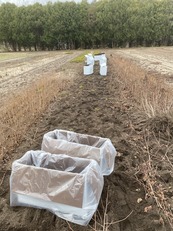
The Wisconsin DNR is part of a collaborative study formally known as Desired REgeneration Through Assisted Migration (DREAM). This international collaboration between the DNR, the United States Department of Agriculture (USDA) Forest Service, Canada and other partners is investigating assisted species migration in a number of locations, including five field sites in Wisconsin. This study will help forest land managers understand which trees will adapt most successfully to future climate conditions in Wisconsin.
Assisted migration involves moving seeds or trees to areas where they are expected to be a better match for future climate conditions. This can mean moving trees within their natural range, just outside it, or even far from it.
In this study, researchers used climate models to tell them what the future climate is projected to be at study sites in Wisconsin both 50 and 100 years from now. Using that information, scientists have identified trees that are currently growing in those conditions, largely in more southern latitudes. Seeds were collected, seedlings grown and then planted at study sites throughout the state where they are expected to be a better match for future climate conditions. Scott O’Donnell, DNR forest geneticist, and Else Radeloff, DNR forestry research field coordinator, help lead the effort in Wisconsin. O’Donnell explained that in this experiment, the team wants to see if moving trees can lead to better forest regeneration and more resilient forests. They are asking important questions: How well do these trees survive when moved? Can they handle the new local conditions? The hope is that the tree species planted at each study site will be well-adapted to future climates.
|
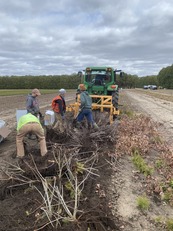
Another goal is to see if non-local species or different tree populations can be used for reforestation or timber production. For example, if oak or walnut trees can grow in areas where they are not usually planted, these trees could add value to the land and help forests grow more resilient to climate change. The study builds on earlier work in Canada that looked at forest management methods, deer browsing, and the survival of moved species.
The project also tests different forest management techniques. Some plots will be fenced to keep deer out; others will remain open. In addition, the team will compare clear cuts, shelterwood and selective harvesting to see which method supports the best growth of the trees.
The trees being used for the DREAM study were grown at Wilson State Nursery in Boscobel and were lifted and planted as seedlings at their respective study site locations in early June 2025. Every summer for the next 10 years, the team will measure each tree and collect several other pieces of data for future analysis.
Visit the DNR’s Forestry Research webpage to learn more about DREAM and other research being conducted within the Division of Forestry!
|
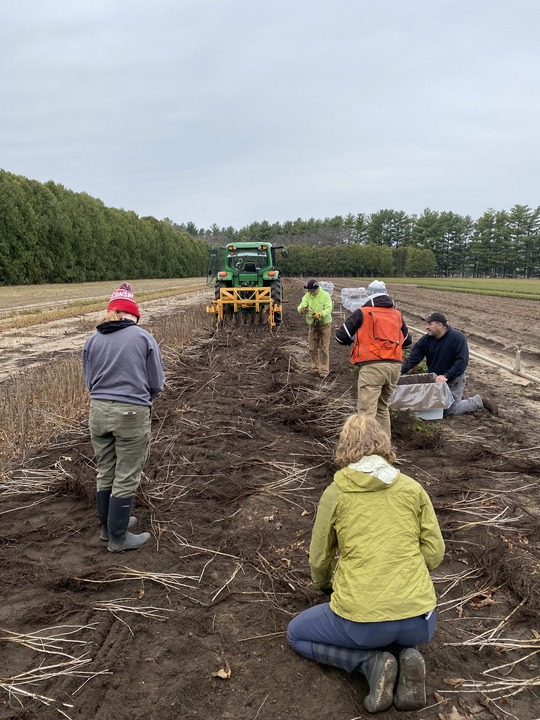
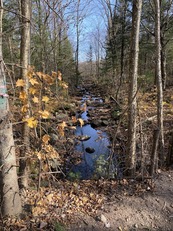
The Wisconsin DNR completes Best Management Practice (BMP) monitoring for water quality on all landowner groups in Wisconsin. In the fall of 2024, large private and federal landowner timber sales were again monitored for the application and effectiveness of Wisconsin’s Forestry BMPs for water quality.
The DNR, together with dedicated teams of foresters, volunteers and state experts, monitors the use of BMPs around waterways in forests throughout the state. BMPs are a set of rules designed to protect water quality by making sure forest management activities like road building and tree harvesting do not harm nearby lakes, streams, or wetlands.
The Wisconsin DNR uses BMP monitoring as an opportunity to track ways to improve the BMPs and document successes in protecting water quality.
There are five types of water resources (lakes, streams, wetlands, dry washes and springs/seeps) that are evaluated during BMP monitoring. Riparian Management Zones (RMZs) — areas next to lakes or streams where forest management practices can be modified by foresters to provide shade, stabilize soil and protect water quality — were also monitored.
|
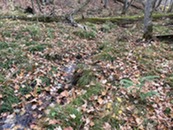
The teams also tracked several different elements of forestry work, such as how forest roads were built and maintained, the equipment used in the forests and the design of stream crossings. They noted small areas for improvement while celebrating many successes.
The 2024 BMP report found that nearly all BMPs were followed correctly across all 58 randomly chosen timber sale sites examined in the field. On large lands, 95.5% of the applicable BMPs were applied properly. On federal lands, the rate was even higher — 96.2%. After determining which BMPs are applicable to a site, the trained volunteers must decide how effective the BMPs used were in protecting water quality. For federal and large private lands, it was discovered that the BMPs that were correctly applied worked 100% of the time. These high rates mean that efforts to protect water quality are working. When BMPs are used correctly, they help prevent damage to water quality.
|
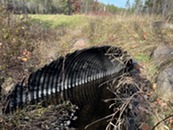
The 2024 BMP Monitoring report shows us that with careful planning and community effort, forest management in Wisconsin keeps our waters clear. While our state continues to lead in forest stewardship, these findings reaffirm the value of a voluntary, adaptive management approach. The report also serves not only as an accountability measure but as a guidepost for continual improvement in protecting the state’s vital water resources.
In 2025, the Wisconsin DNR completed BMP monitoring on private, non-industrial forestlands. Keep an eye out for the next edition of the Forest Management, Ecology, and Research newsletter for an upcoming article about BMP monitoring results in 2025!
|
|
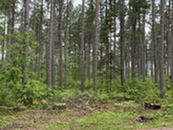
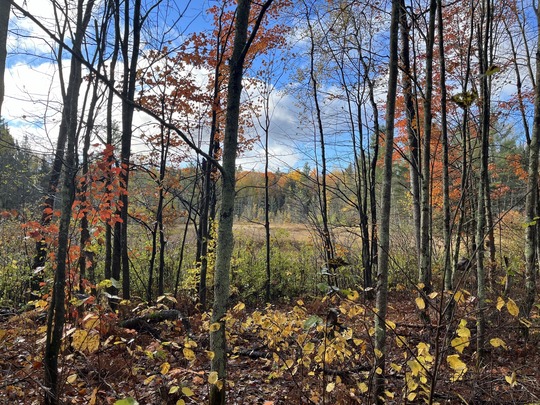
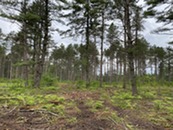
In the past, red pine forests were maintained by frequent, low-severity fires. These fires created a mosaic of single trees, clumps of trees, and openings, which helped regulate fire behavior. Jed Meunier explains that a complex forest can change the way fire spreads, leading to milder fires that help preserve the forest structure. In other words, the forest and fire work together in a positive loop that keeps high-severity fires at bay.
Another benefit of the ICO method is its visual appeal and harvesting efficiency. At one study site near a bike path, the ICO treatment was praised for its attractive look compared to a clear-cut. Foresters also noted that harvesting in clumps is faster and more efficient because they only need to mark the trees to leave behind, rather than marking many trees to remove.
Using the ICO method along with regular low-intensity fires may help restore the natural, complex patterns of red pine forests. This approach could make forests more resistant to future disturbances and better able to handle climate change.
To learn more about ICO and other research within the Division of Forestry, visit the DNR’s Forestry Research webpage.
|
Photo credits: Wisconsin DNR unless otherwise noted.
More DNR Forestry News
Division of Forestry News
Forest Health News
Forest Products News
Private Forestry News
Reforestation News
Urban Forestry News
Wildland Forestry News
Love this newsletter? Forward it to a friend! To subscribe for the newsletters, visit our sign-up page.
|