|
|
Cooler and drier weather settled into the state on August 23 and persisted throughout the week. After a cold front swept through on Saturday, northwesterly winds brought lower humidity and below-normal temperatures to Wisconsin. Conditions were brisk and fall-like, with highs in the upper 60s to mid-70s and overnight lows dropping to the upper 40s and lower 50s. Aside from widely scattered light showers and storms over the weekend, dry weather prevailed.
As August draws to a close, Wisconsin's crop conditions are rated favorably. The USDA NASS reports 83% of corn and soybeans are in good to excellent condition, well above last year’s ratings of 65% for corn and 63% for soybeans. Condition estimates for alfalfa, potatoes, and small grains, are also very promising, with good to excellent ratings varying from 81% to 87%.
In orchards across the state, the apple picking season is underway and growers are anticipating large apple harvests in 2025 as a result of this summer's warm weather and ample rainfall. An ideal holiday weekend forecast calling for comfortably cool, dry weather is expected to boost visitor traffic to orchards and Labor Day-related events.
__________________________________
|
|
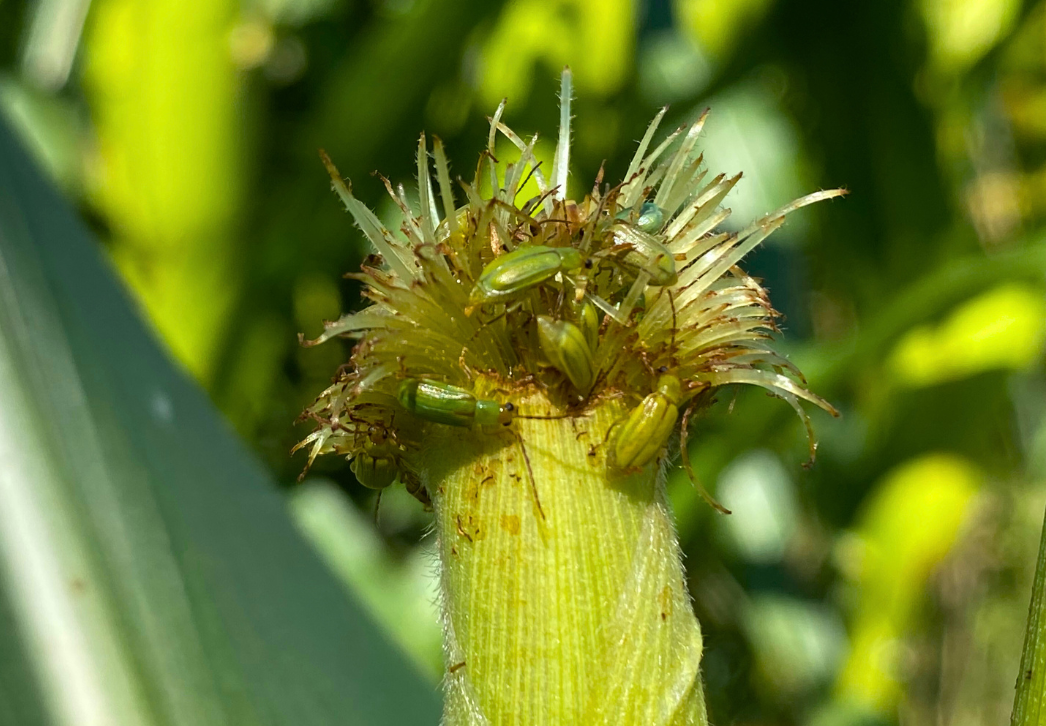
DATCP’s Pest Survey Program completed its annual corn rootworm beetle survey this week. Corn rootworm is widely considered the costliest pest to corn production in Wisconsin and the U.S., and this important long-term survey helps inform rootworm management decisions by assessing current-year beetle populations and providing a forecast for potential larval root damage to next year's corn crop.
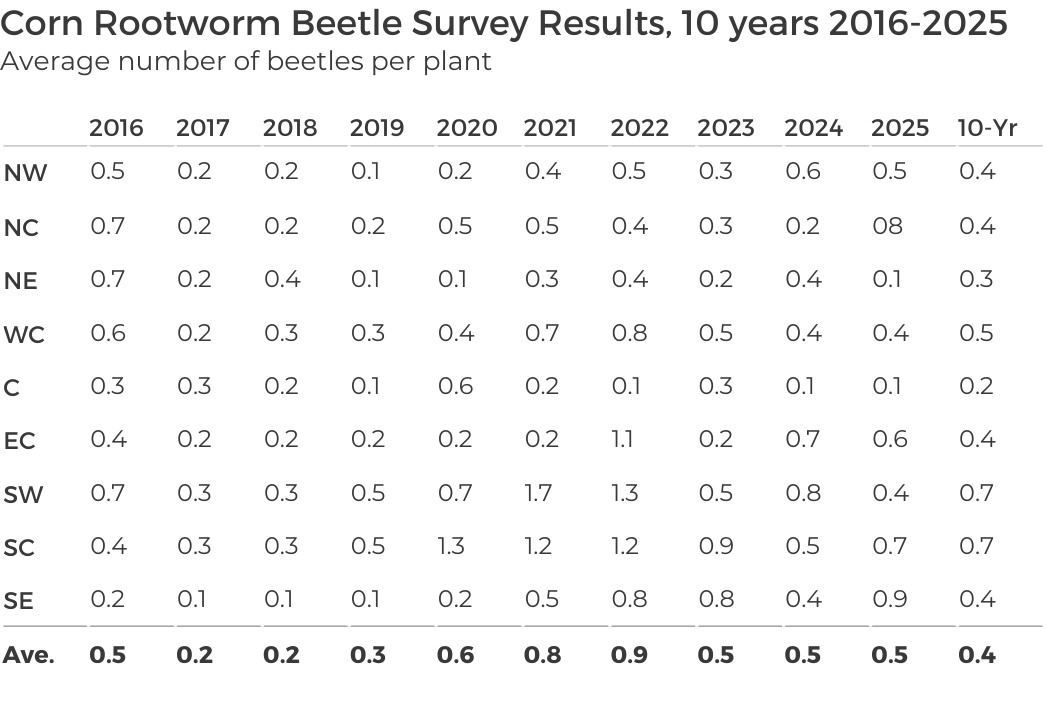
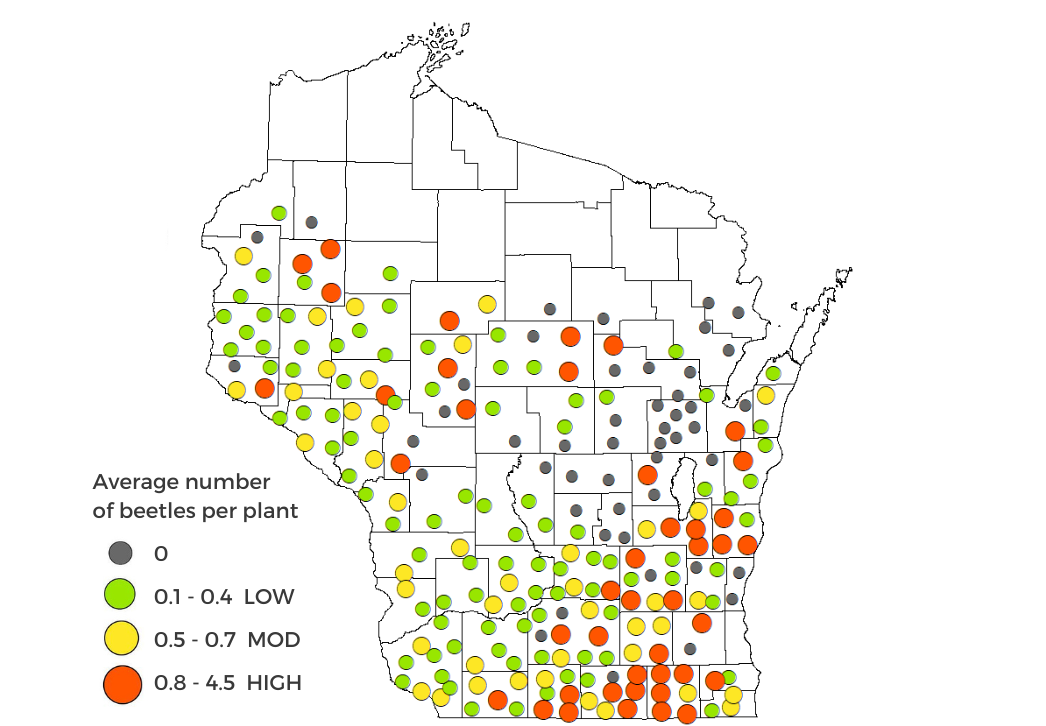
Results of sampling throughout August indicate beetle pressure in grain corn fields has been moderate overall and similar to levels recorded in 2024 and 2023. The survey found a state average count of 0.5 beetle per plant, the same average documented during the previous two seasons.
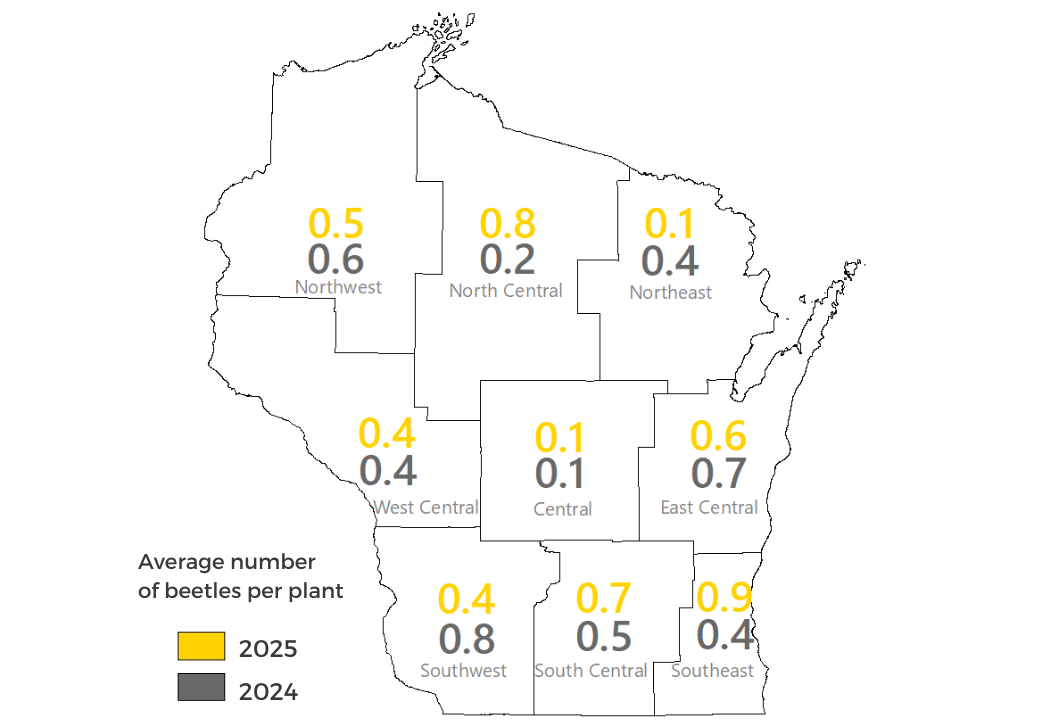
As shown in the maps and table below, average beetle counts decreased or remained static in six of the state’s nine crop reporting districts and increased in three districts. The most significant change observed in 2025 was an eastward shift in beetle pressure into the southeastern counties, away from the usual corn rootworm hotspots in southwestern Wisconsin. The highest averages were recorded in the southeast (0.9 beetle per plant), north-central (0.8 beetle per plant), and south-central (0.7 beetle per plant) regions, though only the first two districts had average beetle counts exceeding the 0.75 beetle per plant economic threshold. Corn fields with high or above-threshold beetle populations comprised 19% of this year’s 229 sites, an increase from last year’s 15%. |
|
Although the survey documented mostly low and moderate beetle populations in Wisconsin corn fields for the third year in a row, individual fields with high rootworm counts were found across the southern and north-central districts. Effective corn rootworm management in these higher-pressure areas will continue to require a multiyear plan emphasizing rotation out of a continuous corn cropping system; selection of a dual or stacked mode of action Bt-rootworm (RW) and RNAi corn seed product; and, in some situations, the use of a soil-applied insecticide at planting—usually for corn products without Bt-RW protection. Crop rotation remains the most effective regulator of corn rootworm populations by breaking the lifecycle and should be the foundation of integrated rootworm management. |
|
__________________________________ |
|
Another season of orchard insect reporting has ended, with significant apple maggot and codling moth activity still occurring at some monitoring locations. Although it is not necessary to send in insect counts after August 28, apple cooperators can expect pest pressure to linger throughout harvest and are advised to maintain traps until late September.
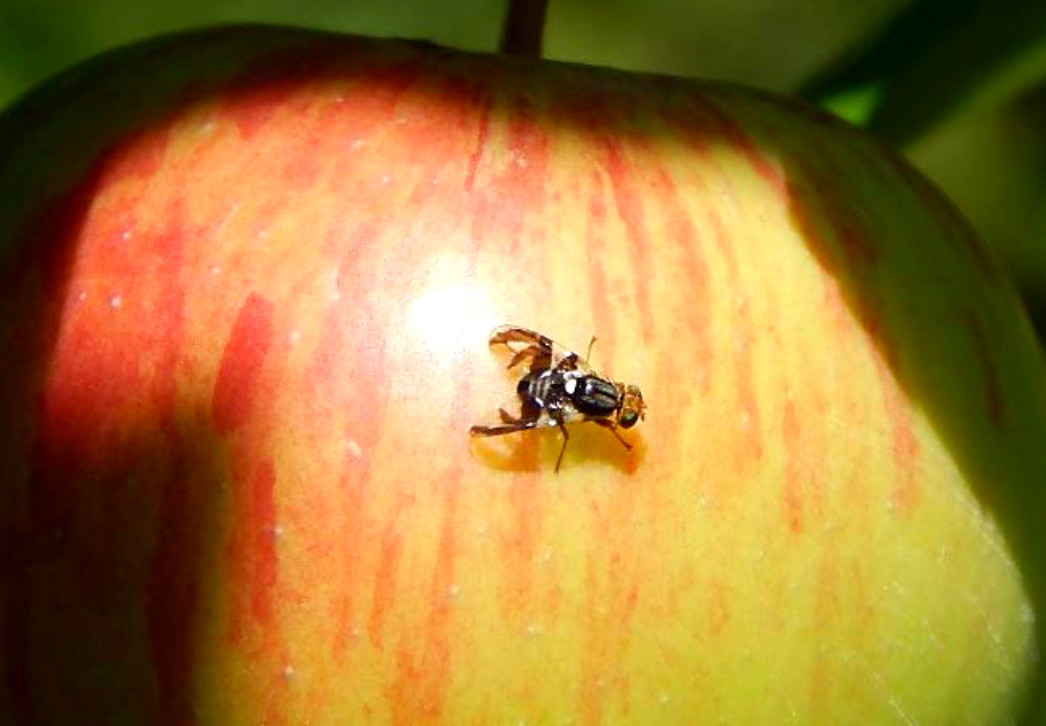
As is often the case, apple maggot counts have been variable this summer. A few orchards have reported extremely high weekly captures of 10 to 25 flies per red sphere trap, while other sites have noted surprisingly few flies. Classic symptoms of apple maggot infestation, including misshapen and pitted spots on fruits and brown, internal larval tunnels, are now visible on affected fruits. Monitoring traps for at least two more weeks is suggested since the flies are still laying eggs and could cause problems in late-ripening apple varieties.
Codling moth activity in orchards has declined markedly, though a few orchard locations registered above-threshold counts of five or more flies per trap. The cooperators in Columbia, Fond du Lac, and Marquette counties reported high weekly captures of six to 23 moths per trap. Orchards that have recorded large summer-generation flights should continue trap checks since counts in September can be an indicator of spring codling moth pressure and damage potential by the first generation of larvae next June.
The Pest Survey Program wishes to thank our dedicated network of apple growers, and all of our cooperators, for their reliable weekly reporting again this season. Data supplied through their efforts contributes to our understanding of the seasonal development and abundance of insect pests in Wisconsin and helps support decision-making and reduced pesticide use. End-of-year summaries of the 2025 insect counts will be posted on DATCP’s various pest monitoring pages next month. |
|
 __________________________________
|
|
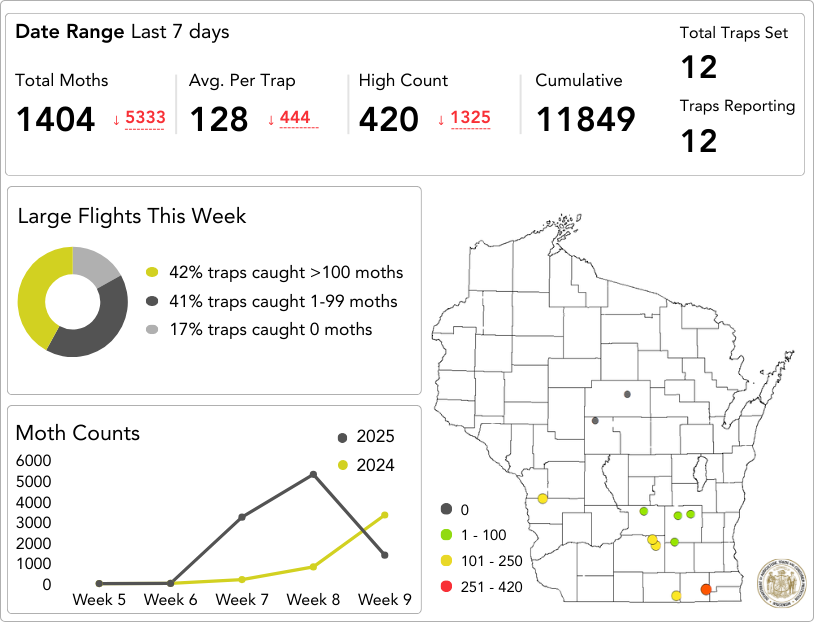
Cooler overnight temperatures and brisk northwest winds curtailed corn earworm activity following last week’s remarkably large flights. DATCP’s corn earworm network reported a total catch of 1,405 moths in 12 traps for the week ending August 28, down sharply from 5,333 moths last week (August 15-21). A few trap sites still registered substantial counts of 200 or more moths, but most reported fewer than 70 moths. The highest individual trap count of 420 moths was reported from the Burlington monitoring site.
As of August 28, the cumulative nine-week total is 11,849 moths in 12 traps (average of 987 moths per trap). The heavy corn earworm moth flights during the latter half of the month signal a high risk of egg laying in sweet corn fields with green silks. Sweet corn growers are encouraged to continue monitoring fields and following DATCP’s corn earworm migration reports through mid-September. |
|
 __________________________________
|
|
|
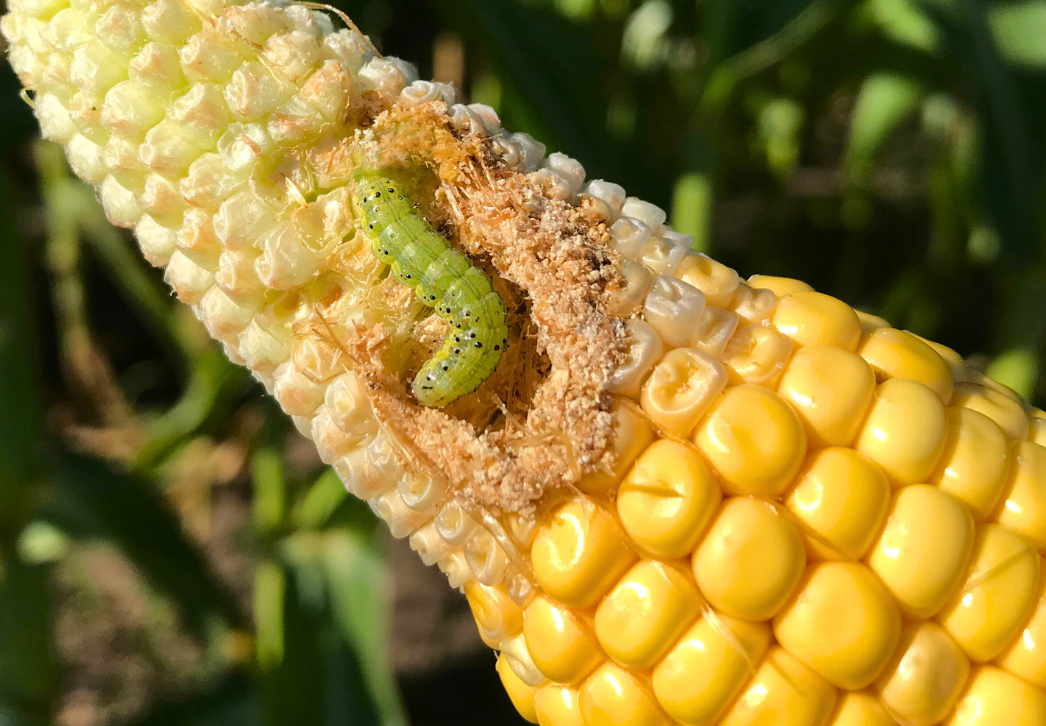
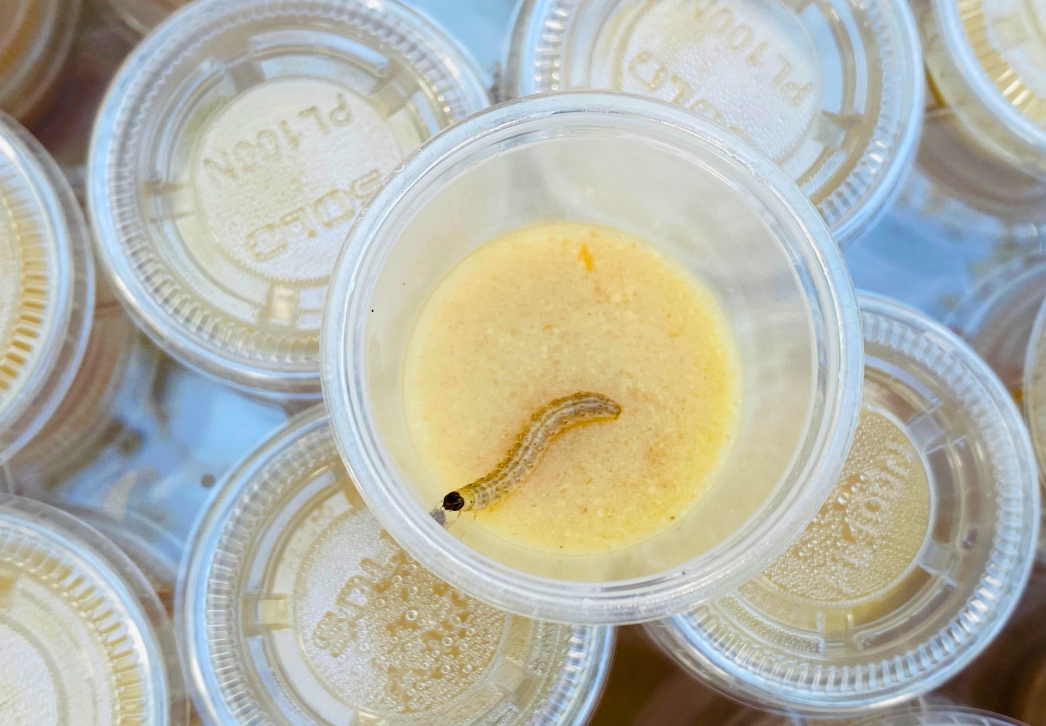
DATCP has a long history of conducting fall surveys for the European corn borer (ECB). Our experienced scouting team is skilled at recognizing signs of ECB and can help determine if larvae are damaging your fields, and the rate of infestation. The fall ECB survey starts September 2 and our program is looking for non-Bt corn fields to scout for larvae and damage. The goal of surveying both Bt and non-Bt fields is to gain a more accurate understanding of ECB pressure (particularly in non-Bt fields where populations are likely higher) and to determine areas of the state where ECB populations may be developing resistance to Cry Bt proteins. Non-Bt corn sites are most needed in Columbia, Dane, Dodge, Grant, Lafayette, and Rock counties, although all Wisconsin counties will be considered.
Corn growers, crop advisors, and Extension educators who have or know of non-Bt corn fields that could be assessed for ECB are asked to email krista.hamilton@wisconsin.gov with:
- Your name
- Phone number
- Field location (county, GPS coordinates, and description of field)
We are hoping to sample 40-50 non-Bt fields between September 2 and October 24. The survey is not destructive and involves examining 25 consecutive corn stalks for signs of ECB infestation and dissecting two stalks to count larvae. Fields that are relatively accessible from a roadside are preferred. Growers will be notified of the ECB population in their fields once the survey is complete.
|
|
__________________________________ |
|
|
|
|