|
|
A heavy rainfall pattern with multiple days of showers and storms drenched much of Wisconsin this week. Accumulated precipitation August 15-21 ranged widely from 0.1-7.0 inches, though many locations recorded totals of 3.0 or more inches. The heaviest swaths of rain (2.0-3.0 inches) fell August 18 in the western and central counties, causing delays in harvesting of alfalfa, apples, oats, sweet corn, and potatoes, until drier weather arrived.
Meanwhile, above-normal temperatures accelerated summer crop maturation. At the start of the week, 81% of the state’s soybeans were setting pods, equal to last year’s pace and one day ahead of the five-year average (USDA NASS). Corn development progressed at a slightly slower than average rate and 54% of the crop is in the R4 dough stage, one day behind last year and two days behind the five-year average. The fourth alfalfa crop of the season was 18% harvested, compared to the 10% long-term average.
DATCP’s field staff continued late-season survey work despite the rain. Activities for the week ending August 21 included sampling corn for rootworm beetles, checking various insect survey traps, completing seed field inspections for export certification, and removing spongy moth traps.
__________________________________
|
|
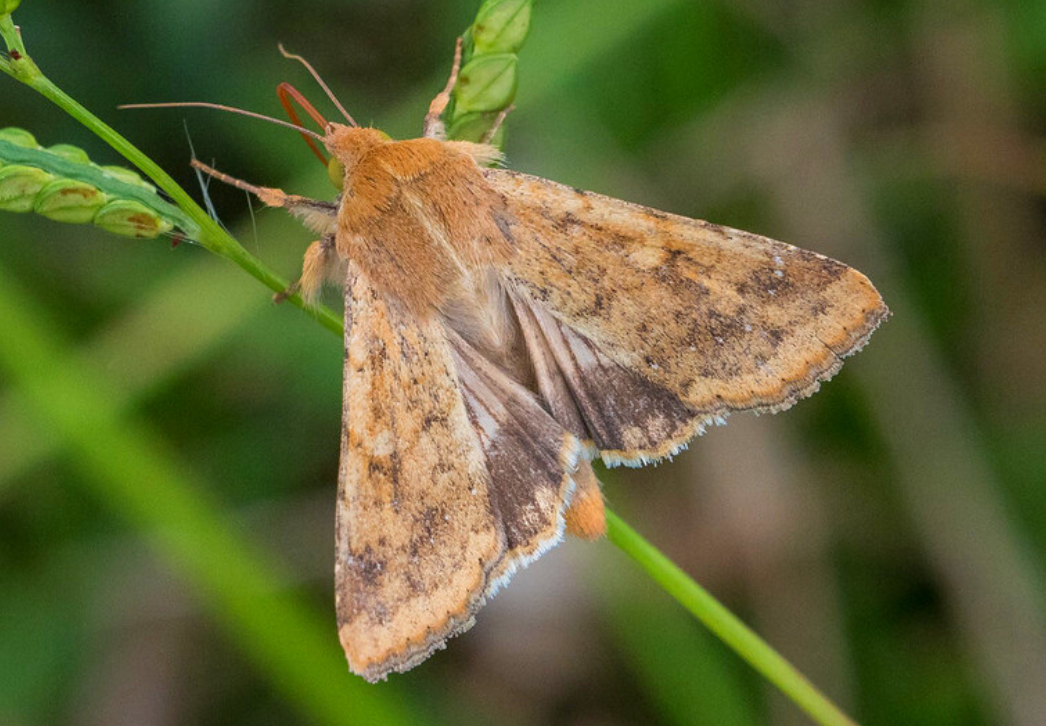
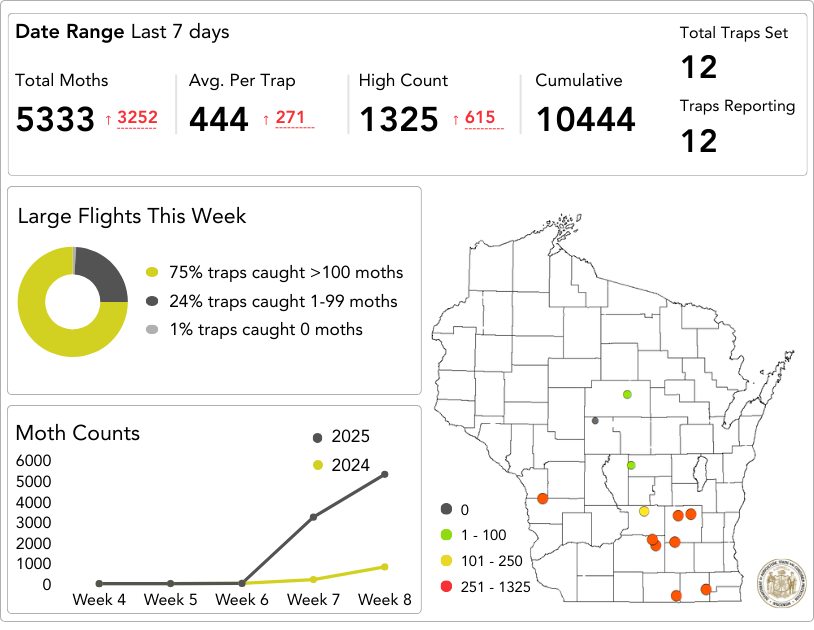
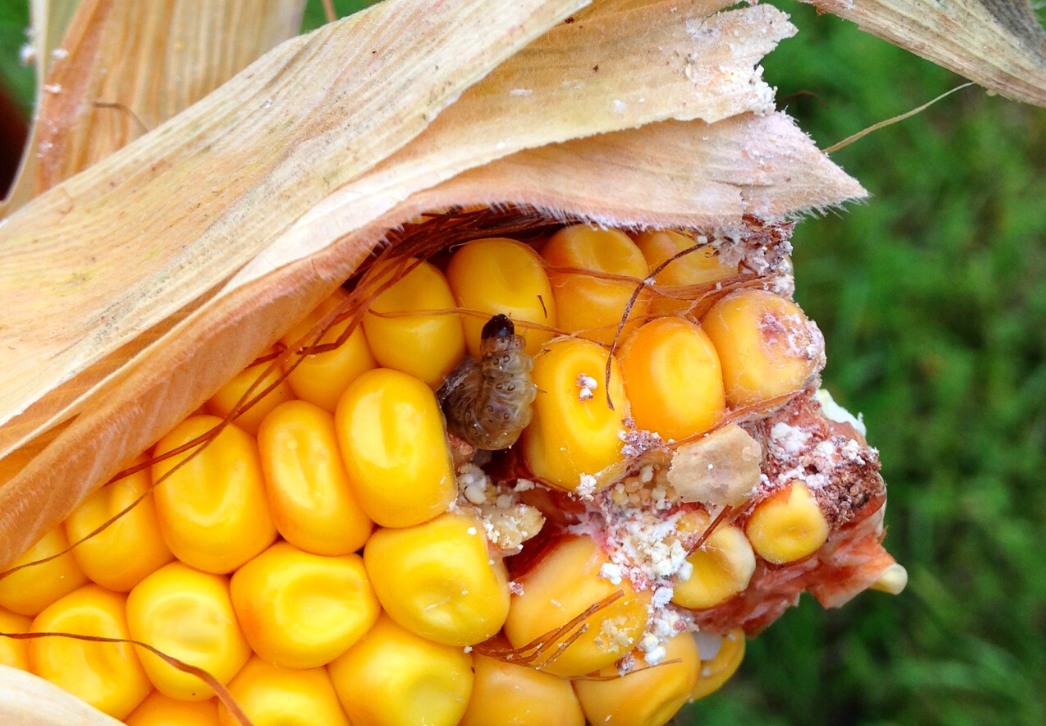
Substantial late-season migration flights of corn earworm moths were registered for the second week in a row. DATCP’s pheromone trap network captured 5,333 moths August 15-21, for a cumulative total of 10,444 moths in 12 traps. The monitoring sites near Burlington and Beaver Dam reported extremely high weekly catches of 1,325 and 1,112 moths, respectively. Counts at six other sites in Dane, Dodge, Rock, and Vernon counties were also very high and ranged from 300 to 679 moths per trap.
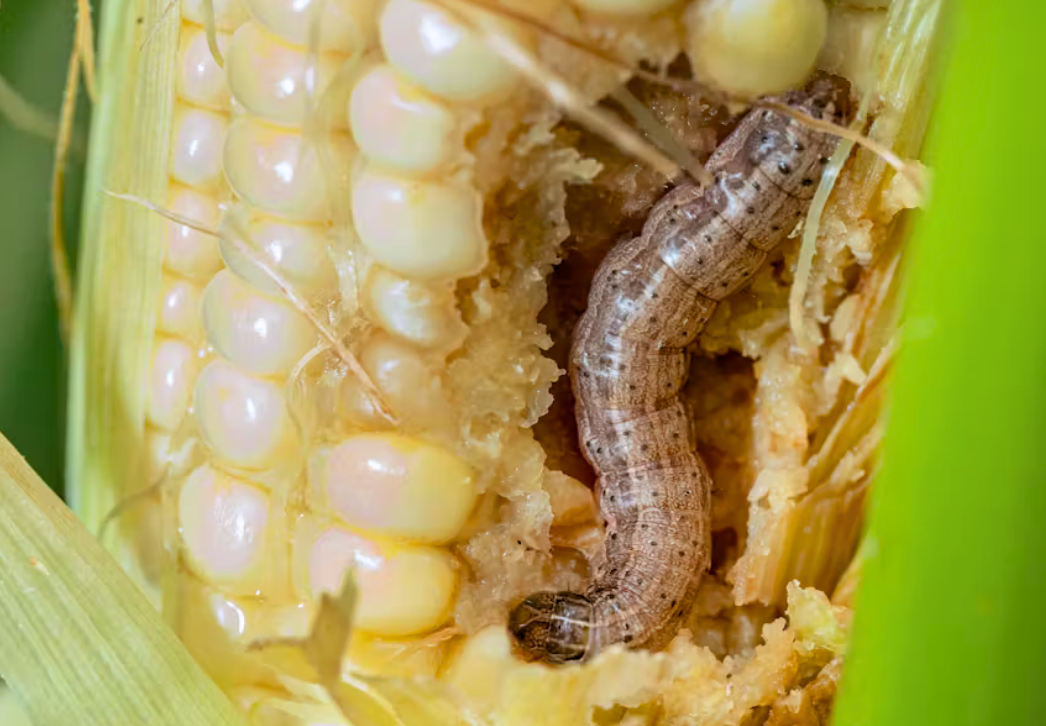
The surge in corn earworm moth activity in the last two weeks signals a high risk of egg laying in sweet corn fields with green silks. Sweet corn growers are encouraged to continue monitoring fields and following DATCP’s corn earworm migration reports through mid-September. Treatment schedules based on nightly corn earworm moth trap catches are available at 2025 Commercial Vegetable Production in Wisconsin (A3422 pg. 280). |
|
 __________________________________
|
|
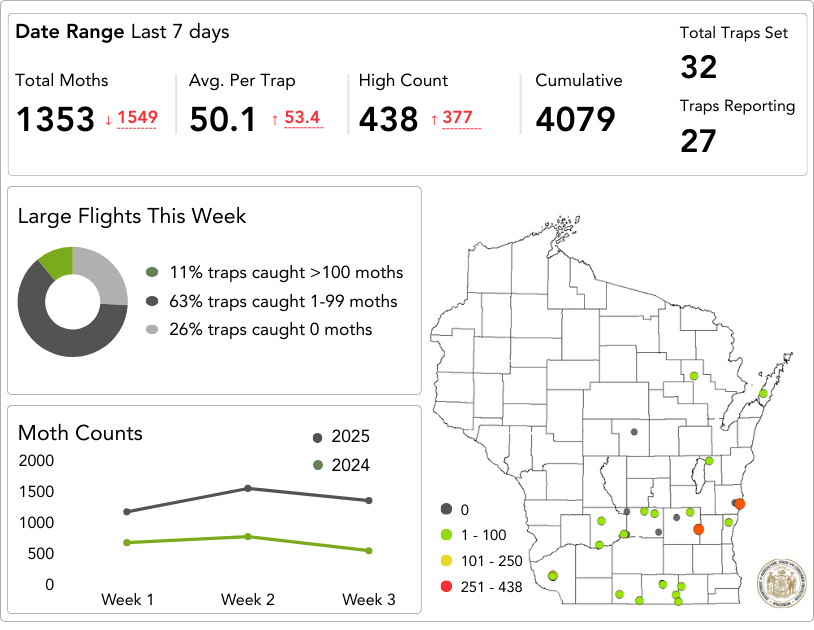
DATCP's fall armyworm (FAW) trap network is monitoring late summer moth migration flights for seven weeks, from August 1 to September 18. During the third week of trapping, FAW moth counts at 32 Wisconsin locations were highly variable. A few traps reported significant weekly captures of 168 to 438 moths, while most sites registered fewer than 10 moths per trap.
As of August 21, the network has captured a cumulative total of 4,079 fall armyworm moths, or an average of 128 moths per trap. This week’s count of 1,353 moths (August 15-21) is a decrease from 1,549 moths the week before (August 8-14). Three sites registered seven-day totals of 100 or more moths and the highest individual weekly count was 438 moths near Sheboygan. The recent trapping network activity suggests that moths are arriving in the state and are likely laying eggs on corn and other host plants. It is unclear if these late flights will result in localized FAW damage to corn.
For regional fall armyworm flight data extending across the northeastern U.S. and adjacent Canadian provinces, please review the Great Lakes and Maritimes Pest Monitoring Network (select FAW tab). |
|
|
__________________________________
|
|
Codling moth flights continued in Wisconsin apple orchards this week, but numbers have declined at most sites. The largest capture of 31 moths per trap was reported from Malone in Fond du Lac County. Apple growers are reminded that evaluating second-generation larval damage by early September will help to forecast first-generation codling moth pressure next season. Orchards that have recorded captures higher than 10 moths per trap per week since the second flight began in July will likely find visible fruit damage at harvest, if the pest population is established in the orchard. If no damage is observed this fall or less than 1% of fruits are affected, then the source of the moths may be from outside of the orchard.
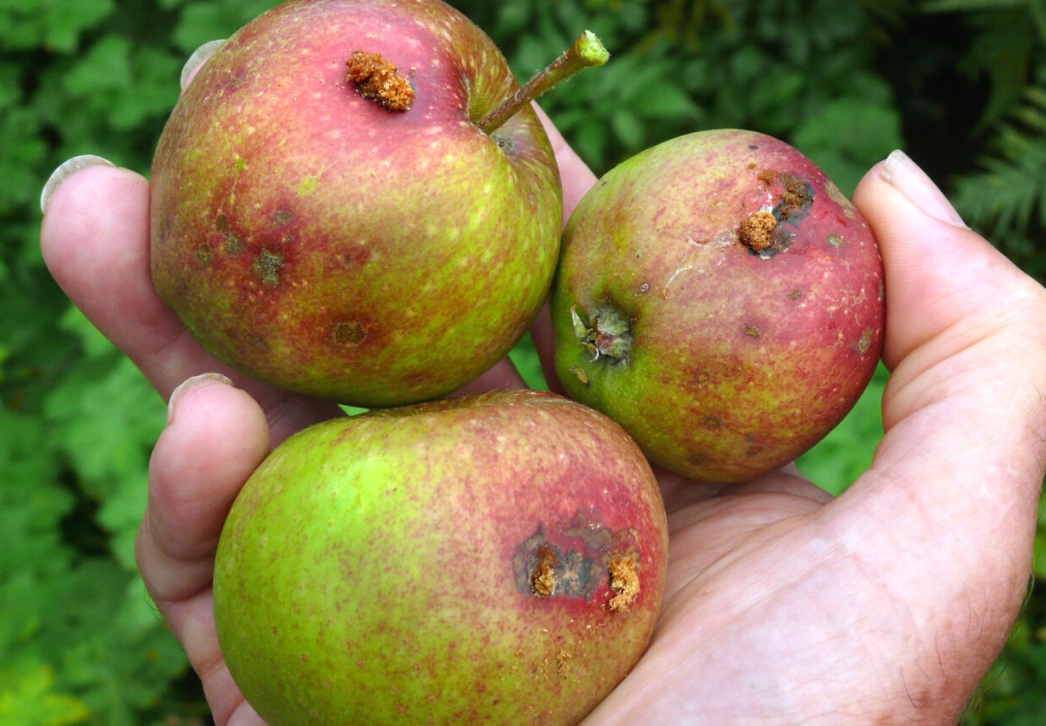
Orchardists are also encouraged to maintain apple maggot (AM) traps well into September since the flies are still active and could cause problems in late cultivars. As is usually the case, apple maggot pressure has been variable this season. Some monitoring locations have recorded very high weekly counts of 10 to 25 flies per trap since AM began emerging in early July, while several sites have not caught a single fly. Apple maggot activity is expected to persist in orchards until approximately 2,800 degree days (modified base 50°F) have been reached. The base 50°F accumulation as of August 21 was 2,380 at Beloit, 2,313 at Madison, and 2,211 at Racine. The external depressions and brown, internal larval tunnels indicative of AM infestation are developing on apples in orchards where AM flies have been abundant this season.
Continued obliquebanded leafroller (OBLR) trap maintenance is also recommended through mid-September. Second-generation OBLR larvae occasionally cause severe fruit damage late in the growing season, and moth counts in late August and September can be a predictor of damage potential of the overwintered larval population next spring. |
|
 __________________________________
|
|
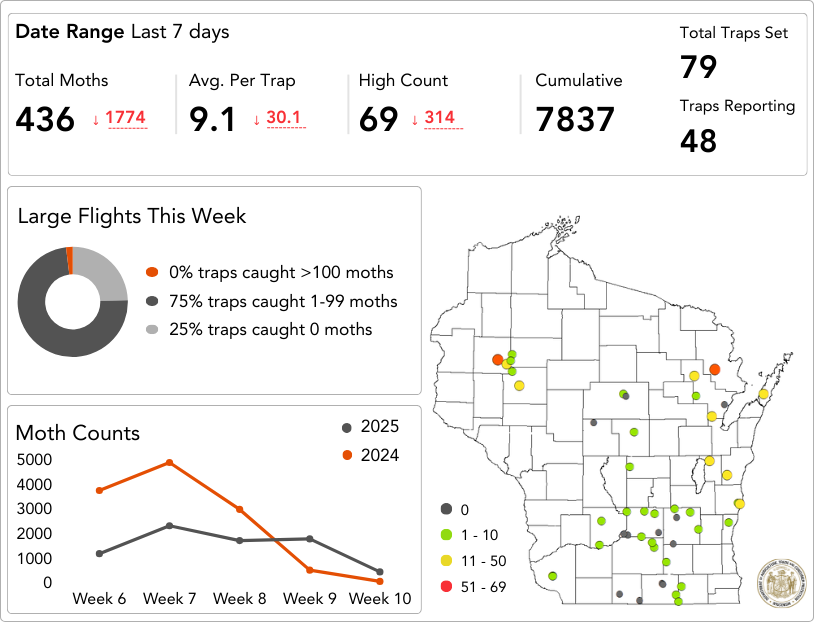
The annual western bean cutworm (WBC) flight is subsiding at northern pheromone trap monitoring locations. The WBC monitoring network reported 436 moths in 48 traps this week (9.1 per trap average), a sharp decrease from 1,774 moths (30.1 per trap average) last week. The highest individual count August 15-21 was 69 moths in the trap near Crivitz in Marinette County, while counts at southern Wisconsin trap sites have dropped to near zero.
The current state total WBC count is 7,837 moths in 79 traps (99 per trap average). This number is approximately one-half of the 15,685 moths in 69 traps (227 per trap average) collected last year but higher than the 10-year average of 90 moths per trap.
All western bean cutworm traps may be removed at this time. The DATCP Pest Survey Program wishes to extend its appreciation to all the volunteers who monitored traps again in 2025. Thank you to our cooperators for making this survey possible.
For regional western bean cutworm flight data extending across the northeastern U.S. and adjacent Canadian provinces, please refer to the Great Lakes and Maritimes Pest Monitoring Network (select WBC tab). |
|
|
__________________________________
|
|
|
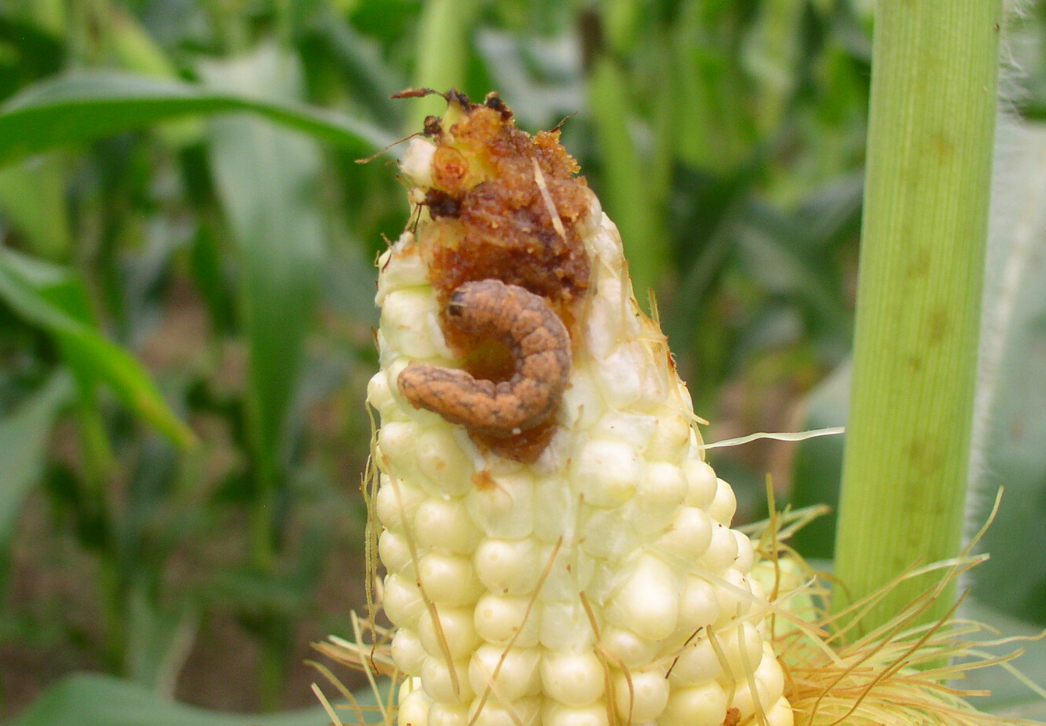
DATCP has a long history of conducting fall surveys for the European corn borer (ECB). Our experienced scouting team is skilled at recognizing signs of ECB and can help determine if larvae are damaging your fields, and the rate of infestation. The fall ECB survey starts September 2 and our program is looking for non-Bt corn fields to scout for larvae and damage. The goal of surveying both Bt and non-Bt fields is to gain a more accurate understanding of ECB pressure (particularly in non-Bt fields where populations are likely higher) and to determine areas of the state where ECB populations may be developing resistance to Cry Bt proteins. Non-Bt corn sites are most needed in Columbia, Dane, Dodge, Grant, Lafayette, and Rock counties, although all Wisconsin counties will be considered.
Corn growers, crop advisors, and Extension educators who have or know of non-Bt corn fields that could be assessed for ECB are asked to email krista.hamilton@wisconsin.gov with:
- Your name
- Phone number
- Field location (county, GPS coordinates, and description of field)
We are hoping to sample 40-50 non-Bt fields between September 2 and October 24. The survey is not destructive and involves examining 25 consecutive corn stalks for signs of ECB infestation and dissecting two stalks to count larvae. Fields that are relatively accessible from a roadside are preferred. Growers will be notified of the ECB population in their fields once the survey is complete.
|
|
 __________________________________
|
|
https://content.govdelivery.com/accounts/WIDATCP/bulletins/3ef0997 |
|
|
|
|