|
|
Summer heat and humidity gave way to milder, more comfortable conditions during the last week of July. Periods of showers and thunderstorms occurred Monday night into Wednesday (July 28-30), though mostly hot, sunny weather prevailed. Weekly average temperatures ranged from 2.0-7.0°F above normal statewide as afternoon highs reached the mid-90s in a few locations. Accumulated precipitation was generally light and varied from 0.10-1.50 inches, with most of the state receiving seven-day rain totals of less than 0.50 inch. Warm overnight temperatures in the upper 50s to lower 70s were favorable for activity by nocturnal pest insects, including western bean cutworm moths, which appeared in high numbers in several survey traps as the annual flight peaked.
DATCP Pest Survey activities included conducting seed field inspections, assessing soybeans for insect pests, checking western bean cutworm traps, and beginning the annual corn rootworm beetle survey, which will continue throughout the month of August.
__________________________________
|
|
Reports of armyworm activity have slowed since last week, but the potential for late-season infestations and crop damage remains high. Second-generation true armyworm larvae began appearing in crops and lawns, primarily in the southern and western areas of the state, around July 18. The week of July 18-24 brought many armyworm sightings, most of which involved armyworms migrating through residential yards to nearby crop fields. As of July 31, reports of locally heavy larval populations have been received from Barron, Burnett, Chippewa, Clark, Columbia, Crawford, Dane, Dunn, Eau Claire, Green Lake, Iowa, Jackson, Jefferson, Monroe, Taylor, and Washburn counties.
The timing of the infestations is typical for second-generation armyworms and corresponds with large moth flights tracked by DATCP’s True Armyworm Trap Network in late June and early July (June 27-July 3). Additional heavy flights this month (850 moths at Lake Mills in Jefferson County July 4-17) signal a potential for more larvae and feeding to extend well into August. Continued scouting of corn, small grains, and other susceptible crops for armyworms is advised to detect and prevent developing problems. |
|
 __________________________________
|
|
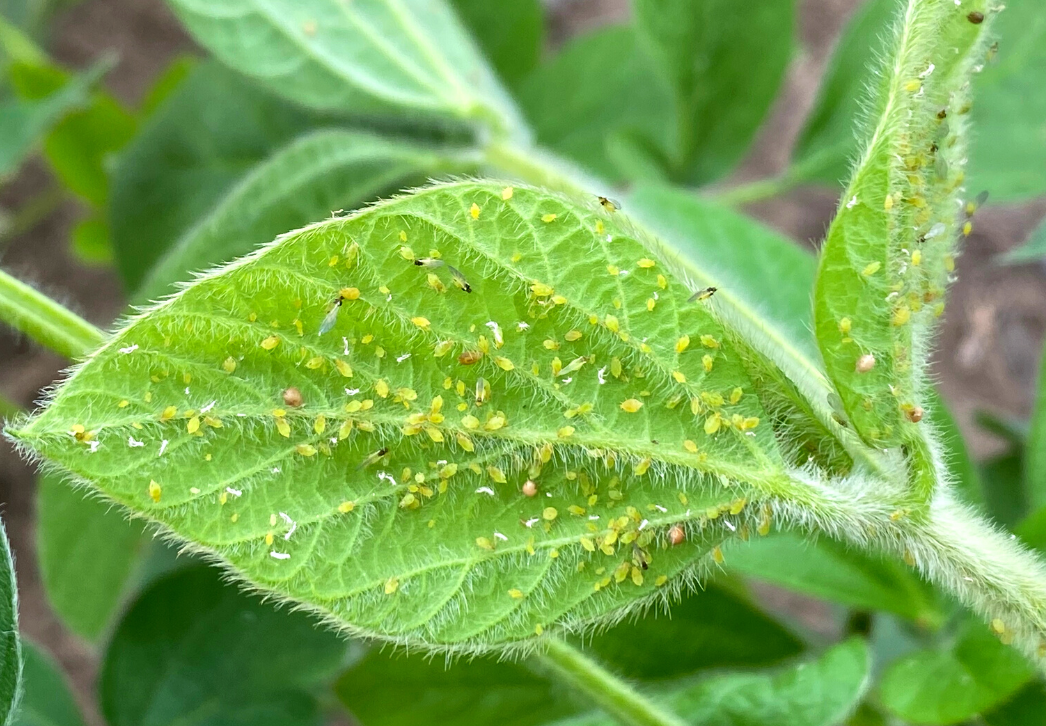
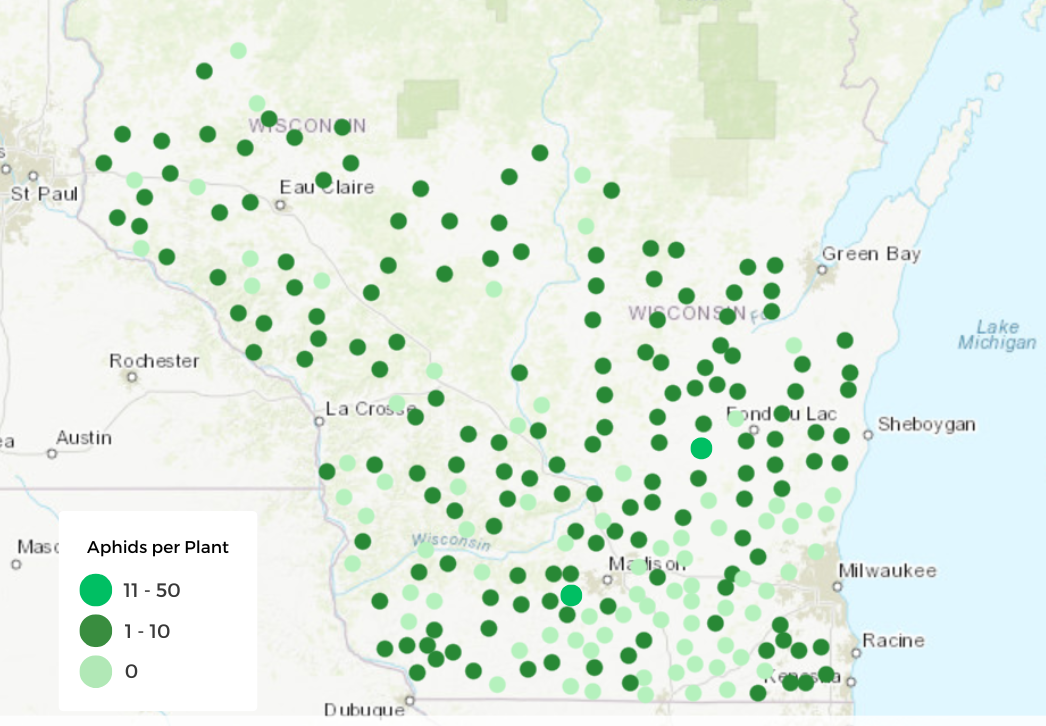
Field surveys across Wisconsin indicate that the most advanced soybeans are at the R5 (beginning seed) growth stage and soybean aphid pressure has generally been low. Of the 230 sites surveyed as of July 31, only two had an average count exceeding 25 aphids per plant (refer to map below). The highest count recorded was 60 aphids per plant on 60% of the soybean plants in a Fond du Lac County field.
The vast majority of soybeans scouted by DATCP for economic pests this month have had very light aphid infestations in the range of 1-20 aphids per plant on less than 50% of the plants throughout the field. In addition, natural enemies such as ladybeetle larvae, green lacewings, and parasitoids are abundant at most sites. |
|
|
Although aphid pressure has been low so far this month, 25 years of experience with this insect in Wisconsin has shown that soybean aphid populations often surge during the last two weeks of July and first two weeks of August. Scouting and insecticide treatment decision-making will be most critical in the next two weeks. To qualify for treatment to control aphids, a soybean field must meet the following three criteria:
- The average aphid count is greater than 250 soybean aphids per plant
- More than 80% of plants are infested with soybean aphids
- The aphid population is increasing
Soybeans should be evaluated not only for aphids, but also for defoliation caused by Japanese beetles, green cloverworm, and assorted caterpillars. Defoliation that meets the 20% threshold between the bloom and pod-fill stages and 30% in the pre-bloom stages may warrant control. Scouting several areas in the field interior, in addition to field edges where Japanese beetles are most numerous, is required for an accurate assessment.
|
|
 __________________________________
|
|
|
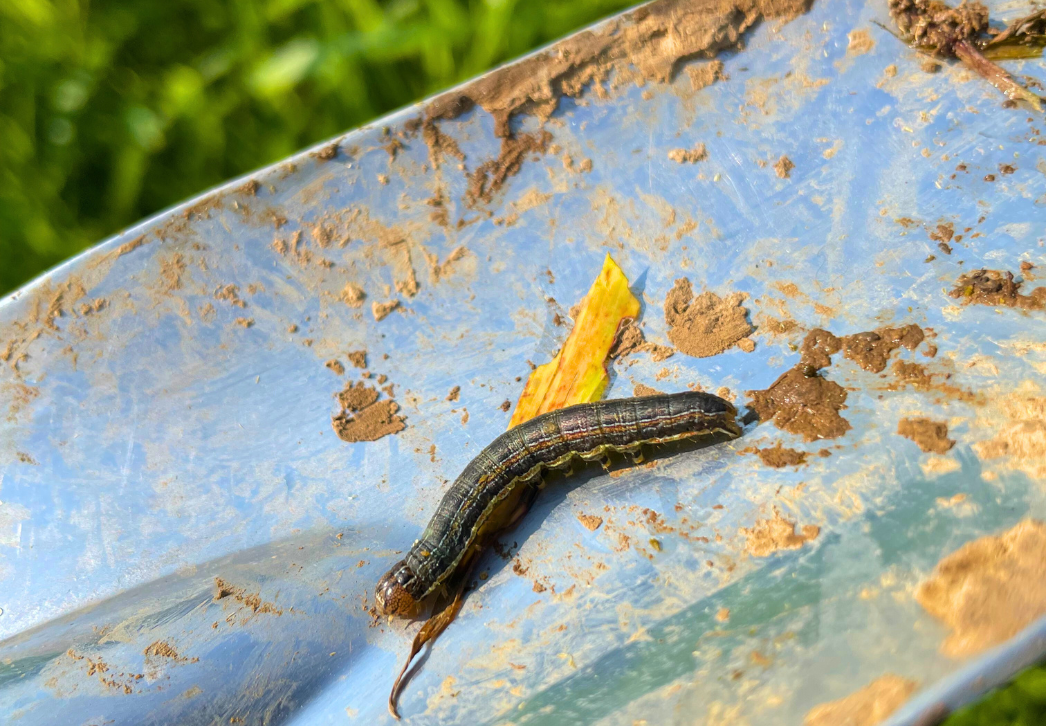
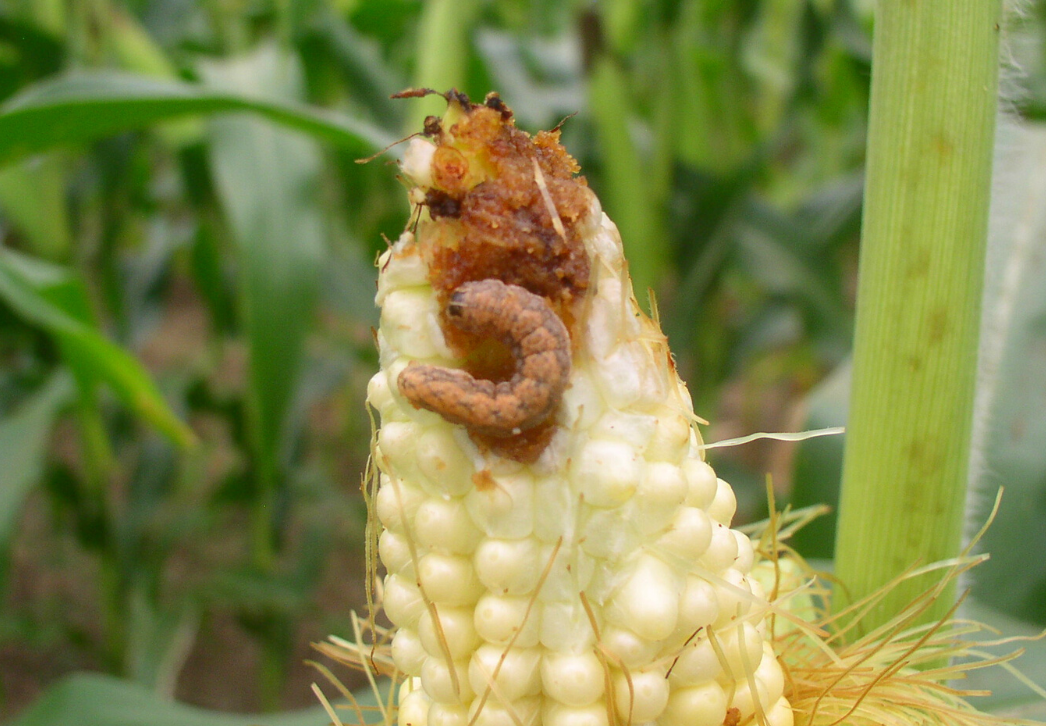
Western bean cutworm larva | K. Hamilton DATCP
 
|
|
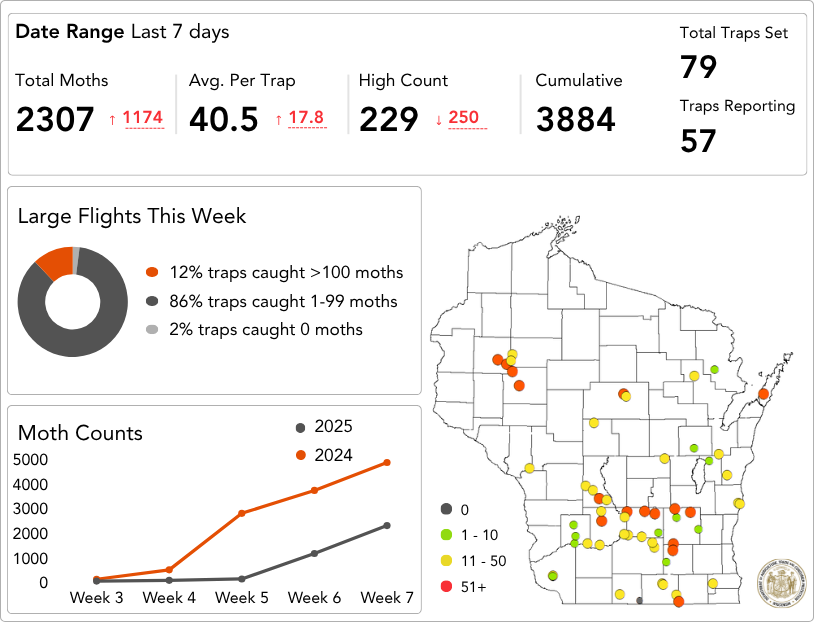
Western bean cutworm moth counts have peaked across most southern and central Wisconsin trap locations and will begin to decrease in the week ahead. In areas north of Wausau, the annual flight is still increasing and should peak July 29-August 11 as degree day accumulations reach 2,704 (modified base 38°F), the point at which 50% emergence is expected.
DATCP’s Western Bean Cutworm Network captured a weekly total of 2,307 moths July 25-31, compared to 1,174 moths the week of July 18-24. The current cumulative state count is 3,884 moths in 79 traps, or an average of 49 per trap. This week’s highest individual trap count of 229 moths was reported near Bloomer in Chippewa County while the trap at Lake Mills in Jefferson County captured 160 moths. These two sites, and five others, each registered 100 or more moths this week. Based on the recent high catches, larval infestations are probable for these areas in early August.
Although the primary scouting window for egg masses has closed across the south, there is still time to assess northern Wisconsin corn fields. Scouting requires checking 20 consecutive plants in five separate areas of the field for egg masses laid on the upper surface of the top leaves. The treatment threshold has been met if egg masses or small larvae are found on 5% or more of the plants. |
|
 __________________________________
|
|
|
|
|