|
|
Extreme heat and humidity impacted Wisconsin this week as a heat dome stalled over the eastern U.S. High temperatures June 21-23 soared to the upper 90s, and heat index readings reached 105-110°F before cooler and less humid air arrived on June 24. During the peak of the heat on Sunday, several locations in the state tied or set new daily records and all-time records. Eau Claire recorded a daily low of 82°F on June 22, the all-time hottest minimum temperature on record for the city. Green Bay and Wausau also set or tied high minimum temperature records with overnight lows of 79°F and 78°F, respectively. According to the Wisconsin Department of Transportation, the searing temperatures caused 53 pavement buckling incidents on roads and highways over the weekend.
Along with the intense heat, severe weather and heavy rain affected much of the state. Rainfall totals of 2.0-4.0 inches were common across southern and west-central Wisconsin, with La Crosse reporting 5.2 inches June 23-25. Although the recent excess moisture helped reduce the moderate (D1) drought coverage in southwestern Wisconsin, the almost daily precipitation has left many agricultural fields saturated. Crop conditions for corn and soybeans are currently rated as 76% and 73% good to excellent (USDA NASS), but surplus rain and damage from this week’s storms have likely caused condition ratings to decrease in some areas.
__________________________________
|
|
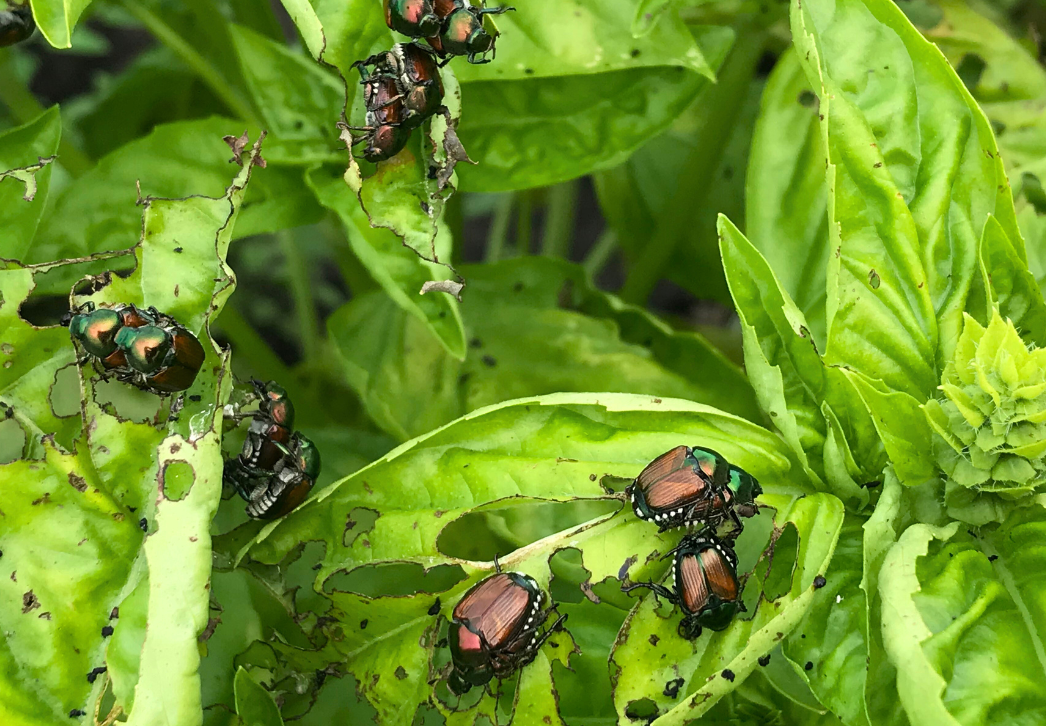
Emergence of the destructive Japanese beetle is underway in Wisconsin. Beetles were observed this week in Dane County, signaling that fruit growers and gardeners should begin making preparations to protect sensitive trees and garden plants from beetle feeding later this summer. Populations will steadily increase over the next six to eight weeks and peak in late July or August. During the primary emergence and damage period, residents can expect to see beetles devouring a wide range of landscape ornamentals, garden plants, field crops, and trees. Favored hosts include basil, birch, grape, linden, mountain ash, plum, and rose.
The earliest Wisconsin Japanese beetle detection surveys began in 1937, and the first documented capture was in 1956 near Mitchell Park in Milwaukee. The state’s first infestation was confirmed in 1973 in Kenosha. At that time, it was thought that the range of Japanese beetles could not extend into northern Wisconsin due to climatic unsuitability, but it is now clear that this insect can survive and flourish as far north as Bayfield and Douglas counties. Populations reached historic highs in Wisconsin from 2016-2018.
One of the most effective deterrents used by fruit and vegetable growers in DATCP’s pest monitoring networks is simple barrier netting (0.25 inch or less mesh). The nylon mesh netting can protect smaller plants such as berries, vegetables, herbs, shrubs, and young trees, as long as it fully covers plants and the edge of the mesh is secured to the ground. Netting should be in place by late June and maintained though harvest or until beetle populations decline in August.
Soil insecticides for grub control in lawns or turf must be applied three to four weeks in advance of beetle emergence. Please note chemical control of grubs will not prevent future damage since the adult Japanese beetle can fly in from nearby areas.
Additional control options for Japanese beetles on landscape and garden plants are available by clicking the button below. The UW Fruit Program offers the following resource for apple growers: Managing Japanese Beetle in Apple | Wisconsin Fruit. |
|
 __________________________________
|
|
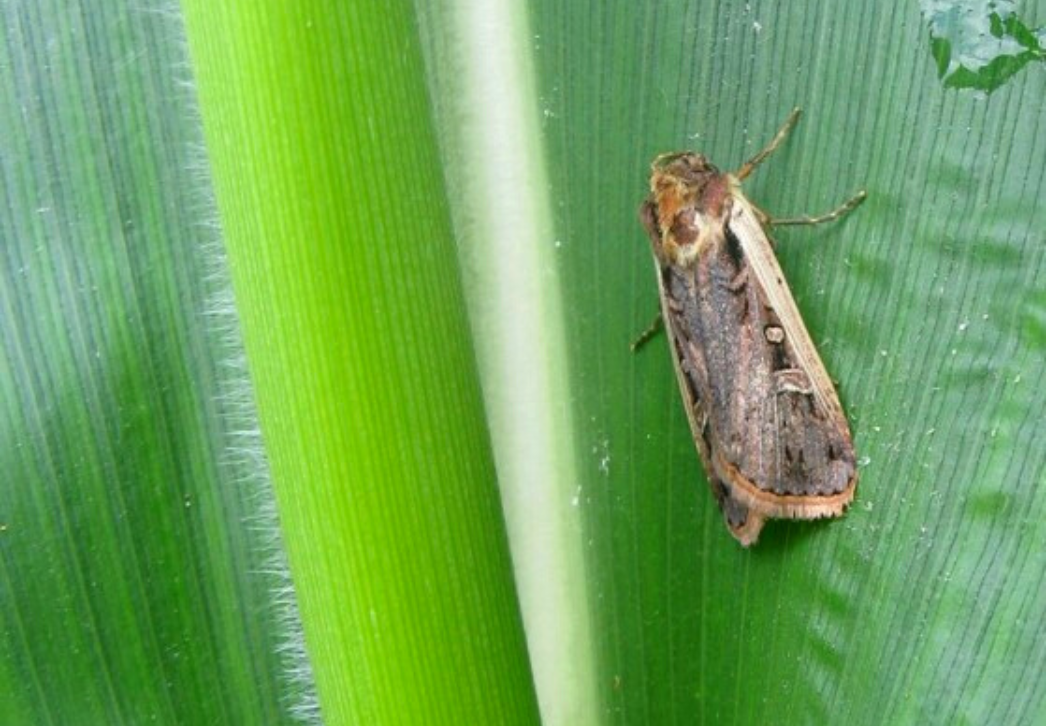
Cooperators participating in the Western Bean Cutworm (WBC) Monitoring Network began setting traps last week and currently, 48 of the expected 70 traps are distributed in 24 counties. The season’s first WBC moths were captured last week (June 13-19) in Columbia, Green, Rock, and Walworth counties, and 12 moths were reported this week (June 20-26). Counts so far have been very low, at 1-4 moths per trap in 13 of the 48 traps.
In combination with the trap network data, DATCP uses a WBC degree-day model to forecast the timing of moth flights and the presence of eggs and larvae in the field. The model predicts 25% of the moth population will emerge when 2,577 degree-days are reached (base 38°F and max 75°F). Across the southern two-thirds of Wisconsin (areas south of Highway 29), 25% moth emergence is anticipated July 6-19. This two-week window is when scouting for eggs and small larvae should begin in late-whorl and pre-tassel corn fields. The eggs are laid on the upper surface of the top three to four leaves, often on the flag leaf, and the larvae can be found in developing tassels. In fields where egg masses and small larvae are found on 5% or more of the corn plants, an insecticide applied when 90-95% of plants have tasseled is most effective.
Moth counts will be available through mid-August on DATCP's Western Bean Cutworm Monitoring page. In addition, WBC degree-days are provided in the modified base 38°F column in our degree-day table. Note that the lower threshold for WBC is 38°F and the upper threshold is 75°F. |
|
 __________________________________
|
|
Heavy late June rainfall in parts of the state has created favorable soil moisture conditions for emergence of apple maggot flies. Growing degree-day (gdd) accumulations (modified base 50°F) as of June 26 have exceeded the threshold required for fly emergence (900 gdds) throughout much of the southern half of the state. The earliest apple maggot fly captures on orchard traps are anticipated during the first week of July.
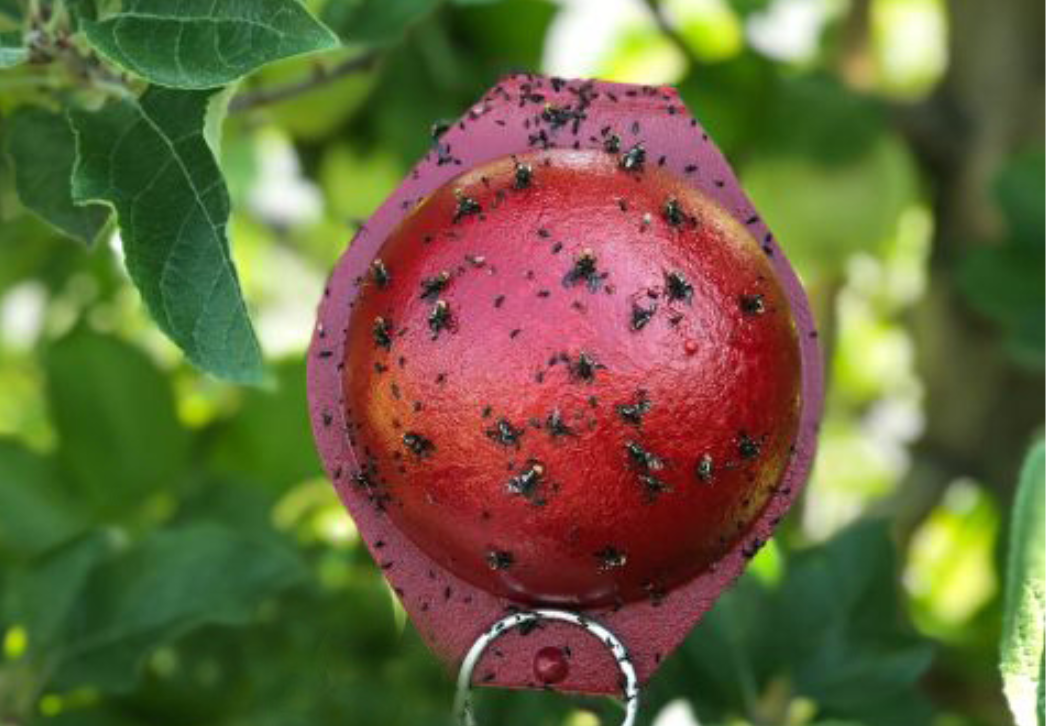
At this time, DATCP apple pest monitoring network cooperators should set out sticky red sphere traps in trees along the orchard perimeter (especially next to wooded edges) since the source of apple maggot flies is often nearby wild hosts. A perimeter trapping density of 6-12 unbaited red spheres per acre is suggested. The density can be reduced to one trap every 20 trees along the perimeter when the traps are baited. Orchards with a history of apple maggot problems should also place a few traps in the orchard interior in blocks with the earliest maturing apple varieties. The red visual traps mimic a ripened apple and attract mated female flies ready to lay eggs. The number of flies caught on a trap per week can help with management decisions and will provide an overall indication of apple maggot pressure this season.
In conventional programs, the initial treatments begin immediately after the first apple maggot fly is captured on a red sphere, with later sprays following at 10 to 14-day intervals as long as above-threshold numbers of flies are appearing on traps. The economic threshold for apple maggot control is one fly per unbaited trap per week or five flies per baited trap per week. Baits commonly used with apple maggot traps are ammonium acetate, ammonium carbonate (food odor), and butyl hexanoate (fruit odor). The traps supplied by DATCP do not include bait.
Home fruit growers can also use the red sphere traps to reduce apple maggot pressure in backyard apple trees or in very small orchards. The UW Extension recommends a trap density of one trap per small tree, two to four traps per medium-sized tree, and six to eight traps for a large apple tree for apple maggot control. Additional guidelines are to position the traps at eye-level in the tree canopy where they are not obstructed by foliage and to clean and reapply the sticky coating weekly, or as needed. Disposable and reusable versions of the red traps are available online through Great Lakes IPM and Gemplers. |
|
 __________________________________
|
|
|
|
|