|
|
Mild early June temperatures in the 60s to mid-80s prevailed this week as scattered showers and thunderstorms covered most of the state. Several days of active weather brought beneficial rain to the northern and central regions, with the highest weekly totals of 1.25-1.50 inches recorded in the northwest. Across portions of 13 counties south of Interstate 90, ongoing precipitation deficits are a concern this season and conditions are abnormally dry (D0). Eight counties from Grant County east to Kenosha County are currently experiencing moderate (D1) drought. A large swath of Wisconsin north of Highway 29 is also abnormally dry, according to the latest U.S. Drought Monitor.
Survey activities for the week ending June 12 included scouting for small grains pests; sending supplies for the upcoming western bean cutworm survey; and setting traps for nursery and forest pests such as box tree moth, bark beetles, and wood borers. Spongy moth trap setting also continued, and 55% of the expected 8,000 traps have been deployed in western Wisconsin.
__________________________________
|
|
|
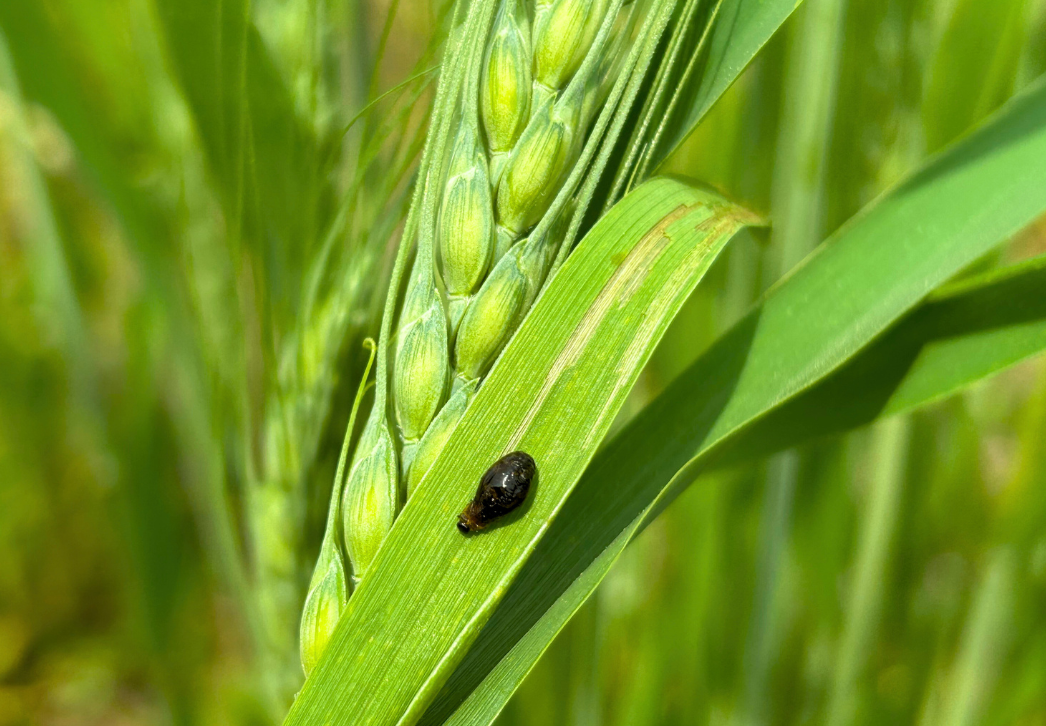
Cereal leaf beetle larva | K. Hamilton DATCP
 
|
|
As the first alfalfa harvest of 2025 concludes ahead of the normal pace, DATCP’s Pest Survey Program is now concentrating on wheat surveys and monitoring for mid-season insects. Surveys June 6-12 were conducted in southern and east-central Wisconsin wheat fields, from Dane County northeast to Door County, where most of the state’s wheat crop is grown. DATCP survey specialists sampled 49 fields to assess populations of cereal leaf beetle, aphids, true armyworm larvae, and other small grains pests.
All 49 wheat fields sampled had generally low insect pressure. Cereal leaf beetle adults and larvae were collected from 25 of the fields, true armyworm larvae were found in very low numbers in seven fields, and aphids (including bird cherry-oat aphid and English grain aphid) were common at low levels in 46 of the fields. Overall, insect counts were below economic levels and damage was not apparent.
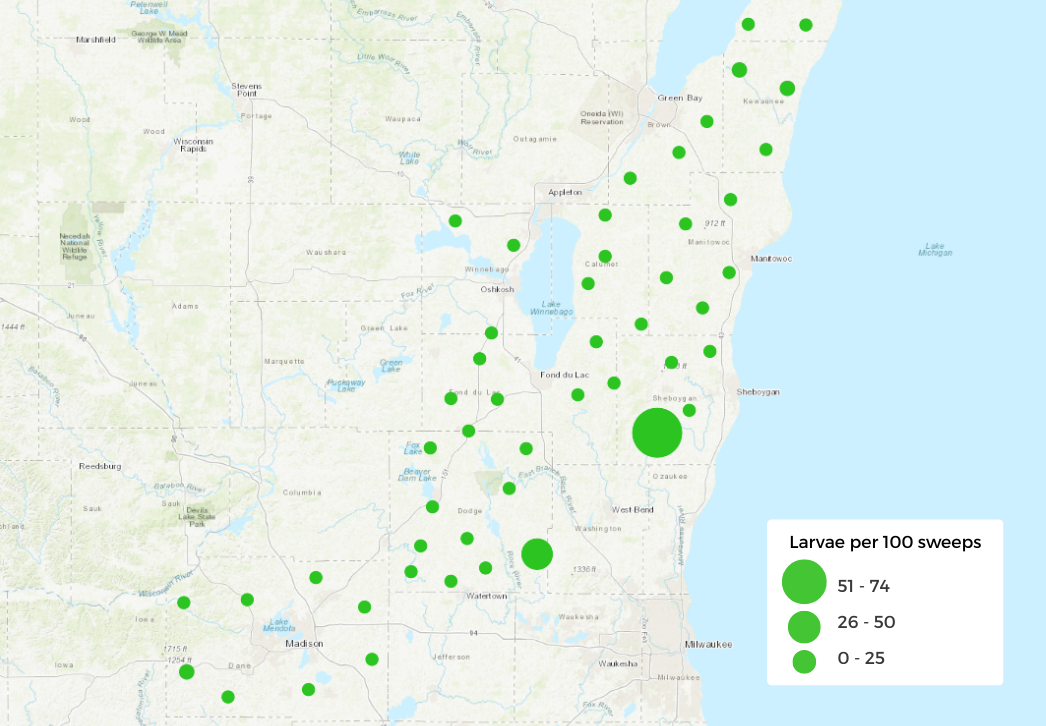
The map below shows the wheat sites surveyed for cereal leaf beetle and the number of larvae collected per 100 sweeps. Although most of the infestations were minor and yield loss was not expected, peak cereal leaf beetle feeding is likely to occur next week and scouting efforts should be increased for fields in the boot stage and early heading stage.
The larval period for cereal leaf beetle is brief and requires only about 10 days to complete, making the optimal chemical control window very narrow. Cereal leaf beetle populations that reach or exceed three larvae per plant for grain that has not reached the boot stage or one larva per flag leaf when grain is heading may qualify for treatment. |
|
 __________________________________
|
|
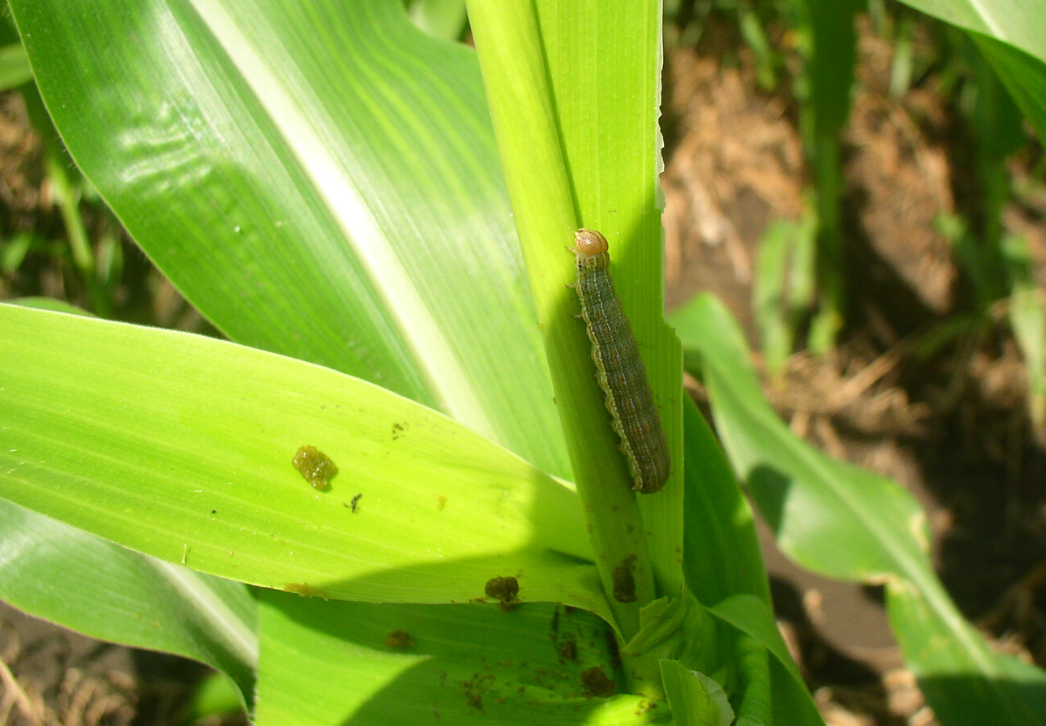
Increased scouting for first-generation true armyworm larvae is also recommended during the second half of June since heavy spring moth flights have been recorded by DATCP’s True Armyworm Network over the past several weeks and caterpillars are now active in crops throughout the state.
Armyworm larvae were observed this week in scattered wheat and corn fields. Wheat surveys in the east-central region found very low counts of one to two larvae per 100 sweeps in about seven, or 14%, of the 49 sites sampled. The numbers recorded were far below the economic threshold of three larvae per square foot for small grains.
Armyworm larvae are also beginning to migrate into corn field edge rows and should be detectable by scouting for plants with irregular, ragged edges and frass. As a reminder, it is normal to see a few edge row plants with armyworm feeding. Counts must reach two or more armyworms (0.75 to 1.0 inch or smaller) per corn plant on 25% of the plants, or one worm per corn plant on 75% of the plants, to qualify for treatment. No significant infestations have been recorded by DATCP as of June 12, but mid- to late June is a critical time to step up scouting outer corn rows and lodged areas of wheat fields for larvae. |
|
 __________________________________
|
|
|
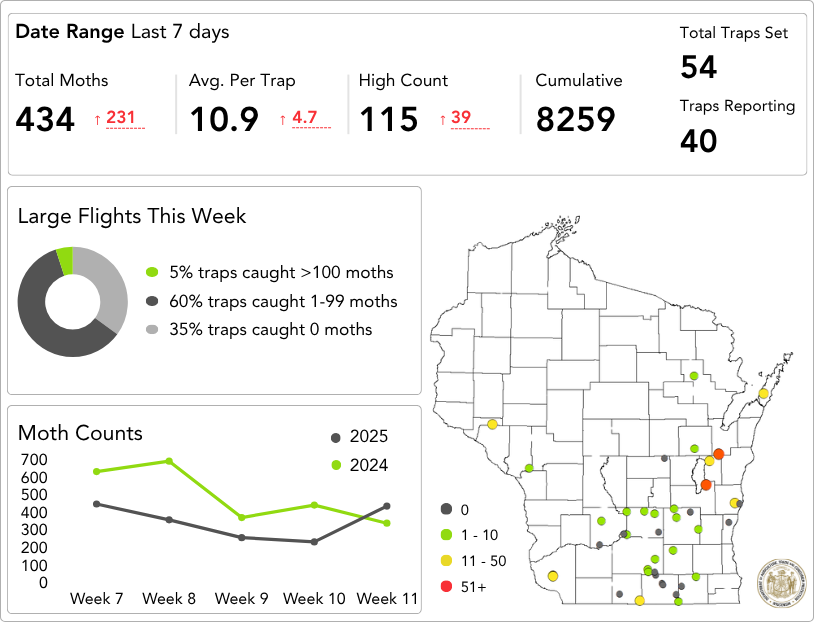
Reports from the DATCP apple pest monitoring network indicate codling moth flights have been atypical since moths began emerging in late May. Cool evening temperatures with rain and gusty winds have suppressed flights in some areas of the state and trap counts have been abnormally low. The cooperator at Rochester in Racine County reported that codling moth trap counts are “way down from last year at this stage.”
By contrast, the orchard near Montello in Marquette County trapped 22 moths this week, a record-high catch for that location. The general trend at monitoring locations June 6-12 was an increase in codling moth activity, with nine monitoring locations reporting above-threshold catches. High codling moth pressure is indicated by a weekly count of five or more moths per trap for orchards not using mating disruption (non-MD) and two to three or more moths per trap for orchards using mating disruption (MD).
Apple orchards that set the first codling moth biofix of the season during the last week of May (May 25-31) have accumulated about 150-200 degree days as of June 12 and initial treatments will begin next week. Sprays targeting first-generation larvae are usually applied at 250 degree days (modified base 50°F) from the biofix, if spring trap counts have been high (at or above 10 moths per trap per week).
For orchards where some traps have reached the five moths-per-week threshold and counts in other traps have been below-threshold, delaying treatment until 350 degree days is suggested. Orchards using mating disruption can follow the same approach for determining the need for a larvicide. With the inconsistent codling moth flights observed this spring, some orchards will likely wait until 350 degree days to make the first application.
|
|
 __________________________________
|
|
|
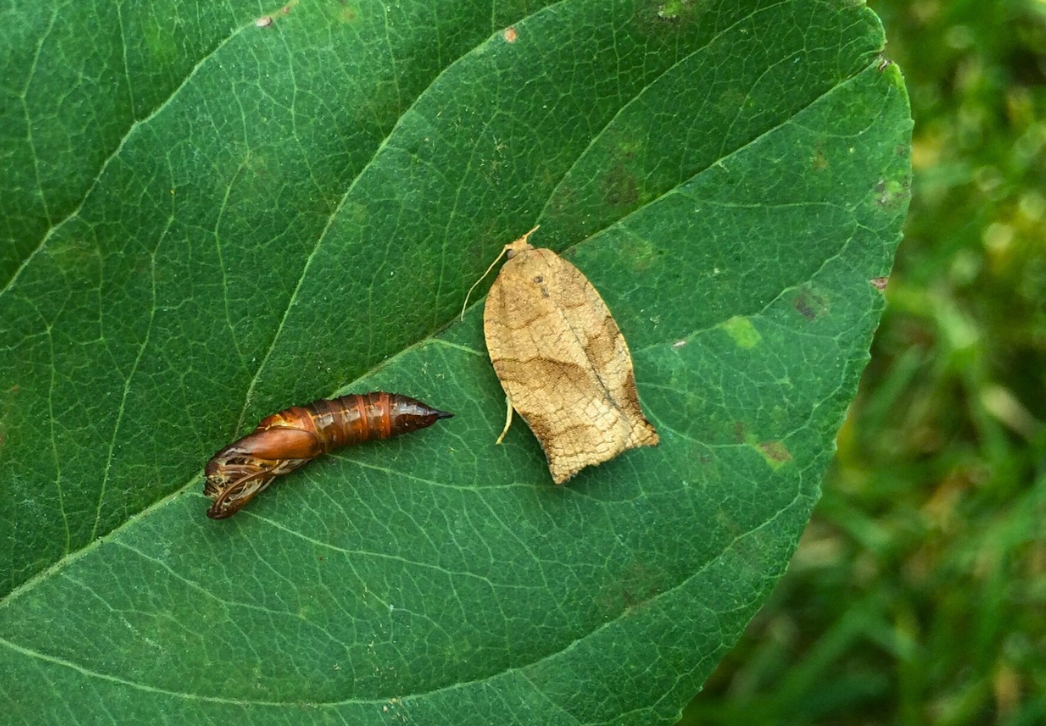
Apple orchards across the state are reporting a marked increase in insect activity. The spring obliquebanded leafroller (OBLR) flight is officially underway, with moth catches registered at 11 southern and central monitoring sites. Inspecting terminals over the next two to three weeks for larvae will help to determine the potential for problems later this season. Although there is no direct correlation between trap counts and larval populations, scouting is important since orchards that register even low counts (less than five moths per trap) can develop significant larval problems a few weeks after a flight has occurred. Control of OBLR is warranted for populations averaging three or more larvae per tree.
In addition, dogwood borer moths have started appearing in orchard pheromone traps in the last two weeks. The traps do not indicate the need for control but instead signal when to start scouting for evidence of larval feeding, such as frass around the graft union of trees. DATCP cooperators should be aware that the commercially available dogwood borer pheromone lure attracts several native clearwing moth species, therefore accurate identification is important. The correct height for traps is 3-4 feet above the ground. Scouting for this pest is most critical for orchards with new trees planted in the last five years.
In the photos below, the smaller specimens are male dogwood borers while the larger insects are non-targets. Male dogwood borers can be identified by the two bands on the abdomen (see enlarged second photo).
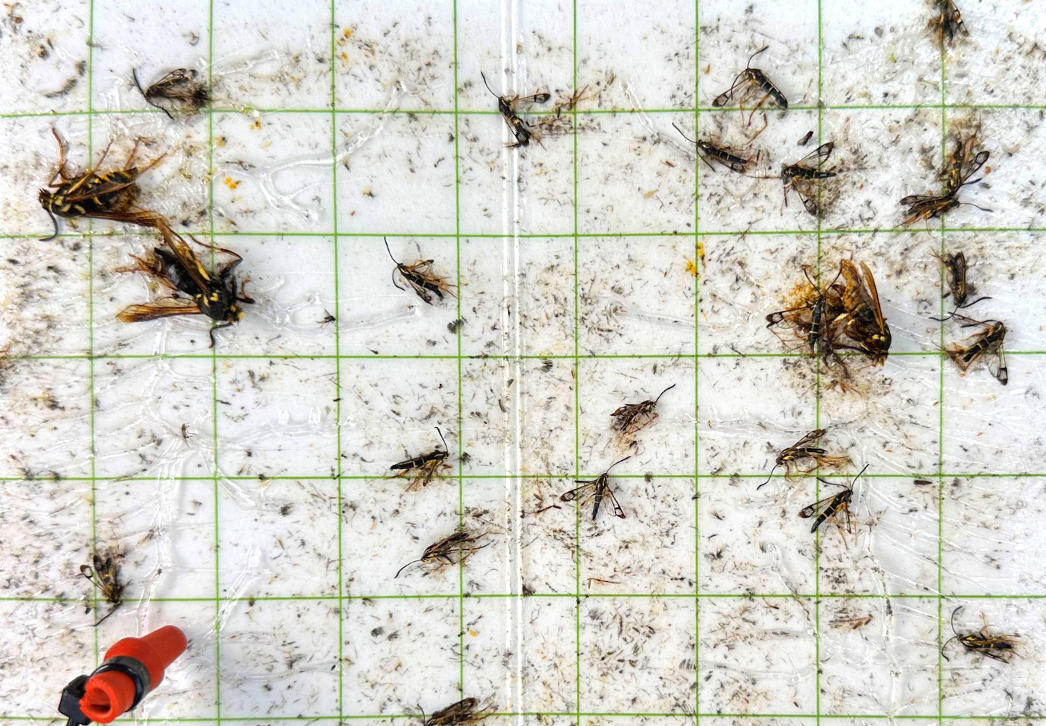 Dogwood borer males (smaller), Non-target (larger)
Laura Tisch Munchkey Apples
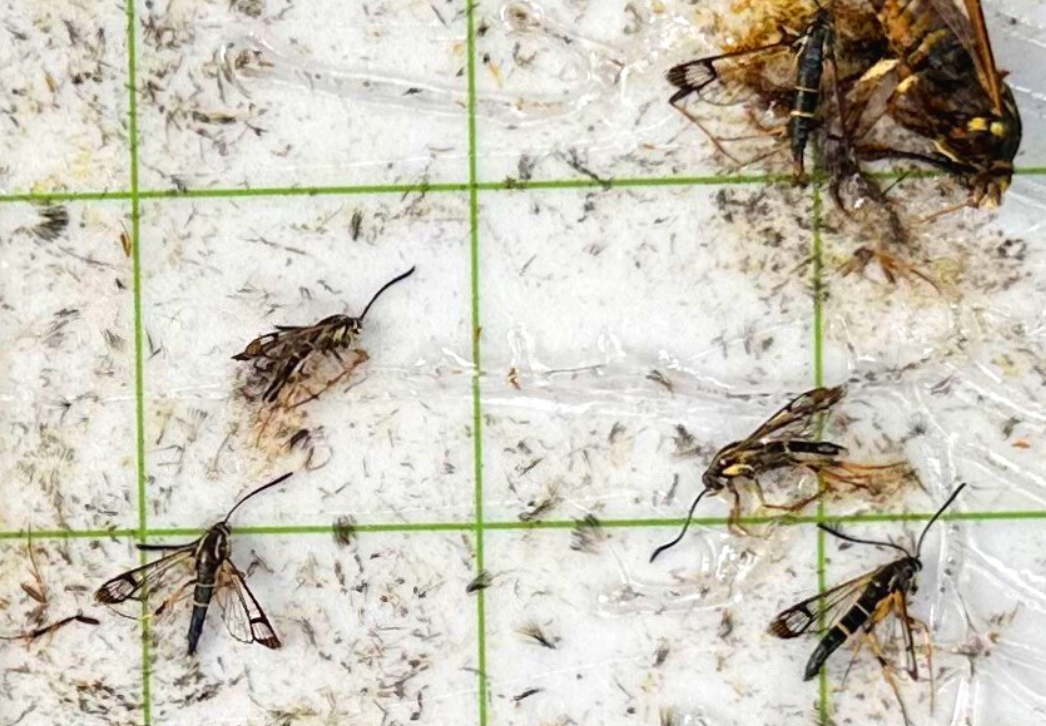 Male dogwood borers have two bands on abdomen
Laura Tisch Munchkey Apples
|
|
|
Lesser peachtree borer (LPTB) emergence began approximately three weeks ago and the first of two flights has likely peaked in southern Wisconsin orchards. Counts ranged as high as 51 moths per trap this week and averaged 15 per trap, an increase from 12 per trap May 30-June 5 and one per trap May 23-29.
Control of LPTB in orchards is based on preventing larval establishment underneath the bark and should be timed just before or to coincide with egg hatch. Once under the bark, chemical control is ineffective. Egg hatch begins about eight to 10 days after LPTB moth emergence, therefore the treatment window is seven to 14 days after the first moths are captured in pheromone traps. Directed sprays must be applied uniformly to drench the trunk and scaffold limbs to about 8 feet above-ground.
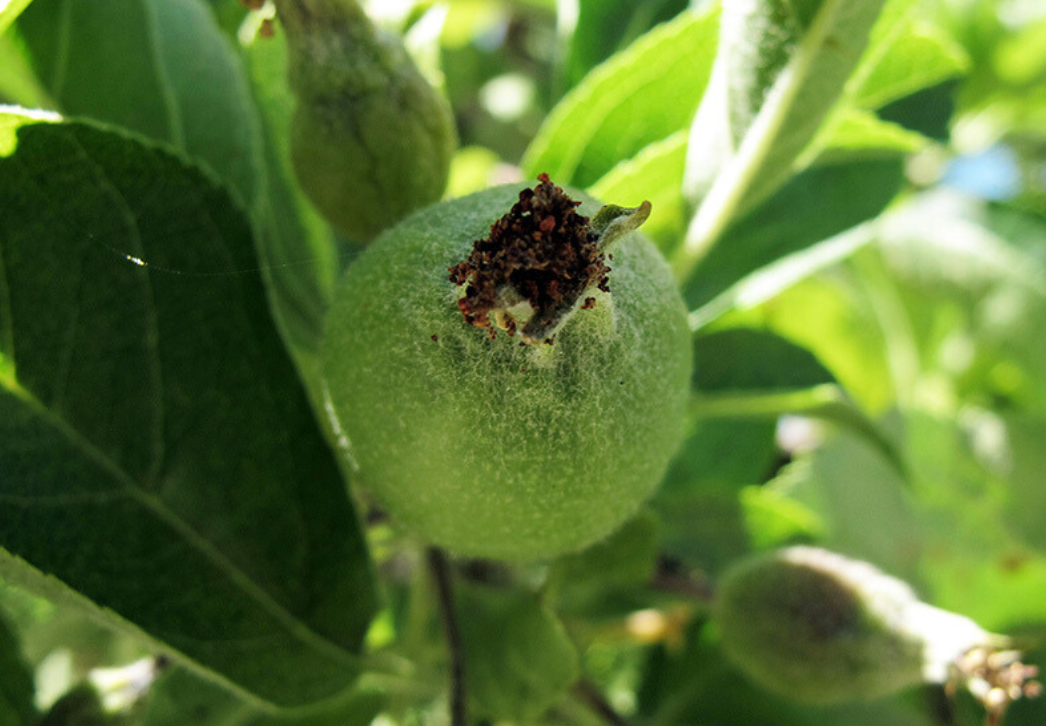
Orchards that record high LPTB trap counts are advised to begin checking for signs of infestation, such as presence of pupal skins, sawdust, and frass produced by feeding borers in the gum in cankered areas. If the gum does not contain frass or sawdust, the injury is probably not caused by borers. LPTB problems are almost always associated with Cytospora canker and, to a lesser extent, pruning wounds, winter injury, and mechanical damage. A second and more damaging flight can be expected in late August or September.
Lastly, redbanded leafroller (RBLR) moth counts were relatively low at most monitoring locations again this week. The low number of moths appearing in traps means that the first RBLR flight has ended, and populations are primarily in the larval stages. The second moth flight is likely to begin in one to two weeks. Apple growers are reminded to refresh pheromone lures in advance of the second flight.
|
|
 __________________________________
|
|
|
|
|