|
Foundational Community Supports (FCS) is an initiative of Medicaid Transformation. It allows qualified providers to receive Medicaid reimbursement for delivering supportive housing and supported employment services for people with the greatest and most immediate social and health needs.
In Permanent Supportive Housing (PSH), crises are inevitable, but homelessness does not have to be the outcome. Whether a participant is experiencing a mental health crisis, substance use emergency, interpersonal conflict, or medical event, the response should be guided by the idea of keeping a person in housing using trauma-informed care, and person-centered support. The goal is not simply to resolve the immediate crisis, but to do so in a way that preserves dignity, promotes safety, and helps individuals remain successfully housed.
Effective crisis response begins long before a crisis occurs. Programs that invest in proactive planning, staff training, and collaborative relationships with community crisis resources are better equipped to respond quickly and appropriately. Every interaction during a crisis has the potential to either strengthen trust or create additional trauma. By responding with empathy, consistency, and a focus on recovery, staff can help participants build resilience, reinforce stability, and navigate difficult situations while supporting long-term housing stability that Permanent Supportive Housing is designed to provide.
Best Practices for Crisis Response in PSH
-
Develop individualized pre-crisis plans with participants that identify early warning signs, triggers, preferred interventions, and support contacts.
-
Use trauma-informed communication by remaining calm, listening without judgment, validating emotions, and offering choices whenever possible.
-
Keep housing stability at the center of every decision. Whenever it is safe to do so, explore alternatives to eviction or unnecessary hospitalization.
-
Recognize early warning signs such as increased isolation, missed appointments, changes in mood, substance use, or behavioral changes before they escalate.
-
Build strong partnerships with community crisis resources, including mobile crisis teams, behavioral health providers, peer support specialists, and emergency responders.
-
Respond with the least restrictive intervention appropriate for the situation, recognizing that not every crisis requires law enforcement involvement.
-
Document objectively by describing observations, actions taken, referrals made, and follow-up plans rather than assumptions or labels.
-
Conduct post-crisis follow-up with participants to review what worked, update crisis plans, strengthen supports, and identify strategies to prevent future crises.
-
Support staff wellness through regular debriefing, supervision, and training to reduce burnout and secondary traumatic stress.
When crisis response is rooted in compassion, preparation, and evidence-based practices, it becomes more than an emergency intervention it becomes an opportunity to strengthen relationships, build resilience, and reinforce the stability that Permanent Supportive Housing is designed to provide.
Thank you for joining us at the June FCS Provider Listening Sessions! Over 80 representatives from the Provider Network registered across sessions in Everett, Tacoma, Yakima, and Spokane.
Your feedback is important to us. Our partners from The Technical Assistance Collaborative (TAC) are working to pull themes from the discussions to help HCA and partners continuously improve the FCS program.
If you are interested in continuing to support this work, keep an eye out for the next Quarterly Advisory Council meeting announcement.
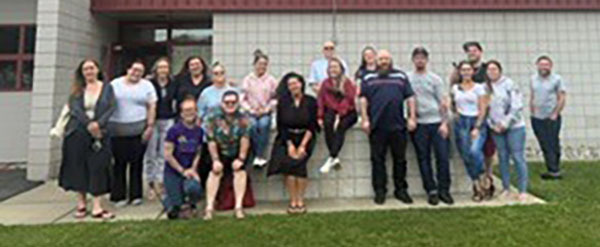 Pictured above: Agency representatives involved in the FCS Cadre including Consistent Care, Revive Counseling, Pioneer Human Services, ODAT (One Day at a Time), EASE (Employment Access Services Empowered), Whatcom County, and Family Promise. Photo used with permission, FCS Cadre 2026.
We are excited to announce the certification of 17 new Foundational Community Supports (FCS) Supportive Housing Lead Fidelity Reviewers, With folks from & different agencies across the state, marking an important milestone in our commitment to quality improvement across Washington State.
Over two days of intensive training, participants strengthened their understanding of the FCS Supportive Housing Fidelity Scale, practiced interviewing techniques, refined scoring consistency, and demonstrated their ability to lead fidelity reviews with confidence. Through hands-on exercises, collaborative learning, and calibration activities, these new reviewers built the skills needed to support providers in delivering high-quality, evidence-based supportive housing services.
The Lead Fidelity Reviewer Cadre plays a vital role in ensuring fidelity reviews remain consistent, reliable, and focused on continuous quality improvement. By expanding the cadre with 17 newly certified reviewers, we are increasing statewide capacity to support providers, promote fidelity to the FCS Supportive Housing model, and ultimately improve outcomes for the individuals and families we serve.
Congratulations to our newest Lead Fidelity Reviewers! We appreciate your dedication to advancing quality supportive housing services and look forward to the expertise and leadership you will bring to future fidelity reviews.
Washington Health Care Authority (HCA) Foundational Community Supports (FCS) trainers are inviting you to join them in a six-part training series for The Golden Thread documentation training
Next training: Thursday, July 2, 2026, from 1:05 to 3 p.m.
Join us for a six-session training series that provides a comprehensive overview, with practical applications FCS documentation. Each webinar covers a specific type of documentation and addresses Medicaid requirements and the importance of the connection between assessments, service plans, and progress notes, known as the Golden Thread. The series will be presented with the newly developed Golden Thread Toolkit, a valuable new resource for FCS staff. It is recommended that participants attend all sessions in the series, as the information presented is cumulative.
This training is recommended for those who:
- Are new to providing supportive housing and supported employment services
- Are interested in improving the standards of personnel or agency documentation standards
- Are considering participating in a fidelity review and would like more information on how to prepare for it
Objectives
- Become comfortable with using Medicaid-compliant documentation of Foundational Community Support services, specifically the assessments, service plan, and progress notes
- Learn what the Golden Thread is and its importance in providing quality services to participants.
- Receive guidance on writing documentation in a way that accurately and completely reflects a participant’s story in a person-centered way
Washington Health Care Authority (HCA) Foundational Community Supports (FCS) team are excited to invite you to an eight-part learning community hosted by Advocates for Human Potential (AHP)
Webinar: Friday, July 3, from 10 to 11 a.m.
FCS is convening a Learning Collaborative on Permanent Supportive Housing (PSH) to strengthen the capacity of providers, community partners, and stakeholders in delivering high-quality housing and supportive services.
This collaborative will offer a structured forum for sharing best practices, addressing implementation challenges, and fostering innovation in PSH models. Through facilitated discussions, peer learning, and expert-led sessions, participants will gain practical tools to improve housing stability, health outcomes, and service coordination for individuals experiencing chronic homelessness and behavioral health challenges across Washington State.
Topics
- Long-term solutions, not quick fixes: Supportive housing focuses on permanent stability, moving beyond temporary shelter to lasting change for individuals and communities
- Partnerships are essential: Successful supportive housing depends on collaboration between housing providers, health care systems, behavioral health services, and community organizations
- Community strengthening: Beyond ending individual homelessness, supportive housing builds healthier, safer, and more inclusive communities
- Housing is healthcare: Stable housing is foundational to improving health, recovery, and overall well-being
This is an eight-part series, occurring from 10 to 11 a.m. the first Friday of each month.
Washington Health Care Authority (HCA) Foundational Community Supports (FCS) team invites you to this two-part fidelity review training
Webinar part I: Monday, July 6, from 1 to 3 p.m.
Webinar part II: Tuesday, July 7, from 1 to 3 p.m.
The supportive housing benefit under the FCS program is based on the federal evidence and research-based Substance Abuse and Mental Health Services Administration (SAMHSA) model. FCS staff are committed to training and assisting FCS providers in pursuing strategies that will result in improved services and outcomes for people enrolled in FCS.
Please note: This training is not an onboarding training for new FCS staff. This training is designed for staff members who already have an understanding of the Permanent Supportive Housing principles and want to be trained in becoming a fidelity reviewer.
Who should attend?
- Anyone who is interested in learning about SAMHSA's permanent supportive housing evidence-based practice
- Staff who are new to supportive housing or FCS
- Providers who would like a refresher of the permanent supportive housing principles
- Individuals interested in Fidelity Reviewer Certificate Training
Washington Health Care Authority (HCA) Foundational Community Supports (FCS) invite you to join us in learning about updates to HRSN
July webinars: Monday, July 13 and July 27, from 4 to 5 p.m.
Foundational Community Supports (FCS) team are excited to announce that the Health-Related Social Needs (HRSN) rental arrears funding launched April 1, 2026!
Join us every other Monday for an informal conversation via Teams where you can ask questions and learn more about this funding and program reach. Please remember, if discussing specific client situations, do not share any PHI.
Resources
Please contact Anessa Williams (anessa.williams@hca.wa.gov) with any additional questions in the interim.
Call for HRSN success stories
Have you recently helped a participant access rent assistance through HRSN? We would love to hear your success stories! Your stories are extremely important to us to demonstrate the ongoing need for programs like this.
If having arrears paid helped someone prevent eviction, stabilize, improve mental health and stress levels, etc., please submit these anecdotes to anessa.williams@hca.wa.gov.
Washington Health Care Authority (HCA) Foundational Community Supports (FCS) team is kicking off 2026 with another round of our FCS 101 monthly trainings
Webinar: Wednesday, July 15, from 10 a.m. to noon
This training is intended to provide you with an introduction to the FCS program. The FCS Team will be offering the FCS 101 training on the third Wednesday of every month from 10am-12 noon. It is an open and supportive space to get a basic introduction to all things FCS Supportive Housing and Supported Employment. We enthusiastically encourage providers to learn more about the variety of programs and services supported by FCS, as well as an introduction to the Washington FCS team and answer questions you may have.
Objectives
- Learn about Foundational Community Supports
- Get an overview of supported employment services
- Get an overview of supportive housing services
- Connect with HCA’s FCS Team
Upcoming 2026 FCS 101 trainings: August 19, September 16, October 21, November 18, December 17
Washington Health Care Authority (HCA) and the Foundational Community Supports (FCS) team are launching this new training series for providers new to FCS!
Webinar: Wednesday, July 15, from 11 a.m. to 1 p.m.
The FCS team is unrolling a standing monthly provider orientation which will cover introductory information about Foundational Community Supports Supported Employment, Supportive Housing, Apple Health and Homes Rental Assistance Program (AHAH-RAP), and the Transition Assistance Program (TAP).
This will be an open and supportive space to get a basic orientation to all things FCS and serve as a great place for new and prospective providers and FCS staff to ask questions, meet the FCS team, and meet our WellPoint partner team members.
We enthusiastically encourage you to attend if
- You are an organization interested in providing FCS and need more information about the program and associated programming
- You are a new FCS provider (Welcome!)
- You have recently hired new Supportive Housing or Supported Employment specialists, or have staff that would like a refresher on FCS and fidelity to best practices
- You would like an opportunity to connect with HCA’s FCS Team and Wellpoint to ask questions about service provision, program implementation, etc.
This orientation will be offered every third Wednesday of the month from 11 a.m. to 1 p.m.
Washington Health Care Authority (HCA) Foundational Community Supports (FCS) team invites you to join us for our monthly office hours, the last Tuesday of each month.
Virtual office hours: Tuesday, July 28 (the last Tuesday of each month), from 3 to 4 p.m.
Drop in to join the HCA trainers to learn about Medicaid documentation requirements to support FCS service activities. Our goal is to support staff in weaving in the 'Golden Thread' process to develop a seamless record that connects goals, life events, staff support, interventions and next steps that support Medicaid billing.
Let's create quality service plans and progress notes that support necessary services and activities that move program participants to achieve their goal of housing and employment.
Office hours will be held on Teams, the last Tuesday of each month from 3 to 4 p.m. (Previously held on the last Friday. Please update your calendar holds.) The next scheduled office hours will occur Tuesday, July 28.
The Washington Health Care Authority (HCA) Foundational Community Supports (FCS) supported employment team invite you to this IPS-focused Supported Employment training series
Webinar: Tuesday, July 28, at 12:30 p.m.
The virtual training series will cover the eight practice principles of Individual Placement and Support (IPS) supported employment. New staff in IPS programs, case managers, Certified Peer Support Specialists, and clinicians and providers are welcome to join.
IPS is a multidisciplinary team of researchers and trainers who conduct research studies, disseminate findings, prepare training and educational materials, and provide training and consultation services. The center’s activities focus on employment for people with serious mental illnesses. Learn more about IPS.
The Washington Health Care Authority (HCA) Foundational Community Supports (FCS) team invite you to this Supported Employment training
Webinar day 1: Wednesday, July 29, from 9 a.m. to 12:30 p.m
Webinar day 2: Thursday, July 30, from 9 a.m. to 12:30 p.m
Hosted by IPS trainers and the HCA FCS team, this two-day virtual training course offers the chance to gain in-depth knowledge of Individual Placement and Support (IPS) as the evidence-based practice for supported employment services and how to evaluate programs. Engage in an immersive discussion around the process and intent of fidelity reviews and the continuous quality improvement that keeps IPS viable and relevant.
Starting in 2026, there is an intent to include fidelity reviews as part of FCS contracts with Wellpoint. This training will help to prepare agency staff for this eventuality.
Objectives
- Review briefly the FCS program and fidelity review goals under FCS
- Explore key principles of the IPS supported employment model related to fidelity review
- Learn what it is like to participate in fidelity reviews
- Develop skills to be a fidelity reviewer
- Learn interview and documentation techniques for fidelity scoring
- Acquire skills related to writing part of the fidelity report
If you have any questions, please contact Darren Paschke.
|