“What mental health needs is more sunlight, more candor, and more unashamed conversation.”
~Glenn Close, award-winning actor and advocate
Mental Health Awareness Month was started in 1948 by Mental Health America. It is a wonderful time to increase awareness, reduce stigma, and provide resources and support.
Here are a few things you can do to observe, and even celebrate, this important month:
- Practice self-care such as journaling, art (submit to the Peer 2 Peer Newsletter!), tapping, walking, or decluttering.
- Check-in on someone who you think needs an extra connection. Consider sharing parts of your own recovery journey to provide hope and inspiration.
- Host a small gathering to build community.
- Wear green, the official color of mental health awareness.
Learn more about Mental Health Awareness Month with the SAMHSA toolkit.
This month’s self-care challenge is to declutter one space in your home. It can be a drawer, a shelf, or any corner. Put on your favorite playlist and set a timer for 15 minutes.
Decluttering helps with mental clarity by lessening visual noise. When your brain has less to process, stress and anxiety can be reduced. Decluttering can also provide emotional relief when you let go of items that no longer serve you, leading to a sense of lightness.
Decluttering turns your environment into something that gives you energy. You can gently repeat an affirmation while you organize your space:
- “I release what I no longer need and make space for peace.”
- “It’s okay to let this go. It served me, and now I am free.”
Once you’ve completed the challenge, take a moment to notice how it feels. What has shifted for you? Then reward yourself with your favorite snack, or by lighting a candle, or sharing your progress with a friend.
Celebrating Community Behavioral Health conference: Thursday and Friday, June 11 and 12, 2026, at Three Rivers Convention Center, Kennewick, Wash.
Currently, registration scholarships for Consumers, Advocates, and Peers are available for this annual conference, which features 34 workshops, keynote speakers, and activities focused on recovery and resiliency, leadership, management and operations, innovative care practices, and more.
Featured speakers:
- Ryan Campbell, expert on mental health and overcoming burnout
- Chamique Holdsclaw, Olympic gold medalist, WNBA Hall of Famer, and mental health advocate
- Shola Richards, best-selling author of Civil Unity, expert on organizational and individual resilience
This two-day conference kicks off with a welcome reception Wednesday evening. Details are available upon registration.
Please note: Scholarships cover the conference registration fee, but do not cover the Law and Ethics course or travel and lodging expenses. Scholarships do include breakfast and lunch on Thursday and Friday, as well as the Welcome Reception on Wednesday.
HCA’s Division of Behavioral Health and Recovery will postpone the Peer Pathways Workforce Development conference until 2027. HCA is focusing efforts on training individuals to meet the growing workforce need of Certified Peer Support Specialists.
We look forward to hosting the Peer Pathways Workforce Development Conference in 2027.
HCA has launched a free guide to support family and other loved ones navigate the aftermath of a non-fatal overdose.
This guide combines educational and supportive resources for the reader and their loved one and answers practical questions including:
- What is an overdose?
- Where do I find instructions on how to respond to an overdose?
- What do these terms mean: substance misuse, substance use disorder, and addiction?
- What care and support are helpful after an overdose?
- What are some of the treatment and support options available for my loved one?
- How do I balance caring for my loved one and myself?
This guide also has a companion one-pager to summarize key messages, and a supportive resource library is in development, which will include a sort-able list of resources for and by individuals and professionals helping each other navigate in the aftermath of an overdose.
This toolkit includes specific considerations for Washington residents.
Questions, comments, or to request printed copies, please contact sarah.melfi-klein@hca.wa.gov
“I found I could say things with colour and shapes that I couldn't say any other way – things I had no words for.”
~Georgia O'Keefe, 20th-century American modernist artist
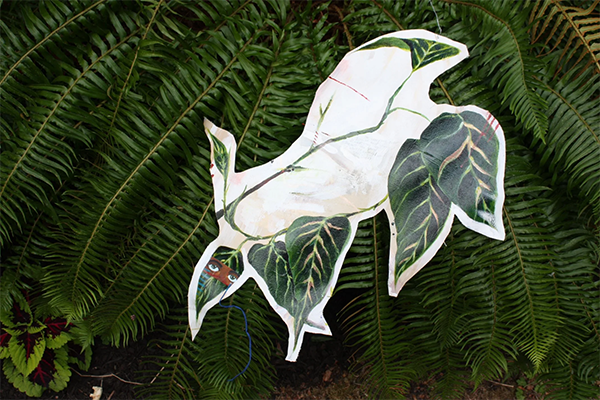 Pictured above: "Love Games in a Flowering Garden" by Mahllie Beck (CPSS at Y Social Impact Center), original work. Permission: M. Beck, 2026.
We now feature original artwork in the Peer 2 Peer Newsletter and would love to see yours!
Who can submit:
Any peers! All visual art is welcome: Any medium or style (painting, drawing, photography, digital, mixed media, sculpture, etc.)
What to send:
- High-resolution, well-lit images of your original work (300 DPI preferred) showing only your artwork (no people, frames, or backgrounds)
- Your name (as you’d like it credited)
- Title of the work, medium, size, and year
- Optional: a short description or artist statement
How to submit:
- Email your original images and details to gillian.holsinger@hca.wa.gov
- Subject line: Art Submission – [Your Name]
- Deadline: the 15th of each month
Selected artists will be featured with full credit.
By submitting, you are confirming the work is your own and give permission for HCA to share the images as part of this online feature.
We can’t wait to see what you’ve been making!
Featured Peer or Peer organizations: We want to highlight YOU
Nominate a Peer
Your work matters. Your stories inspire others. Think of the CPCs, CPSSs, or Peer-run organizations who you think deserve a little extra gratitude. We would love to highlight them in these newsletters.
Send your nominations at any time, including as much information about their impact as possible, like:
- Name of person/organization
- Their location
- Why are you highlighting them?
- Their photo or organizational logo
|