|
Join our next office hours at 3 p.m. on May 15, 2025.
Don’t let diseases of the past become a part of their future.
In 2025, no parent should have to worry about their baby facing diseases like measles, rubella, diphtheria, or other illnesses we now have the power to prevent. But the ongoing measles outbreaks facing our nation today remind us that the progress we’ve made is fragile — and it’s up to all of us to protect it.
We’re fortunate to live in a time when we can protect babies from more than 16 dangerous diseases that once infected and even killed thousands of children. Today, 9 out of 10 parents in the U.S. choose to vaccinate. But with misinformation spreading and preventable diseases like measles making a comeback, it’s more important than ever to affirm why making the choice to vaccinate is so important.
Important information for parents:
We all want to protect our children. But in a world full of conflicting information, knowing who to trust can be hard. The #VaxToTheFuture campaign helps explain how we can trust that vaccines are safe, while emphasizing that risking infection with diseases they protect against is not.
Vaccinate Your Family’s #VaxToTheFuture campaign is a bilingual initiative to remind parents, caregivers, and communities of a simple but powerful truth: a childhood free from vaccine-preventable diseases is possible, but only if we remember the lessons of the past and choose to vaccinate.
Join us in spreading the word about the importance of infant immunization. It has never been more important for each of us to speak up for the importance and safety of routine immunization for babies. Remember to use the #VaxToTheFuture hashtag when you share on social media and tag @vaccinateyourfamily (@vaxyourfam on X/Twitter) so we can amplify your posts!
Heads up! World Immunization Week (WIW) happens around the same time as NIIW. WIW is April 24-30, 2025. It’s time to show the world that Immunization for All is Humanly Possible. Hashtags: #VaccinesWork, #Humanly Possible Check out the World Health Organization's Campaign!
DCYF Updated Data Reports: Staff at the Office of Innovation, Alignment, and Accountability have posted updates to inform decisions during the Legislative session, including the Child Welfare Overview 2024, and the Extreme Child Care Access Deserts and Uptake Estimates dashboard.
Nominate a Father Who Has Reunited with their Child. This award is meant to recognize fathers who have had a successful outcome with their child welfare case. The virtual ceremony will be hosted on June 12, and the recipient will receive a prize for him and his family. Nominations due April 30 – view the full message.
Planning for this year's virtual Indigenous, Children, Youth & Families (ICYF) conference is underway! The Office of Tribal Relations (OTR) is currently accepting session proposals. We are looking for sessions that will build the knowledge and skills of those working with system-involved Native families. Sessions will be held on Oct. 15, 11 a.m. to 4 p.m., and Oct. 16, 9 a.m. to 3 p.m. Submit your proposal to present at ICYF by filling out the Call to Presenters Form.
Early Childhood Equity Grant: DCYF is pleased to announce that the Early Childhood Equity Grant application is now available. This grant is intended to serve as a step toward expanding access to early learning statewide and transforming Washington's early learning system to make it more inclusive and equitable. The grant will support inclusive and culturally and linguistically specific early learning and early childhood and parent support programs across the state. For more information, including frequently asked questions and contact information for technical assistance, please visit the DCYF Early Childhood Equity Grant webpage. (Due May 27).
Guidance for Requests from Immigration Enforcement Officials (English|Español): In this bulletin, you will find a few tips about what you can do to prepare for possible encounters with immigration enforcement.
Community of Practice – Supervisor Home Visiting Core Competency
We have newly available translations, on our website Washington State Home Visiting Core Competencies.. You can now find both sets of competencies (Home Visitor and Supervisor) as well as three companion documents, in five languages: Arabic, Chinese, English, Somali, and Spanish.
If you are interested in an overview of the What, Why, and How of the Core Competencies, there is also an introduction video on the website.
Have you taken a look at the companion documents yet?
-
Team Discussion Guide– Program Supervisors can use this discussion guide at team meetings or in-service trainings to promote a shared exploration and understanding of the relationship of the Washington State Home Visiting Core Competencies to the type of home visiting offered by your program and the actual job responsibilities of home visitors on your team.
-
Home Visitor Self-Assessment & Development Plan– This form supports home visitors’ ongoing growth and effectiveness by supporting them to identify their own strengths and abilities for each of the eight competency areas, as well as identify and prioritize one area for growth and development.
-
Supervisor Self-Assessment& Development Plan – This form supports supervisors’ ongoing growth and effectiveness by supporting them to identify their own strengths and abilities for each of the five supervisor competency areas, as well as identify and prioritize one area for growth and development.
If you’re interested in learning more about how to integrate the Washington State Home Visiting Core Competencies in practice, consider joining the upcoming Community of Practice.
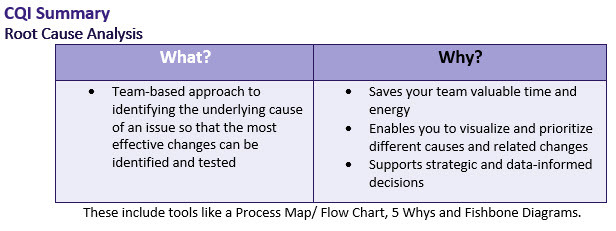 Key Driver Diagram: Visually displays a shared improvement theory of how things might get better based on change ideas gathered through research, observation, and experience.
 Spotlight: Parents As Teachers
In 2025, Parents as Teachers launched the 2025 Challenge grant. They received 98 applications and awarded 18 Parents as Teachers affiliates, totaling $525,000 in funding. We are excited to share that Friends of Youth has been selected as one of this year’s grant recipients. They were awarded $25,000 to support their project focused on Family Leadership Development.
Project Summary: The Healthy Start Local Group Connections project by Friends of Youth aims to improve access, participation, and sustainability of group connections by reducing attendance barriers. It also focuses on developing strong Parent Leaders who can continue organizing group connections in their communities after the project ends. Parent Leaders will receive stipends to ensure their participation and the project's sustainability. They will be empowered to organize group connections independently and train other Parent Leaders, helping to connect families and fill gaps in services and support systems for disenfranchised families. The project was awarded $25,000 in funding to achieve these goals.
Congratulations to Friends of Youth for this amazing achievement and for your hard work and commitment to the success of your program.
Each month, DCYF ESIT Tribal Program Consultant Brian Frisina will provide a key topic to help support us all in getting to know our Tribal Nations partners better.
This month’s topic is:
Inherent Sovereignty
The sovereignty, self-governing powers, that tribes have are inherent powers.
It's Time to Take Back Our Cultural Sovereignty
David Wilkins, Lumbee Nation, has said that Tribal Sovereignty is arguably the most important, unifying concept across Indian Country. It is about more than political boundaries; it defines nothing less than our living, collective power which is generated as traditions are respectfully developed, sustained, and transformed to confront new conditions. Read full article here:
It's Time to Take Back Our Cultural Sovereignty
Media Recommendations
Sources
-
1989- “Indian Self-Determination the Ideal and Indian Self-Governance the Reality” – Joe DeLaCruz Speech, 1989- “Indian Self-Determination the Ideal and Indian Self-Governance the Reality” – Joe DeLaCruz Speech, Copyright © 2025 Tribal Self-Governance.
-
Inherent Sovereignty, General Principles of Federal Indian Law, The University of Alaska.
-
It's Time to Take Back Our Cultural Sovereignty, article by Donna Ennis, Updated Sept. 12, 2018, Original July 22, 2015, ictnews.org, © 2025.
-
Beyond Sovereignty: New Solutions for Self-Determination, posted to YouTube by Bioneers, Dec. 5, 2019.
-
The Nations Within: The Past and Future of American Indian Sovereignity, Vine Deloria Jr., First published Jan. 1, 1984, © 2025 Goodreads, Inc.
50-State Comparison of TANF Policies Linked to Child and Family Protection: The National Center for Children in Poverty (NCCP) is please to announce an update to its resource, A 50-State Comparison of TANF Policies Linked to Child and Family Protection, featuring scorecards of each state's current policy position for flexibilities that have been shown to affect child maltreatment, neglect, and foster care placements through their effects on caseloads. Especially in the face of federal funding cuts, it is important for state policymakers and advocates to know that the TANF policies that each state adopts can increase protections for children and families. These policies include providing cash assistance for up to 60 months in a lifetime, refraining from drug testing applicants and recipients, and exempting parents of children under one year of age from work requirements.
PCA America and ReachTV Present a Message of Prevention: In collaboration with ReachTV, PCA America has developed short in-studio videos in which Dr. Melissa Merrick uplifts the power of prevention. A chapters-centered video has been developed to promote the National Day of Giving, taking place on Friday, April 25. Share this video to encourage your networks and communities to invest in prevention this April 25. Please reach out to the PCA America Communications Team with any questions.
How About Dad? Join CalTrin on Tuesday April, 29 from Noon-2 p.m. CT for a webinar about engaging fathers. Learn the basics on how to engage with fathers and increase your organization’s father friendliness. This training will discuss biases and common misconceptions, review research supporting father involvement, and identify best practices in strength-based father engagement and ways to help re-engage absent dads. Register now!
Below are resources and opportunities to engage:
LGBTQ2IA+ Families: Love is Love from Brazelton Touchpoints. This community conversation series provides an opportunity for gay, lesbian, bisexual, transgender, and queer parents and caregivers and their allies to explore some of the critical issues and challenges parents face every day, sharing solutions and successful approaches while strengthening our community. Mondays, May 5 – June 23 at Noon PST. Learn more and register here.
Culturally responsive Mental Health Assessment: This 3-hour, interactive online training will help you better understand the root of the problem by introducing you to the Neuro-Relational Framework’s stress assessments. May 6, 2025 | 9 a.m.-Noon (tailored specifically for supervisors) or May 22, 2025 | 9 a.m.-Noon. Register here.
Breaking Barriers: Anti-Oppressive Practices in Perinatal Support from Perinatal Support WA. The session will equip community health care workers, lactation consultants, home visitors, doulas and other perinatal professionals with practical tools to reduce harm, challenge biases, and provide culturally responsive care that centers healing, liberation, and equity for BIPOC clients. Wednesday, June 11; 9 a.m.-5 p.m. Priority registration for Klickitat County and Columbia River Gorge area. Register here.
We Move Together: We Move Together by Kelly Fritsch, Anne McGuire, illustrated by Eduardo Trejos, follows a mixed-ability group of kids as they creatively negotiate everyday barriers and find joy and connection in disability culture and community. A perfect tool for families, schools, and libraries to facilitate conversations about disability, accessibility, social justice and community building. Includes a kid-friendly glossary (for ages 6–10): We Move Together.
|