Blacksburg Transit
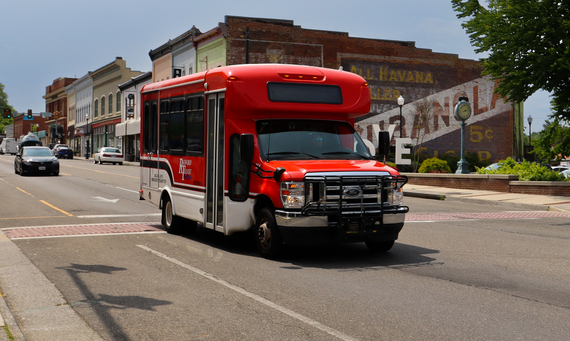
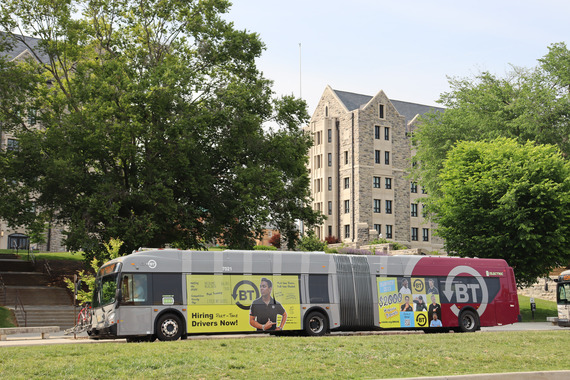
First up is Blacksburg Transit, often referred to simply as BT. Blacksburg Transit is a department of the Town of Blacksburg and operates there year-round. In addition to providing local routes in Blacksburg and serving Virginia Tech, BT operates fixed-route and demand-response bus services in surrounding Montgomery County and nearby Christiansburg, as well as providing paratransit services.
In April 2025, BT unveiled its new Multi Modal Transit Facility (MTTF) on Virginia Tech’s campus. Through years of planning and construction, and with funding from DRPT and others, the MTTF serves as the centerpiece of BT’s transit operations, improving passenger accessibility, ridership, and transit reliability.
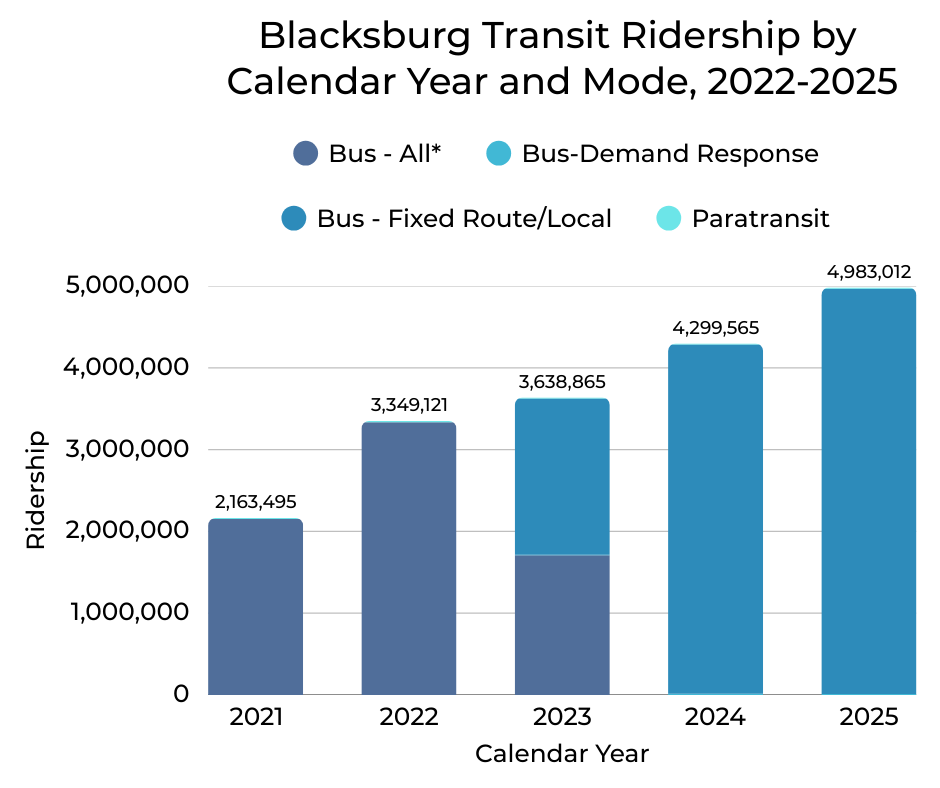
The agency’s efforts are reflected in its growing ridership. In 2025, the American Public Transportation Association named Blacksburg Transit the third-fastest growing transit agency of its size in the entire nation. The chart below shows the agency’s ridership over the past five years
  Pulaski Area Transit
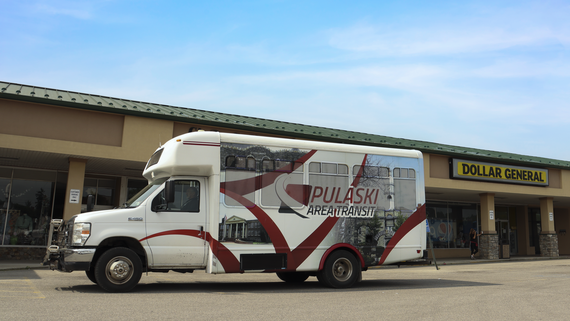
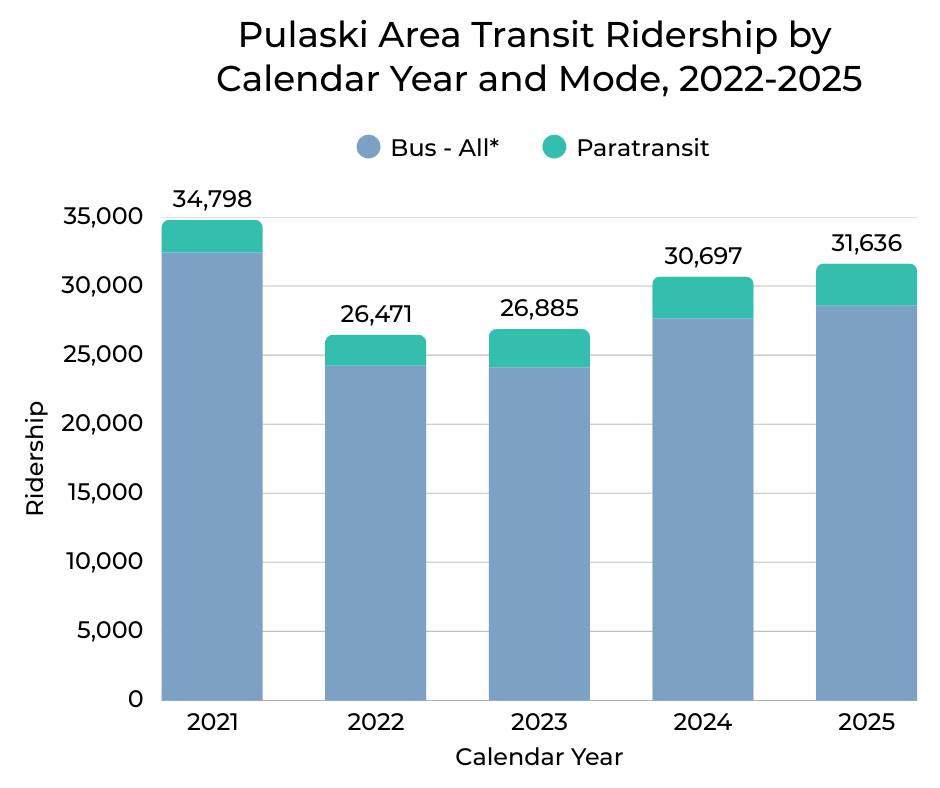
On the other side of the New River Valley from Blacksburg is Pulaski, where locals get around on transit provider Pulaski Area Transit (PAT). PAT operates both fixed route and paratransit bus services in Pulaski, with local routes serving the town and longer routes connecting to major destinations like the New River Valley Community College or beyond to nearby Radford. Through calendar year 2025, Pulaski Area Transit transported nearly 32,000 people. The chart below shows PAT’s ridership over the past five years:
 RADAR
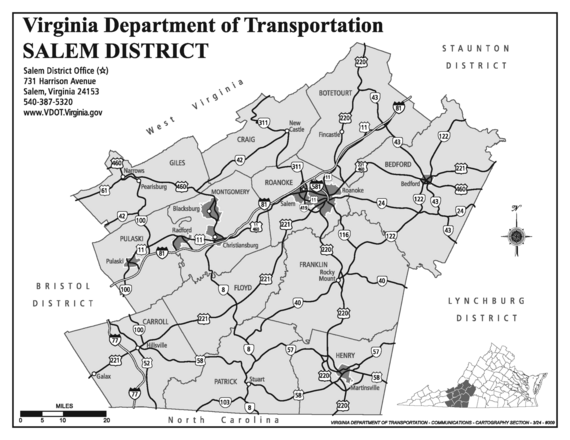
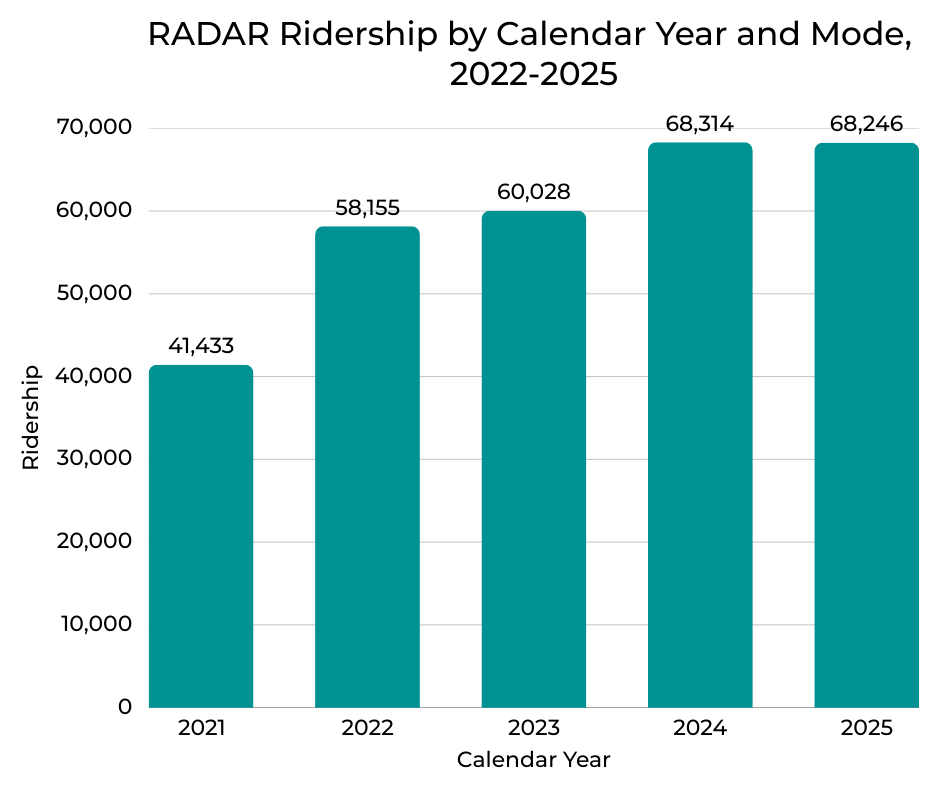
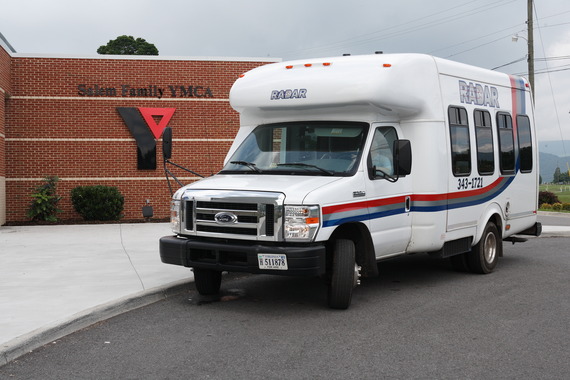 RADAR is the operating name of the Unified Human Services Transportation System, Inc. RADAR’s services extend into numerous regions in Virginia, including Greater Roanoke, Alleghany County, Rockbridge County, and Martinsville. The agency even operates the Ferrum Express Shuttle – the shuttle bus for Ferrum College in Franklin County! This chart visualizes RADAR’s ridership since 2021:
  Radford Transit
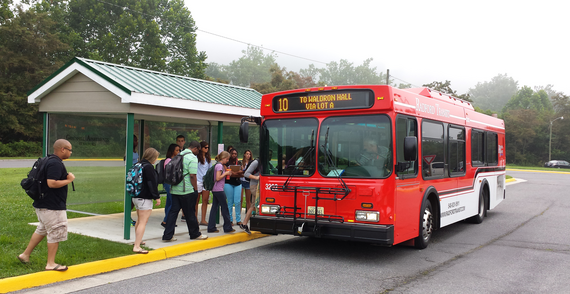
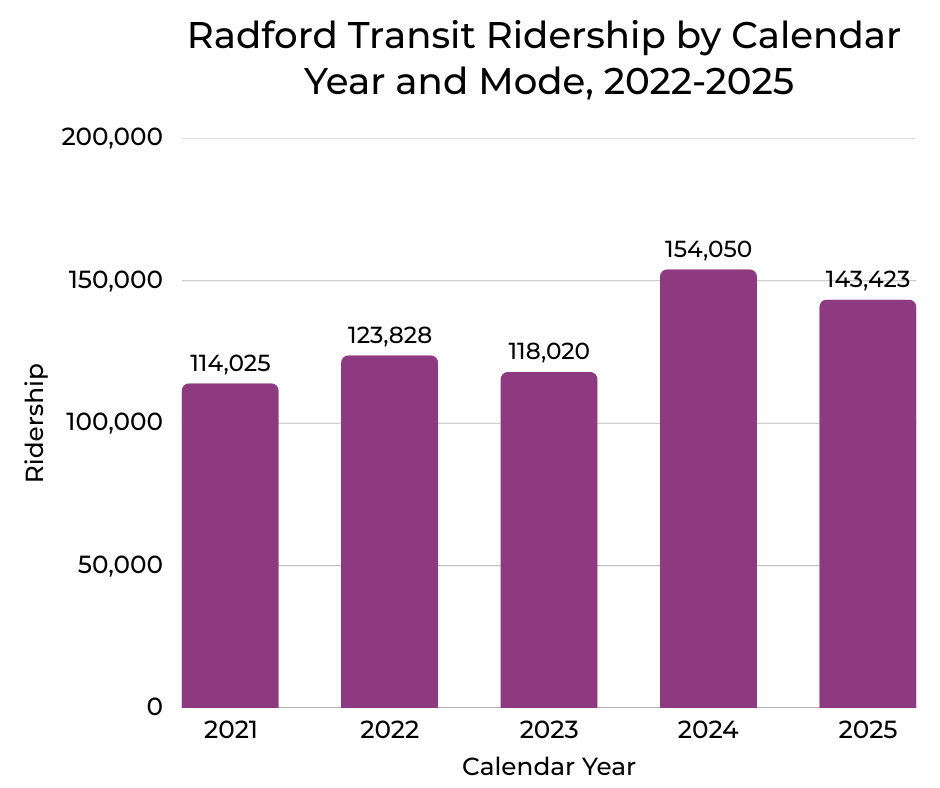
Between Pulaski and Blacksburg lies the City of Radford, situated along the New River. Radfordians and students at Radford University alike get around with Radford Transit. Radford Transit started out as Tartan Transit, only providing transit services to Radford University, before expanding throughout the city starting in 2011. Radford Transit offers fare-free transit services, thanks in part to a DRPT Transit Ridership Incentive Program grant, and saw a rapid growth in ridership between 2023 and 2024, growing by over 25%. Radford Transit’s rad ridership over the past five years is shown on the chart below:
 Valley Metro
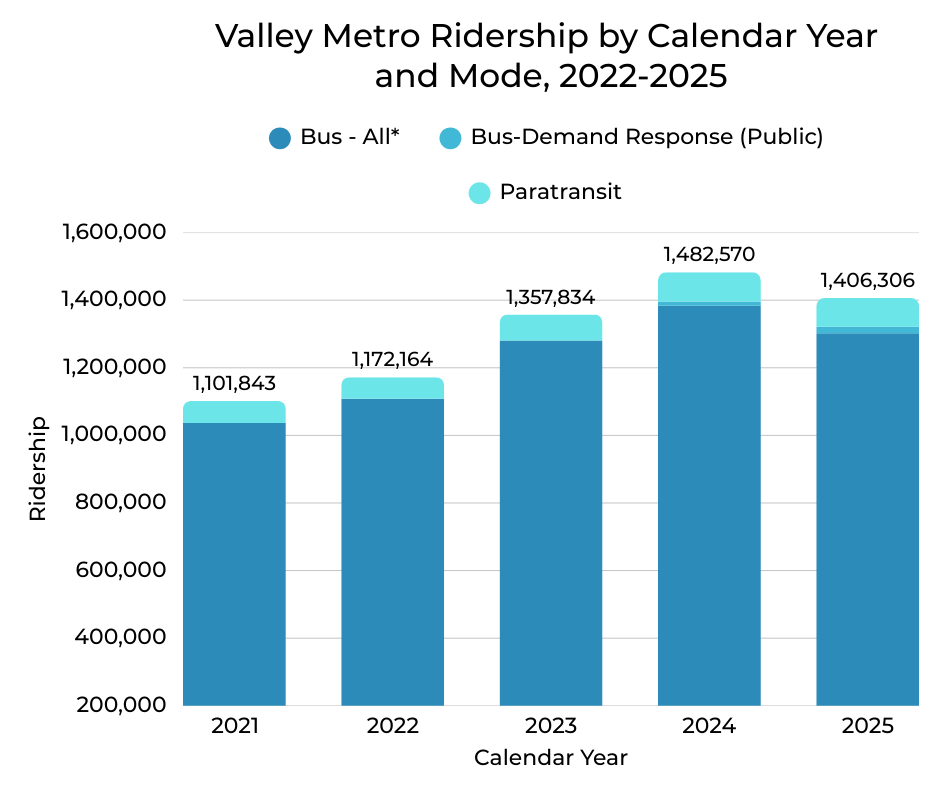
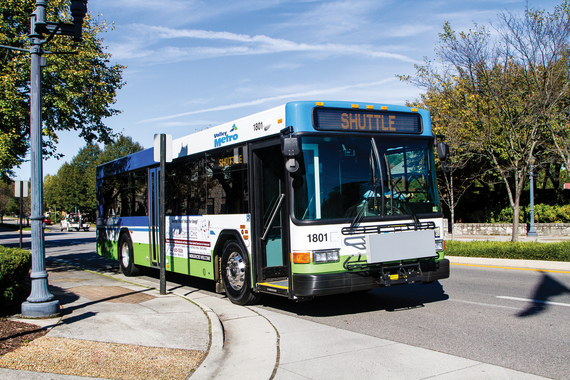 Last but certainly not least, is the Star City’s public transportation provider, Valley Metro. (Not to be confused with the identically named Valley Metro that operates public transportation in Phoenix, Arizona.) Valley Metro is the operating name of the Greater Roanoke Transit Company, a nonprofit public service corporation that has provided fixed-route bus and paratransit services in Roanoke, Salem, and into Vinton, since 1975. Valley Metro also operates commuter bus services (through The Smart Way Bus) into nearby Christiansburg and Blacksburg, connecting the New River and Roanoke River Valleys. The chart below shows Valley Metro’s ridership over the past five calendar years:
 Calendar Year 2025 Ridership
This Data Story covered a lot of ridership data from Calendar Year 2025 for the individual transit agencies in the Roanoke and New River Valley region. But what about statewide ridership? There are more good news and even better data there. In 2025, Virginia’s public transportation operators moved over 154 million people, nearly 13 million more than in 2024. Want to see more data about ridership in Virginia? Check out DRPT’s Transit Performance Data Dashboard to see more!
Building Connections Across Southwest Virginia
The New River and Roanoke River Valleys showcase how diverse and adaptable public transportation can be across Virginia. From student‑focused networks to regional commuter routes and rural mobility services, each agency plays a critical role in supporting the communities it serves. As ridership continues to grow statewide, these transit partners are helping drive a more connected Commonwealth.
|