|
|
|
Share this email with your colleagues to make sure they get the latest VHA IE news: SUBSCRIBE
|
|
|
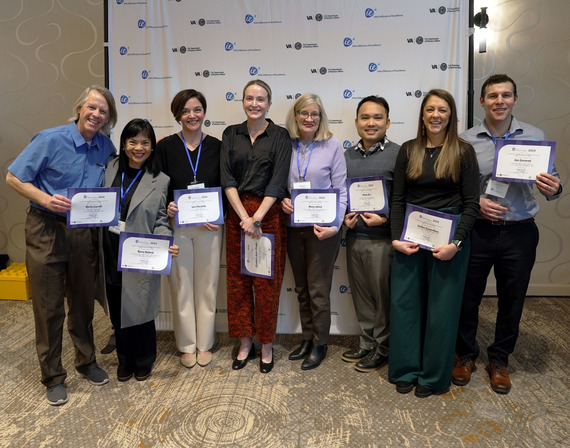
The application period to be a part of the 2025 VHA Innovation Ecosystem Fellowships program will soon close! June 14, 2024, at 11:59 pm PT is the deadline to apply to be a 2025 VHA IE Fellow. To apply, please visit the Fellowships Application page. (VA only)
After the application submission window closes on June 14, 2024, evaluators, VA employees and subject matter experts from VA and VHA Innovation Ecosystem (VHA IE), will review and score all applications. VHA IE will notify applicants of their acceptance or non-acceptance by the end of August. The 2025 VHA IE Fellowships cohort will be publicly announced on October 1, 2024.
Applications for the MIT Catalyst Fellowship are also open! MIT Catalyst, one of VHA IE's three fellowship programs, is built on a principled methodology for needs identification and opportunity development, and an organizational model that fosters a vibrant multi-stakeholder community. The Catalyst mission is to increase the potential impact of biomedical research and improve the likelihood that newly developed solutions will address unmet health care needs. MIT Catalyst is currently accepting applications from VA employees at VHA Innovators Network sites, plus all facilities located in VISNs 1 and 8.
There will be an information session on Wednesday, July 10 at 6 pm ET.Those interested in learning more about the MIT Catalyst Fellowship Program, register by clicking here. You can view the previous information session from May 28, 2024, on YouTube, here. More information about MIT Catalyst can be found on their website here. Interested applicants must complete an expression of interest form by July 19 for priority consideration.
|
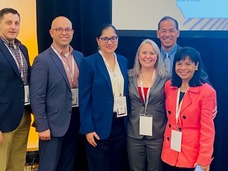
From May 29 to 31, 2024, members from VHA IE attended and spoke at the Healthcare Innovation Congress (thINc360) held in Washington, DC. 2024 VHA IE Senior Innovation Fellows Dr. Nichol Salvo and Dr. Rona Relova participated in the Fostering Innovation and Entrepreneurship in Healthcare Deep Dive Workshop, speaking on their respective fellowship projects, support they receive as fellows, and progress they’ve been able to make with support from VHA IE.
Joining Drs. Salvo and Relova in the workshop were Dr. Michelle Petrovic, Director of Clinical Simulation at VA Orlando, Matt Rowley, Community Builder with VHA IE, and Dave Brimmer, PathFinder Tech Scout with VHA IE. Rowley and Brimmer touched on Veteran Service Office engagement and PathFinder components during the workshop.
Brimmer shared a deep dive on how PathFinder submissions are processed and the program’s focus on customer service, while Rowley shared the ways in which VHA IE is collaborating with Veteran Service Organizations to advance the mission of innovation and improving health care services and experiences for Veterans.
|
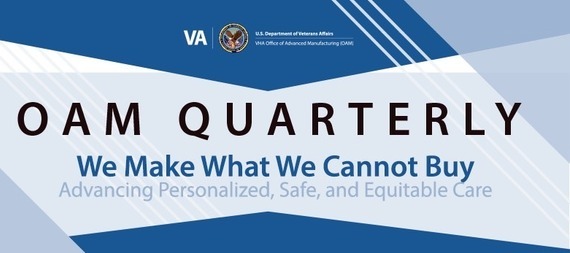
OAM’s quarterly newsletter offers a comprehensive look at OAM's impactful work regarding personalized, safe, and equitable care for Veterans by building advanced manufacturing capabilities, such as 3D printing, across the VA enterprise.
Each edition of the newsletter features insightful articles, exclusive spotlights on groundbreaking projects, and profiles of dedicated staff. It highlights exciting developments at the six nationwide OAM sites, including Seattle, Charleston, Pittsburgh, Milwaukee/VISN 12, Cleveland, and Richmond. These advanced manufacturing site labs create medical devices based on VA clinician needs by manufacturing medical and non-medical devices, maintaining the highest standards of quality through compliance with the Food and Drug Administration (FDA) and Office of Discovery, Education and Affiliate Networks (DEAN) Quality Management System (QMS).
Stay updated on OAM's efforts to provide patient-specific health care solutions and be part of a community dedicated to advancing Veteran care. Read the most recent edition here and join in the mission to innovate and improve health care for all Veterans.
|
|

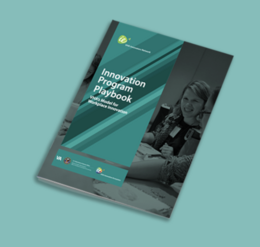
The VHA Innovators Network (iNET) recently unveiled an Innovation Program Playbook, developed with two purposes in mind: to serve as a structured guide for the professional growth of iNET’s Innovation Specialists and to be a model for external healthcare systems, federal agencies, and others to develop their own employee-centered innovation programs. Packed with insights, strategies, and best practices, this Playbook promises to lead frontline visionaries toward lasting and impactful cultural change.
Developed by a team of experts within iNET with help from Aspen Labs, the Playbook is a comprehensive resource brimming with actionable wisdom and practical tools drawn from VHA’s frontline innovation experiences.
"We believe that innovation is a journey, not a destination," remarks Matt Knight, iNET’s Programming Curator. "And this Playbook is the compass that guides us on our journey to a future where every idea has the power to enhance the health and well-being of our Veterans.”
Whether you are new or years deep in your innovation program, the Playbook can assist in all stages of your innovation journey. This guide contains 18 core competencies divided into three distinct levels ranging from novice to expert, each with checkpoints, tools, and additional resources.
Ready to unlock the secrets of innovation success within VHA? Dive into the Innovation Program Playbook today.
|
|
|

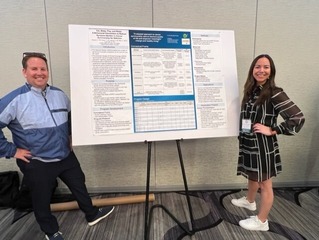
Cancer survivorship has increasingly become a focus within the health care community, especially as advances in cancer treatments and screening efforts have led to a rise in the number of cancer survivors. However, the transition from active treatment to survivorship is often fraught with biopsychosocial challenges, which encompass the biological, psychological, and social aspects of health. The Eat, Sleep, Play, and Relax (ESPR) Initiative, a notable program being developed at the Central Virginia VA Health Care System (CVHCS) in collaboration with Virginia Commonwealth University, aims to address these challenges head-on for Veteran cancer survivors.
Dr. Carl Williams, Program Manager of Health Psychology at CVHCS, and Dr. Paige Naylor, Psychologist at the Oncology Clinic of CVHCS, presented the program at the 27th Annual VA Psychology Leadership Conference. They received great feedback; mainly about how similar initiatives are needed. Their combined expertise and dedication have been instrumental in developing this comprehensive program to support Veterans transitioning from active cancer treatment to survivorship.
Reflecting on the need for the program, Dr. Naylor shared, "Many people think that when cancer treatment ends, all the problems of cancer end. But patients continue to experience high symptom burden, biopsychosocial symptoms into survivorship." This insight underscores the ongoing challenges faced by cancer survivors.
The development of the ESPR Initiative has been supported by the VHA Innovators Network and CVHCS’ IDEAS Center for Innovation, with Director Kathryn Beckner and Medical Director Dr. Stefan Ianchulev participating in the conversations. Dr. Williams noted, "Talking through these issues with Kathryn and Stefan and other colleagues has been invaluable. It's important because, while we have certain ideas, making them a reality takes the commitment of the whole institution."
The ESPR Initiative is designed to support Veterans in their transition from active cancer treatment to survivorship. This initiative leverages social cognitive theory and self-determination theory to empower Veterans to adopt and maintain healthy behaviors. The program features weekly virtual sessions, alternating between expert presentations and individual sessions with a survivorship skills navigator. Social peer support is encouraged during bi-weekly group presentations, fostering a sense of community among participants.
Dr. Williams emphasized, "It's about living well into survivorship and optimizing your wellness going forward." The program employs self-report and physiological measures to track participants' progress, including mood assessments, health locus of control, overall quality of life, food and activity logs, sleep diaries, and nutritional status evaluations.
Reflecting on their collaboration, Dr. Naylor remarked, "The Veterans themselves are the major reason that we are doing this." Dr. Williams added, "It's the hundreds of conversations with Veterans and hearing their stories and spending time with them. These are longitudinal relationships that come in certain volumes at different times with them, but essentially never end.”
|
|
|
|
|
|