|
|
Volume 13, Issue 1, October 2026
Food Hubs: Building Bridges Between School Buyers
|
|
#ProcurementCounts! Celebrate Farm to School Month and Get Ready for the Farm to School Census
Today, students near you are loading up their plate with fresh local produce from the salad bar; making compost to nourish their school garden; and meeting farmers who grew their lettuce, cucumbers, or carrots. Across the country, schools are opening their doors to local food producers and encouraging students to experience the bounty of their own communities.
As we celebrate Farm to School Month, it’s important to reflect how far the movement has come. According to the 2023 Farm to School Census, in School Year 2022-2023:
• 74% of school food authorities (SFAs) participated in farm to school activities.
• 62% of SFAs participating in farm to school served local foods
• 16% of SFAs participating in farm to school served total food budget on local foods, totaling approximately $1.8 billion.
Farm to school creates new, reliable market opportunities for producers, and it provides countless other benefits like fresh, delicious meals, increased food and agriculture knowledge, and stronger community connections.
This year’s theme, #ProcurementCounts!, tries to recognize these many benefits and encourage two key actions:
• Share and Celebrate Your Work: Your efforts support local farmers, improve children’s health, strengthen community resiliency, and ensure schools get the right products at the right price. Use #ProcurementCounts! to showcase the positive impacts you make every day.
• Get Ready for the Farm to School Census: Document your work in the upcoming Farm to School Census. The data findings help decision-makers at all levels plan, promote, celebrate, and secure resources for farm to school. New tools are on the way to help you prepare for this quadrennial survey!
Beginning in May 2027, USDA will once again ask school meal programs nationwide to respond to the 2027 Farm to School Census. Keep an eye on this space for resources to help you prepare. Let’s make this Farm to School Month our freshest, boldest, and most impactful yet—and show the nation why #ProcurementCounts!
Now on to your regularly scheduled farm to school news…
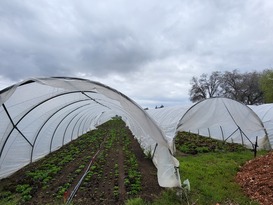
School meals feed nearly 30 million students five days a week. This means schools need reliable delivery of fruits, vegetables, and other protein rich products. For many small farmers, school district procurement requirements, such as volume minimums, may be intimidating or difficult to meet. This is where food hubs step in!
USDA defines a food hub as "a business or organization that actively manages the aggregation, distribution, and marketing of source-identified food products primarily from local and regional producers to strengthen their ability to satisfy wholesale, retail, and institutional demand."
Food hubs not only aggregate products from small and medium sized farms, they also offer essential logistics and marketing support for farms looking to diversify their sales. This help can aid farms in reaching a level of stability that is difficult to achieve through farmers' markets sales and produce box subscription bases alone. According to the most recent National Food Hub survey, published by Michigan State University in 2025, an estimated 65 percent of food bugs were selling to institutions, a term that includes schools and food banks for the survey.
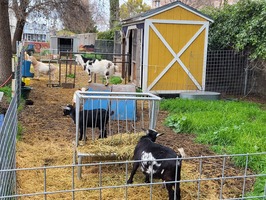
Shayne Zurilgen, co-owner of Fiery Ginger Farm and the farms' Spork Food Hub, serves the greater Sacramento area in California. Zurilgen and the team at Fiery Ginger Farm want to connect smaller, often newer, farms with the school food market. In 2024, the farm used a Patrick Leahy Farm to School Grant to partner with 30 local farms to help them understand how to plan their growing in a way that meets the needs of the regional school meal markets. Zurilgen shared his thoughts on the dual value of food hubs for both local producers and school buyers.
|
Food Hubs: A Compass for Farmers New to School Markets
Many local producers are interested in getting their products into a school's salad-bar but aren't familiar enough with institutional procurement to navigate the process. Food Hubs can help with that.
When asked about the value that a food hub can bring to smaller producers, Zurilgen is straight to the point: “As a small farm – we found that you need multiple legs under your marketing stool.” He then explains, it is difficult to both build and maintain a subscription base if you are following a community supported agriculture or produce box model . The Spork Food Hub connects farmers to school markets as well as advises them on how to competitively price their products and engage with school food buyers. They also educate farmers about the food safety and quality standards required in the school solicitations and serve as quality control.
|
One-Stop-Shopping and Product Knowledge: A Boon for Schools Purchasing through Food Hubs
Based on findings in the USDA 2023 Farm to School Census, seven percent of participating school food authorities reported sourcing products through food hubs – a four percent increase from the 2019 Farm to School Census. What makes a food hub a convenient solution for schools seeking to support local producers?
Zurilgen acknowledges that, at the end of the day, schools are a business on their own. “Schools are making a choice to source local because it is part of their own values,” says Zurilgen, and “there is some level of funding there to [buy local], which is helping them make that decision.” With the Spork Food Hub, Zurilgen notes “you have one invoice with 20 farmers all identified. Juggling 20 vendors can be difficult – but the hub can aggregate so that they get different vendors and can control for quality.”
For schools, food hubs can simplify local purchasing by bringing products from multiple farms together through a single supplier. For smaller producers, food hubs can provide market connections, technical support, and the distribution capacity needed to reach school customers. Zurligen also emphasizes the work is critically important because nutrition programs engaged in farm to school are prioritizing the health and well-being of students by minimizing ultra processed food items.
As schools and farmers look for efficient ways to put more local foods on students’ trays, food hubs can help bridge the gap between school buyers and the farmers who want to serve them. To read more about farm to school and food hubs, check out this story from The Dirt archives. For more information on food hubs, explore USDA Agricultural Marketing Service’s Many Hats- A Food Hub Operator’s Toolkit or the USDA Local Food Directory.
|
|
|
 |
Secretary Rollins Unveils the "Harvest to Hallways" Initiative
On August 24, 2026, U.S. Secretary of Agriculture Brooke Rollins and Health and Human Services Secretary Robert F. Kennedy, Jr. announced the Harvest to Hallways Initiative, a new effort to strengthen school meals by connecting more farmers with local schools, investing in school kitchen infrastructure, and giving states and school districts new tools to serve healthier, more nutrient-dense meals to children. The initiative includes several major actions:
• Expanding Local Procurement – Last month, USDA launched an education and outreach campaign to help schools use procurement flexibilities and strategies to bring more fresh, local foods to schools. USDA FNA will release the recording of its Procurement 101 webinar in the coming weeks.
• Investing in School Kitchens – USDA will make a new $50 million investment in school cafeteria infrastructure, such as cold storage and stoves, building on the $20 million awarded through the National School Lunch Program Equipment Assistance Grant.
• Bringing More Local Food to Schools – USDA will award up to $25 million in additional Patrick Leahy Farm to School Grants from the Fiscal Year (FY) 2026 applications. FNA is reviewing FY26 applications now and will not reopen the FY 26 application process or reconsider eligibility decisions.
• Accelerating Healthier Meals – Arkansas, Florida, Nebraska, and Nevada have adopted the Pledge for Healthier School Meals, encouraging states and food service companies, with support from school food authorities (SFAs), to adopt practices aligned with the Dietary Guidelines for Americans, 2025-2030, and within current regulations. USDA encourages more states to adopt the Pledge.
• Investing in School Meal Nutrition Research – HHS announced Developing Evidence for Programs to Ensure Nutrition for Development (DEPEND), a $32.5 million initiative to help schools replace highly-processed foods with nutrient-dense, real food and identify effective, scalable strategies for improving school meals. Applications were due October 13, and decisions are anticipated October 23, 2026. To learn more and apply, visit https://www.hhs.gov/real-food-in-schools/index.html.
|
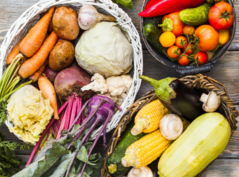
USDA Simplifies the Geographic Preference Option!
The U.S. Department of Agriculture (USDA) Food and Nutrition Administration (FNA) is clarifying the geographic preference option—a tool designed to help child nutrition program (CNP) operators more easily purchase local foods for program meals. The update is part of the Harvest to Hallways Initiative and the Secretary’s commitment to clarify statutory, regulatory, and administrative requirements.
The new rule, Simplified Geographic Preference Procurement in Child Nutrition Programs, aims to support CNP operators in bringing more locally sourced food to students’ trays. It does not change the meaning of the geographic preference option or how it is implemented. Instead, it makes the regulatory language easier to understand and explains how CNP operators may use geographic preference option strategies when buying unprocessed agricultural products. The rule takes effect on November 9, 2026.
|

USDA Launches Initiative to Bring More States into Meat Inspection
On September 16, U.S. Secretary of Agriculture Brooke L. Rollins announced the Stand-Up Program to provide up to $50 million in new funding to help states start or expand their own meat inspection programs in partnership with the USDA’s Food Safety and Inspection Service (FSIS). The program carries out President Trump’s September 4th Executive Order to expand market access for American meat producers and strengthen the domestic supply chain.
|
 Rooted in Goodness: Launching Farm to CACFP with Local Vegetables - October 19, 2026, 2:00 – 2:30 pm
Join the National CACFP Association (NCA) for a free webinar to kickoff Farm to CACFP Week, October 18-24, 2026. The annual celebration encourages Child and Adult Care Food Program (CACFP) operators to feature local agriculture through seasonal foods, hands-on learning, and educational activities.
The webinar will explore practical ways to add local foods into CACFP menus, including menu swaps, crediting basics, and adapting ideas to different regions and budgets.
Whether you celebrate for one day or all week, Farm to CACFP Week is a great opportunity to highlight how CACFP operators and providers connect young children with local foods, agriculture, and their communities. NCA offers free resources—activity pages, sample menus, and practical guides for connecting with farmers and sourcing local foods—to make participation easy.
On-Demand CACFP Halftime: Thirty on Thursdays Webinar “Using the Nutrition Facts Label in the Child and Adult Care Food Program”
USDA’s Team Nutrition is excited to announce a new, on-demand CACFP Halftime Thirty on Thursdays webinar. The webinar, training slides, and Using the Nutrition Facts Label in the Child and Adult Care Food Program worksheet support CACFP operators in choosing foods that meet current CACFP meal pattern requirements and show how these standards align with the Dietary Guidelines for Americans, 2025–2030 and Real Food Pyramid.
These resources explain how to use the Nutrition Facts label to check serving sizes, added sugars, and sodium, so Program operators can select foods that meet CACFP meal pattern requirements. The webinar also includes a frequently asked questions section about using the Nutrition Facts label in the CACFP.
|
|

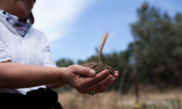
USDA AMS Specialty Crop Multi-State Program (SCMP) - Due Date: October 16, 2026 (Multi-State Partners to Participating States); December 4, 2026 (Participating States and Entities in Nonparticipating States to AMS)
The SCMP supports collaborative multi-state partnerships to enhance the competitiveness of specialty crops through competitively funded projects The focus is to address regional or national level specialty crop issues, including food safety, plant pests and disease, research, crop-specific projects addressing common issues, and marketing and promotion. Projects must enhance the competitiveness of U.S. or U.S. territory-grown specialty crops in either domestic or foreign markets.
|
Capacity Building Grants for Non-Land-Grant Colleges of Agriculture Program (NLGCA) - Due Date: November 10, 2026
The NLGCA Program will assist NLGCA institutions in maintaining and expanding their capacity to conduct education, research, outreach, and integrated activities relating to agriculture, renewable resources, and other similar disciplines.
USDA Organic Certification Cost Share Program (OCCSP) - Due Date: December 31, 2026
The OCCSP provides cost share assistance to producers and handlers of agricultural products who are obtaining or renewing their certification under the National Organic Program (NOP). Certified operations may receive up to 75 percent of their certification costs paid during the program year, not to exceed $750 per certification scope.
|
|

Local Food Procurement Pathways: Key Drivers of Farm to School Participating Authorities Buying Directly from Farmers
Farm to school programs are widely adopted in U.S. school food systems: in 2022–2023, 74 percent of U.S. schools participated in farm to school activities, and their local food purchases totaled $1.8 billion. This USDA Economic Research Service report analyzes how these schools source local products and the factors shaping their procurement choices.
|
School Food Preparation Study Final Briefs
USDA FNA has released insights from the USDA School Food Preparation Study, which collected feedback from 36 school food authorities, ranging from small rural districts to large urban districts. The series includes briefs on the State of Scratch Cooking in School Meals, How School Food Authorities Use Scratch Cooking, and How State Agencies and Partners Can Support Scratch Cooking.
Cooperative Extension in Transition: Trends Through 2024
The U.S. Cooperative Extension Service provides non-formal education through land-grant universities. Since the 1970s, Extension funding has diversified, and professional staff and Federal funding have declined, with notable regional differences.
|
|
|
|
|