|
Welcome to our August edition of At the Table.
I love the name of our quarterly newsletter because gathering around the table is synonymous with togetherness, laughter, and joy. Nothing connects people more than sharing a good meal. It is fundamentally unifying and nurturing for both the body and soul, and I love being in such an important business, ensuring all Americans have nutrition security.
In this edition we will reflect on MyPlate’s 12th Birthday, some recent visits from FCNS Deputy Under Secretary Stacy Dean and FNS Administrator Cindy Long, and our regional office’s most recent “All Y’all,” our biannual, regional all-employee meeting. We will also see some recent successes from around the region, including the Regional Food Bank Association Meeting, the Colorado SNAP eHIP Grant, a Farm to School Institute video from Montana, the Farm to School Summit, and the Farm to School grantees, among other things.
It is hard to believe the country is sending students back to school already. As they get back to class, we hope to reach as many children as possible with nutritious school meals. Please join us in spreading the word through our back-to-school outreach toolkit.
We’re excited about the recent Healthy Meals Initiative announcing funding support from USDA to meet that goal. We’re seeing an exciting trend across the nation as the momentum for Healthy School Meals for All is building. Eight states including California, Maine, Colorado, Minnesota, New Mexico, Vermont, Michigan, and Massachusetts have passed policies to permanently offer free school meals to all students, and Nevada has extended free school meals for all through the 2023–2024 school year. Interested persons can get the most current information by contacting their National School Lunch Program state agency. A list of contacts by state is available at: National School Lunch Program Contacts | Food and Nutrition Service (usda.gov)
We look forward to continuing to partner with all of our programs to support American agriculture and provide healthy and nutritious food across the nation.
Sincerely,
Cheryl Kennedy
Regional Administrator
|
|
|
Starting the School Year with Support for School Meals, Recognition for Success
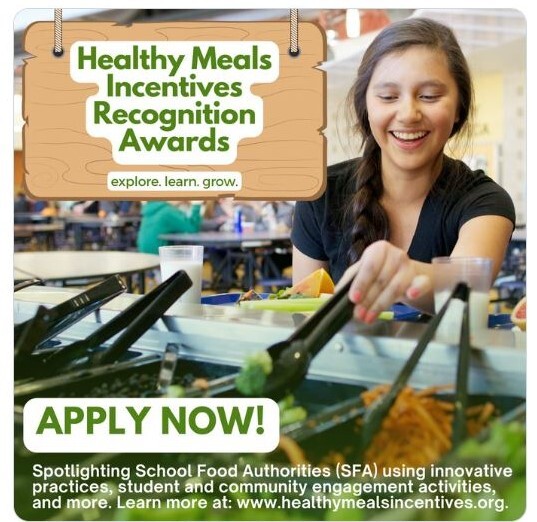
As part of a cooperative agreement between USDA Food and Nutrition Service and Action for Healthy Kids, the Healthy Meals Incentives Initiative provides funding to improve nutritional quality of school meals, support innovation in meal operations, and recognize schools that have made improvements to their school meal service.
The Healthy Meals Incentives Initiative has awarded nearly $30 million dollars to school districts to support small and/or rural schools. The funding supports strategies to improve nutritional quality of meals and operational modernization, such as innovative staff training, kitchen renovations, and support for school nutrition professionals.
Grant funding of up to $150,000 each was provided to 264 school districts across 44 states and the District of Columbia. The online map from Action for Healthy Kids shows the participating school districts and the grant awards. Here in the Mountain Plains Region, there are 24 school districts that received grant funding.
In addition to these grants, the initiative also allows for Healthy Meals Incentive Recognition Awards to celebrate and further support school food authorities that have made significant improvements to their school meal programs. The awards will spotlight innovative practices, student and community engagement activities, and strategies that school food authorities have used to provide meals, which are consistent with the 2020-2025 Dietary Guidelines for Americans. Applications for the recognition awards will be accepted now and on a rolling basis through June 30, 2025. AFHK will also host a webinar on September 21, to provide more information on award criteria and the application process. Be sure to register here and for further questions, contact awards@healthyincentives.org.
An additional and important piece of the Healthy Meals Incentives Initiative is the School Food System Transformation Challenge Sub-Grants proposed to support innovation in the school meals marketplace by incentivizing collaboration among schools, the food industry, and other stakeholders. USDA is pleased to work with the organizations who will manage the sub-grants to facilitate these transformational efforts, including Boise State University, Chef Ann Foundation, Full Plates Full Potential, and Illinois Public Health Institute. The sub-grants support collaborative projects between school districts, food producers, suppliers, distributors, and/or community partners to stimulate the creation of a resilient, equitable, and nutritious school food system.
USDA FNS knows that a healthier future for our country starts with healthy kids and with that, the support for school meals through a variety of approaches and partnerships is a great way to start the school year. Congratulations to grant recipients across the Mountain Plains!
|
|
|
Administrator Long Visits Colorado SFSP Site
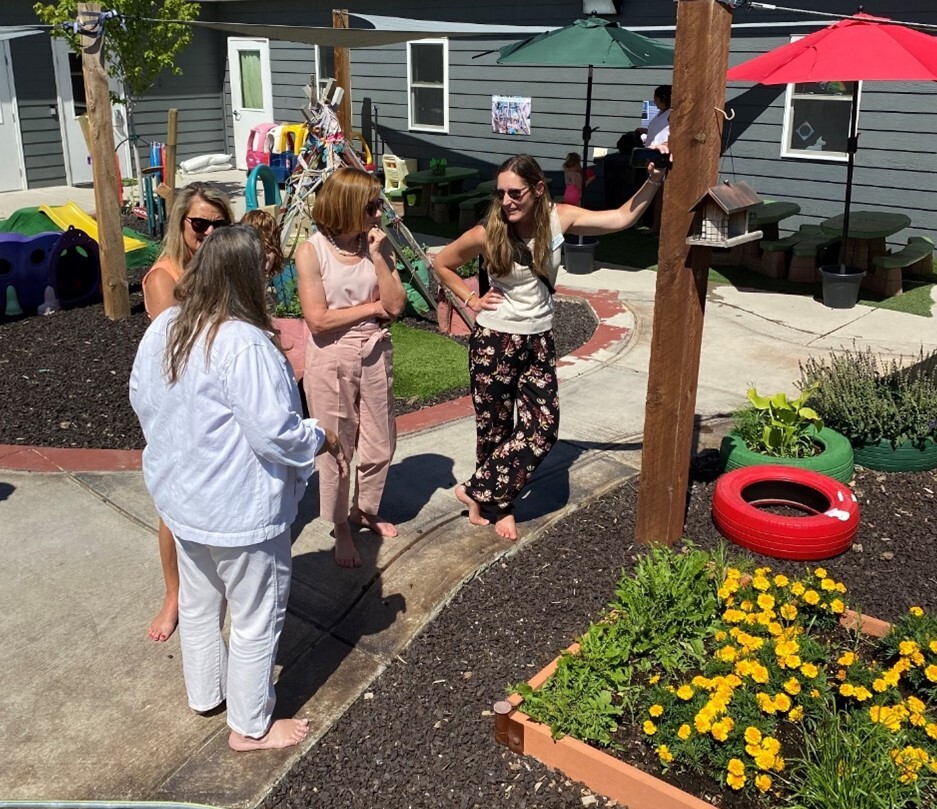 Administrator Cindy Long visited Colorado July 9-12 to participate in the School Nutrition Association Annual National Conference, visit a Summer Food Service Program non-congregate meal site, and meet with the Chef Ann Foundation about employment and training opportunities.
Her July 11 visit to the Evans Early Childhood Center in Fort Morgan, Colorado, was an opportunity to see a state leader in the area of Farm to Early Childhood Education.
The center was started by a husband-and-wife team in their home with 12 children. After Rosie Evans won a local business development competition, they built a new facility and expanded the center to a beautiful campus in town that now serves 150 children ages 6 weeks to 12 years.
The center was also among the first in the state to offer the non-congregate SFSP option this summer to better serve their rural community. “Our rural community enjoys the flexibility of the non-congregate option. Some of our families live across the street and others live 10-15 miles away, so being able to meet their diverse family needs helps us extend our reach,” Evans said.
Nutrition education and physical activity are priorities at the center, with children spending 4-6 hours of their day outside, Evans says.
As a leader in Farm to Early Childhood, the center is excited to host a Farm to Early Childhood Summit in September for 75 participants across the state.
“The satisfaction of knowing we are establishing the foundation for a lifetime of success socially, emotionally, physically, and academically for children in our community is the highest honor,” Rosie says about the center. “We hope our conference can be that small seed for someone else and we are excited to give back to others and collaborate!”
|
|
The USDA Food and Nutrition Service is working to ensure all communities have access to foods that support good health and well-being. This focus on nutrition security builds on and complements our longstanding efforts to address food insecurity and emphasizes the co-existence of food insecurity and diet related diseases. Watch our new video, which highlights how FNS nutrition assistance helps all Americans.
|
|
|
MyPlate Turns 12!
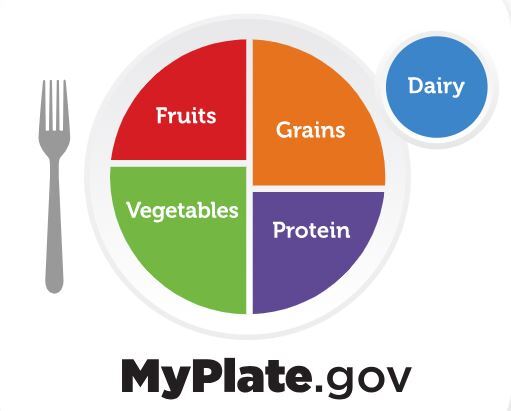 |
MyPlate turned 12-years-old in June. To mark the festivities, the agency celebrated a different life stage each week. Bite by bite, small changes add up over time, and the Food and Nutrition Service encourages healthy eating at all ages and life stages every day.
Each week in June, MyPlate shared new tips and resources specific to a life stage to celebrate the benefits of eating healthy foods that are full of nutrients. These benefits have positive impacts over time, from pregnancy and lactation, all the way to older adults, and everywhere in between.
During June, the MyPlate website focused on a different stage each week:
- Week 1: Pregnancy and Lactation
- Week 2: Infants and Toddlers
- Week 3: Kids and Teens
- Week 4: Adults
- Week 5: Older Adults
The MyPlate.gov website continues to provide a wealth of information on healthy eating, including videos, graphics, and printed materials. There’s something for everyone, tip sheets, activity sheets, games for kids, and more. MyPlate works hand-in-hand with other FNS programs such as Team Nutrition, WIC, and SNAP-Ed, which also integrate the MyPlate nutritional guidance.
Happy 12th Birthday, MyPlate!
|
|
Colorado Tests Incentive to Encourage Healthy Eating in SNAP
In late June, USDA’s Food and Nutrition Service announced Colorado received $7.9 million to test a new model for incentivizing fruit and vegetable purchases among participants in the Supplemental Nutrition Assistance Program, also known as SNAP. Colorado, Louisiana, and Washington are receiving a total of $25 million as well as federal support to establish and operate an electronic healthy incentives pilot, eHIP, intended to streamline incentives and make it easier for SNAP households to access the healthy foods necessary for lifelong health and well-being.
Each of the pilot states will upgrade its SNAP system so incentive dollars can be loaded directly onto participants’ Electronic Benefit Transfer cards. The eHIP pilots aim to test incentive models that reduce administrative costs, allowing more incentive dollars to reach SNAP participants. Colorado’s project will target a variety of small and independent stores, farmers markets, retail chains and locally grown foods. SNAP participants who purchase qualifying fruits and vegetables using their SNAP benefits will receive 100% of the dollars spent on the qualifying purchase back on their EBT card, up to $60 per month, per household -- to be subsequently redeemed on the purchase of any SNAP eligible food. Colorado’s project is expected to launch in April 2024.
|
|
Regional Food Bank Association and MPRO Increase Collaboration
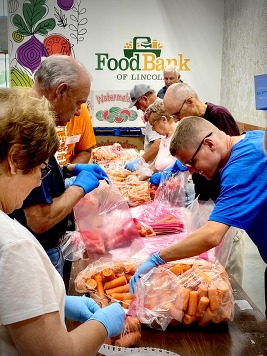
Food banks are some of our most dynamic partners as they administer multiple Food and Nutrition Service programs and have large service areas, reaching many people. With a network of 200-member food banks and their work alongside local, state, and regional organizations, Feeding America is a tremendous partner to FNS. To further collaboration, Feeding America has recently reorganized its regional structure to align with the regions of FNS. This realignment allows for direct partnerships with regional offices.
During the past year, the FNS Mountain Plains Regional Office and leadership from the Regional Food Bank Association have connected to further this collaboration. To date, results include quarterly education sessions and an annual training conference which took place this May. Approximately 50 staff representing the 18 Feeding America Food Banks in the region, as well as state agency partners who work with USDA Foods, attended the conference held at the FNS regional office in Denver. The agenda was robust with topics covering updates to both The Emergency Food Assistance Program and the Commodity Supplemental Food Assistance Program, as well as an overview of USDA programs including SNAP-Ed and SNAP outreach, the Child and Adult Care Food Program, Summer Food Service Program, and the Food Distribution Program on Indian Reservations. Food and Nutrition Service program priorities and initiatives, disaster response, and a discussion on best practices and innovations at the local level were also covered. The final highlight of the conference was a tour of the Food Bank of the Rockies.
A special thank you goes to the planning committee: Brian Walker, President and CEO for the Kansas Food Bank; Gayle Carlson, President and CEO for the Montana Food Bank Network; and Stephen Davis, President and CEO of Harvesters Community Food Network. Thank you as well to Erin Pulling, President and CEO of Food Bank of the Rockies, for hosting the group’s tour. Many thanks go to all who attended the conference and who participate with the ongoing collaboration between the Regional Food Bank Association and FNS Mountain Plains Regional Office. Your partnership makes all the difference.
|
|
|
Local Food Purchasing Agreement Boosts Missouri Food Access, Supports Farmers
USDA Agricultural Marketing Service launched the Local Food Purchasing Assistance Cooperative Agreement Program with the goal of maintaining and improving food and agriculture supply chain resiliency. The cooperative agreements allow states, tribes, and territories to procure local and regionally grown foods for distribution to local feeding programs. The program is a win for supporting local farmers and producers while also increasing access to nutritious foods among underserved populations. Missouri’s LFPA is a true success story, where the program is not only supporting farmers with their growing efforts but also reaching underserved areas of the state to provide both nutritious food and additional social services. (See this video showcasing a variety of growers and community partners.)
LFPA Program Specialist Chastity Haxton with the Missouri Department of Social Services, explained that the program was designed to reach underserved areas of the state. “Our community partnerships have been strategic, focusing on opening up new sites, such as pantries, churches or schools, in places that currently do not have food distribution.” She explained Missouri DSS worked with the food bank to map service areas and identify areas of need based on both the percentage of residents at 185% of the federal poverty level and SNAP participation levels. Funding for the program was then spread across those targeted areas. Areas such as “the Boot Heel” have the highest levels of poverty in the state and limited access to grocery stores. LFPA allows for the distribution of high quality, fresh, local food to these underserved areas.
LFPA also benefits local growers and producers, with a requirement to reach socially disadvantaged farmers. Joan Daleo, President of Ole Tyme Produce, explained that LFPA has allowed consistent support for farmers and local growers, especially socially disadvantaged farmers who benefit from the stability of orders that the program allows. Due to scale, wholesalers like Ole Tyme Produce can set up consistent orders to support smaller farmers and then distribute the produce directly to sites, connecting Missouri grown food to Missouri families.
Daleo explained that involvement with this type of work has changed their company, reaffirming their core value of supporting the community. “During COVID, we worked with USDA directly on the Farmers to Family Food Box Program. We went to places no one else would go…50 boxes here, 40 there… We parked our truck and with volunteers from other organizations, we put the food boxes into people’s cars. I’ll tell you something, if that doesn’t change your life, nothing will. It changed this company forever.”
Daleo went on to explain that LFPA supports every part of the food system. “This government program strengthens that chain and allows for diversity of suppliers and diversity in our food system—and that makes it much more secure.”
Through monthly stakeholder calls, Missouri DSS continues to strengthen the regional food network. Companies like Old Tyme Produce, Moyer Farms, and Proffer Foods join the calls to share best practices and knowledge on food distribution. The monthly calls also connect new growers and producers in order to identify socially disadvantaged farmers, who’s involvement in the program is one of the goals of the grant.
|
|
|
WIC Invests in Community Innovation and Outreach
On May 18, through a cooperative agreement with USDA Food and Nutrition Service, Food Research and Action Center awarded $16 million in subgrant funding to 36 projects. The projects are designed to test new ways of delivering WIC messaging and conducting outreach in order to expand partnerships with community-based organizations and connect underserved populations with WIC.
Congratulations to the four sub-grantees in the Mountain Plains Region: Community Food Bank of Grand Junction Colorado, The University of South Dakota Sioux Falls, Blue Valley Community Action Partnership Nebraska, and Andrew County Health Department, Missouri.
|
|
FNS Administrator Visits Kansas City Area to Discuss Tribal Food Sovereignty and Food Assistance for Children and Families
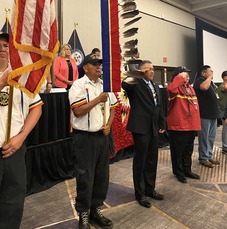
The 34th annual conference for the National Association of Food Distribution Programs on Indian Reservations was held in August in Kansas City, Missouri, and Administrator Cindy Long was on hand to deliver opening remarks. The theme of the conference this year was “Tribes are Unique, We’re Not the Same.” In the spirit of that theme, Administrator Long announced that eight additional tribes will participate in the FDPIR Self-Determination Demonstration Projects, including the Spirit Lake Tribe in the Mountain Plains Region.
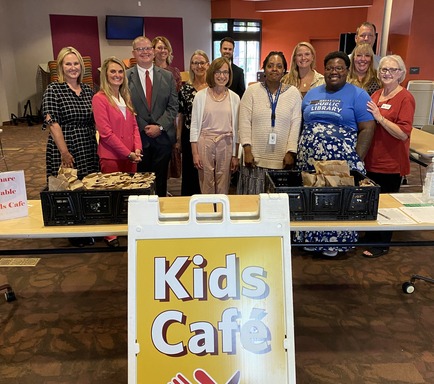
While in Kansas City, Administrator Long made a stop at the Kids Café at the Bluford Branch of the Kansas City Public Library to visit the “Read and Feed” Summer Food Service Program site sponsored by Harvesters Community Food Network.
Like SFSP, the Special Supplemental Nutrition Program for Women, Infants, and Children aims to provide nutritious food to children and families to increase nutrition security. During her visit, Administrator Long traveled west to Riley County, KS, to hold a roundtable with Senator Roger Marshall about the importance of full funding for the WIC program. The officials heard from WIC participants, county and state leadership, retailers, and health care partners about all the benefits WIC brings to families and communities.
Only about half of eligible families across the country are currently participating in WIC. Find out if you or those you know may be eligible for the program by contacting your local state agency.
|
|
|
A Busy Summer for Farm to School
Summer is an exciting and busy time on the farm, and the same can be said for USDA’s Farm to School Program. The Mountain Plains Farm to School team has been especially busy this summer, bringing stakeholders from across the region to Denver for the Mountain Plains Farm to Child Nutrition Summit.
Representatives from state agencies and partner organizations met for four days in June to network, receive training, share best practices and resources, and build a community of practice to advance the goals of farm to school programs. As one example, states learned about the Farm to School Institute model, highlighted in this video from Montana.
USDA was also excited to announce a new round of Farm to School grantees in July. Congratulations to the Mountain Plains Region's newest grantees: Community Development Institute in Colorado; First Nations Development Institute in Colorado; Headwaters RC&D in Montana; Montana CO-OP in Montana; Youth and Family Services, Inc., in South Dakota; Cornerstones of Care in Missouri; St. Louis Public Schools in Missouri; United Community Change in Missouri; and Center for Rural Affairs in Nebraska.
Click here to learn more about these and other FY23 Farm to School Grant projects.
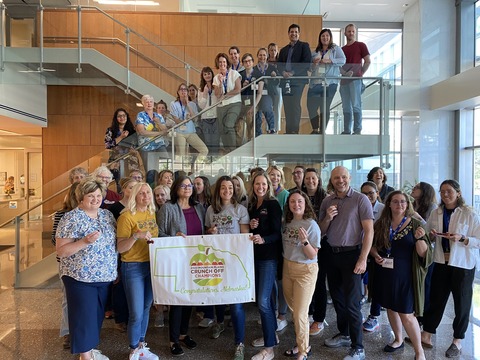
As the harvest picks up momentum in the fall, Farm to School shows no signs of slowing down in the coming months. USDA will be kicking off the FY2023 Farm to School Census in October to learn more about schools’ awareness of and participation in farm to school activities. The Fiscal Year 2024 request for grant applications is on the way, as is the Mountain Plains Regional Office Crunch Off, a friendly competition to see which state can crunch into the most fresh, local produce.
|
|
Community and Tribal Partners Showcase Strong Food Distribution Programs
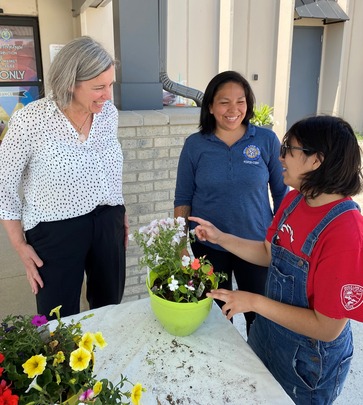 |
USDA Deputy Under Secretary for Food, Nutrition and Consumer Services Stacy Dean visited Grand Forks, North Dakota, the Spirit Lake Sioux Nation and Turtle Mountain Band of Chippewa Indians June 5-7 to see a Grand Forks food pantry as well as food assistance and distribution facilities on the reservations.
On June 5, Deputy Under Secretary Dean, along with other USDA staff, met with Melissa Sobolik, CEO and president of the Great Plains Food Bank and toured the HC Community Care Center & Food Pantry in Grand Forks.
On June 6, they visited Spirit Lake Nation to observe the tribe’s food distribution center as well as nutrition programs being offered on the reservation. Food Distribution Programs on Indian Reservations Director Mary Greene Trottier planned a full day of activities to see the strong program the tribe has built in recent years, including a grocery store model for FDPIR clients to pick some of the foods for their food package. The group also saw the Summer Food Service Program in action and thriving gardens on the reservation.
Next, on June 7, they visited the Turtle Mountain Band of Chippewa Tribe to meet with tribal leaders and attend the ribbon-cutting for the tribe’s new food distribution facility, funded with Coronavirus Aid, Relief, and Economic Security Act grant money.
The food pantry, as well as both tribal food distribution programs, are important partners in reaching clients with much-needed nutrition assistance.
All three offered tours that showcased the tremendous work done in communities to feed people and provide nutrition education. Deputy Under Secretary Dean was honored to meet these program leaders and express FNS’s gratitude for the agencies’ efforts.
The Deputy Under Secretary authored a blog describing some of her visits with tribes, including Spirit Lake and Turtle Mountain.
|
|
First Interagency Food & Mood Convening
Held in Denver
|
|
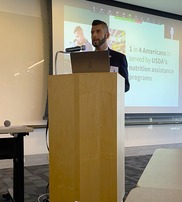
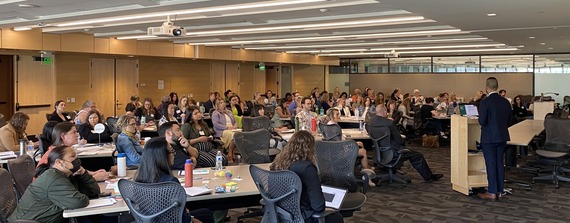
The Substance Abuse and Mental Health Services Administration and USDA Food and Nutrition Service held the first interagency, multi-region Food and Mood Collaborative summit in Denver the week of August 21. The goal of the Food and Mood Collaborative is to promote behavioral health and reduce the impact of mental health and substance use issues by identifying and implementing strategies that address the intersection between nutrition security and behavioral health and wellness.
The Food and Mood convening brought together nutrition security and mental health practitioners from the Mountain Plains Region and the Substance Abuse and Mental Health Services Administration regions VII and VIII to discuss the important link between nutrition security and mental health among children and youth.
|
|
|
Colorado Backpack Conference
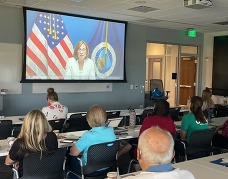
FNS Administrator Cindy Long provided opening remarks via video for more than 40 participants at the first annual Colorado Backpack Conference on August 22. Sponsors of backpack programs from around the state attended the event in Denver to network and learn more about nutrition, food options, and fundraising opportunities for their programs.
|
|
|
MPRO Brings all Regional Employees Together During July All Y'all
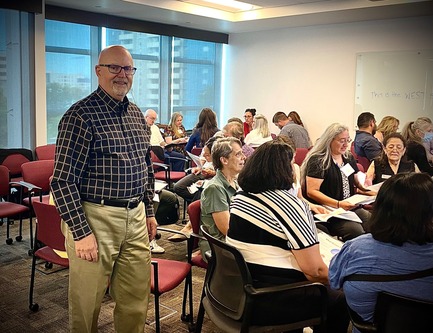
On July 25-27, Food and Nutrition Service’s Mountain Plains Regional Office brought all employees into the regional office in Denver, Colorado, for its bi-annual “All Y’all” All Employee Meeting.
Regional Administrator Cheryl Kennedy and Deputy Administrator Mario Ramos sought to bring the staff together for growth and team building.
“We’ve learned how to work in a hybrid work environment, and our team is highly successful in this challenging environment,” said Kennedy. “But one thing we always aim to do is ‘Connect to the people and connect to the work.’”
While the hybrid environment allows many employees to telework or work remotely, fostering positive relationships is often best done in person. By bringing the staff together twice a year, the leadership team hopes to improve communication and teamwork within an already highly successful agency.
More than 100 employees took a work-style assessment and were led through a facilitated discussion on how understanding their personality and communication style can be used to complement other communication styles in their teams and organizations.
Each division had breakout discussions to get to know their working groups better, and employees were divided into mixed discussion groups to offer collaborative, creative solutions to organizational challenges previously raised by staff.
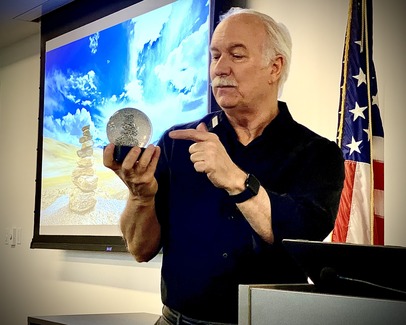
The three-day session ended on a high note with a motivational speaker discussing the power of positive thinking, the power of listening, and the power of keeping an open mindset as one moves through their adventures in the world.
The next Mountain Plains Regional All Y’all is in planning for January 2024.
|
|
|
|
|