|
On January 14, FEMA announced more than $116 million in federal funding to support the state of North Carolina’s recovery from Tropical Storm Helene and help prevent future disaster damage across the state.
Of the approved funds, more than $72 million will go to rebuilding or restoring critical infrastructure, clearing debris from public roads and repairing roads and bridges damaged by Tropical Storm Helene. An additional $44.6 million will support hazard mitigation investments to protect communities from future flooding and severe weather.
Prior to this announcement, FEMA provided more than $1 billion to North Carolina for recovery efforts. FEMA has also paid more than $549 million in grants to survivors to directly help families recover.
Read the full press release on FEMA.gov.
FEMA announced nearly $9 million in federal funding is now available to communities in Tennessee affected by Tropical Storm Helene and other past disasters.
This money is available as part of FEMA’s Public Assistance grant program, which is funded at a minimum of 75% federal share.
Here is a list of some notable projects FEMA will help fund for the state and local communities:
-
$3.7 million for emergency protective measures taken by Humphreys County School District following catastrophic flooding.
-
$3 million for 10 public infrastructure projects, including:
-
$1.4 million for road repairs in Carter, Haywood and Unicoi counties and the city of Dyersburg.
-
$1.3 million for electrical and utility repairs for Bolivar Energy Authority, Nashville Electric Service, Southwest Tennessee Electric Membership Cooperative and Unicoi County Gas Utility District.
-
$268,000 for building repairs to the Tennessee Department of Corrections.
-
$1.2 million to remove debris from Cheatham and Tipton counties and the city of Grand Junction.
Read the full press release on FEMA.gov.
FEMA recently published guidance to help applicants and recipients of the Fiscal Year (FY) 2026 Counter-Unmanned Aircraft Systems and the FIFA World Cup grant programs understand their requirements.
In Information Bulletin No. 548, FEMA provides additional information on the FIFA World Cup Grant Program’s allowable costs, including indirect costs, management and administration costs, and vehicle-related costs.
In Information Bulletin No. 554, FEMA provides additional information on the FY 2026 Counter-Unmanned Aircraft Systems Grant Program. The information bulletin clarifies requirements for the Price Act Waiver, Vulnerability Assessment and Mission Statement, equipment eligibility and compliance, and mitigation technology approval.
The application deadline for these funding opportunities was December 5, 2025. FEMA announced the FY 2026 Counter-Unmanned Aircraft Systems Grant Program awards on December 30, 2025.
Questions regarding both information bulletins may be directed to your assigned FEMA Preparedness Officer or FEMA Grant Programs at fema-gpd-grantprograms@fema.dhs.gov.
PrepToolkit is an online portal that provides communities with tools to help them implement all six areas of the National Preparedness System. It helps people at all levels of government and the private and non-profit sectors work together to prepare for risks their communities face. Users can easily share ideas, information, files and data with peers and stakeholders across the nation.
One feature is the Exercise Builder tool, developed and supported by the Homeland Security Exercise and Evaluation Program. This tool helps you manage and execute exercise planning, design, operation and evaluation all in one location.
Exercise Builder saves emergency managers time and resources, so they can focus on the key capabilities they need to respond effectively. By streamlining exercise planning through structured templates and workflows, the tool:
- Reduces time and effort needed to design effective exercises.
- Helps ensure exercises are structured around the Homeland Security Exercise and Evaluation Program doctrine, improving the quality and consistency of preparedness activities.
- Enhances collaboration by allowing state, local, tribal and territorial stakeholders to work together in real time from multiple locations.
These exercises help organizations respond better to real world events.
On January 5, FEMA's National Exercise Division held a two-day training and technical assistance session on PrepToolkit for Florida's emergency managers. The session was held to prepare them for a full-scale state-wide exercise.
To learn more about PrepToolkit and how emergency managers can use the tool to prepare for disasters, visit PrepToolkit.fema.gov.
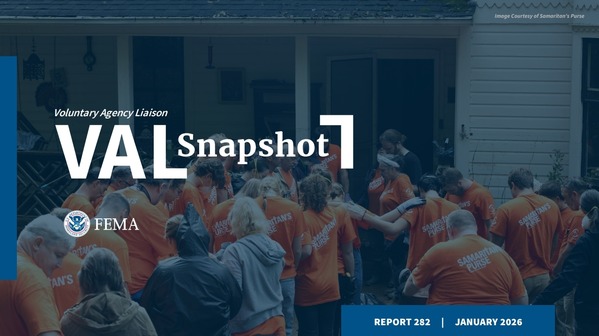
Click here to read the January 2026 Voluntary Agency Liaison Snapshot Newsletter.
FEMA’s Individual Assistance Voluntary Agency Liaisons launched a collaborative effort to test recent improvements to how survivors apply for disaster assistance on DisasterAssistance.gov.
The liaisons brought together more than 80 participants from more than 40 organizations—including voluntary agencies, philanthropic groups, community-based organizations, private sector entities, associations and academia. These organizations play a vital role in community recovery efforts by providing direct services such as case management, sheltering, rebuilding, emotional care and long-term recovery for disaster survivors.
Non-governmental organizations provide essential expertise and feedback for shaping FEMA’s Individual Assistance modernization efforts, ensuring survivor support is effective, accessible and centered on people's needs.
For more updates, subscribe to the Voluntary Agency Liaison (VAL) Snapshot newsletter. This newsletter helps inform FEMA’s non-governmental partners about current events to help them determine where and how they can deploy resources.
To read the full January 2026 VAL Snapshot, visit VAL Snapshot Report.
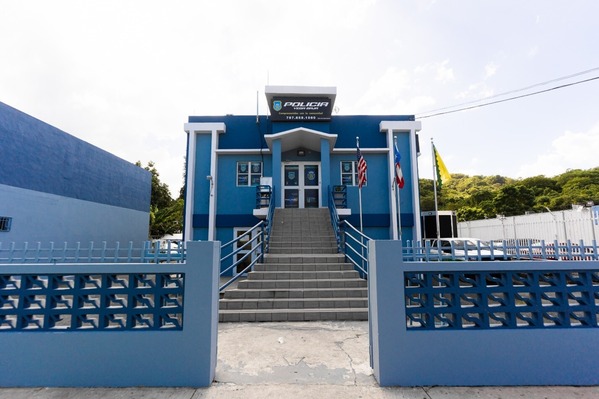
Puerto Rico continues to make strides in its recovery from Hurricane Maria, thanks to the Trump Administration. Funding from FEMA has helped repair and strengthen essential public services and community facilities across the island.
Three municipalities—Vega Baja, Cataño and Gurabo—were awarded more than $700,000 in FEMA Public Assistance to restore their local police stations, which serve as critical hubs for community safety and emergency response. These repairs include structural improvements, hazard mitigation measures and upgrades to equipment, ensuring that municipal police officers can operate from safe, resilient facilities.
Here’s how funding is being used in each municipality:
- In Vega Baja, over $251,000 were allocated for renovations, including waterproofing and climate control enhancements, as well as the replacement of three patrol cars.
- Cataño received more than $405,000 for structural repairs and upgrades to its communications equipment, essential for effective emergency response.
- Gurabo’s public safety building, which houses both the Emergency Management Office and municipal police, was awarded nearly $46,000 to restore meteorology stations, radio antennas and data servers, with additional funds for disaster mitigation.
To date, FEMA has obligated nearly $34.8 billion for Puerto Rico's recovery efforts following Hurricane Maria, including over $8 billion for more than 3,300 projects focused on restoring public buildings and equipment. These investments enhance the safety and resilience of critical infrastructure, foster community well-being and stimulate local economies.
To learn more about Puerto Rico’s recovery after Hurricane Maria, visit FEMA.gov | Hurricane Maria.
Attend DHS Human Trafficking Webinars in January
On January 6, President Donald J. Trump issued a presidential message renewing the commitment to end human trafficking, protect the most innocent and ensure that every trafficker faces the full force of American justice.
Join DHS Center for Countering Human Trafficking Continued Presence Public webinar on January 22 from 3:30-4 p.m. ET.
DHS's Blue Campaign will also host two public Human Trafficking 101 webinars—one in English and one in Spanish—on January 28 and 29 respectively. Register to attend and invite others to learn how to recognize and report suspected human trafficking cases.
Follow @DHSBlueCampaign on X, Facebook and Instagram for more information on anti-human trafficking efforts in January and throughout the year.
....................................................................................................................................................
Award Acceptance Extended to January 31 for Select Grant Programs
The Department of Homeland Security and FEMA recently announced an extension of the award acceptance deadlines for all Fiscal Year 2025 Non-Disaster Grant Programs and Fiscal Year 2024 Assistance to Firefighter Grant Programs.
The new deadline to accept these awards is January 31, or the deadline specified in the grant award, whichever is later. This revised deadline is now reflected in your award file in the FEMA GO system.
Recipients who have already accepted their award in FEMA GO and whose grants are not impacted by a court ruling are not subject to this extension.
For more information, please refer to the Grant Programs Directorate Information Bulletin page.
....................................................................................................................................................
Deadline to Apply for FEMA Assistance Extended to February 20 for Individuals Affected by October 2025 Alaska Severe Storms
The state of Alaska and FEMA have extended the application deadlines for Individual Assistance to February 20 for Alaskans impacted by severe storms, flooding and remnants of Typhoon Halong from October 8-13, 2025.
Survivors are encouraged to register for both state and FEMA Individual Assistance programs to maximize their recovery benefits.
The fastest way to apply is online at DisasterAssistance.gov or the Spanish language site at DisasterAssistance.gov/es.
If you need more information or additional help:
- Download the FEMA App.
- Call the FEMA Helpline at 1-800-621-3362 for assistance in multiple languages. If you use a relay service—such as video relay service (VRS), captioned telephone service or others—provide FEMA the number for that service.
- Find in-person FEMA support at fema.gov/drc.
To view an accessible video on how to apply, visit What to Expect Before Applying for FEMA Assistance.
For more information, visit FEMA.gov.
....................................................................................................................................................
|


