|
FEMA has provided more than $1 billion in federal grants, disaster loans and flood insurance payments to the state of Florida and Floridians to help jumpstart their recovery from Hurricane Ian.
More than $545 million has gone to households and $302 million to the state for emergency response and recovery. The U.S. Small Business Administration provided $130 million in disaster loans, while the National Flood Insurance Program has paid $98 million in claims.
For more information, please visit FEMA.gov.
FEMA’s Grant Programs Directorate (GPD) is offering additional one-hour trainings on the federal procurement rules applicable to recipients and subrecipients impacted by Hurricane Ian when purchasing under a FEMA grant award. These virtual trainings will be facilitated by GPD’s Procurement Disaster Assistance Team and will be offered through the end of October. Each training will cover a variety of procurement under grant concepts, frequent compliance issues and user-friendly resources.
This training is appropriate for FEMA award recipients, staff and subrecipients impacted by Hurricane Ian, including state, local and tribal government personnel, nonprofit organization staff and other non-federal entities.
For additional information and trainings on the federal procurement standards, please visit the Procurement Disaster Assistance Team website. If you have any questions, please contact AskCSID@fema.dhs.gov.
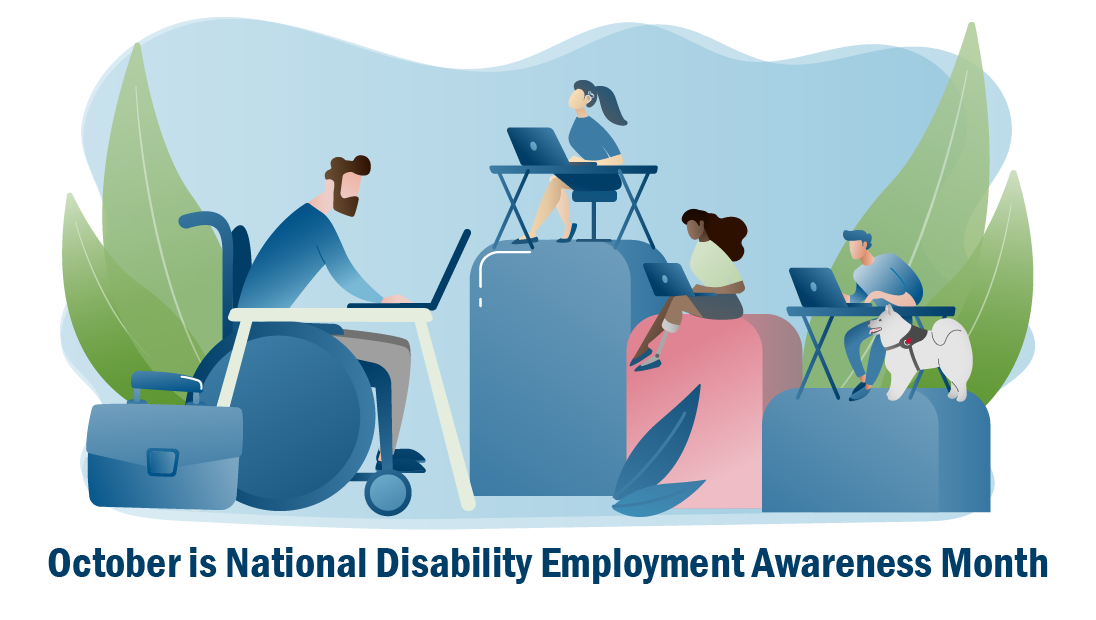 October is National Disability Employment Awareness Month
. This annual national campaign increases awareness and celebrates the many and varied contributions of America's workers with disabilities. The 2022 theme, Disability: Part of the Equity Equation, recognizes the vital role people with disabilities play in making the nation's workforce diverse and inclusive.
National Disability Employment Awareness Month is also an opportunity to reflect on the importance of fostering a community that is inclusive for all and to reassure FEMA’s commitment to dignity and respect in the workplace.
FEMA is a leading agency in the Department of Homeland Security for employing individuals with targeted disabilities. FEMA values the diverse experiences and abilities our employees bring to FEMA and the people we serve. Learn more about National Disability Employment Awareness Month by visiting dol.gov.
FEMA published the “National Continuous Improvement Guidance.” This guidance provides an approach to conduct consistent and rigorous continuous improvement activities before, during and after real-world incidents. The guidance is intended for the whole community, including state, local, tribal and territorial partners; nongovernmental organizations; the private sector; and other organizations with emergency management functions.
To download the guidance, please visit https://preptoolkit.fema.gov/web/cip-citap/ncig.
FEMA will host a series of 60-minute webinar sessions to provide an overview of the guidance and discuss revisions based on feedback from the national engagement period held earlier this year. Guest speakers will discuss the importance of continuous improvement in emergency management. Webinar sessions will be offered through mid-December 2022.
- Webinar 1: 1 - 2 p.m. ET on Nov. 1. (Guest Speaker: MaryAnn Tierney, FEMA Region 3 Administrator)
- Webinar 2: 12 - 1 p.m. ET on Nov. 7. (Guest Speaker: John Benson, Director, Iowa Department of Homeland Security and Emergency Management)
- Webinar 3: 4 - 5 p.m. ET on Nov. 17. (Guest Speaker: Melanie Bartis, Deputy Coordinator, Harris County Office of Homeland Security and Emergency Management)
- Webinar 4 - Spanish-speaking session: 11 a.m. - Noon ET on Dec. 2. (Guest Speakers: Jose Marchand, Lead Continuity Analyst, and Michelle Ortiz, Continuous Improvement Coordinator, FEMA Region 2, Puerto Rico Caribbean Area Office)
- Webinar 5: 10 - 11 a.m. ET on Dec. 13. (Guest Speaker: Clint Osborn, Deputy Director, District of Columbia Homeland Security and Emergency Management Agency)
For questions, please contact FEMA-CITAP@fema.dhs.gov.
For the first time in FEMA history, FEMA’s National Advisory Committee (NAC) meeting is being held at a Tribal Nation and will focus discussion on improving tribal-federal relations. The meeting will take place at the Choctaw Nation of Oklahoma’s Headquarters in Durant, Ok from Oct. 25-27.
The NAC’s recommendations provide critical feedback from stakeholders across the emergency management enterprise that have led to significant changes in FEMA policy and operation. This session will allow for candid discussions on critical areas that may require program or policy changes and improvements.
This year has been a first for several key Tribal Affairs successes. In addition to the August release of the National Tribal Strategy, earlier this month, FEMA Administrator Deanne Criswell announced Kelbie Kennedy as the agency’s National Tribal Affairs Advocate. Kennedy is the first tribal political appointee in FEMA history.
NAC members will also hear from several key Tribal Nation Leaders and emergency managers including Santa Clara Pueblo Governor Chavarria. In addition to the Choctaw Nation, numerous other Tribal Nations are expected to attend or present during the meeting including the Seminole Nation of Oklahoma, Citizen Potawatomi Nation, Coushatta of Louisiana and the Jena Band of Choctaw.
The NAC was established as part of the Post-Katrina Emergency Management Reform Act and is comprised of members from throughout the nation who represent emergency management, government agencies, the private sector and nongovernmental organizations.
FEMA is sponsoring the annual National Dam Safety Program Technical Seminar. The seminar is held for the broader dam safety community including officials from government entities including state, federal, territorial and tribal dam safety programs and professionals; dam owners and operators; engineering consultants and emergency managers.
This year’s topic is Managing and Regulating Dams into the Future. The National Dam Safety Review Board’s Training Task Group develops the content and selects presenters each year. If you would like the opportunity to present, submit your idea with a title and a few sentences of your proposed topic to JMalama@usbr.gov by Nov. 2.
Suggested seminar topics for this year include New Challenges (aging infrastructure, seismic loadings, sedimentation, climate change) and New Technologies or Approaches (regulator and owner perspective, risk evaluation, intelligent compaction, fiber optics, remote sensing, LIDAR, artificial intelligence, innovative rehabilitation methods, dam removal, sedimentation mitigation, new partnerships).
This year’s seminar is in-person from 8 a.m. – 5 p.m. ET from Feb. 22-23, 2023 at FEMA’s Emergency Management Institute in Emmitsburg, Maryland. Travel dates are Feb. 21 and Feb. 24. Registration information will be shared later this fall.
Region 8 Building Science Specialist Sean McGowan found himself in the path of the 2021 Marshall Fire on Dec. 30, 2021. Extremely dry conditions and hurricane-force winds gave rise to this powerful urban fire. A federal disaster was quickly declared and FEMA began response efforts. McGowan was deployed to serve on the Mitigation Assessment team.
McGowan and his team spent the weeks that followed analyzing the impact, interviewing survivors and educating communities on how to make homes more resilient in the future.
Read more about his experience on the FEMA Blog.
FEMA and Mississippi River Cities and Towns Initiative Co-Host Alliances for Inclusive Resilience
The Alliances for Inclusive Resilience virtual series is part of the 7th Annual Partnership Forum led by the FEMA Resilient Nation Partnership Network (RNPN). Attendees will have an opportunity to hear from diverse speakers about community-led resilience, engage with industry peers and identify opportunities for future collaboration.
Join the RNPN and leaders from the private, public and nonprofit sectors as we explore competing priorities in the decision-making process. How do we make decisions? What do we prioritize? How can we balance the reality of trade-offs when advancing climate adaptation? We will tackle these questions and find ways to unite these priorities.
Please join us from 1-3 p.m. ET on Oct. 26 as we explore Voices of Inclusive Resilience.
…………………………………………………………………………………………………………..
FEMA Cyber Incidents Planning Guidance Webinar
FEMA seeks feedback on the draft “Planning Considerations for Cyber Incidents: Guidance for Emergency Managers.” This document provides state, local, tribal and territorial emergency managers with foundational knowledge of cyber incidents to increase cyber preparedness efforts in their jurisdictions.
Key aspects of cyber incident preparedness included in the document:
- Understanding the types of cyber incidents likely to occur.
- Engaging service owners and operators.
- Identifying cyber dependent critical services and related dependencies.
- Prioritizing and planning for service and system disruptions.
- Identifying roles and responsibilities.
- Providing integrated communication and public messaging,
- Developing a cyber incident response plan.
FEMA will host a series of 60-minute webinars beginning at 2 p.m. ET on Oct. 26 to give an overview of the draft document and gather feedback from partners. The sessions will include facilitated discussions with stakeholders to help improve the existing draft. FEMA seeks real-world input— that can be incorporated into the guide. The draft guide is available to allow individuals to provide comments on specific areas within the document. This national engagement period will conclude at close of business on Nov. 22.
To review the document and learn more about the webinar sessions, please visit FEMA.gov.
…………………………………………………………………………………………………………..
|


