
Rhode Island Service Center Newsletter - January 29, 2026
In This Issue:
- February 2, 2026 - Southern RI Local Working Group Virtual Meeting, 12:00-1:00 p.m. Register at sricd.org or email gmanchester@sricd.org.
- February 2, 2026 - Deadline to vote in local County Committee Elections (COC). Producers and landowners must return ballots to their local FSA county office or have their ballots postmarked by Feb. 2, 2026, for those ballots to be counted.
- February 11, 2026 - Eastern RI Easements for your Working Lands Workshop, 6:00-7:00 p.m., Portsmouth Public Library. Register at https://www.eventbrite.com/e/easement-workshop-easements-for-your-working-lands-tickets-1980021297000
- February 25, 2026 - Eastern RI Local Working Group Meeting, 6:00-7:00 p.m., Greenvale Vineyards, Portsmouth. Register at https://www.eventbrite.com/e/eastern-ri-conservation-district-local-working-group-meeting-tickets-1980023294976
-
February 26, 2026 - Deadline to submit application for coverage for the 2026 Dairy Margin Coverage Program (DMC).
- February 27, 2026 - Sign up deadline for Conservation Easements and RI Statewide Natural Systems Demo RCPP Project
- February 28, 2026 - Southern RI Local Working Group Meeting, 10:00 a.m.-12:00 p.m., South Kingstown Land Trust Barn. Register at sricd.org or email gmanchester@sricd.org.
- March 1, 2026 - Deadline to file a notice of loss and application for payment for 2025 .
- March 1, 2026 - Deadline to file a notice of loss and application for payment for 2025 the Livestock Indemnity Program (LIP).
-
March 16, 2026 - Deadline to file a 2026 Noninsured Disaster Assistance Program (NAP) application for coverage for spring-seeded crops.
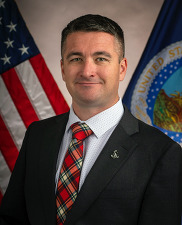
Greetings from the State Office at USDA’s Rhode Island Farm Service Agency (FSA). As we step into 2026, we are excited and optimistic to continue our work helping producers across the state to meet the needs and goals for their farming operations. Our staff in both our state and county offices work tirelessly to provide comprehensive and timely service. We’re here when you need us. Our focus on customer service helps producers march forward, during the most stressful situations.
I’m happy to report that Secretary of Agriculture Brooke L. Rollins has appointed five new members to the Rhode Island FSA State Committee. Our new members represent a cross-section of the geography and farming operation of Rhode Island giving us well rounded and fresh perspectives through their unique experiences in production agriculture. Our state committee helps oversee our state’s farm programs, program appeals, and helps set new crop tables that determine important crop information to support implementation for many of our programs.
Our dedicated state and county office staff are eager to connect with you this year. We invite you to reach out, ask questions, express concerns, and share your experiences. Staying informed is crucial and we encourage you to contact your local county office and participate in our programs. We understand the challenges you face and work tirelessly to help you navigate even the most stressful times. Agricultural producers are the backbone of our food systems, and we are here to help.
Robert Sullivan
State Executive Director, Connecticut and Rhode Island
|
The U.S. Department of Agriculture (USDA) has mailed ballots for the Farm Service Agency (FSA) county committee elections to eligible farmers and ranchers across the country. To be counted, ballots must be returned to the Rhode Island county FSA office or postmarked by Feb. 2, 2026.
Each committee is comprised of three to 11 elected members who serve three-year terms.
Newly elected committee members will take office March 2, 2026. County committee members play a key role in how FSA delivers disaster recovery, safety-net, conservation, commodity and price support programs, as well as making decisions on county office employment and other FSA program delivery issues.
The following producers have been nominated and are running in the County elections in Rhode Island:
Candidates for Kent County, LAA2:
- Gilbert Rathbun Jr is nominated to serve as COC member for a 3-year term beginning March 2, 2026. Billy resides in Kent County, and has been producing crops and livestock for the last 40 years. Billy currently serves as the Chairperson of the Rhode Island FSA County Committee and has served the Richmond Grange for over 23 years. Billy is willing to serve if elected.
Candidates for Bristol County, LAA5:
- Candace Clavin is nominated to serve as COC member for a 3-year term beginning March 2, 2026. Candace has produced specialty crops and livestock for 30 plus years. She resides in the East Bay of Rhode Island and is founder farmer of Water Way Farm. Candace is an active member of United States Lavender Grower Association, Northeast Organic Farmers Association, Rhode Island Food Policy Council and Barrington Farm School. Candace is part of the Rhode Island Peer Network for agricultural workers, farmers and their families at Land & Sea Together. She has served on the Bristol East Bay Food Pantry board, Barrington Community Center board, and outreach for several non-profit organizations. Candace is willing to serve if elected.
- Spencer Morris is nominated to serve as COC member for a 3-year term beginning March 2, 2026. Spencer resides in Bristol County, and is an orchardist who has been growing apples for the past 10 years for the purpose of producing hard cider. Spencer also serves as the vice president of the Rhode Island Fruit Growers Association. Spencer is willing to serve if elected
Candidates for Newport County, LAA4:
- Stephen Anderson is nominated in to serve as COC member for a 3-year term beginning March 2, 2026. Stephen resides in Newport County and has been producing crops since 2000 and is the third generation to run the family farm. Stephen has previously served as an alternate for the Rhode Island FSA County Committee. Stephen is willing to serve if elected.
- Michelle Garman is nominated in to serve as COC member for a 3-year term beginning March 2, 2026. Michelle resides in Newport County and has produced certified organic vegetables and cut flowers since 2012. Michelle served as a member of the RI FSA State committee in 2024 and 2025. Michelle is willing to serve if elected.
To be eligible to vote in the county committee elections, producers must participate or cooperate in a USDA program and be assigned to the LAA that is up for election. Each year, at least one Local Administrative Area (LAA) in each COC jurisdiction is up for election on a three-year rotation, and each producer is assigned to vote in a single LAA. A cooperating producer is someone who has provided information about their farming or ranching operation to FSA, even if they have not applied or received program benefits.
Producers can identify LAAs up for election through a geographic information system locator tool available at fsa.usda.gov/elections and may confirm their LAA by contacting their local FSA office. Eligible voters who do not receive a ballot in the mail can request one from the Rhode Island County FSA at 60 Quaker Ln, Warwick RI or call (401) 828-3120 Ext. 1.
^ back to top
Agricultural producers who suffered eligible crop losses due to natural disasters in 2023 and 2024 can apply for $16 billion in assistance through the Supplemental Disaster Relief Program (SDRP).
To expedite the implementation of SDRP, USDA’s Farm Service Agency (FSA) is delivering assistance in two stages. This first stage is open to producers with eligible crop losses that received assistance under crop insurance or the Noninsured Crop Disaster Assistance Program during 2023 and 2024. Stage One sign-up started in-person at FSA county offices on July 10 and prefilled applications were mailed to producers starting July 9.
SDRP Stage One
FSA launched a streamlined, pre-filled application process for eligible crop, tree, and vine losses by leveraging existing Noninsured Crop Disaster Assistance Program (NAP) and Risk Management Agency (RMA) indemnified loss data. The pre-filled applications were mailed on July 9, 2025.
Eligibility
Eligible losses must be the result of natural disasters occurring in calendar years 2023 and/or 2024. These disasters include wildfires, hurricanes, floods, derechos, excessive heat, tornadoes, winter storms, freeze (including a polar vortex), smoke exposure, excessive moisture, qualifying drought, and related conditions.
To qualify for drought related losses, the loss must have occurred in a county rated by the U.S. Drought Monitor as having a D2 (severe drought) for eight consecutive weeks, D3 (extreme drought), or greater intensity level during the applicable calendar year.
Producers in Connecticut, Hawaii, Maine, and Massachusetts will not be eligible for SDRP program payments. Instead, these states chose to cover eligible crop, tree, bush, and vine losses through separate block grants. These block grants are funded through the $220M provided for this purpose to eligible states in the American Relief Act.
How to Apply
To apply for SDRP, producers must submit the FSA-526, Supplemental Disaster Relief Program (SDRP) Stage One Application by April 30, 2026, in addition to having other forms on file with FSA.
SDRP Stage One Payment Calculation
Stage One payments are based on the SDRP adjusted NAP or Federal crop insurance coverage level the producer purchased for the crop. The net NAP or net federal crop insurance payments (NAP or crop insurance indemnities minus administrative fees and premiums) will be subtracted from the SDRP calculated payment amount. For Stage One, the total SDRP payment to indemnified producers will not exceed 90% of the loss and an SDRP payment factor of 35% will be applied to all Stage One payments. If additional SDRP funds remain, FSA may issue a second payment.
Future Insurance Coverage Requirements
All producers who receive SDRP payments are required to purchase federal crop insurance or NAP coverage for the next two available crop years at the 60% coverage level or higher. Producers who fail to purchase crop insurance for the next two available crop years will be required to refund the SDRP payment, plus interest, to USDA.
SDRP Stage 2
FSA recently announced the SDRP Stage 2 sign-up period, which also runs through April 30, 2026. Learn more by visiting fsa.usda.gov/sdrp.
^ back to top
USDA announced the next phase in the Farmer Bridge Assistance Program (FBA), the eligible commodity per-acre payment rates. In 2026, $12 billion will be paid to American farmers. Of that amount, $11 billion consists of one-time FBA program payments.
Eligible Row Crop Commodities and Payment Rates:
Below are the payment rates for the FBA eligible commodities that triggered a payment.
Commodity, Per Acre Payment Rates
- Barley: $20.51
- Canola: $23.57
- Chickpeas (Large): $26.46
- Chickpeas (Small): $33.36
- Corn: $44.36
- Cotton: $117.35
- Flax: $8.05
- Lentils: $23.98
- Mustard: $23.21
- Oats: $81.75
- Peanuts: $55.65
- Peas: $19.60
- Rice: $132.89
- Safflower: $24.86
- Sesame: $13.68
- Sorghum: $48.11
- Soybeans: $30.88
- Sunflower: $17.32
- Wheat: $39.35
Eligibility, Program Applications, and Crop Insurance Linkage
FBA payments are based on 2025 planted acres, Economic Research Service cost of production, and the World Agriculture Supply and Demand Estimate Report. Double crop acres, including all initial and subsequently planted crops, are eligible. Prevent plant acres are not eligible.
All intended row crop uses are eligible for FBA except grazing, volunteer stands, experimental, green manure, crops left standing and abandoned or cover crops.
Crop insurance linkage is not required; however, USDA strongly urges producers to take advantage of the new risk management tools provided for in the One Big Beautiful Bill Act (OBBBA) to best protect against future price risk and volatility. The OBBBA federal crop insurance improvements include expanding benefits for beginning farmers and ranchers, increasing coverage options, and making crop insurance more affordable.
Specialty Crop Assistance
Of the $12 billion being provided by the Commodity Credit Corporation Charter Act, up to $11 billion is being directed to eligible row crop producers and the remaining $1 billion of the $12 billion in assistance is reserved for specialty crops and sugar. Timelines for payments to producers of these crops are still under development and require additional understanding of market impacts and economic needs.
Producers, including specialty crop producers and stakeholder groups, can submit questions to farmerbridge@usda.gov.
More information on FBA is available online at https://www.fsa.usda.gov/fba or you can contact your local USDA FSA county office.
^ back to top
The Farm Service Agency (FSA) offers two types of set-aside programs to assist FSA direct loan borrowers. The set-aside programs are intended to help distressed borrowers as well as borrowers impacted by natural disasters.
Disaster Set-Aside Program
The Disaster Set-Aside Program (DSA) assists existing FSA direct loan borrowers who have been impacted by natural disasters. The DSA program provides short-term financial relief by allowing eligible borrowers to delay FSA direct loan payments that are due this year or next year (but not both). You may delay up to one full annual payment per loan and the delayed payment will be moved to the end of the loan term. You will not be required to pay this set-aside installment until the loan’s final due date.
The principal portion of the amount set-aside will continue to accrue interest at your loan’s existing interest rate.
To be eligible, borrowers must have operated a farm in a county declared a disaster area or a contiguous county at the time of the disaster. In addition, the borrower’s inability to make their upcoming payment must be due to the disaster.
To apply for DSA, borrowers must provide their local USDA Service Center with a letter requesting DSA, which must be signed by all parties liable for the debt. The letter must be provided to your local Service Center within eight months of the disaster declaration date. The application process also includes providing your actual production, income, and expense records for the last three years. FSA may also request additional information as needed to make an eligibility decision
Distressed Borrower Set-Aside Program
FSA Direct Farm Loan Program borrowers whose loans were closed before Sept. 25, 2024, may be eligible for assistance under the Distressed Borrower Set-Aside Program (DBSA). Similar to DSA, DBSA also provides short-term financial relief by allowing eligible borrowers to delay FSA direct loan payments that are due this year or next year (but not both). You may delay up to one full annual payment per loan and the delayed payment will be moved to the end of the loan term. You will not be required to pay this set-aside installment until the loan’s final due date.
An increased benefit with DBSA is that the principal portion of the set-aside will accrue interest at a reduced rate of 0.125% rather than your loan’s existing interest rate.
To be eligible for DBSA, the borrower must demonstrate financial distress, but their inability to make the upcoming payment does not need to be due to a disaster.
The DBSA application process is similar to DSA as borrowers must provide their local USDA Service Center with a letter requesting DBSA, which must be signed by all parties liable for the debt. The application process also includes providing your actual production, income, and expense records for the last three years. FSA may also request additional information as needed to make an eligibility decision.
Important Factors for Both DSA and DBSA:
FSA direct loan borrowers are not able to obtain more than one set-aside per loan. Borrowers also cannot obtain both a DSA and DBSA simultaneously on the same loan. In addition, FSA direct loans with less than two years remaining are not eligible for a DSA or DBSA. Other eligibility requirements apply; we encourage you to contact your local Service Center for more information.
Both DSA and DBSA are intended to provide short-term relief for situations where borrowers anticipate the ability to resume paying their full annual installment(s) in the following year. If you require a more long-term form of financial relief, FSA has other potential options available through primary loan servicing (PLS).
For more information on DSA, DBSA, or PLS, please contact your local USDA Service Center. You may also visit fsa.usda.gov. Additional information, eligibility criteria and program limitations may be found within the Disaster Set-Aside and Distressed Borrower Set-Aside Program fact sheets.
^ back to top
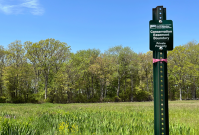
The USDA Natural Resources Conservation Service (NRCS) in Rhode Island is extending the fiscal year (FY) 2026 signup for property owners for conservation easements to protect working ag lands and wetlands through the Agricultural Conservation Easement Program (ACEP)to February 27, 2026.
ACEP helps landowners, land trusts, and other entities protect, restore, and enhance wetlands or protect farmland and ranchland through conservation easements. We offer two easement types, Agricultural Land Easements (ALE) to protect working crop and pasture lands, and Wetland Reserve Easements (WRE) to protect, restore and enhance wetlands previously degraded by ag activities.
Contact Rhode Island NRCS Easements Program Manager, Marina Capraro, at 401-527-5147 or Marina.Capraro@usda.gov. Learn more...
^ back to top
|
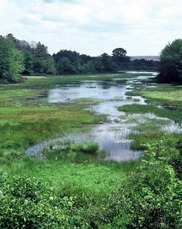
NRCS encourages farmers and forestland owners to sign up for conservation assistance as part of the Rhode Island Statewide Natural Systems Demonstration Project through the Regional Conservation Partnership Program (RCPP).
RCPP is a voluntary program that provides financial and technical assistance to farmers and forestland owners to address natural resource concerns through an array of conservation practices. This demonstration project has two focus areas:
-
Northern Rhode Island (Providence County) – Funding will be used to implement a suite of natural systems-based approaches including green infrastructure improvements, riparian buffers, and stream corridor restoration to protect water quality in the Scituate Reservoir Watershed.
-
Southern Rhode Island (Kent and Washington counties) – Funding be used to implement a suite of natural system-based approaches including green infrastructure to protect water quality in Winnapaug Pond Watershed, Westerly (a coastal saltwater pond).
Learn more...
^ back to top
|
USDA – Rhode Island
60 Quaker Lane
Warwick, RI 02886
|
Natural Resources Conservation Service (NRCS)
401-828-1300 | www.RI.nrcs.usda.gov
|
|
Eastern RI – Serving Newport and Bristol counties
|
|
NRCS Field Office
Kat Zuromski, Acting District Conservationist
401-786-1389 Kathryn.Zuromski@usda.gov
|
Conservation District Office
401-934-0842 info@easternriconservation.org
|
|
Northern RI – Serving Providence County
|
|
NRCS Field Office
Ghyllian Alger, Acting District Conservationist
401-822-8835/ Ghyllian.Alger@usda.gov
|
Conservation District Office
401-934-0840/ mallard.nricd@gmail.com
|
|
Southern RI – Serving Kent and Washington counties
|
|
NRCS Field Office
Jameson Long, District Conservationist
401-822-8837/ Jameson.Long@usda.gov
|
Conservation District Office
401-661-5761/ gfuller@sricd.org
|
|
|
|
RI FSA County Office, Suite 49
RI FSA Farm Loan Team, Suite 62
RI FSA State Office, Suite 62
|
401-828-3120 Option 1
401-828-3120 Option 2
401-828-3120 Option 3
|
| |
| |
|
|
|
|







