
Rhode Island Service Center Newsletter - Sept. 19, 2025
In This Issue:
-
September 16, 2025 - Fall Conservation Application Assistance Webinar via Zoom, 5:00-6:00 p.m., webinar presentation available online.
-
September 23, 2025 - Farm Financial Aid Signup Workshop, Southside Community Land Trust, 404 Broad Street, Providence, 5:00-7:00 p.m.
-
September 30, 2025 - Deadline to submit 2026 application for coverage for value loss crops for the Noninsured Crop Disaster Assistance Program (NAP) - this includes mollusks, Christmas trees, flowers, and turf.
-
September 30, 2025 - Deadline to submit acreage report for value loss crops.
-
September 30, 2025 - Integrated Pest Management Workshop, Rogers Free Library, Bristol, 6:00-7:00 p.m.
-
October 3, 2025 - Deadline to signup for first round of NRCS Conservation Program funding
- October 31, 2025 - Deadline to enroll in the for 2023 and 2024 Flood and Wildfire (ELRP 2023 and 2024 FW).
- November 20, 2025 -Deadline to submit a 2026 Application for Coverage for perennial crops.
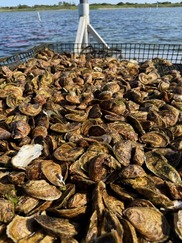
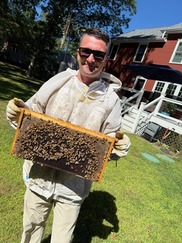
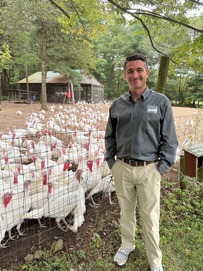
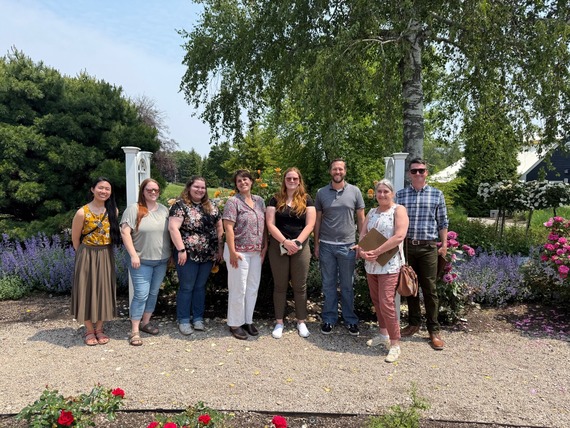 It has been a busy time here at RI FSA. I have had the pleasure of getting out in the field to visit vegetable farms and livestock operations, boat out to oyster cages, and suit up to see our local honeybees hard at work. These visits have highlighted the rich variety of farming operations we share here in RI reinforcing the critical role each plays in sustaining our communities. I look forward to visiting more farms and seeing the great work you do.
|
I am proud to lead our FSA team here in RI who work tirelessly to make sure that we are providing you with the best service to help you in a time of need with one of our programs or help you expand your business with one of our loans. To that end, as we move into fall, please make sure you keep track of upcoming deadlines that are relevant to your farming operation.
The shift to autumn is not just about completing paperwork, it is an opportunity to embrace change and celebrate what the season has to offer. I hope to see you out at fall festivals and hear about your experiences and the innovative work you are doing on your operations.
|
|
 |
Let’s make this season one of growth and connection and take advantage of fresh perspectives and opportunities that come with the changing seasons. Together we can continue to nurture and support Rhode Island’s divers farming ecosystem.
I hope to see you out there!
Rob Sullivan
State Executive Director, Connecticut and Rhode Island
|
A farmers.gov account provides self-service opportunities to Farm Service Agency (FSA) and Natural Resources Conservation Service (NRCS) customers through a secure, authenticated access process.
A new feature now provides access to your current or prior year FSA-578, Report of Commodities (Nationwide Producer Print). Your FSA-578 contains annual crop acreage reporting information submitted to USDA’s Farm Service Agency (FSA). If you are a shareholder (operator, owner or other producer) for a crop on the acreage report, you will be able to view, save and/or print your selected annual FSA-578.
How to Access Your FSA-578’s
From the Land tab in your farmers.gov account, click Land Overview on the navigation drop-down. On the Land Overview page, you will see an information block that states “View and Print Your Acreage Reports” containing a View Your FSA-578 button.
Clicking the button will open a popup modal with a drop-down menu to select the acreage report year. Once you have selected a year, the View FSA-578 button becomes active. Clicking the button will open a new tab with a message indicating the PDF file is being loaded. Once the load is complete, the FSA-578, Report of Commodities (Nationwide Producer Print) PDF document is displayed. You can view, save and/or print the FSA-578 as needed.
If there is no acreage report information on file for the selected acreage report year, the PDF will display the message, “This producer does not have a producer print currently available.”
How to Access FSA-578s Using Your Representative Authority to Act on Behalf of Another Customer
Additionally, if you have been granted the authority to act on behalf of another individual or entity, you can use the yellow banner to “Switch Profile” and view the current or prior year FSA-578, Report of Commodities (Nationwide Producer Print) for the customer you on whose behalf you have been elected to act.
Contact your local FSA office for more information or questions regarding your FSA-578, Report of Commodities (Nationwide Producer Print) or if you have questions regarding establishing representative authority or do not see the expected representative authority options when you log in.]More information can be found in the farmers.gov Fact Sheet and video tutorials. Visit the farmers.gov Account page to log in or learn how to create an account.
^ back to top
The Farm Service Agency’s (FSA) Farm Storage Facility Loan (FSFL) program provides low-interest financing to help you build or upgrade storage facilities and to purchase portable (new or used) structures, equipment and storage and handling trucks.
Eligible commodities include corn, grain sorghum, rice, soybeans, oats, peanuts, wheat, barley, minor oilseeds harvested as whole grain, pulse crops (lentils, chickpeas and dry peas), hay, honey, renewable biomass, fruits, nuts and vegetables for cold storage facilities, controlled atmosphere storage, floriculture, hops, malted small grains, maple sap, maple syrup, rye, milk, cheese, butter, yogurt, meat and poultry (unprocessed), eggs, and aquaculture (excluding systems that maintain live animals through uptake and discharge of water). Qualified facilities include grain bins, hay barns and cold storage facilities for eligible commodities.
Loans up to $50,000 can be secured by a promissory note/security agreement, loans between $50,000 and $100,000 may require additional security, and loans exceeding $100,000 require additional security.
You do not need to demonstrate the lack of commercial credit availability to apply. The loans are designed to assist a diverse range of farming operations, including small and mid-sized businesses, new farmers, operations supplying local food and farmers markets, non-traditional farm products, and underserved producers.
For more information, contact RI FSA Office at (401) 828-3120 (ext. 2) or email Emma Schlam at Emma.Schlam@usda.gov or visit fsa.usda.gov.
^ back to top
The U.S. Department of Agriculture (USDA) reminds agricultural producers that the final date to apply for or make changes to their existing crop insurance coverage is quickly approaching for fall planted crops. Sales closing dates vary by crop and location, but the next major sales closing date is Sept. 30.
Producers are encouraged to visit their crop insurance agent soon to learn specific details for the 2026 crop year. Crop insurance coverage decisions must be made on or before the applicable sales closing date. The USDA Risk Management Agency (RMA) lists sales closing dates in the Actuarial Information Browser, under the “Dates” tab.
Producers can also access the RMA Map Viewer tool to visualize the insurance program date choices for acreage reporting, cancellation, contract change, earliest planting, end of insurance, end of late planting period, final planting, premium billing, production reporting, sales closing, and termination dates, when applicable, per commodity, insurance plan, type, and practice. Additionally, producers can access the RMA Information Reporting System tool to specifically identify applicable dates for their operation, using the “Insurance Offer Reports” application.
Federal crop insurance is critical to the farm safety net. It helps producers and owners manage revenue risks and strengthens the rural economy. Producers may select from several coverage options, including yield coverage, revenue protection, and area risk plans of insurance.
Crop insurance options include Whole-Farm Revenue Protection and Micro Farm. Whole-Farm Revenue Protection provides a risk management safety net for all commodities on the farm under one insurance policy and is available in all counties nationwide. Micro Farm aims to help direct market and small-scale producers that may sell locally, and this policy simplifies record keeping and covers post-production costs such as washing and value-added products.
Crop insurance is sold and delivered solely through private crop insurance agents. A list of crop insurance agents is available online at the RMA Agent Locator. Producers can learn more about crop insurance and the modern farm safety net at rma.usda.gov or by contacting their RMA Regional Office. RMA’s Basics for Beginners provides information for those new to crop insurance.
^ back to top
Assistance for losses due to flooding and wildfire on non-federally managed land
U.S. Secretary of Agriculture Brooke L. Rollins announced eligible livestock producers will receive disaster recovery assistance through the Emergency Livestock Relief Program for 2023 and 2024 Flood and Wildfire (ELRP 2023 and 2024 FW) to help offset increased supplemental feed costs due to a qualifying flood or qualifying wildfire in calendar years 2023 and 2024. The program is expected to provide approximately $1 billion in recovery benefits. Sign-up begins on Monday, September 15. Livestock producers have until October 31, 2025, to apply for assistance.
Qualifying Disaster Events
To streamline program delivery, FSA has determined eligible counties with qualifying floods and qualifying wildfires in 2023 and 2024. For losses in these counties, livestock producers are not required to submit supporting documentation for floods or wildfires. A list of approved counties is available at fsa.usda.gov/elrp.
For losses in counties not listed as eligible, livestock producers can apply for ELRP 2023 and 2024 FW but must provide supporting documentation to demonstrate that a qualifying flood or qualifying wildfire occurred in the county where the livestock were physically located or would have been physically located if not for the disaster event. FSA county committees will determine if the disaster event meets program requirements.
Acceptable documentation includes:
- Photographs documenting impact to livestock, land, or property
- Insurance documentation
- Emergency declaration reports
- News articles
- National Oceanic and Atmospheric Administration storm event database records
- Other FSA disaster program participation records
- Other documentation determined acceptable by the FSA county committee
Livestock and Producer Eligibility
For ELRP 2023 and 2024 FW, FSA is using covered livestock criteria similar to the Livestock Forage Disaster Program (LFP) which includes weaned beef cattle, dairy cattle, beefalo, buffalo, bison, alpacas, deer, elk, emus, equine, goats, llamas, ostriches, reindeer, and sheep.
Wildfire assistance is available on non-federally managed land to participants who did not receive assistance through LFP or the ELRP 2023 and 2024 for drought and wildfire program delivered to producers in July of this year.
When producers submit their application, they must provide documentation to support eligible livestock inventories as of the beginning date of the qualifying disaster event.
Livestock producers can receive assistance for one or both years, 2023 and 2024, and for multiple qualifying disaster events, if applicable. However, producers cannot exceed three months of assistance per producer, physical location county, and program year.
Payment Calculation
Eligible producers can receive up to 60% of one month of calculated feed costs for a qualifying wildfire or three months for a qualifying flood using the same monthly feed cost calculation that is used for LFP.
ELRP 2023 and 2024 for drought and wildfire and ELRP 2023 and 2024 FW have a combined payment limit of $125,000 for each program year. Producers who already received the maximum payment amount from ELRP 2023 and 2024 for drought and wildfire will not be eligible to receive an additional payment under ELRP 2023 and 2024 FW. Eligible producers may submit form FSA-510, Request for an Exception to the $125,000 Payment Limitation for Certain Programs, to be considered for an increased payment limit of $250,000.
Supplemental Disaster Assistance Timeline
USDA is fully committed to expediting remaining disaster assistance provided by the American Relief Act, 2025. On May 7, we launched our 2023/2024 Supplemental Disaster Assistance public landing page where the status of USDA disaster assistance and block grant rollout timeline can be tracked. The page is updated regularly and accessible through fsa.usda.gov. Contact your local FSA county office for more information.
^ back to top
|
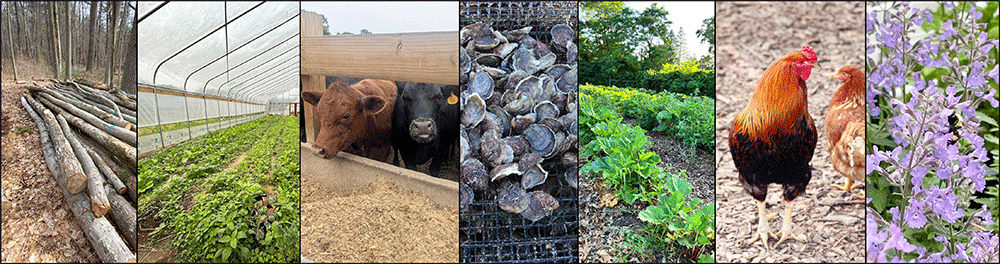 |
Rhode Island NRCS announces that the first fiscal year (FY) 2026 sign-up deadline for our conservation programs has been set for October 3, 2025. This first signup is for our Environmental Quality Incentives Program (EQIP), Conservation Stewardship Program (CSP), Agricultural Management Assistance (AMA) Program, Agricultural Conservation Easements Program (ACEP), and Regional Conservation Partnership Program (RCPP).
NRCS helps Ocean State farmers, private woodland owners, and oyster growers apply conservation practices and activities on their land. We offer a variety of practices like cover crops, tree planting, composting facilities, pasture & hay planting, oyster reef restoration, wildlife habitat planting, efficient irrigation systems, long term land protection with conservation easements, and more.
All our NRCS financial and technical assistance programs are voluntary programs that help our clients to install or manage conservation practices on eligible agricultural land. Learn more…
^ back to top
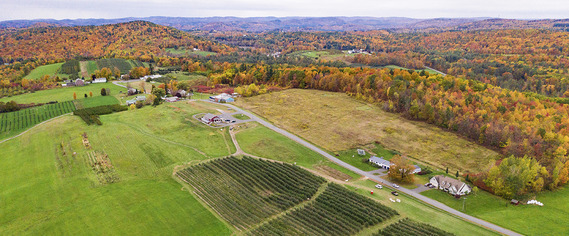 If you’re a farmer or other operator, you may be asked to participate in a survey to gather in-depth information about the use of conservation practices on cultivated cropland.
The 2025 Conservation Effects Assessment Project (CEAP) Survey is a joint effort between USDA’s Natural Resources Conservation Service (NRCS) and National Agricultural Statistics Service (NASS). NASS will visit approximately 23,000 operators across the contiguous U.S. in August and September 2025 to determine survey eligibility. A more in-depth follow-up survey will be conducted starting in November 2025.
This is the second of three years of surveys conducted by NASS. Once surveying is complete, NRCS will combine the data with information from the National Resources Inventory, NRCS field staff, and multiple data sources to estimate environmental and management outcomes of conservation on cultivated cropland across U.S. farms. NRCS will publish the findings as a CEAP Cropland Assessment report. CEAP Cropland Assessments quantify the effects of voluntary conservation efforts across the nation’s cropland at both regional and national scales.
Learn more about the survey.
^ back to top
USDA is reducing red tape around the Natural Resources Conservation Service (NRCS) and National Environmental Policy Act (NEPA)-related reviews, which will improve conservation delivery to America’s farmers and ranchers.
NEPA requires all federal agencies to consider the environmental impact of their proposed actions before deciding whether and how to proceed. NEPA’s aims are to ensure that agencies consider the potential environmental effects of their proposed actions in their decision-making processes and encourage public engagement in that process.
To comply with NEPA, agencies determine the appropriate level of review for a proposed action. Where required, these levels of review may be documented in an environmental impact statement (EIS), an environmental assessment (EA), or categorical exclusion. A federal agency may establish categorical exclusions — categories of actions that the agency has determined normally do not significantly affect the quality of the human environment — in its agency NEPA procedures.
Notice with Revised Guidelines
The notice describes the categories of proposed actions for which NRCS intends to apply the categorical exclusions, the considerations that NRCS will use in determining the applicability of the categorical exclusions and the consultation between the agencies on the use of the categorical exclusions, including application of extraordinary circumstances. The notice is available at the NRCS NEPA website under the “NRCS NEPA Regulations, Guidance, and Related Documents.”
^ back to top
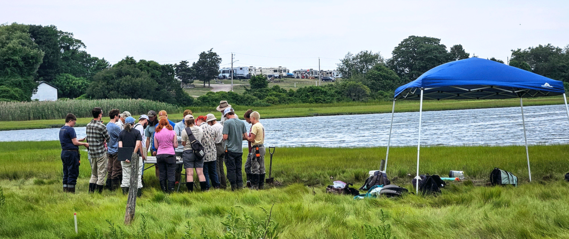 The University of Rhode Island College of Environmental Life Sciences (URI-CELS) hosted the 2025 Northeast Graduate School Pedology tour in Rhode Island July 29-31. NRCS soils staff from Rhode Island and Connecticut, and the Tolland, CT, SPSD Special Projects helped with the tour and preparations.
Twenty-five students and professors from the University of Maryland, Delaware Valley University, Brooklyn College, Virginia Tech, University of Rhode Island, North Carolina State University, and Brown University braved a 90°F+ degree heat wave to attend the tour. Dr. Mark Stolt, Professor Emeritus, and Joe Manetta, Research Associate, both with the URI Department of Natural Resources Science, organized the tour.
Participants toured twelve locations and observed 30 soil pits during the three-day event. Each site had several soil pits with data to discuss and featured published research and other information related to the site. Learn more…
^ back to top
U.S. Secretary of Agriculture Brooke L. Rollins announces the U.S. Forest Service is awarding $80 million in Wood Innovation Grants to spur wood products manufacturing, expand active forest management, and accelerate energy innovation across America’s timber-producing communities.
“The United States is blessed with a bounty of natural resources that we must properly manage to sustain our future economy and boost rural communities. Proper forest use and management lowers our reliance on foreign products and is inherently aligned with President Trump’s America First agenda,” said Secretary Rollins. “We’re investing in innovation that ensures a steady, sustainable supply of American wood that not only supports jobs and fuels economies, it protects the people and communities we serve, as well as the forest resources they depend on to survive and thrive.”
This investment delivers on President Trump’s commitment to unleashing America’s abundant natural resources by tearing down unnecessary barriers that have kept forests dangerously overstocked and unhealthy, putting communities at risk from wildfire and other threats. It also follows through on Secretary Rollins’ memorandums to the Forest Service (PDF, 2.9 MB) to carry out efforts to make forests more productive, $200 million timber investment in May, part of a broader strategy to advance economic opportunity and ensure long-term forest resilience through regulatory streamlining and expedited project approvals.
^ back to top
|
USDA – Rhode Island
60 Quaker Lane
Warwick, RI 02886
|
Natural Resources Conservation Service (NRCS)
401-828-1300 | www.RI.nrcs.usda.gov
|
|
Eastern RI – Serving Newport and Bristol counties
|
|
NRCS Field Office
Kat Zuromski, Acting District Conservationist
401-786-1389/ Kathryn.Zuromski@usda.gov
|
Conservation District Office
401-934-0842/ info@easternriconservation.org
|
|
Northern RI – Serving Providence County
|
|
NRCS Field Office
Ghyllian Alger, Acting District Conservationist
401-822-8835/ Ghyllian.Alger@usda.gov
|
Conservation District Office
401-934-0840/ mallard.nricd@gmail.com
|
|
Southern RI – Serving Kent and Washington counties
|
|
NRCS Field Office
Jameson Long, District Conservationist
401-822-8837/ Jameson.Long@usda.gov
|
Conservation District Office
401-661-5761/ gfuller@sricd.org
|
|
|
|
RI FSA County Office, Suite 49
RI FSA Farm Loan Team, Suite 62
RI FSA State Office, Suite 62
|
401-828-3120 Option 1
401-828-3120 Option 2
401-828-3120 Option 3
|
|
County Committee
|
|
Gilbert Rathbun Jr., Chairperson
John Sousa, Member
Howard Tucker III, Member
|
Erin Cabot, Vice Chairperson
William Coulter, Member
Dawn M Spears, SDA Member
|
|
|
|






