NRCS Rhode Island Conservation Update Newsletter - December 18, 2025
In This Issue:

-
December 19, 2025 - Deadline to apply for the RI Forest Health Works Regional Conservation Partnership Program (RCPP) Project.
- December 19, 2025 - last day for farmers to amend 2025 acreage reports with FSA.
-
January 8, 2026 - Southern RI Conservation District/NRCS Easements Webinar, 12:00-1:00 p.m. Webinar Link
-
January 15, 2026 - Deadline to apply for NRCS Conservation Programs: EQIP, CSP, AMA, ACEP.
-
January 15, 2026 - Northern RI Conservation District/ Easements Workshop/ Webinar, Mohr Library, Johnston, 5:30 p.m. with virtual option.

As we begin our new Fiscal Year, I want to thank our NRCS employees and Conservation District partners for their extraordinary effort this past year to obligate increased funding in record time (by July) - all while undergoing staff reorganization. They made an outstanding achievement to support Rhode Island agriculture & forestry.
Their drive to protect our natural resources and help our clients and communities resulted in our highest contract obligation and practice implementation rates ever. In fiscal year 2025, we received 452 applications for our conservation programs (EQIP, CSP, AMA, RCPP and ACEP) and funded 252 (56%).
Overall, NRCS in Rhode Island obligated over $11.8 million in financial assistance (FA) through our conservation and easement programs and $838,000 through the Emergency Watershed Protection Program (EWP). Additionally, we certified over 550 conservation practices for Rhode Island farmers, conserving resources on over 18,000 acres in the Ocean State.
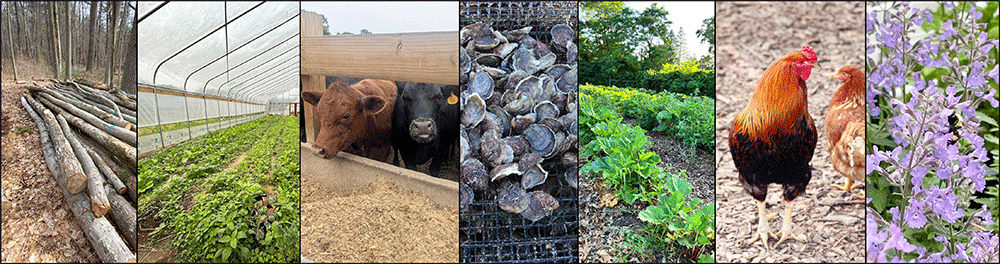
As we take stock during this holiday season and head into the new year, we are committed to continuing to serve our clients. We strongly encourage Rhode Island farmers, forest managers, oyster growers, ranchers, small-scale growers and other agricultural producers to apply for assistance to our conservation programs to help them to get conservation on the ground.
Happy Holidays!
Tom
NRCS Rhode Island State Conservationist (Acting)
^ back to top
|
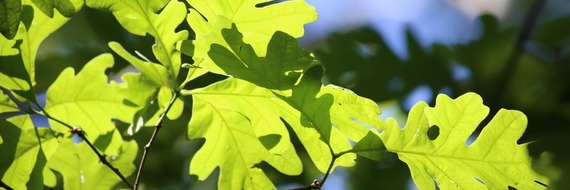 The USDA Natural Resources Conservation Service (NRCS) announces extension of the application cut-off date for RI Forest Health Works Project fiscal year 2026 funding to December 19, 2025, to accommodate interest in the program.
The RI Forest Health Works Project is a Regional Conservation Partnership Program (RCPP) agreement between NRCS, the Rhode Island Department of Environmental Management (DEM) Division of Forest Environment and ten partners. This partnership will leverage over $3.9 million in 5 years to protect critical forests across the state of Rhode Island. Learn more...
^ back to top
The U.S. Department of Agriculture’s Natural Resources Conservation Service (NRCS) today announced the establishment of a national January 15, 2026, batching deadline for the first funding round of key conservation programs. This national batching date ensures producers have a clear, consistent timeline for participating in Environmental Quality Incentives Program (EQIP), Conservation Stewardship Program (CSP), Agricultural Management Assistance (AMA) Program, and Agricultural Conservation Easements Program (ACEP). This includes the new NRCS Regenerative Pilot Program, which provides targeted Farmer First assistance through EQIP and CSP.
NRCS programs are continuous sign-up programs, but due to the government shutdown, the agency is implementing an initial national batching period to ensure producers have access to funding and support.
NRCS helps Ocean State farmers, private woodland owners, and oyster growers apply conservation practices and activities on their land through our voluntary technical and financial assistance programs. We offer a variety of practices like cover crops, tree planting, composting facilities, pasture & hay planting, oyster reef restoration, wildlife habitat planting, efficient irrigation systems, long term land protection with conservation easements, and more. Learn more…
^ back to top
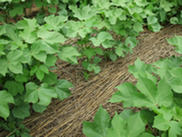
This is a new program to help American farmers adopt practices that improve soil health
On Dec. 10 USDA announced a $700 million Regenerative Pilot Program to help American farmers adopt practices that improve soil health, enhance water quality, and boost long-term productivity, all while strengthening America’s food and fiber supply.
Administered by the USDA Natural Resources Conservation Service (NRCS), this new Regenerative Pilot Program delivers a streamlined, outcome-based conservation model—empowering producers to plan and implement whole-farm regenerative practices through a single application. The initiative highlights USDA’s commitment to putting Farmers First and advancing the Make America Healthy Again (MAHA) agenda by building a healthier, more resilient food system.
In FY2026, the Regenerative Pilot Program will focus on whole-farm planning that addresses every major resource concern—soil, water, and natural vitality—under a single conservation framework. USDA is dedicating $400 million through the Environmental Quality Incentives Program (EQIP) and $300 million through the Conservation Stewardship Program (CSP) to fund this first year of regenerative agriculture projects. Read more.
^ back to top
|
 |
October 2025 updates to the Web Soil Survey include new Coastal Zone Soil Survey data for Kickemuit River and Nannaquaket Pond in Bristol County, Rhode Island. The “Kickie” and Nannaquaket are important locations for shellfish management in the state.
The Kickemuit is a 550-acre tidal river in the town of Warren designated as a shellfish management area by the Rhode Island Department of Environmental Management (RI DEM). USDA NRCS and the RI DEM Marine Fisheries Division found that the Kickemuit had natural oyster recruitment occurring while partnering to identify sites along the Rhode Island coastline with natural oyster beds.
This highlighted the need for site-specific soils information in the river.
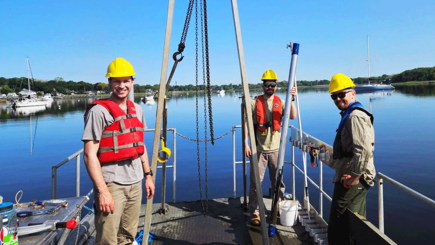
This fall, USDA NRCS soil scientists from Connecticut and Rhode Island, with assistance from Southern RI Conservation District partners, mapped the Kickemuit River and Nannaquaket Pond using modern Coastal Zone Soil Survey protocols. They collected side-scan sonar data, produced a map of the bathymetric bottom, collected soil cores using vibracoring methods, and documented/sampled soils for physical and chemical properties. These projects are the latest addition to a long run of successful coastal zone soil survey work in Rhode Island and surrounding states.
Learn more about the Kickemuit Coastal Soil Survey
^ back to top
|