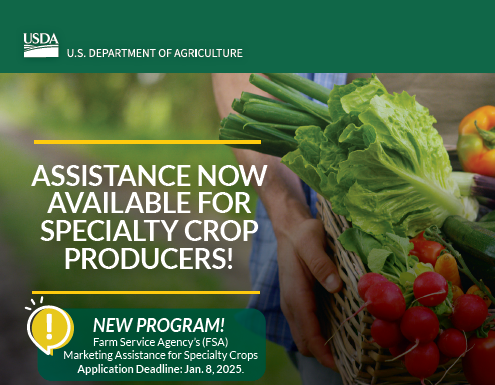
Indiana FSA State Newsletter - December 12, 2024
In This Issue:

To be successful, the first thing to do is to fall in love with your work.
This is so true.
As farmers across this great state, we have passion for the land and all that it represents. From generation to generation, the land is a constant. It is the reliable foundation for the greatest industry ever – Agriculture.
As we prepare for the holiday season, so is the time for me to say thank YOU to each of you -- the American farmer. This fall has been a busy one for many of you – and some may have some late crops still lingering in farm fields across the Hoosier state. To all of you, I salute the work you do, each providing food for more than 160 people in addition to yourself. You do it every day with careful stewardship of the soil, air, and water quality. You do it every day with the production of alternative energy sources such as ethanol and biodiesel. You do it every day producing over 260% more food with 2% fewer inputs (labor, seed, feed, fertilizer, etc.). You do it every day receiving only 15 cents out of every dollar spent on food at home and away from home. And you do it every day affording Americans the opportunity to enjoy a food supply that is abundant, overall affordable and among the world’s safest.
Over 1.9 million farms dot America’s rural landscape. You are one of those important dots in our economy. Thanks for all you do – everyday, and for falling in love with your work.
I wish you all a beautiful Holiday season with your friends and family.
Happy Holidays!
|
 |
|
|
State Executive Director
USDA Supports Expansion of Current and Development of New Markets
FSA's Marketing Assistance for Specialty Crops (MASC) program is aimed at helping specialty crop producers expand markets and manage higher costs. FSA is currently accepting applications. Signup began on December 10, 2024 and runs through January 8, 2025.
Funded by the Commodity Credit Corporation, MASC was announced in November alongside the $140 million Commodity Storage Assistance Program for facilities impacted by 2024 natural disasters.
MASC helps specialty crop producers meet higher marketing costs related to:
- Perishability of specialty crops like fruits, vegetables, floriculture, nursery crops and herbs;
- Specialized handling and transport equipment with temperature and humidity control;
- Packaging to prevent damage;
- Moving perishables to market quickly; and
- Higher labor costs.
MASC Eligibility
To be eligible for MASC, a producer must be in business at the time of application, maintain an ownership share and share in the risk of producing a specialty crop that will be sold in calendar year 2025.
MASC covers the following commercially marketed specialty crops:
- Fruits (fresh, dried);
- Vegetables (including dry edible beans and peas, mushrooms, and vegetable seed);
- Tree nuts;
- Nursery crops, Christmas trees, and floriculture;
- Culinary and medicinal herbs and spices; and
- Honey, hops, maple sap, tea, turfgrass and grass seed.
Applying for MASC
Eligible established specialty crop producers can apply for MASC benefits by completing the FSA-1140, Marketing Assistance for Specialty Crops (MASC) Program Application, and submitting the form to any FSA county office by January 8, 2025. When applying, eligible specialty crop producers must certify their specialty crop sales for calendar year 2023 or 2024.
New specialty crop producers are required to certify 2025 expected sales, submit an FSA-1141 application and provide certain documentation to support reported sales i.e., receipts, contracts, acreage reports, input receipts, etc. New producers are those who began producing specialty crops in 2023 or 2024 but did not have sales due to the immaturity of the crop, began producing specialty crops in 2024 but did not have a complete year of sales or will begin growing specialty crops in 2025.
MASC applicants, established and new, must also submit the following information to FSA if not already on file at the time of application:
- Form AD-2047, Customer Data Worksheet.
- Form CCC-902, Farm Operating Plan for an individual or legal entity.
- Form CCC-941, Average Adjusted Gross Income (AGI) Certification and Consent to Disclosure of Tax Information.
- Form FSA-942, Certification of Income from Farming, Ranching and Forestry Operations, if applicable, for the producer and members of entities.
- A highly erodible land conservation (sometimes referred to as HELC) and wetland conservation certification (Form AD-1026 Highly Erodible Land Conservation (HELC) and Wetland Conservation (WC) Certification) for the ERP producer and applicable affiliates.
- Other Documentation if requested by FSA to support reported specialty crop sales.
Most producers, especially those who have previously participated in FSA programs, will likely have these required forms on file. However, those who are uncertain or want to confirm the status of their forms or producers who may be new to conducting business with FSA, can contact their local FSA county office.
For MASC program participation, eligible specialty crop sales only include sales of commercially marketed raw specialty crops grown in the United States by the producer. The portion of sales derived from adding value to a specialty crop (such as sorting, processing, or packaging) is not included when determining eligible sales. Further explanation of what is considered by FSA for specialty crop sales as well as an online MASC decision tool and applicable program forms, are available on the MASC program webpage.
MASC Payments
For established specialty crop growers, those who certify crop sales in 2023 or 2024, FSA will calculate MASC payments based on the producer’s total specialty crop sales for the calendar year elected by the producer. Payments for new producers will be based on their expected 2025 calendar year sales. Payment calculation details and examples are available on the MASC webpage or related questions can be directed to local FSA county office staff.
FSA will issue MASC payments after the end of the application period. If demand for MASC payments exceeds available funding, MASC payments may be prorated, and the payment limitation of $125,000 may be lowered. If additional funding is available after MASC payments are issued, FSA may issue an additional payment.
Specialty crop producers interested in applying for MASC benefits, are encouraged to review the program fact sheet for detailed information on program eligibility, required documentation, payment calculations and more.
More Information
Additional information on MASC is available in the Notice of Funding Availability, which went on public inspection in the Federal Register on December 9, 2024.
Top of page

FSA offers funding opportunities to help maple producers start, expand, and maintain their operations.
Farm Storage Facility Loans
FSA’s Farm Storage Facility Loan Program (FSFL) provides low- interest financing so producers can build or upgrade facilities to store certain commodities. Maple sap and maple syrup are both eligible, and equipment and facilities such as sap tanks, certain hauling trucks, and storage space for maple syrup qualify. Eligible facilities and equipment may be new or used, permanently affixed, or portable.
Farm Loan Programs
There are several types of farm loans available to fit your specific business needs. Loan options such as: Farm Operating and Ownership Loans, Microloans, Emergency Loans, Conservation Loans and Youth Loans.
Visit farmers.gov/fund to learn more about funding opportunities for your operation. Through our Farm Loan Discovery Tool, you can answer five quick questions to learn about USDA farm loans that might be right for you.
Recovery Support
FSA’s Noninsured Crop Disaster Assistance Program (NAP) helps producers manage risk through coverage for both crop losses and crop planting that was prevented due to natural disasters.
For 2025 NAP coverage, producers must apply by December 31, 2024.
Through FSA's Tree Assistance Program (TAP), FSA offers financial assistance to eligible orchardists and nursery tree growers to replant or rehabilitate eligible trees, bushes, and vines lost due to natural disasters.
For Federal Crop Insurance, NAP and TAP - Maple producers are required to report their TAP numbers to FSA by January 2, 2025.
To learn more about programs for Maple Sap producers, contact your local USDA Service Center or visit fsa.usda.gov.
|
FSA administers two programs that have specific safety net benefits for producers of honeybees and honey. The Noninsured Crop Disaster Assistance Program (NAP) and the Emergency Assistance for Livestock, Honeybees and Farm-Raised Fish Program (ELAP) assist producers when disasters impact honey production or damage or destroy colonies, hives or honeybee feed.
NAP is designed to reduce financial losses when natural disasters result in lower yields or crop losses, including honey. NAP coverage is equivalent to catastrophic insurance, meaning it covers up to 50 percent of a producer’s normal yield (must have at least a 50 percent loss) at 55 percent of the average market price. The 2018 Farm Bill reinstates higher levels of coverage, from 50 to 65 percent of expected production in 5 percent increments, at 100 percent of the average market price. Producers of organics and crops marketed directly to consumers also may exercise the “buy-up” option to obtain NAP coverage of 100 percent of the average market price at the coverage levels of between 50 and 65 percent of expected production.
The NAP service fee is the lesser of $325 per crop or $825 per producer per administrative county, not to exceed a total of $1,950 for a producer with farming interests in multiple counties.
For 2025 NAP coverage, you must apply by December 31, 2024.
ELAP covers colony losses, honeybee hive losses (the physical structure) and honeybee feed losses in instances where the colony, hive or feed has been destroyed by a natural disaster or, in the case of colony losses, because of Colony Collapse Disorder. Colony losses must be in excess of normal mortality.
Both the NAP and ELAP programs require you to report the number of colonies you have in production to FSA by January 2, 2025.
You must notify FSA within 30 calendar days of changes in the total number of colonies or when honeybees are moved to another county.
For both programs, you must notify FSA within 15 calendar days of when a loss occurs or from when the loss is apparent.
To learn more about programs for honey and honeybee producers, contact your local USDA Service Center or visit fsa.usda.gov.
Top of page
Why are pollinators so important? That’s easy - Food. One out of three bites of food can be attributed to these important creatures – such as bees, butterflies, moths, birds, beetles, bats, and a few other small mammals. Pollinators provide crucial assistance to fruit, vegetable and seed crops as well as other plants that produce fiber, medicine and fuel. For many plants, without the help of pollinators, they would be unable to reproduce.
But as you may know, pollinators are in trouble. Many are seeing decreasing populations because of habitat loss, disease, parasites and pesticide use. But there’s good news. There are simple ways you can help. It can be as easy as selecting high-quality pollinator plants for your garden. To find the best plants for your area, visit the websites of Natural Resources Conservation Service (NRCS) partners at the Xerces Society Pollinator Conservation Program or Pollinator Partnership.
If you operate a farm, NRCS can help you create habitat for pollinators. This not only benefits pollinators. Pollinator habitat also provides ample perks for the farmers too. More pollinators can increase crop yields. Pollinators can be increased by planting wildflowers in and around fields and choosing the right cover crops. NRCS offers more than three dozen conservation practices that assist in building healthier landscapes for pollinators. NRCS can also help fund the implementation of these practices.
Habitats used by pollinators attract beneficial insects (insects that eat crop pests), and they may provide habitat for other wildlife, reduce soil erosion, and improve water quality. As you can see, pollinators and healthy habitat for pollinators help keep the ecosystem healthy. In fact, if you are putting in conservation practices to prevent soil erosion or protect stream banks, consider including wildflowers, shrubs and trees that support pollinators.
Contact your local NRCS office to find out more about available programs and their applicable deadlines.
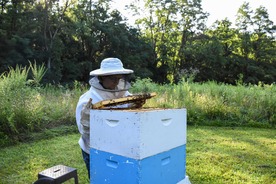
Veterans Protect National Food Security by Becoming Beekeepers
Heroes to Hives is the nation’s largest agriculture training program for US military service members. They offer a FREE 9-month online intensive beginning beekeeping education course designed to train US service members in the art and science of beekeeping.
This program provides the knowledge for being successful in the beekeeping industry as a hobby, a career, or as a therapeutic practice.
The Heroes to Hives program includes:
- 9-months of online education delivered through nine educational Modules provided once a month to students March – November
- Online training in beekeeping through over 75 hours of lectures and instructional videos delivered by some of the Nation’s leading beekeeping experts – Course syllabus
- Small business training through the Small Business Administration’s VetBiz program
- Training in USDA programs and how to access them
- Training to prepare veterans for jobs in the commercial beekeeping industry
- Online business marketing training
- Training on therapeutic beekeeping practices
- Certificate of Completion recognized by the US Dept. of Agriculture
- Heroes to Hives credits eligible for transfer to the Great Plains Master Beekeeping program at the Univ. of Nebraska upon successful completion.
More than 5,000 active military, veterans, and their dependents have received free training to become beekeepers thanks to the Heroes to Hives program.
Registration for the 2025 course is open through February 28, 2025.
The course begins on March 24, 2025.
|
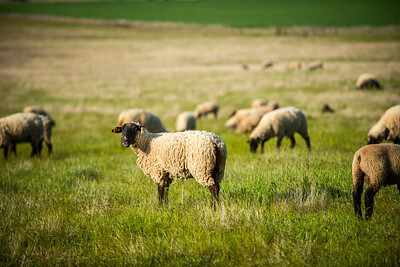
Marketing Assistance Loans (MALs) and Loan Deficiency Payments (LDPs) provide financing and marketing assistance for producers of many commodities, including graded and non-graded wool, mohair, and unshorn pelts.
MALs and LDPs are available during shearing and provide interim financing to help you meet cash flow needs without having to sell commodities when market prices are low, enabling you to delay selling until more favorable marketing conditions emerge. LDPs are payments made to producers who, although eligible to obtain an MAL, agree to forgo the loan in return for a payment on the eligible commodity.
FSA is now accepting requests for 2024 MALs and LDPs for all eligible wool, mohair and unshorn pelts. These requests should be made on or before the final availability date of January 31, 2025. The 2024 Wool and Mohair Marketing Assistance Loan rates can be found here: fsa.usda.gov.
Eligibility
To be eligible for a wool or mohair MAL or LDP, producers must produce and shear eligible mohair and wool in the U.S. during the applicable crop year and must:
- comply with conservation and wetland protection requirements;
- report all cropland acreage on applicable farms where the eligible commodity is produced;
- have and retain beneficial interest in the commodity until the MAL is repaid or the Commodity Credit Corporation (CCC) takes title to the commodity, and;
- meet Adjusted Gross Income (AGI) limitations.
Unshorn pelts are eligible for LDPs only. In addition to the criteria above, producers of unshorn pelts must have sold the unshorn lamb for immediate slaughter or slaughter the lambs for personal use. LDPs and marketing loan gains are not subject to payment limitation, including actively engaged in farming and cash rent tenant provisions.
In addition to producer eligibility, the loan commodity must have been produced and shorn from live animals by an eligible producer, be in storable condition, and meet specific CCC minimum grade and quality standards. Producers are responsible for any loss in quantity or quality of the wool or mohair pledged as loan collateral.
To retain beneficial interest, the producer must have control and title of the wool, mohair, or unshorn pelt. If beneficial interest in the commodity is lost, the commodity loses eligibility for an MAL or LDP and remains ineligible even if the producer later regains beneficial interest. The producer must be able to make all decisions affecting the commodity including movement, sale, and the request for an MAL or LDP.
Producers may repay an MAL any time during the loan period at the lesser of the loan rate plus accrued interest and other charges or an alternative loan repayment rate, the national posted price, which is announced weekly. Visit the Farm Service Agency (FSA) website for posted loan and LDP rates.
How to Apply
Producers can apply for an MAL by contacting their local FSA county office. To be considered for a LDP, producers must first have the form CCC-633 EZ, Page 1, on file with FSA prior to losing beneficial interest in the wool, mohair or unshorn pelt. It is best to visit the county office and submit the CCC-633 Page 1 right before you shear. This is completed one time per crop year and indicates your intention to receive LDP benefits.
To apply and learn more information, contact your local USDA Service Center or visit fsa.usda.gov.
|
Apply for a Farm Storage Facility Loan today.
Agricultural producers of perishable commodities including fruits, vegetables and floriculture can now get funding for controlled atmosphere storage through Farm Storage Facility Loans (FSFL) offered by the U.S. Department of Agriculture’s (USDA) Farm Service Agency (FSA). Controlled atmosphere storage regulates the concentrations of oxygen, carbon dioxide and nitrogen in a storage room to increase the shelf life of crops.
In addition to now supporting controlled atmosphere storage, FSFLs also provide low-interest financing to help producers build or upgrade storage facilities and to purchase portable (new or used) structures, equipment and storage and handling trucks.
The low-interest funds can also be used for controlled atmosphere storage monitoring equipment, designed to notify facility owners immediately if potential atmospheric concerns are detected. Producers may renovate existing storage facilities to include controlled atmosphere storage monitoring equipment. Authorized loan terms for FSFL renovations are three and five years only.
To assist with monitoring gases and particle concentrations for controlled atmosphere storage, the following equipment, but not limited to, is eligible for an FSFL:
- Optical oxygen sensor.
- Low power CO2 sensor.
- Air quality sensor.
- Gas detection devices.
- Air temperature and relative humidity sensor.
- Water activity meter.
- Temperature stabilized water activity analyzer.
- Precision and performance humidity and temperature transmitter.
Loans of up to $50,000 can be secured by a promissory note/security agreement, loans between $50,000 and $100,000 may require additional security and loans exceeding $100,000 require additional security.
FSFL borrowers do not need to demonstrate lack of commercial credit availability to apply. The loans are designed to assist a diverse range of agricultural operations, including small and mid-sized businesses, new farmers and ranchers, operations supplying local food and farmers markets, non-traditional farm products and underserved producers.
For more information, see the FSFL fact sheet and contact FSA at your local USDA Service Center.
Top of page

Did you know that FSA makes loans to youth to establish and operate ag income-producing projects in connection with 4-H clubs, FFA and other agricultural groups. Projects must be planned and operated with the help of the organization advisor, produce sufficient income to repay the loan and provide the youth with practical business and educational experience. The maximum loan amount is $10,000.
Youth Loan Eligibility Requirements:
- Be a citizen of the United States (which includes Puerto Rico, the Virgin Islands, Guam, American Samoa, the Commonwealth of the Northern Mariana Islands) or a legal resident alien
- Be 10 years to 20 years of age
- Comply with FSA’s general eligibility requirements
- Conduct a modest income-producing project in a supervised program of work as outlined above
- Demonstrate capability of planning, managing and operating the project under guidance and assistance from a project advisor. The project supervisor must recommend the youth loan applicant, along with providing adequate supervision.
For assistance in preparing your application forms, contact your local USDA Service Center or visit fsa.usda.gov.
|
FSA loans require applicants to have a satisfactory credit history. A credit report is requested for all FSA direct farm loan applicants. These reports are reviewed to verify outstanding debts, see if bills are paid timely and to determine the impact on cash flow.
Information on your credit report is strictly confidential and is used only as an aid in conducting FSA business.
Our farm loan staff will discuss options with you if you have an unfavorable credit report and will provide a copy of your report. If you dispute the accuracy of the information on the credit report, it is up to you to contact the issuing credit report company to resolve any errors or inaccuracies.
There are multiple ways to remedy an unfavorable credit score:
- Make sure to pay bills on time
- Setting up automatic payments or automated reminders can be an effective way to remember payment due dates.
- Pay down existing debt
- Keep your credit card balances low
- Avoid suddenly opening or closing existing credit accounts
FSA’s farm loan staff will guide you through the process, which may require you to reapply for a loan after improving or correcting your credit report.
For more information on FSA farm loan programs, contact your local USDA Service Center or visit fsa.usda.gov.
FSA is committed to providing our farm loan borrowers the tools necessary to be successful. FSA staff will provide guidance and counsel from the loan application process through the borrower’s graduation to commercial credit. While it is FSA’s commitment to advise borrowers as they identify goals and evaluate progress, it is crucial for borrowers to communicate with their farm loan staff when changes occur. It is the borrower’s responsibility to alert FSA to any of the following:
- Any proposed or significant changes in the farming operation
- Any significant changes to family income or expenses
- The development of problem situations
- Any losses or proposed significant changes in security
If a farm loan borrower can’t make payments to suppliers, other creditors, or FSA on time, contact your farm loan staff immediately to discuss loan servicing options.
For more information on FSA farm loan programs, contact your local USDA Service Center or visit fsa.usda.gov.
Navigating filing taxes can be challenging, especially if you are new to running a farm business, participating in disaster programs for first time, or trying to forecast the farm’s tax bill. Receiving funds from USDA through activities such as a conservation program payment or a disaster program is considered farm income that includes a tax liability for farm businesses. USDA technical assistance is free and creates no tax implications.
At the end of the tax year, USDA issues tax forms 1098 and 1099 forms for farm loans, conservation programs administered by the Farm Service Agency and Natural Resource Conservation Service including the Conservation Reserve Program and Environmental Quality Incentives Program, crop disaster payments, and the Market Facilitation Program. USDA also issues tax forms for recipients of assistance for distressed borrowers, including through Section 22006 of the Inflation Reduction Act.
USDA cannot and does not provide tax advice but wants you to be aware of options that may help manage your tax liability. USDA has partnered with experts to provide resources to help you make the right tax decisions for your operation. USDA offers monthly webinars. Registration options are available, or producers have the option to view on demand at farmers.gov/working-with-us/taxes.
The Tax Estimator Tool is an interactive spreadsheet that producers can download to estimate tax liability. It is for informational and educational purposes and should not considered tax or legal advice. Producers may need to work with a tax professional to determine the correct information to be entered in the Tax Estimator Tool.
We encourage you to visit farmers.gov/working-with-us/taxes for more information on how to find and work with a tax preparer as well as instructions on how to request copies of USDA documents and links to other helpful tax resources.
Top of page
2024
December 10 - Signup began for the Marketing Assistance for Specialty Crops (MASC) Program
December 13 - Application Deadline for Organic Dairy Marketing Assistance Program
December 16 – Final Reporting Date for Fall Mint and Fall-Seeded Small Grains December 25 – Offices Closed in Observance of Christmas Day
December 31 – NAP Sales Closing Date for Hives (Honey) and Maple Sap
2025
January 1 – Offices Closed in Observance of New Year’s Day
January 2 – Final Reporting Date for Hives (Honey) and Maple Taps
January 8 - Application Deadline for Marketing Assistance for Specialty Crops (MASC) Program
January 15 – Final Acreage Reporting Date for Apples
January 20 – Offices Closed in Observance of Martin Luther King, Jr’s Birthday January 30 – Final Date to Submit Application for Payment for 2024 Losses under Livestock Forage Program (LFP)
January 30 – Final Date to Submit Application for Payment and Notice of Loss (NOL) for 2024 Losses under Emergency Assistance for Livestock, Honeybees and Farm-Raised Fish Program (ELAP).
January 31 – Deadline to Apply for Loan Deficiency Payments (LDP) for Unshorn Pelts Produced During the 2024 Crop Year
January 31 – Final Date to Submit Application for 2024 Food Safety Certification for Specialty Crops (FSCSC) Program
USDA announced loan interest rates for December 2024, which are effective December 1, 2024. USDA’s FSA loans provide important access to capital to help agricultural producers start or expand their farming operation, purchase equipment and storage structures, or meet cash flow needs.
Additionally, FSA provides low-interest financing to producers to build or upgrade on-farm storage facilities and purchase handling equipment and loans that provide interim financing to help producers meet cash flow needs without having to sell their commodities when market prices are low. Funds for these loans are provided through the Commodity Credit Corporation (CCC) and are administered by FSA.
FSA also offers guaranteed loans through commercial lenders at rates set by those lenders.
Check your eligibility for FSA loans and find the right loans to fit your needs by utilizing the Farm Loan Assistance Tool.
Top of page
Stay in the Know
Sign up for GovDelivery Newsletters, Bulletins and Indiana Press Releases
USDA-FSA Facebook!
We encourage you to like our pages, comment and share our posts.
Signup for Local County Office FSA Text Alerts
Text Your Service Center Keyword (2-digit State Abbreviation and County Name Example: Adams County IN would be INAdams) to FSANOW (372-669).
Top of page
|