 During National Childminding Week, we wanted to take the opportunity to celebrate our incredible childminders who have been caring for children across the city for 20 years or more. It is truly amazing to think of how many children they have nurtured, supported, and inspired throughout their careers.
The Early Years sector has changed significantly over time, and it takes a very special person to successfully balance the responsibility of caring for other people’s children in their own home, while continually staying up to date with EYFS and Ofsted requirements. This dedication and professionalism should never go unnoticed.
"I've been childminding since 2002 and wow and I can honestly say it's the best job in the world!"
Karen Cooper
 We would therefore like to say a huge thank you to the following exceptional childminders who have reached this remarkable milestone:
-
Caroline Heard – 39 years of service
-
Tracy Norris – 37 years of service
-
Jane Allison – 31 years of service
-
Amanda Kind – 30 years of service
-
Sarah Bulbeck – 26 years of service
-
Karen Cooper – 24 years of service
-
Debra Baker– 24 years of service
-
Pennie Huntley – 24 years of service
-
Vickie Rawlins – 24 years of service
-
Victoria Nicholls – 23 years of service
-
Suzie Taylor – 22 years of service
-
Tina Shervell – 21 years of service
-
Ivana Daly (Simic) – 20 years of service
Thank you all for your hard work, commitment, and dedication - not only supporting children, but their families too. Your impact spans generations and makes a lasting difference in our community.
 Join Foundation Years for 'Pathways to Progress: Stronger Practice in Early Language, Literacy and Mathematics'. This free event is taking place on Thursday 14 May from 4:30pm – 6:00pm on Microsoft Teams.
What to expect:
Expert speakers, including representatives from BookTrust, Early Childhood Maths Group and DfE. Gain valuable insights to improve practice in early language, literacy and mathematics.
 Explore the latest summer term newsletter from the Thames Valley and South Central Early Years Stronger Practice Hub, packed with upcoming training opportunities, useful resources, and network events to support your practice.
 Child Safety Week is running from 1 - 7 June. This year’s theme is Making Prevention Possible. Help to empower families to make simple changes without feeling overwhelmed.
 Take a look at our ten top tips for supporting EAL learners in EYFS...
-
Value their first language: Children’s first language is a strength. Using it supports thinking, identity and learning English.
-
Use consistent routines: Repetition and predictable routines help children understand language in context and feel secure.
-
Model clear, simple language: Use short sentences, repeat key words and speak naturally during everyday interactions.
-
Use visuals and objects: Gestures, photos, symbols, real objects and demonstrations support understanding.
-
Narrate play and actions: Talk about what the child is doing to link words with meaning (“You’re building a tall tower”).
-
Give extra thinking time: EAL learners need longer to process language - don’t rush responses or answers.
-
Accept all communication: Gestures, single words, use of home language and non-verbal responses are all valid.
-
Plan for talk through play: Songs, stories, role play and small world activities create natural opportunities for language.
-
Say it and show it: Always pair spoken instructions with actions or modelling to make meaning clear.
-
Work closely with families: Share key words, routines and songs. Encourage families to continue using their first language.
 The Child Accident Prevention Trust (CAPT) has shared their latest May newsletter for families, offering practical advice and support to help keep children safe at home and in everyday situations.
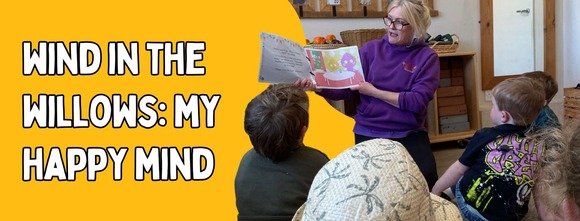 Wind in the Willows have been continuing to work on supporting the My Happy Mind programme by delivering sessions with their children. They report that:
"These activities have been great for the age ranges of our children. The children have embraced being safety stars and Healthy Hero's. The children drew pictures of characters and healthy snacks, we also added a song - "This is the way we brush our teeth on a warm and sunny morning" going through our routines of washing and dressing. We have printed the stories off so children can experience looking at the books independently".
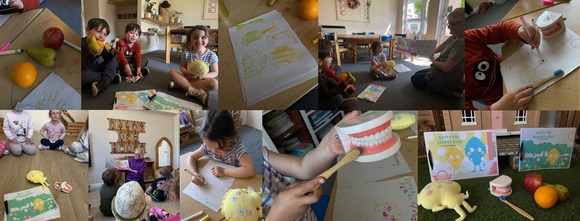 Keep up the great work Wind in the Willows, we know that taking part in this programme helps children develop their PSED skills and understand and regulate their emotions.
 The Department for Education and the UK Health Security Agency (UKHSA) have become aware that some early education settings are temporarily excluding children who have recently been vaccinated, even if they feel well enough to attend. This statement from a UKHSA health protection expert explains why such policies are unnecessary and can have serious unintended consequences for children and the early years settings they attend.
Dr Mary Ramsay, Director of Public Health Programmes at the UK Health Security Agency, said:
“Vaccinations are vital for protecting children against serious and potentially life-threatening diseases. With measles outbreaks occurring in areas of the UK, it's more important than ever that children receive their routine immunisations on schedule.
While some children may experience mild side effects after vaccination, there is absolutely no medical reason to exclude a vaccinated child from a setting if they are feeling well. This practice could potentially discourage parents from getting their children vaccinated and therefore increase the risk of having outbreaks in nurseries and schools.
All medicines can cause side effects, but global health authorities agree that immunisation is the safest way to protect children's health. If a parent or carer feels their child is well enough to attend nursery or school after vaccination, they should be welcomed as normal.
There is no reason to exclude children who have been recently vaccinated as vaccine viruses cannot spread to others.
By supporting childhood vaccination and maintaining inclusive and evidence-led policies, early years and education settings play a crucial role in protecting not just individual children, but entire communities from preventable diseases.”
|