|
 |
Climate newsletter |
|
|
Issue 98 | 10 September 2025 |
|
|
Released on 1 September, provisional Met Office statistics confirm that summer 2025 is officially the warmest summer on record for the UK. 1976, which had a mean temperature of 15.70°C, has now dropped out of the top five warmest summers since records began in 1884, leaving all five warmest summers having occurred since 2000.
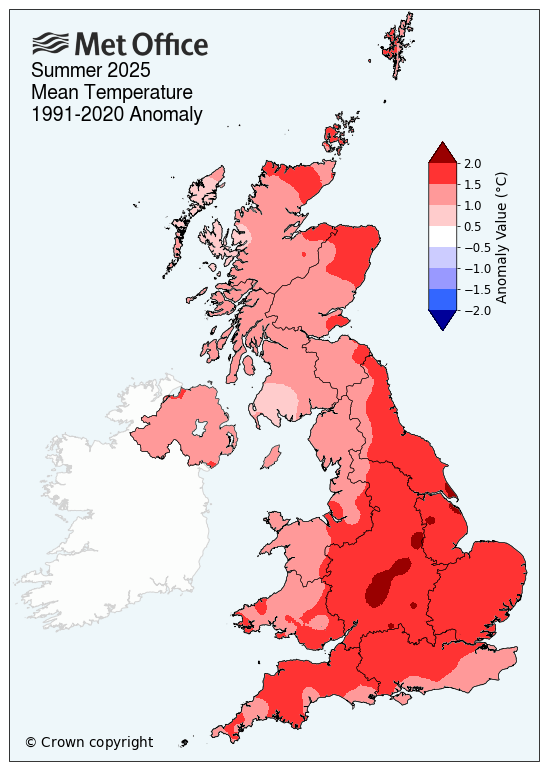 Rapid analysis by Met Office climate scientists using peer-reviewed methods has shown that a summer temperature as high as 2025 has been made around 70 times more likely because of human induced climate change.
Head of climate attribution at the Met Office, Dr Mark McCarthy, said: “Our analysis shows that the summer of 2025 has been made much more likely because of the greenhouse gases humans have released since the industrial revolution. In a natural climate, we could expect to see a summer like 2025 with an approximate return period of around 340 years, while in the current climate we could expect to see these sorts of summers roughly 1 in every 5 years.
“Our analysis suggests that while 2025 has set a new record, we could plausibly experience much hotter summers in our current and near-future climate and shows how what would have been seen as extremes in the past are becoming more common in our changing climate."
|
|
|
The summer of 1976 is often regarded as the benchmark for extreme British summers. However, the climate in which it occurred was fundamentally different from today’s. While summer 2025 is exceptional in the context of the historical record, just as 1976 was at the time, current climate projections suggest that similar conditions could be much more common in the future.
|
|
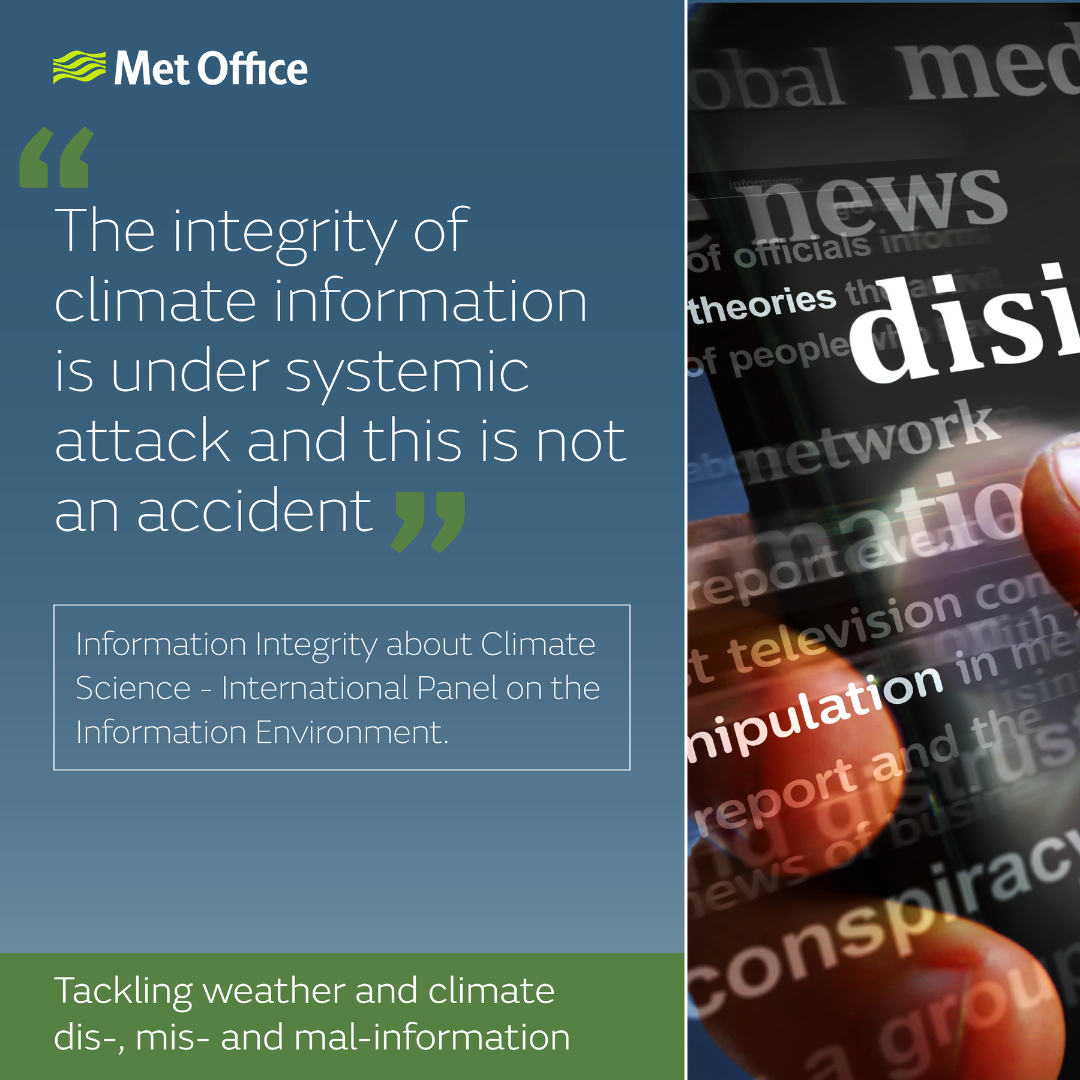 Yesterday, we published a blog post on the challenges around climate misinformation and how to critically engage with information to help curb its spread. The World Economic Forum Global Risks Report 2024 perception survey ranked misinformation and disinformation as the risk with the highest likely impact globally over the next two years and fifth highest risk over ten years. Incorrect information influences people’s beliefs, increases distrust or affects behaviour.
Critically engaging with information can help stop the spread of misinformation – learn about the steps to take in the blog post along with where to source reputable information.
|
|
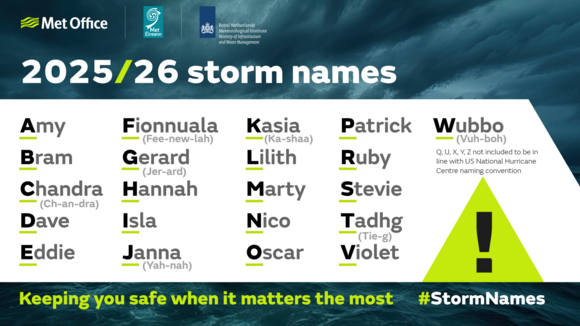
On 1 September, we revealed the storm names for the 2025-26 season in partnership with Met Éireann (Ireland) and KNMI (Netherlands). Rebekah Hicks, Chief Meteorologist at the Met Office explains: “Naming storms isn’t just about giving them a label, it’s about making sure people take notice.
"When a storm has a name, it becomes easier for the media and public to talk about it, share information, and prepare. It’s a simple step that can make a big difference in helping communities stay safe, protect their homes, and make informed decisions ahead of severe weather.”
|
|
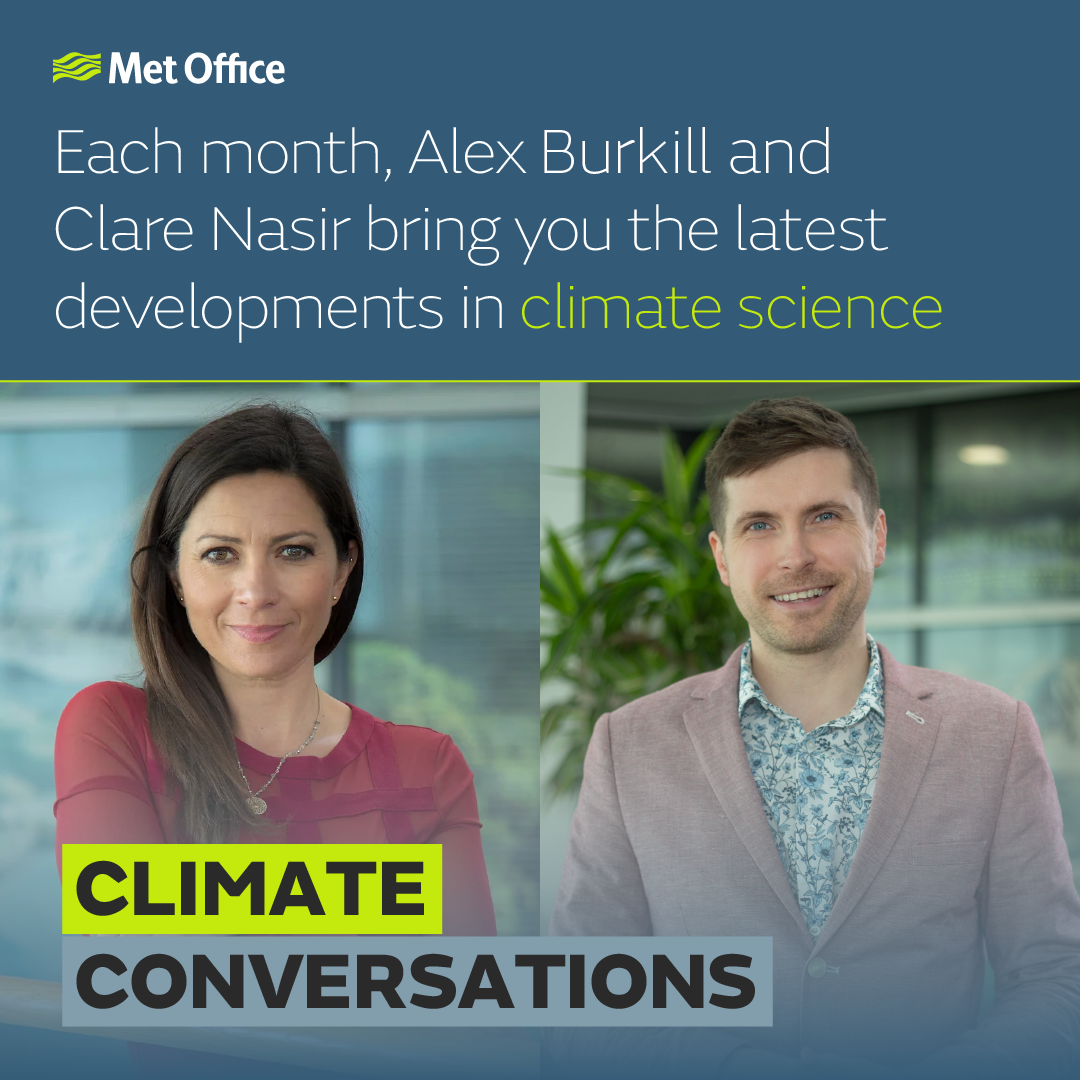 Our Climate Conversations series covers the latest research and real-world impacts of climate change. Topics have included record-breaking marine heatwaves, the future of UK sporting events and sustainability. Stay tuned, as there are more episodes coming up. You can watch all previous episodes on our playlist and subscribe to our YouTube channel to keep up to date.
|
|
|
Following a summer break, our UK Climate Projections (UKCP18) series will return on Thursday 25 September from 12-1pm. We’ll hear from Michael Angus of the Met Office about supporting the water sector to reduce weather and climate impacts. Paula Gonzalez of the Met Office will also speak about using numerical models for future offshore wind resource assessment.
The webinar will be recorded and published on YouTube afterwards, so you can catch-up later if you can’t attend.
If you would like to be added to our UKCP webinars mailing list, please email: ukcp.usernetwork@metoffice.gov.uk
|
|
|
Alongside our academic partners, we are supporting the UK’s clean energy mission by bringing multi-disciplinary expertise to help us deliver trusted data and intelligence with greater efficiency and relevance.
As part of our focus on critical aspects of the energy-climate interaction, we’re co-convening the Climate and Finance Conference, held by University of Reading Henley Business School, to include a focus on energy.
The event will complement and inform our ongoing work focused on the finance sector to help improve climate data and knowledge in this sector.
If you want to upskill in this critical area, have relevant research to share, or see the value of enhancing your network in this field, see the registration details below.
Deadline for abstracts submissions: 30 Sep
Conference registration deadline: 20 Oct
|
|
|
Follow us on our social media channels to join the conversation. Look out for our hashtag - #GetClimateReady - on X (formerly Twitter), and follow our climate channels on TikTok and Instagram.
You might also be interested in our new Government and Industry Newsletters. Subscribe here.
|
|
|
To subscribe or unsubscribe please visit our email updates page to access your preferences.
The Met Office is not responsible for the content of external internet sites.
|
|
|
|