November 2025
Robust future work to benefit thousands

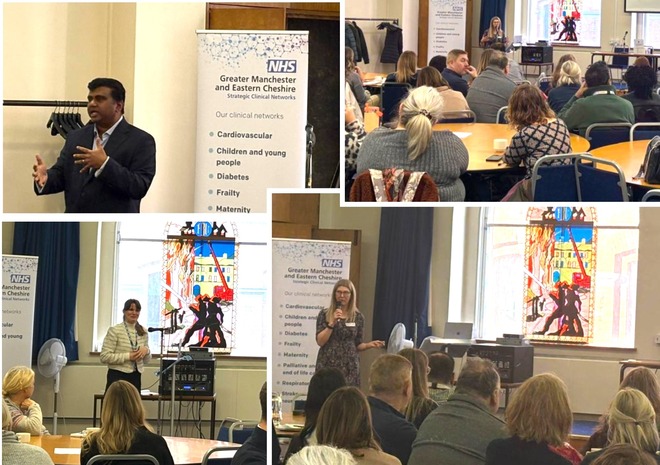
Pictured above, clockwise from bottom left, Dr Claire Lake, NHS Greater Manchester deputy chief medical officer, Dr Raja Murugesan, GP and the Respiratory Network's clinical lead for respiratory disease in primary care, attendees at the event, and Dr Jennifer Hoyle, clinical lead for the Respiratory Network.
Our Respiratory Network still feels like one of our younger teams, although a quick look through our archived newsletters shows it has been improving services for people since 2018.
With an estimated 75,000 patients living with chronic obstructive pulmonary disease (COPD) in Greater Manchester, it clearly remains very important that the way we support and treat people reaches as high a standard as possible.
An event this month saw health and social care professionals get together to discuss how pathways and services could be further improved.
Discussions on the day produced a robust roadmap which should lead to a further strengthening of what we can offer to people living with COPD. See more details in our story below.
Also in this month’s newsletter you can find the following updates:
Palliative and end of life care: virtual event to launch new guidelines.
Maternity: Q&A with neonatal charity founder. National award for director of midwifery. Positive work at Stepping Hill to keep babies safe. Two valuable workshops for teams.
Diabetes: Clinical lead delivers positive message on World Diabetes Day.
Frailty: event brings together clinicians and patients to improve rehabilitation.
Cardiovascular/CVD prevention: national team asks for highlights from programmes. Team continues to improve services.
Diabetes: Clinical lead delivers positive message on World Diabetes Day.
Neurorehabilitation and stroke: Neurogenic bladder and bowel work collaboration highlighted. Wigan charity anniversary shows importance of patient voice. Dozens attend workshop.
Thanks once again for your interest in our networks.
Best wishes

Focus on COPD action
Clinicians spent a full day working with our Respiratory Network on improving services for people living with COPD.
Approximately 75,000 people across Greater Manchester suffer from the condition’s symptoms and the team organised the event to discuss how its pathway and service provision could be improved.
Around 60 people attended the workshop, which looked at services in both primary and secondary care, supporting patients to self-manage their condition and exploring how data can highlight areas for improvement.
Clinical lead Dr Jennifer Hoyle said: “We looked at ways we can work a bit smarter, joining some of the services up, reducing the gaps, reducing the variation and trying to get a patient-centred approach to improve the lived experience for our patients with COPD.”
Some of the main themes from the event, which was held at the Mechanics’ Institute in Manchester city centre, included prevention, early and accurate diagnosis, optimising treatment pathways and better utilisation of data.
|
Some future actions agreed on the day included:
- A consensus for a set of Greater Manchester standards for pulmonary rehabilitation teams to work towards, with a supporting peer review process to reduce inequalities and share learning
- A Greater Manchester data dashboard was identified as a priority to help the 10 localities understand what is happening in other areas
- There is a need for better information and education for both patients and staff in relation to COPD.
Information from the breakout sessions and the mapping exercise will now be brought together and shared.
Task and finish groups will continue, or new groups be set up, to progress specific pieces of work and the overall aim is to have a revised COPD pathway, a supporting toolkit and data dashboard by the end of March 2026.
Watch Dr Hoyle's video message from the event (on LinkedIn page).
Watch the video message from clinical lead for respiratory disease in primary care, Dr Raja Murugesan (also on LinkedIn).
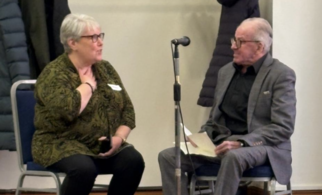
Pictured above right: Clinical project manager Sue Mason speaks to service user John.
|


Launch of new guidelines to improve end-of-life care
A virtual event is being held on Wednesday, December 10, to launch new Greater Manchester guidelines which will put people at the centre of decisions on deactivating implantable cardioverter-defibrillators (ICDs).
The session, which is called Preventing the Shock and is co-hosted by both our Palliative and End of Life Care and Cardiovascular Networks, will be led by Eleri Gregory, consultant cardiac physiologist at Wythenshawe Hospital, and president of the British Heart Rhythm Society.
As well as the presentation of the new guidelines, there will be the opportunity to ask questions on all areas relating to ICD deactivation, as well as to highlight and reflect on any issues and challenges being experienced.
This guidance, which has been jointly created by the two Networks, supports primary and secondary care providers to develop their own policies and protocols for reprogramming ICDs to turn tachycardia therapies off, proposing a framework that will help everyone responsible for the care of patients with ICDs to deliver high quality care.
The number of people with ICDs has increased in recent years and many are also living longer with these devices.
However, we need to be mindful that even patients with ICD may will deteriorate, either with worsening cardiac failure, another non-cardiac condition or general frailty, and will have a limited prognosis.
To ensure a person receives high-quality end-of-life care they should have the opportunity to consider and discuss the option to deactivate the shock and rapid pacing function of their ICD.
The event is open to health professionals with an interest in ICD deactivation.
As well as the presentation of the new guidelines, there will be the opportunity to ask questions on all areas relating to ICD deactivation, as well as to highlight and reflect on any issues and challenges being experienced.
Please click here to book a place on the session. For more information, please colin.daffern@nhs.net.
***
Also, a virtual lunch and learn session is being held on Tuesday, December 2, showcasing findings from a North West collaborative project focused on emergency admissions in the last 90 days of life.
Find out more about the event.
|
A lunch and learn session is being held on Tuesday, December 2, which will showcase findings from a North West collaborative
Calling all Clinical Leads involved in Urgent, Frailty, or End of Life Care, ICB and Place Commissioners and Leadership Teams, PCN and NWAS Leads.
You are invited to attend a Lunch & Learn event on Tuesday, 2nd December 2025, showcasing the findings from a North West collaborative project focused on emergency admissions in the last 90 days of life.
This session will share key insights, achievements, and recommendations for clinical leaders, commissioners, and system partners working to improve outcomes and experiences for people at the end of life.
📅Tuesday, 2nd December 2025
🕛 12:00 – 1:00 pm (Presentation), 1.00-1.30 pm (Q&A)
💻 Online via Microsoft Teams
🎟️ Free to attend
👉 Register Your Place

People at centre of new rehabilitation model
The SCNs are a member of the partnership which is looking to transform rehabilitation in Greater Manchester, called ACCESS4ALL.
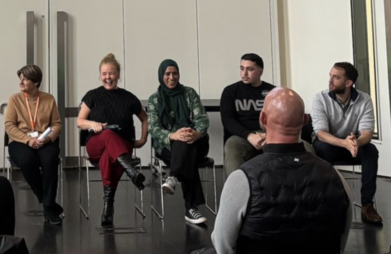
The programme held an event this month which brought together researchers, clinicians, commissioners and community leaders to tackle one shared goal: making rehabilitation fair, inclusive and designed with people, not for them.
Gregg Stevenson MBE, who is a Paralympic gold medallist, is leading the work and said conversations from people using services were raw, grounded and full of purpose.
Feedback from the event will inform early research, which will be distributed widely when published.
Gregg has started a PhD at Manchester Metropolitan University, where the event was held, with his focus on reducing health inequalities and improving rehabilitation services in Greater Manchester.
Pictured above: a panel at the event.
|


Highlights submitted to national team
The Cardiovascular Disease Prevention (CVD) team has submitted details of its past projects which may inform future government policy.
The Network, along with others nationally, was asked to highlight successful programmes which could influence the creation of the national Cardiovascular Disease Modern Service Framework (CVD MSF).
In line with the government’s wider ambition, the CVD MSF’s goal will be to reduce premature deaths from heart disease and stroke by a quarter within a decade by supporting consistent, high quality, high value and equitable care and foster innovation across the CVD pathway.
Among the projects highlighted by our Network were:
- Rapid access to valve assessment project, which aims to reduce the timescale from referral to treatment for patients with suspected left-sided valvular heart disease
- Redesign of inpatient echocardiography pathway for heart failure patients, which would result in earlier access to echocardiography for suspected heart failure patients, reducing their overall length of stay in hospital.
The national team will confirm if submissions will be considered for publication within the final MSF.
|
CVD team continues vital work
The CVD team is continuing to bring together the system to promote and improve cardiovascular disease prevention (CVD) in Greater Manchester.
The Network delivers and supports a wide range of strategic and operational work to improve patient and system outcomes, including uniting leadership, intelligence, clinical practice and community action.
A good example of its role is the informal monthly meeting which brings localities, clinical leads and local programme teams together.
CVD is an intricate network of inter-related diseases, behaviours, and wider determinants; hypertension, diabetes, chronic kidney disease, lipid disorders, frailty and mental health needs often coexist within the same people and communities, particularly those experiencing deprivation or structural disadvantage.
Tackling CVD in GM therefore demands a whole-system strategy - one that bridges clinical, behavioural and social dimensions of health rather than treating them in isolation.
The Network’s CVD work is structured around four inter-dependent pillars that form the foundation of the approach:
- System leadership
- Understanding and targeting unwarranted variation
- Supporting a system-wide response
- Public, professional and personal engagement
Together, these pillars form a learning health system that unites leadership, intelligence, clinical practice, and community action.
If you would like further information on the SCN CVD Prevention team’s monthly informal meetings, please contact kiley.haberman-pool@nhs.net.

Q&A with charity founder
Spoons is a charity which is supporting the Greater Manchester Local Maternity and Neonatal System (LMNS) to improve neonatal care for babies and parents.
Here, its chief executive, Kirsten Mitchell, answers a Q&A about its beginnings and how work is progressing across our maternity units.
Q: You are the founder and CEO of a charity called Spoons - please can you tell us what the charity does and why it was established?
A: I set up Spoons ten years ago with a group of parents I met on the neonatal unit, when my son was born at 24 weeks gestation. We’d all felt the shock, fear and isolation of neonatal care, and we'd talked about how much difference it would have made to have support from someone who truly understood. Spoons was set up to give families exactly that. We offer lived experience peer support on the neonatal unit, at home and in the community, as well as trauma therapy, practical help and safe spaces for families to connect and recover.
Q: How do you work with providers across the localities?
A: We work closely with neonatal units across Greater Manchester, supporting families on the units, at home and in the community. Our peer supporters build trusted relationships with families and work alongside neonatal teams to ensure parents have access to appropriate and timely support. We also share insight and feedback with units in a way that helps them understand what families need and how small changes can make a big difference.
|
Q: What is your involvement with the Greater Manchester Local Maternity and Neonatal System? What is the charity hoping to achieve from this project?
A: As part of the wider LMNS work in Greater Manchester, Spoons leads on the neonatal element of the Maternity Neonatal Voices Partnership (MNVP) alongside Voices for Choices, who lead the whole MNVP across Greater Manchester. Together we bring maternity and neonatal lived experience into one joined approach to strengthen how the system listens to families. Spoons’ role is to share meaningful and trusted insight from neonatal families so their experiences inform LMNS priorities around equity, safety and personalised care. We also link with the North West Neonatal Operational Delivery Network to ensure the neonatal voice aligns with wider improvements across Greater Manchester.
Q: Has neonatal care improved in Greater Manchester over the past 10 years, since the charity was established?
A: It has changed enormously. Eleven years ago, when my baby was on a neonatal intensive care unit, parents were rarely involved in their baby's care and often felt like visitors. Family integrated care (a model of care, particularly in NICU where parents are treated as primary caregivers in partnership with healthcare professionals) has transformed that culture and parents are now seen as essential partners. Staff awareness has also grown, with much more focus on the need to support parents emotionally through the trauma of neonatal care. There's now greater attention on health inequalities, but neonatal care is still a complex and often traumatic experience. Some families face barriers to support, and that's where Spoons come in, helping families feel understood and less alone throughout their journey.
Q: What do you think Greater Manchester neonatal units do well? Where do you think improvement is needed?
A: Neonatal staff across Greater Manchester show incredible commitment. Families regularly share how much they value the compassion, skill and dedication of the teams caring for their babies. We are also seeing a really positive movement in how units are listening to families and involving them in shaping their experience of care. There is a real opportunity to build on this. Staff bring huge professional and learnt experience, and when this is combined with families’ lived experiences, care becomes better aligned with what families need. We are excited to keep developing, working with the MNVP and neonatal teams so families feel heard, involved and supported throughout their neonatal journey.
|
National honour for maternity director
The director of midwifery at the Royal Bolton Hospital has been honoured with a prestigious national honour for her work transforming care.
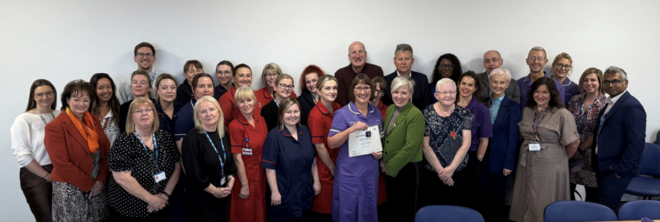
Janet Cotton was presented the Chief Midwifery Officer’s Silver Award after demonstrating exceptional dedication and performance, and excellence in areas such as clinical practice, leadership, education, service development, as well as improving outcomes for women, newborns and families.
She was presented the award by Kate Brintworth, chief midwifery officer for England, as an acknowledgment of her role in improving maternity services in Bolton, and developing the care that is provided for women and families accessing services.
Janet said: “It’s a totally unexpected privilege to receive this award today. I accept it for myself and also for the whole team I work with and for the families in our care. Without the team that I work with I wouldn’t be able to do what I do.”
Julie Cheetham, senior responsible officer for the Greater Manchester Local Maternity and Neonatal System (GMLMNS) and director of the Strategic Clinical Networks (SCNs), said: “This is such a well-deserved honour and recognition of the work Janet has done personally and professionally for maternity services in Bolton. She is a truly compassionate and authentic leader.”
Dr Alison McGovern, assistant director of the GMLMNS and the Maternity and Children and Young People Network’s at the SCNs, said: “Janet consistently shows an unwavering commitment to shape the maternity care not just within Bolton but across Greater Manchester.
“Her compassion and dedication to improving the care women receive during their pregnancy and birth journey and ensuring the staff are supported brings the team together in a shared purpose under Janet's leadership, making a measurable difference. It is a pleasure to have Janet's care and leadership within GM LMNS.”
Janet began her midwifery journey in 1992, training locally in the Greater Manchester area before coming to work in Bolton as a newly qualified midwife in 1993. She built her career in Bolton, leaving in 2013 after 20 years to pursue leadership opportunities and then returned in 2022.
Bolton maternity services provide care for more than 5,000 women a year, at the Royal Bolton Hospital, Ingleside Community Centre and across health centres in Bolton.
Pictured above: Janet with her award, centre, with the chief midwifery officer Kate Brintworth and colleagues, including Julie Cheetham and Dr Alison McGovern from the LMNS (pictured far left).
Positive action taken to stabilise body temperature
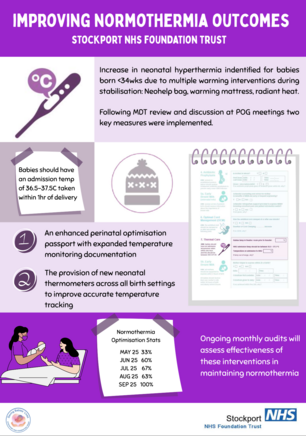
Staff at Stepping Hill Hospital’s maternity unit in Stockport have taken successful action to make sure newborn babies have a normal body temperature.
A critical part of perinatal care is maintaining normothermia - the state of having a normal body temperature, between 36.5 to 37.5 °C – but over the past 12 months there has been an increase in neonatal hyperthermia in infants born before 34 weeks’ gestation.
However, in May 2025, 33% of babies were born within normothermic ranges and this has now risen to 100% in September and October 2025 after action was taken.
While no infants were admitted to the neonatal unit (NNU) with hypothermia (<36.5°C) before changes were made, it was also noted there had been a rise in admissions with elevated temperatures (>37.5°C). This prompted a multidisciplinary review and discussion at the Perinatal Optimisation Group meetings.
In response, two key measures were implemented:
- a document called an enhanced perinatal optimisation passport with expanded temperature monitoring documentation to guide real-time adjustments in thermal care
- the provision of new neonatal thermometers across all birth settings to improve access and facilitate accurate temperature tracking
Following the introduction of these quality improvement interventions, there has been a notable rise in normothermia results.
Monthly audits will make sure the effectiveness of these changes continue to be monitored, helping to improve outcomes for newborns and their parents.
Download a workforce poster designed for the team at Stepping Hill.
|

Insightful workshops for maternity teams
Two virtual workshops were held by the LMNS for maternity teams in Greater Manchester.
The first saw more than 100 people listen to a review of the balanced scorecard, focusing on maternity claims data and its implications for safety and learning.
Key highlights included:
- Overview of NHS Resolution’s role in managing claims and supporting learning through data insights
- Analysis of 10 years of maternity-related claims across the Greater Manchester footprint
- Identification of recurring themes such as delayed treatment, failure to recognise complications, and retained products post-C-section—highlighting opportunities for targeted improvement
- Comparative data across trusts, adjusted for birth rates, offering a fairer view of claim volumes and values
- Discussion on lifelong neonatal injuries, stillbirths, and maternal harm, with emphasis on learning from closed and open claims
- Emphasis on triangulating claims, incidents and complaints data to inform quality improvement and governance
- Call to action for trusts to engage with tailored insights and future workshops, including sessions on informed consent and care outside of guidance
- Importance of using claims data to drive safer maternity care.
The second session, also facilitated by Victoria Wilkins, associate safety and learning lead at NHS Resolution, focused on informed consent and care outside of guidance.
The workshop explored the legal and clinical frameworks underpinning consent, highlighting recent case law and practical implications for maternity care.
|

The key highlights included:
Legal Context:
- The landmark Montgomery (2015) case established the duty to inform patients of material risks and reasonable alternatives.
- The McCulloch (2023) ruling reinforced this principle, emphasising that consent discussions must be tailored to the individual patient’s circumstances and aligned with professional standards.
Practical Learning:
- Real-world case examples illustrated how thorough documentation and personalised discussions can prevent litigation.
- Common pitfalls include inadequate communication, failure to explore patient preferences, and poor documentation of antenatal conversations.
- Care Outside Guidance:
- Explored scenarios where women choose care that falls outside local or national guidelines, such as home births in high-risk cases.
- Emphasis on collaborative planning, psychological safety and consistent communication to balance patient choice with clinical safety.
Emerging Themes:
- Importance of easy-read and accessible consent materials for diverse populations.
- Growing need for national guidance on managing complex requests and free birth scenarios.
- Suggestions for terminology changes (e.g., “supported birth planning” vs. “care outside guidance”) to encourage engagement.
The takeaway message for the session was that consent is more than a signature - it’s an ongoing, personalised dialogue. Robust documentation, multidisciplinary collaboration and proactive communication are key to safe, patient-centred care.
|
Great news for families with new screening of rare condition
Newborn babies across the region will now be screened for a rare genetic condition thanks to the work of a Manchester team.
The team at the specialist NHS biochemical genetics laboratory at St Mary’s Hospital is supporting the national roll out of the new test for hereditary tyrosinaemia type 1 (HT1).
If undetected and untreated, this rare condition can cause issues such as poor weight gain, jaundice, an enlarged liver, bleeding, and bruising, which can lead to liver and kidney damage.
The team at the Willink Biochemical Genetics Laboratory in St Mary’s Hospital, in conjunction with the Manchester Newborn Screening Laboratory in Laboratory Medicine, analyse more than 60,000 blood spot samples from babies born across Greater Manchester, Lancashire and South Cumbria each year.
Together they provide the newborn bloodspot test for nine rare conditions, and the Willink Laboratory will now include testing for HT1 as part of the routine screening panel, since it was launched nationally in September.
Teresa Hoi Yee Wu, consultant clinical scientist and director of Willink Laboratory, said: “Adding this test for HT1 to the screening we already do is great news for families in Greater Manchester and across the region.
“Early detection means early treatment, so babies with HT1 will not have to wait for symptoms to develop, as would previously have happened.”
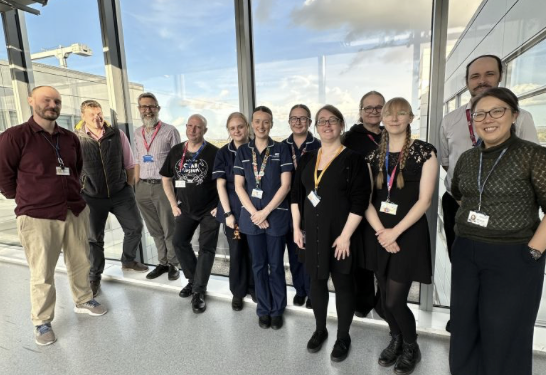
Pictured above right: specialist team from NHS biochemical genetics laboratory at St Mary's Hospital.
|

Video message from clinical lead on World Diabetes Day
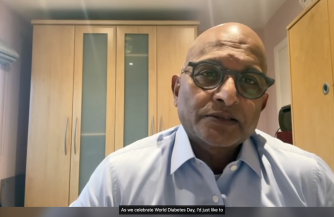
To mark World Diabetes Day 2025, Professor Naresh Kanumilli, clinical lead for the Diabetes Network, has shared a video message celebrating recent progress in diabetes care across the region.
In his post (pictured left) Prof Kanumilli highlights:
- The successful Diabetes Clinical Network Autumn Event.
- Integration of the latest medicines into clinical pathways ensuring benefits for people living with diabetes from the latest treatments.
- New guidelines for continuous glucose monitoring (CGM) and hybrid closed loop systems (HCL) supporting safe and equitable access to the latest technologies.
He says: “These achievements reflect the dedication of the team working, not just clinical leads, but the team behind us supporting us in every way and this, I hope, will improve the outcome for people living with diabetes in our region.”
World Diabetes Day also gave people the opportunity to help challenge the stigma surrounding diabetes and support those affected by it.
Diabetes UK marked the day by inviting healthcare professionals, communities and individuals to join the next phase of its awareness campaign ‘Strike Out Stigma’.
With the key message that “Stigma causes harm. And that’s not ok,” the campaign calls for people to speak up, share resources and help change perceptions.
Visit World Diabetes Day 2025 Strike Out Stigma for more information.
|

Collaborative work showcased at experience day
An event was held to highlight the collaborative work happening to improve how neurogenic bladder and bowel conditions are managed in Greater Manchester.
The Network’s facilitator Cillian O’Briain attended the Greater Manchester Neurogenic Bladder and Bowel Service (GMNBBS) Experience Day, which showcased the collaborative work facilitated by the Network involving private company Coloplast, which produces personal and private products, as well as local continence, spinal and neurorehabilitation teams, charities and people with lived experience.
The group developed a gold-standard neurogenic bladder and bowel pathway for the region and, in January 2025, a dedicated GMNBBS was launched to embed this pathway into practice.
A highlight of the day was hearing from a patient who had used the service. They shared how accessing the GMNBBS improved their health and wellbeing, describing the approach as highly person-centred and holistic. From receiving the appointment, attending clinic, follow-up care, and managing prescriptions, every step was considered and coordinated, leaving no gaps in support.
The Network is very proud of the collaboration to develop the GMNBBS and recently won an award from Bladder and Bowel UK for the initiative.
Read the full story.
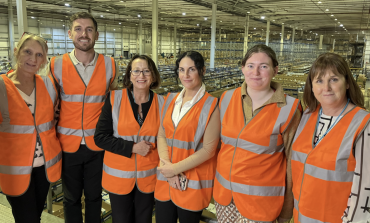
Pictured above right: attendees at the collaborative work experience day.
|
Anniversary highlights importance of patient voice
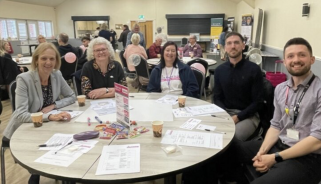
The Network was honoured to be invited to Wigan-based stroke charity Think Ahead’s 25-year anniversary event.
The event was a vibrant celebration of collaboration and fantastic community services, with the team given the opportunity to present about their work.
It also gave the Network the opportunity to connect with a wide range of attendees, including their staff, local health and social care professionals, as well as local stroke survivors and carers.
Think Ahead was founded in 2000 and provides support and advice to stroke survivors and their families in Wigan. Their work includes peer mentoring, wellbeing programmes, and social activities that rebuild confidence and connection after stroke.
Think Ahead exemplifies the principle of the most important voices in shaping services being the ones who use them, and Network said it had been a pleasure to work in close partnership with such a fantastic charity over the years.
Pictured above left: guests at the charity's anniversary event.
|
Dozens attend therapy session
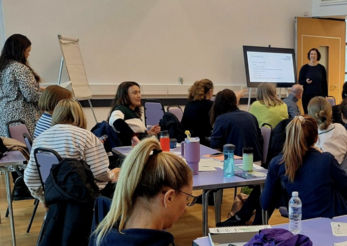
Nearly 100 clinicians from Greater Manchester stroke and neurorehabilitation teams benefited from a Acceptance and Commitment Therapy (ACT) training session.
The workshop, delivered by local clinical neuropsychologists and the Network’s clinical lead for inpatient rehabilitation, Rachael Collins, focused on the mindfulness-based behavioural therapy that can be provided by non-psychology staff to help people take active steps towards building a rich, meaningful life.
The morning session was aimed at inpatient services, with community staff attending after lunch.
The training covered a range of topics, with delegates also reviewing previous ACT training delivered last year. The Network will evaluating the effectiveness of the session attendees, as well as following up on how they put the training into practice when supporting patients and their carers.
Pictured above right: people at the training event.
|

Further reading
In case you have missed any of them, please find below links to wider Greater Manchester-related health and social care newsletters you may be interested in from both the SCNs and partners.
Diabetes newsletter
A round-up of news from our diabetes team.
North West Maternal Medicine Network newsletter
Latest updates from the network.
Greater Manchester Integrated Care Partnership ‘Partnership Update’
Health and social care updates from across the 10 localities, pictured left.
|