January 2025
New year, new (and old) resolutions

Happy New Year to all our readers!
This first newsletter of 2025 very aptly includes stories about a Greater Manchester cardiologist who has received an OBE in the New Year’s Honours list, as well as the year’s first arrivals at Royal Bolton Hospital’s maternity unit.
And there is also a fascinating resolutions-themed blog from our clinical director, Dr Peter Elton.
The next 12 months brings a mix of new and old challenges for our Network of working clinicians and support team.
Lord Darzi’s review of the NHS has sharpened our focus on what our priorities should be, although many of the main themes in his report have played a major role in our improvement projects for many years, such as equality of care, moving from hospital to the community and prevention.
In this month’s newsletter you will also find the following stories:
Diabetes Network: Public consultation launched to improve how people living with type 2 diabetes can learn more about their condition. National diabetes experience survey results announced. Clinical lead becomes chair of Diabetes Primary Care Society.
Children and Young People Network: new CORE20Plus5 project to be launched.
Palliative and End of Life Care Network: a Q&A with two clinical leads working on improving services for babies, children and young people.
Neurorehabilitation and Integrated Stroke Delivery Network: friend of the Network Pippa Tyrrell sadly dies.
Cardiovascular Network: cardiologist named in New Year honours list. New pathway trialled to cut heart disease waiting times.
Staff news: A big welcome to three new starters.
Thanks for your continued interest in our work.
Best wishes

First class deliveries for the new year!
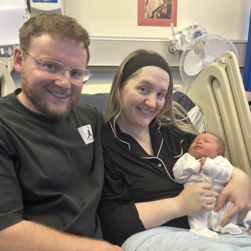
While many of us partied our way into 2025, maternity teams across Greater Manchester were busy delivering the first babies of the year.
Janet Cotton, director of midwifery at Bolton NHS Foundation Trust, said: "It’s always a pleasure and privilege to bring new life into the world but there’s something extra special about seeing the magic that birth brings at this time of year."
Pictured left is Georgia Marriott and Danny Burrows who welcomed their new addition, Jaxx, at 7.59pm on New Year's Day.
|

New year honour for Greater Manchester cardiologist
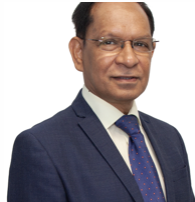
Congratulations to consultant cardiologist and friend of the Network Professor Sanjay Arya (pictured right) who received an OBE in the New Year honours list.
Prof Arya, who works at Wrighington, Wigan and Leigh Teaching Hospitals NHS Trust, has been a strong ally of the Network for a long time and receives his award for services to black and minority ethnic doctors and healthcare in North West England.
He joined the Trust in November 2000 as a consultant cardiologist, specialising in coronary heart disease, heart failure and cardiac arrhythmia.
Prof Arya has been the Trust’s executive medical director since 2017, playing a critical role in providing leadership to the medical workforce and focusing on delivery of clinically safe care to patients.
He was given a Community Hero award by the Prime Minister for developing cardiac services in Wigan in 2016 and was acknowledged as a Covid Hero by the people of Wigan for his work in the borough during the Covid pandemic.
|
 |
Leading cardiologists to speak at event
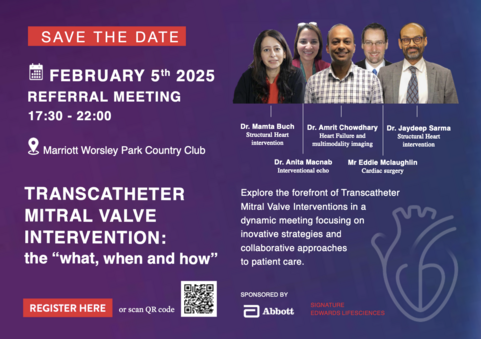
The Greater Manchester Cardiac Network has organised an event which will explore the forefront of transcatheter mitral valve interventions in a dynamic meeting focusing on mitral TEER.
It will provide an update on current guidance, referral criteria and pathways to facilitate access to the service.This will be presented in the context of improving care for all patients with mitral valve disease alongside complementary surgical options.
A collaborative approach to introducing a single point of access pathway will be discussed to improve pathways for patients and referrers.
The event, which is sponsored by industry partners, is led by Dr Mamta H Buch, lead for structural heart intervention at Manchester University NHS Foundation Trust, and will be delivered with colleagues from the multidisciplinary field in Greater Manchester and comprise a combination of talks and MDT case-based discussions.
Register for the event, called Transcatheter Mitral Valve Intervention: The “what, when and how”, which is being held at the Marriott Worsley Park Country Club on Wednesday, February 5, 2025, from 5.30pm-10pm.
Information on new pathway to speed-up wait for tests
A new pathway is being trialled across Greater Manchester to reduce the time patients with left-sided heart valve disease wait for further tests.
The new process will see people waiting up to 100 days less for an appointment for a rapid access valve assessment (RAVA) with a cardiac physiologist.
The pathway will also ease pressure on busy GPs, as sonographers who carry out the initial scans will refer straight into secondary care (the new RAVA clinics), rather than sending the results back to the GP to refer.
For more information, please read the FAQs.

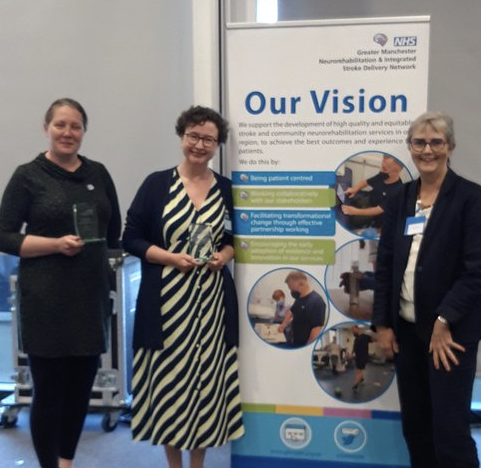
Death of "staunch supporter and great friend"
It is with great sadness that the Network shares the news of the death of Pippa Tyrrell (pictured left, far right), emeritus professor of Stroke Medicine at the University of Manchester and retired consultant in stroke medicine at Salford Royal Hospital.
She worked tirelessly to transform the provision of stroke care across the city region and always recognised the value of multi-disciplinary care to meet the needs of patients.
Pippa was a staunch supporter and great friend to the Network. She significantly influenced the development of its centralised hyper acute model and continued to support improvements after it was fully implemented in 2015.
In the early years as a Network, she led work on stroke prevention and used her considerable experience to help us shape our new model for integrated community stroke services.
The Network's clinical lead Dr Krishnamoorthy Shivakumar said: "I have fond memories of Pippa as my consultant during my training in Salford. She has always been an inspirational leader and mentor and a tireless champion for Stroke care in Greater Manchester."
Former clinical lead Dr Khalil Kawaii said: "Pippa is the reason I became a stroke consultant.
"She was the first true stroke physician in Greater Manchester. She inspired a generation of geriatricians to become stroke physicians, including myself. She was my mentor and she was always kind and generous with her time and advice when I needed it.
"Taking over from her as stroke lead for Greater Manchester was a daunting task as she was one of a kind. I hope I made her proud and to get the Pippa Tyrrell award last year for contribution to stroke services was a real honour.
"We will all miss her dearly."
Network manager Sarah Rickard said: “I always think of Pippa as the grandmother of stroke. She was an inspiring female leader, who remained humble and importantly very kind. She will be missed but her legacy in stroke lives on.”
She inspired a generation of clinicians and researchers and her legacy is the continued excellence of stroke care and a flourishing portfolio of stroke research across Greater Manchester.
|
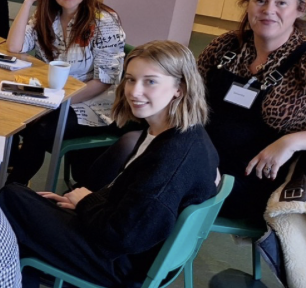
Patient and public involvement changes
The Network’s patient and public involvement (PPI) coordinator Abi Bisset (pictured right) is sadly leaving the team.
The Network would like to thank her for all her work, and that of her predecessor Deb Drinkall, which includes:
- Helping grow a more robust, diverse and accessible patient and carer group that is actively helping shape improvements within the network
- Developing new ways for those with lived experience to contribute outside of the group
- Launching a PPI toolkit of resources to help the Network and local teams to involve patient and carers more effectively and often in projects
- Training the network team to ensure PPI is included in as much of what it does as possible.
The Network has revamped its patient and carer webpages to help share this information better, including the toolkit.
Abi recently recorded a webinar with the network team explaining this in more detail.
Please direct all PPI enquiries to Debbie (deborah.o’halloran@nca.nhs.uk).
|

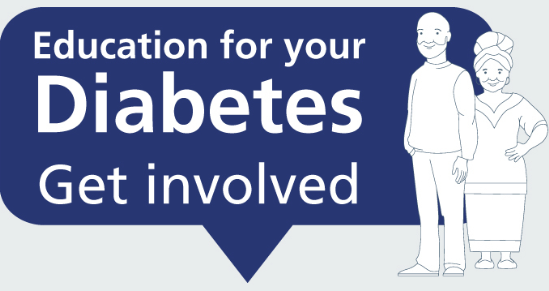
Consultation launched on type 2 diabetes structured education
Clinicians and health professionals are invited to take part in a public consultation which aims to improve how people living with type 2 diabetes can learn more about their condition.
The Network has launched the fact-finding exercise about structured diabetes education (SDE) programmes, which are offered to those newly diagnosed or those wanting to increase their knowledge about diabetes.
Research has shown that participation at SDE courses can significantly improve outcomes for individuals.
The focus of the engagement exercise is to better understand how people would prefer to receive information and support to better manage their condition.
Input will help design new methods of delivering structured diabetes education across Greater Manchester.
People living with type 2 diabetes, their family members and carers are being invited to share their thoughts - they may have views on what currently works and help explore potential improvements to the service.
How to share your thoughts:
The deadline to share views is March 2, 2025. For more information about the project, please visit GM Integrated Care Education for your Diabetes.
If you require any further information please contact melanie.atack@nhs.net.
|
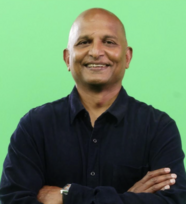
Clinical lead in top diabetes appointment
The Diabetes Network would like to congratulate its long standing clinical lead Professor Naresh Kanumilli (pictured left) on his announcement as new chair of the Primary Care Diabetes Society.
In his new position, Professor Kanumilli is eager to build on the society’s solid foundation and drive forward new initiatives that will benefit both healthcare professionals and people living with diabetes and obesity.
|

What local people think about their diabetes
People with type 1 and type 2 diabetes from Greater Manchester responded to the National Diabetes Experience Survey.
They were generally very happy with their care. For example, 85% thought their experience at their last annual review was good and 96% thought their conversation with the clinician was useful.
There are issues. For example, only about a quarter of people felt the clinicians had supported their emotional and mental health needs and a similar proportion felt they had been supported to take part in physical activity.
People said how diabetes affects their lives. A substantial proportion of people are constantly worried about their diabetes, it negatively impacts on their social lives and it has a deleterious effect on their finances.
The results need to be interpreted with caution as only two in five people approached responded. This may be why the survey indicates that more people had their annual check processes and attended structural education than our routine data indicates.
|

New pilot project aims to reduce inequality in diabetes care

The Network is planning to launch a new pilot which aims to identify children who are at risk of type 2 diabetes and its symptoms.
Starting in April, the team will roll out a risk stratification tool, design referral and treatment pathways and hold additional clinics in Oldham and Stockport.
The project, which has been devised with Dr Chris Cooper, the Network’s clinical lead for diabetes, and partners ABL Health, will contribute to the delivery of the children and young people CORE20Plus5 Framework for health inequalities deliverables. Read more information.
The six-month pilot will test the screening tool, to see if it helps identify children at high risk of developing type 2 diabetes, or those who have already developed the condition, but have not yet accessed diabetes services.
The Network’s senior programme lead Fran Carbery will write-up the report and share the findings with other regions.
A training programme is being developed and ABL Health Community Weight Management teams in Oldham and Stockport will receive the training, which will be delivered by one of our diabetes clinical community.
|

Q&A with clinical leads for babies, children and young people
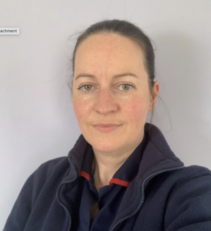
This month, we speak to two of our babies, children and young people (BCYP) clinical leads, Anna Oddy and Lydia Bowden.
The Network is currently focusing on this area and held an event last year which took a look at services in Greater Manchester and how they could be improved.
Q: What is your health or social care background and what is your job title at the moment (both to answer)?
Anna (pictured right): I am an advance practitioner in children’s complex and palliative care. I undertook my children’s nurse training at the University of Central Lancashire from 1998- 2001 and then worked for Booth Hall Children’s Hospital, and then Pendlebury Children’s Hospital.
In 2006, I joined the Children’s Community Team in Rochdale and recognised the importance of palliative care within the community setting. I have remained within this team and completed the double module in palliative care, master’s module in palliative care, advanced communication training and the non-medical prescribing, clinical examination, as well as a module in bereavement support whilst working within the community setting. I am also the co-chair of the Greater Manchester Palliative Care Network.
|
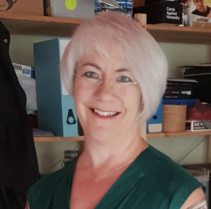
Lydia (pictured left): I am a consultant neonatologist, clinical lead complex and palliative care, and medical examiner.
I qualified at Dundee University in 1988 and started paediatric and neonatal training in 1989. I did my paediatric and neonatal training at North Staffordshire, and in Liverpool and Manchester as a senior trainee. I then settled back in Manchester, gaining specialist training in neonatal paediatrics. I was appointed neonatal consultant in 1998 at South Manchester University Hospital Trust , transferring to Royal Oldham Hospital in 2013. Since 2021, I have also worked as a medical examiner one session a week. I co-chair the North West neonatal palliative care group, and together with Anna, co-chair the GM Paediatric Palliative Care Network.
|

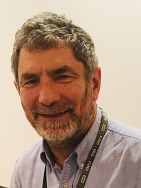
Will you keep your New Year resolutions?
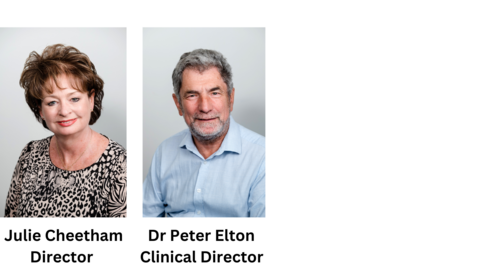
In his latest blog, our clinical director Dr Peter Elton (pictured left) discusses how we can help people keep a health-inspired New Year's resolution.
"You may want to know how we can increase the probability of a person keeping a New Year's resolution. To give an estimate of the probability, the following formula may help:
New year resolution success rate = 1- (α x addiction level) – (β x negativity) –
(γ x lack of relevant trigger).
Most New Year resolutions relate to health (1). The constants in the formula need to be determined by empirical evidence and may change depending on the time period used to measure the success rate.
If the New Year resolution:
- requires giving up an addictive substance, the dependency properties will affect the chances of quitting. Examples of addiction levels are 3.0 for heroin, 2.39 for cocaine, 2.21 for nicotine and 1.93 for alcohol (2).
- is negative, the resolution will be more difficult to keep than a positive one(1).
- is enhanced by a trigger, it will increase the incentive for change according to the catastrophic theory of behavioural change (3).
This formula may need further refinements such as adding the equivalent of the Bonferroni corrections when a person makes multiple resolutions.
We can help people keep their New Year resolutions. The effect of addiction can be mitigated by the use of a substitute such as in vaping friendly stop smoking services (4); obviating the effect of the addictive substance such as long-acting naltrexone to manage opiate addiction (5); and the use of contingency management such as financial incentives (6).
It is preferable to make positive recommendations such as advising the use of low sodium salt rather than cutting out salt. A new diagnosis could act as a trigger for behaviour change although increasing investigations in December to diagnose COPD, diabetes and hypertension might improve the success rate of New Year resolutions at the price of casting a shadow over Christmas."
1. Oscarsson M, Carlbring P, Andersson G, Rozental A. A large-scale experiment on New Year's resolutions: Approach-oriented goals are more successful than avoidance-oriented goals. PLoS One. 2020 Dec 9;15(12):e0234097. doi: 10.1371/journal.pone.0234097. PMID: 33296385; PMCID: PMC7725288.
2. Nutt D, King LA, Saulsbury W, Blakemore C. Development of a rational scale to assess the harm of drugs of potential misuse. Lancet. 2007 Mar 24;369(9566):1047-53. doi: 10.1016/S0140-6736(07)60464-4. PMID: 17382831.
3. West R, Sohal T. "Catastrophic" pathways to smoking cessation: findings from national survey. BMJ. 2006 Feb 25;332(7539):458-60. doi: 10.1136/bmj.38723.573866.AE. Epub 2006 Jan 27. PMID: 16443610; PMCID: PMC1382540.
4. Farrimond, H., Abraham, C. Developing E-cigarette friendly smoking cessation services in England: staff perspectives. Harm Reduct J 15, 38 (2018). https://doi.org/10.1186/s12954-018-0244-8
5. Sullivan MA, Bisaga A, Pavlicova M et al. A Randomized Trial Comparing Extended-Release Injectable Suspension and Oral Naltrexone, Both Combined With Behavioral Therapy, for the Treatment of Opioid Use Disorder. Am J Psychiatry. 2019 Feb 1;176(2):129-137. doi: 10.1176/appi.ajp.2018.17070732. Epub 2018 Oct 19. PMID: 30336703; PMCID: PMC6358483.
6. Clinical Guidelines on Drug Misuse and Dependence Update 2017 Independent Expert Working Group Drug misuse and dependence: UK guidelines on clinical management. Department of Health, London 2017.
|

Three new starters join the team!

We have three new starters to welcome to the team this month – please see their Q&As below.
Also, we say goodbye to Hannah Bishop, senior project manager for the Diabetes Network, who has started a new role with NHS England South West.
Nida Fatima
Q: What is your role at the Networks?
I’m project manager in the Children and Young People Network.
Q: Why did you decide to join the team and what do you hope to achieve with your Network?
I am deeply committed to improving outcomes for children and young people and supporting initiatives that make a real difference in their lives. I hope to use my project manager skills to drive impactful projects to help improve services and ensure children and young people receive the highest quality of care.
Q: How have you found your first few days or weeks with the team?
First few weeks have been informative and inspiring. I feel really welcomed and supported in the team.
Q: Where have you joined us from and what is your career background?
I was previously working in the Northern Care Alliance NHS Foundation Trust as a project coordinator in pathology on laboratory-related projects.
Q: Outside work, what do you like to do to relax?
Outside work, I enjoy playing badminton and tennis and I love spending time with family.
|

Kiley Haberman-Pool
Q: What is your new role at the SCNs?
Senior project manager for long term conditions
Q: Why did you decide to join the team and what do you hope to achieve with your Network?
I joined the team as I had been wanting to work in prevention and an opportunity came up at the right time. I am looking forward to doing more work around cardiovascular disease prevention and getting to know new colleagues in Greater Manchester.
Q: How have you found your first few days or weeks with the team?
Everyone at the SCNs has been extremely approachable and welcoming during my first few weeks.
Q: Where have you joined us from and what is your career background?
I previously worked on the North West Learning Disability and Autism Programme focusing on health inequalities and project management office.
A: Outside work, what do you like to do to relax?
When I’m not working, I’m often outside – walking in the Peak District or spending time in the garden. I try to travel as much as possible and go back to the U.S. to visit family a few times a year.
|

Michael Ojetola
Q: What is your new role at the SCNs?
Project manager (data analyst)
Q: Why did you decide to join the team and what do you hope to achieve with your Network?
I joined to leverage my project management and data analysis skills to support the team in achieving its objectives. Additionally, I aim to expand my knowledge and gain valuable experience in my field.
Q: How have you found your first few days or weeks with the team?
My first week has been excellent. I have been warmly welcomed and already feel part of the team.
Q: Where have you joined us from and what is your career background?
I previously worked with the NHS England Northwest Controlled Drugs Team as a data analyst.
Q: Outside work, what do you like to do to relax?
Outside of work, I enjoy cooking and spending quality time with my family.
|
|