|
View as a webpage / Share
 Welcome to the November edition of the Cumberland Safeguarding Children Partnership (CSCP) Newsletter.
Within this newsletter, you will find useful information from across the partnership and from our partner agencies relating to safeguarding, which is aimed to support practitioners and professionals in their role.
From 13 November, the Working Together to Safeguard Children 2026: statutory guidance’ has been updated to now include paragraphs 322 to 324 on multi-agency public protection arrangements, ensuring a coordinated approach to safeguarding children. |
|
 |
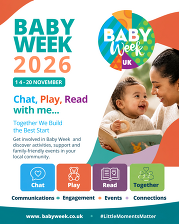
Baby Week takes place from 14-20 November 2026, providing a great opportunity to connect expectant parents and families with babies to the support available in Cumberland.
Baby Week will give you an opportunity to find out more about the programmes on offer in Family Hubs aimed at families of under 5’s, as well as what other organisations have to offer. Cumberland look forward to welcoming you to one of the many activities that will be on offer, because we know that every baby in Cumberland deserves the best start in life – and we want every parent and family member to feel fully supported in your parenting journey.
Please visit Cumberland's channels for more information on the Baby Week website.
|

National Hate Crime Awareness Week 2026 took place from 10-17 October 2026 across the UK.
Queer Cumbria in partnership with Cumbria Police have created a video highlighting how local people are affected in real ways by hate crime.
This publication co-incided with Hate Crime Awareness Week, take a moment to hear the stories of Cumbrian people affected by this. You can watch the video here.
For more information, please visit our website here.
|
As part of this year's 16 Days of Activism Against Gender-Based Violence, Cumberland Community Safety Partnership and Westmorland & Furness Community Safety Partnership are pleased to invite you to a series of learning events designed to raise awareness, encourage reflection, and strengthen our collective response to domestic abuse, violence against women and girls, and related harms.
These sessions provide an opportunity to hear from experienced practitioners, learn about current issues, and explore how we can all play a role in creating safer communities. Whether you are completely new to these topics or have extensive experience, we hope there will be valuable learning and discussion for everyone.
The 16 Days campaign is a reminder that preventing abuse and violence is not the responsibility of a single organisation or profession. Meaningful change happens when communities, services, and individuals come together to learn, challenge harmful behaviours, and support those affected.
We encourage you to attend any sessions that are relevant to your role or interests and, importantly, to share this programme widely within your organisation, teams, and professional networks. By helping us reach as many people as possible, you can support greater awareness, stronger partnerships, and a wider conversation about how we can work together to end violence against women and girls.
Please review the programme below for session details and booking information.
16 Days of Activism 2026 Flyer.pdf
|

The Boost Learning Academy is now available, serving as a key resource for training and development. The learning academy offers a wide range of courses, seminars, and events, all designed to support our collective commitment to delivering the highest standards of care to the population we serve.
The Boost Learning Academy is open to all those working or volunteering in health and care across the North East and North Cumbria, including colleagues in the NHS, local authorities, public health, the voluntary, community and social enterprise sector, and private care providers.
In order to register for any training sessions, it is necessary to sign-up to the Boost learning academy first, here: https://academy.boost.org.uk/participant/signup
It offers a wide range of learning opportunities, including courses on leadership and health improvement to programmes on reducing health inequalities and prevention, using a "making every contact count" approach. Topics cover key areas in population health, such as alcohol, tobacco, mental health, poverty, and more. Plus, there's the chance to connect and learn with others across the region. Whatever stage of your career journey you are at, the academy provides valuable resources to enhance your knowledge, skills, and confidence. Our aim is to help you continue making a meaningful impact in your role and for us all to be the best at getting better.
Please take time to look at what's on offer. If you have any questions or would like more information about the academy, please contact Boost on info@boost.org.uk. We encourage you to take advantage of this opportunity for your growth and development.
|
Keep an eye out for our 5-Minute Briefings being published about the following:
- 16 Days of Activism (25 November - 10 December 2026)
Please read our previous months published 5-Minute Briefings here:
CSCP TRAINING
Cumberland Community Safety Partnership are offering learning sessions covering the following topics:
- Domestic Abuse Bitesize
- Prevent Awareness
- Learning from Domestic Abuse Related Death Reviews
For more information and how to book on any of the above sessions, please click on the flyer below
Flyer - DA_Prevent Duty Awareness_DARDR Learning Sessions 2026-2027.pdf
Cumberland Community Safety Partnerships have also published a 7-Minute Briefing on Prevent, the briefing is aimed at leaders, managers and frontline staff for statutory and voluntary agencies.
Cumbria United is a county-wide project uniting sports clubs, coaches, and athletes from all sports to take a stand against suicide. One important goal of Cumbria United Against Suicide is to get as many people trained in suicide prevention as possible.
Therefore, they are offering a range of free suicide prevention training sessions tailored for sports clubs across Cumbria. They know that YOU can play a vital role in preventing suicide, and these sessions explore how.
The training is aimed at anyone who wants to understand more about suicide, recognise when someone may be having thoughts of suicide, learn how to talk directly and comfortably about suicide, and understand what practical support they can offer. There will be a specific focus on their role within sports clubs, and participants will hear through lived-experience videos how teammates, coaches, and club members can make a crucial difference.
Available sessions include:
Session dates and how to book your free place, please click on the link below:
Cumbria United Training Dates
The Department for Education (DfE) has produced a free online Early Years Safeguarding training package in collaboration with the NSPCC. The training covers sections one and two of the safeguarding training Annex C in the Early Years Foundation Stage (EYFS) statutory framework. Designed for those working with children from birth to five, the training provides early years educators with the foundations they need to identify signs of abuse to children in their care and to create a positive safeguarding culture.
This course will help you understand the Early Years Foundation Stage (EYFS) statutory framework and the legal requirements it sets for children's learning, development and care from birth to age five.
This course will cover:
- what is meant by the terms ‘safeguarding’ and ‘child protection’ in your setting
- the different types of harm, risk and neglect that babies and young children may experience
- the signs and indicators you should look out for when working with babies and young children
- what you should do when you are worried about a baby, a young child or an adult who works with children
- what you should do if you are concerned about the behaviour of any other adult, or another child
- how you should report and record your concerns
- how an early year’s setting can create a strong culture of safeguarding
To register for the training please click on the link below:
Free training launched to strengthen early years safeguarding skills | NSPCC
Online Harm Groups - Guidance for Professionals
Online harm groups, often referred to as Com groups, are networks of individuals who use tactics such as grooming, coercion, manipulation and blackmail to exploit, control and harm others online.
To help professionals identify and respond to these risks, guidance has been developed for those working with children and young people. The resource aims to:
- Increase understanding of online harm groups and the risks they pose to children and young people
- Help professionals recognise potential indicators that a child or young person may be at risk
- Provide guidance on responding appropriately to concerns and supporting safeguarding processes
- Encourage preventative conversations and educational opportunities with children, young people and their families
Guidance for Professionals
By raising awareness and improving understanding of these emerging online threats, professionals can play an important role in protecting children and young people and supporting early intervention where concerns arise.
Safeguarding Practice
The Child Safeguarding Practice Review Panel has published a range of new resources examining the ten most persistent themes in serious child safeguarding incidents in England. The themes reflect recurring challenges that feature across safeguarding practice and the wider safeguarding system, including: understanding the child’s lived experience; understanding the whole family; naming and understanding the harm; and understanding and responding to risk. Each theme on the Panel’s website combines learning from safeguarding reviews with practice insights, actions and reflective questions to support discussion and decision-making.
Access the resources: Persistent themes in safeguarding reviews
Sexually Coerced Extortion
The Internet Watch Foundation (IWF) has published a news story sharing new Report Remove data showing an increase in reports of young people in the UK contacting the helpline about sexually coerced extortion. Report Remove is a free, confidential helpline run by the IWF and Childline where young people can self-report nude or sexual imagery of themselves online and get help to remove and block it. By the end of June 2026, 462 Report Remove reports involving sexually coerced extortion had been confirmed as containing child sexual abuse imagery, 17% higher than the whole of 2025; and of the 462 reports, 95% involved boys exclusively. The news story features comments from the IWF and NSPCC welcoming the government’s commitment to making nudity-blocking technology compulsory on children's devices but calling on them to act quickly to ensure further harms are prevented.
Read the news story: Record number of UK under 18s facing ‘sextortion’ online as experts say no time to lose on nudity blockers for teens’ phones
See also on NSPCC Learning: Young people’s experiences of online sexual extortion or ‘sextortion’
Youth Violence
The Department for Education (DfE) has published new guidance to help schools and colleges in England understand, prevent and respond to serious violence including physical assault, carrying or using weapons, and criminal exploitation. The guidance sets out information on forms of serious violence in education settings and the risks; preventing children’s involvement in violence; responding safely to incidents; support for children affected by serious violence; and working with safeguarding partners. It clarifies existing statutory duties and provides practical guidance on how to implement recommended strategies.
Read the guidance: Understanding and preventing serious violence in education
Child Sexual Abuse
NSPCC Learning has published a Learning from case reviews briefing about child sexual abuse. The briefing compiles and summarises issues and learning from case reviews published between 2022 and 2025 where child sexual abuse was a key factor. Key themes and learning topics include: understanding and identifying child sexual abuse; professional curiosity; talking about child sexual abuse; and responding to child sexual abuse.
Read the briefing: Child sexual abuse: learning from case reviews
|