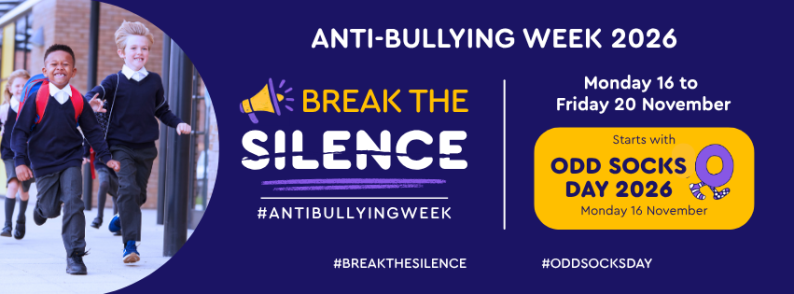
 This week, Monday 16 November - Friday 20 November, is Anti-Bullying Week, which has a theme of Break the Silence. This year’s campaign will encourage children, young people and adults across the UK to start conversations about bullying, speak up, listen and take action together.
The week starts today with Odd Socks Day, with adults and children being encouraged to wear odd socks to celebrate what makes us all unique.
Why is Anti-Bullying Week Needed?
Latest figures from Childline, published for Anti-Bullying Week 2026 this week show that the NSPCC service conducted 5,982 counselling sessions in 2025/26 where bullying was the principal issue raised by the young person.
Counselling sessions concerning online bullying increased by 9% (736) when compared with the previous year (674).
During Anti-Bullying Week this week, the focus is 'Break the Silence', urging youngsters and adults alike to initiate discussions about bullying, voice concerns, pay attention and work collectively to address it.

Bullying has a significant impact on a child’s life and can last well into adulthood, with adults who were bullied as children being more likely to:
- Experience a range of mental health issues
- Earn less money
- Be unemployed
- Be obese
- Not be in a stable relationship
- Leave school with no qualifications
|

Online bullying (often referred to as cyberbullying) is any form of bullying that is carried out through the use of electronic media devices, such as computers, laptops, smartphones, tablets, or gaming consoles.
Anti-Bullying Week 2026: Break the Silence specifically recognises the increasingly complex ways bullying can occur online and through technology.
-
Pol-Ed provide a range of lessons around anti-bullying online
-
Childline - find out more about bullying/online bullying
-
Childnet - helping make the internet a great and safe place for children and young people
|

The impact of bullying can continue long after the incident has occurred. Children may experience anxiety, reduced self-confidence, social isolation, feelings of loneliness, or emotional distress, and these effects are not always obvious or immediately apparent.
Children frequently tell us that the most helpful response was not simply that the bullying ended, but that someone took the time to listen, understand the effect it had on them, and continue offering support afterwards. An effective response should therefore address not only the immediate incident but also the child's ongoing emotional wellbeing, helping to promote resilience, recovery and longer-term positive outcomes.
|
How can you get involved this Anti-Bullying Week?
Children are more likely to share difficult experiences when they feel confident that the adults around them will listen, take their concerns seriously, and work together to provide support. The Anti-Bullying Week 2026 theme, Break the Silence, highlights the importance of open conversations, trusted relationships, and a joined-up approach to helping children and young people.
By continuing to listen, support, challenge inappropriate behaviour, and take action when needed, we can help ensure that every child feels heard, supported, and never has to face bullying on their own.
There are a number of ways schools and agencies can get involved with Anti-Bullying Week, which include films, lesson plans, assemblies, activities and discussion tools.
They have also developed a media, social media and community-based campaign to help bring Anti-Bullying Week to life whether you're at home, work or in school.
Help spread the 'Break the Silence' message
|
Further Information and Resources
For further information about Anti-Bullying Week, and how you can get involved, please visit
Together, we can Break the Silence to end bullying - for good
|