|
View as a webpage / Share
 Welcome to the July edition of the Cumberland Safeguarding Children Partnership (CSCP) Newsletter.
Within this newsletter, you will find useful information from across the partnership and from our partner agencies relating to safeguarding, which is aimed to support practitioners and professionals in their role.
As we enter the peak holiday period, a few simple precautions can help ensure a safe, enjoyable, and worry-free summer for everyone.
Therefore, can we remind you about our recently published 5-Minute Briefings, regarding drowning prevention, sun safety and farm safety.
Drowning Prevention Week (13-20 June 2026)
Sun Safety
Farm Safety Week (20-24 July 2026)
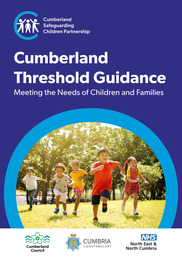
We recently published a 5-Minute Briefing announcing that the Cumberland Threshold Guidance has been updated to reflect legislative changes and revised language.
We have also updated our Understanding the Level of Need and the Practice Response document.
Both documents are published on the CSCP website and can be accessed here.
|
Bookings still open for the CSCP Annual Cumberland Designated Safeguarding Leads Conference on Tuesday 22 September 2026, (9:00am - 4:30pm), at Greenhill Hotel, Wigton, CA7 8LS.
We are pleased to offer a free, full-day training conference to support the improvement of frontline safeguarding practice across Cumberland. A full Conference agenda will be shared closer to the event.
Who can attend?
This conference is open to:
- Designated Safeguarding Leads (DSLs)
- Deputy Designated Safeguarding Leads (DDSLs)
Please note: Initially, only one place per all educational providers, including nurseries, will be allocated.
How to book:
To secure your place, please complete the online booking form (link below):
Cumberland Designated Safeguarding Leads Conference

Cumberland Council's Summer Holiday Activity and Food (HAF) Programme is now live.
HAF provides funded holiday activities for children and young people who are in receipt of means-tested free school meals, as well as additional groups identified by Cumberland Council. These include:
- Children who are cared for or care experienced
- Young carers
- Children and young people on a Resettlement Scheme or seeking asylum
-
Home educated children
- Children and young people with SEND or an EHCP (up to age 18) who are not on free school meals
If you are working with a child who does not meet the eligibility criteria but would benefit from attending, please contact: HAF@cumbria.gov.uk to discuss booking options.
Additional Programmes:
More activities will be added over the next few days and weeks, including an internal programme delivered through Family Hubs across Cumberland.
Find Out More:
|
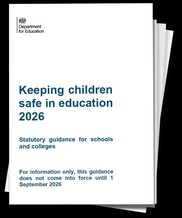
The revised Keeping Children Safe in Education (KCSIE) 2026 statutory guidance has been published, although does not come into force until 1 September 2026, for the 2026/27 academic year. It follows a Department Education Consultation that closed in April 2026, introducing major structural and policy shifts for schools and colleges in England.
Education establishments should continue to follow Keeping Children Safe in Education (KCSIE) 2025 until close of play on 31 August 2026.
Key changes in KCSIE 2026 include new and updated guidance around: regulations and safeguarding requirements on school premises; children requiring mental health support; young carers; children who are questioning their gender; and safer recruitment and regulated activity.
The CSCP will be reviewing the changes and will publish a 5-Minute Briefing in the coming weeks.
|
Updated EYFS frameworks come into force 1 September 2026
On 13 July 2026 the DfE published the updated EYFS frameworks for childminders and group and school-based providers, which apply from 1 September 2026. The main changes from that date are outlined below and represent strengthened safeguarding requirements. The safety of our youngest children is our utmost priority, and we continually monitor and review safeguarding requirements to make sure children are kept as safe as possible.
Both EYFS frameworks include updates which:
- Bring explicit wording on the safer sleep requirements into the main body of the EYFS, so that providers do not need to refer out to separate guidance.
- Prohibit the provision of registered childcare from any premises where a banned dog breed is kept or is otherwise present.
- Require providers to inform Ofsted or their childminder agency (CMA) of allegations of ‘harm’ (instead of ‘serious harm’) by anyone living, working, or looking after children at the premises.
- Require enhanced criminal records checks for volunteers (including those who are supervised) and prevent new employees from commencing employment before receiving their check.
- Amend the requirements for what providers must tell staff they have to disclose, as part of information that may affect their suitability to work with children.
The group and school-based version also requires providers of childcare on domestic premises to notify Ofsted or their CMA of changes to persons aged 16 or over living or working at the premises. This aligns with existing requirements for childminders.
Other minor clarificatory changes have been made to both frameworks. These are mainly to make the existing requirements clearer for providers.
Tuesday 22 September marks the launch of our Safeguarding Month.
Over four weeks, we will be offering a range of online training and awareness raising sessions covering:
- Neglect
- Child Sexual Abuse
- Domestic Abuse
- Learning from Practice (Local and National)
Further information, including booking details, will be shared in the coming weeks.
|
Keep an eye out for our 5-Minute Briefings being published about the following.
Keeping Children Safe in Education
The revised Keeping Children Safe in Education (KCSIE) 2026 statutory guidance comes into force 1 September 2026, for the 2026/27 academic year.
ICON Week
ICON Week is returning this September and we’re excited to be able to share resources for this year’s campaign.
Taking place 21-25 September 2026, ICON Week brings together healthcare professionals, charities, organisations, and families across the UK to raise awareness of infant crying, support parents and carers, and help prevent abusive head trauma in babies.
Together, we can help ensure that every parent and carer hears the message:
Babies cry | You can cope | Never, ever shake a baby
CSCP TRAINING

Cumberland Safeguarding Children Partnership have a range of training sessions on offer.
Please visit our training page on the website for all eLearning, virtual and face to face courses offered to professionals and volunteers working with children, young people and their families who live in Cumberland.
Further dates have recently been published for the following face to face courses, so please check out our website:
|
Westmorland and Furness Safeguarding Children Partnership (WFSCP) and Cumberland Safeguarding Children Partnership (CSCP) are pleased to welcome Recovery Steps to deliver Parental Substance Misuse Training, which follows on from learning identified in recent local reviews.
Brief Description / Summary of Training content:
This session explores the impact of parental drug and alcohol use on children and young people, drawing on learning from recent local reviews. It aims to strengthen practitioners’ understanding, confidence and multi‑agency responses when supporting families affected by substance use.
Who the training is aimed at:
Practitioners within the children’s workforce, including early help, education, health, social care, police and voluntary/community sector colleagues, across the whole of Cumbria.
Please note the session previously advertised for 11 June has been rescheduled. New date below.
Session date:
- Wednesday 16 September (9.00am-12.00noon) - Microsoft Teams
As this is Pan-Cumbria training, Westmorland & Furness Safeguarding Children Partnership (WFSCP) are taking all bookings.
Therefore, to book your place or for any queries, please email WFSCPTraining@cumbria.gov.uk, including the following details:
- Your full name
- Job title
- Organisation
- Email address
Following recommendations from the SafeLives System Review, Cumberland and Westmorland & Furness Community Safety Partnerships have organised a series of virtual MARAC Attendee training sessions, which will be delivered throughout August and September.
Are you a MARAC attendee in Cumbria?
The MARAC Steering Group recommends that all MARAC attendees complete this training to ensure a consistent understanding of the MARC process and their role within it.
MARAC a vital role in safeguarding individuals who may be at risk of serious harm or death through effective information sharing and coordinated action planning.
For more information on what the session will cover, dates and how to book your place, please click on the flyer below:
MARAC Attendee Training August - September 2026
Cumbria United is a county-wide project uniting sports clubs, coaches, and athletes from all sports to take a stand against suicide. One important goal of Cumbria United Against Suicide is to get as many people trained in suicide prevention as possible.
Therefore, they are offering a range of free suicide prevention training sessions tailored for sports clubs across Cumbria. They know that YOU can play a vital role in preventing suicide, and these sessions explore how.
The training is aimed at anyone who wants to understand more about suicide, recognise when someone may be having thoughts of suicide, learn how to talk directly and comfortably about suicide, and understand what practical support they can offer. There will be a specific focus on their role within sports clubs, and participants will hear through lived-experience videos how teammates, coaches, and club members can make a crucial difference.
Available sessions include:
Session dates and how to book your free place, please click on the link below:
Cumbria United Training Dates
Children not in school
The Child Safeguarding Practice Review Panel in England has published two new briefings on safeguarding children who are home educated, have low school attendance or are known to be missing education. The first briefing sets out learning for safeguarding practitioners related to the increased safeguarding risks that some children with additional vulnerabilities can face when they are not in school. The second briefing looks at safeguarding responsibilities across different statutory agencies in relation to vulnerable children not in school. These briefings have been published on the Panel's new learning hub on safeguarding children not in school which also features video explainers and statistics.
Briefings:
Child Safeguarding Practice Review Panel - learning hub:
School attendance
The Department for Education (DfE) has designed a guide to help schools in England communicate with parents and carers about school attendance. Aiming to support improved attendance, the guidance includes: insights into successful attendance communications; practical suggestions about how, what and when to communicate; and ready to use letter templates and phone call scripts.
DfE Guidance:
AI-generated child sexual abuse material
The Internet Watch Foundation (IWF) has launched a campaign and new guidance for parents and carers about AI-generated child sexual abuse material, discussing how AI can be misused to manipulate children’s online images and how to protect children’s photos from AI abuse. The guidance aims to support parents and carers to make informed decisions about their children’s images and includes advice on speaking to children and young people about AI and deepfake nudes, and image consent.
News story and guidance:
|