|
View as a webpage / Share
 Welcome to the April edition of the Cumberland Safeguarding Children Partnership (CSCP) Newsletter.
Within this Newsletter, you will find useful information from across the partnership and from our partner agencies relating to Safeguarding, which is aimed to support Practitioners and Professionals in their role.
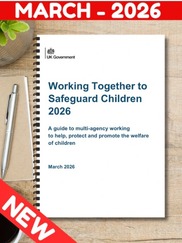
The Department for Education (DfE) published a new edition of its statutory guidance Working Together to Safeguard Children in March 2026. This 2026 edition replaces Working Together to Safeguard Children 2023.
The guidance outlines what organisations and agencies must and should do to help, protect and promote the welfare of all babies, children and young people under the age of 18 in England.
The CSCP published a 5 Minute Briefing earlier this month outlining the additions and summarising the key changes within a briefing.
|
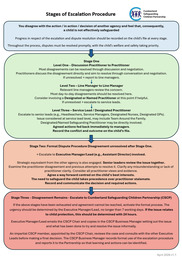
Working Together to Safeguard Children 2026 places responsibility on organisations to ensure they have “clear escalation policies for staff to follow when their child safeguarding concerns are not being addressed within their organisation or by other agencies”
Below you will find the link to the Stages of Escalation and a link to the Escalation policy.
Stages of Escalation Procedure
Escalation Policy
|

Cumberland Council is launching a new Prevention Service Pilot to provide early, intensive, and flexible support to families where children may be at risk of entering care. A dedicated multi‑disciplinary Prevention Team, including a Social Worker, Family Resilience Workers and a Parent Engagement Worker, will deliver evidence‑based interventions designed to strengthen family relationships, stabilise home situations and reduce the need for statutory care.
Local analysis shows many care entries could be prevented with earlier support, and the pilot aims to achieve a 5% reduction in the number of Cared for Children over two years. The project forms part of the wider Children’s Services Transformation Programme, with work underway on recruitment, referral pathways and specialist training such as AMBIT, NVR and trauma‑informed practice..
We will soon be contacting partners across education, health, early help, youth justice, and other key services to share more information and coordinate how we work together. Your support and engagement will be crucial to the pilot’s success.
For more Information, please contact Leigh.Spender@cumbria.gov.uk
|

The Children’s Social Care Reforms began with the Stable Homes, Built on Love Strategy (2023) and have been expanded through the Keeping Children Safe, Helping Families Thrive Policy and the Children’s Wellbeing and Schools Bill (introduced in 2024 and expected to receive Royal Assent in early 2026). This Bill will embed key reforms into law, including Family Help, Multi-Agency Child Protection Teams, and Family Led Decision Making (FLDM). These changes are widely regarded as the most significant overhaul since the Children Act 1989.
The Families First Partnership Programme (FFPP), launched by the Department for Education in March 2025, is the delivery mechanism for these reforms. Its aim is to create a joined-up, family-focused system that intervenes earlier, strengthens families, and improves child protection. The FFPP places much stronger emphasis on early intervention and aims to build on the strengths of our local community networks - across voluntary, community, youth sectors, and statutory services, such as health and schools - rather than duplicate them.
Delivery of the FFPP in Cumberland
In Cumberland, an FFPP Project Team has been implemented. The team will coordinate activity and drive delivery across the programme, strengthening local partnership arrangements and support continuous improvement.
To ensure each area of the FFPP is effectively delivered in Cumberland, a targeted multi-agency Delivery Group for each key area of focus has been established. These groups will ensure that the expectations set out within the Families First Partnership Programme are met.
FFPP Roadshows
To allow you to find out more about the FFPP and how this is being implemented in Cumberland, we’re inviting you to join our Families First Partnership Roadshow, where we’ll be sharing how the programme will work in practice – and, importantly, what it means for your service.
These sessions are a chance for us to come together, understand the changes ahead, and make sure we’re all pulling in the same direction. Implementation of the FFPP can only succeed with strong, active involvement from all our partners. Your insight, experience and day‑to‑day work with families are essential in helping us build an approach that truly meets local needs.
Details of the upcoming sessions, and a link to sign up, is provided below:
Monday 27 April (9.30-11.30am) The Valley Family Hub, Whitehaven
Monday 27 April (1.30-3.30pm) The Oval Centre, Workington
Thursday 30 April (11.30am-1.30pm) Millom Family Hub, Millom
By attending, you’ll help shape how we work together, influence the support model, and make sure your service is represented in the decisions that will affect families across our area.
Should you have any questions or queries about the delivery of the FFPP in Cumberland, please do not hesitate to contact the FFPP Project Team: FFP@cumbria.gov.uk
|

Cumberland Community Safety Partnership is hosting a series of three dynamic learning events inspired by Domestic Abuse Related Death Reviews. Explore the sessions and secure your place using the information below.
|
Domestic Abuse Related Death Review - Learning Event relating to Pamela
A Domestic Abuse Related Death Review (DARDR- also known as a Domestic Homicide Review- DHR) will be carried out when a person aged 16 or over dies, as a result of violence, abuse or neglect by a relative or someone they've been in an intimate relationship with. This also covers deaths by suicide, where Domestic Abuse has been a feature.
A DARDR is an opportunity for national and local agencies, local communities, and society to pay attention to each individual victim and to treat every fatality as preventable.
Independent Chair, Dr Liza Thompson, will lead this session, sharing the learning from DARDR Pamela - who was an older women- who died following neglect by family members. The session will also reflect on similar themes emerging from other recent DARDRs and SARs, giving attendees the opportunity to reflect on neglect, self-neglect, mental capacity and the invisibility of older women - particularly when they are being cared for my family members.
Details of Learning Event
- Wednesday 6 May (10.00-11.00am) - via Microsoft Teams
To book your place, please email Nell.Johnston@cumberland.gov.uk
Domestic Abuse Related Death Review - Learning Event relating to Helen
A Domestic Abuse Related Death Review (DARDR- also known as a Domestic Homicide Review- DHR) will be carried out when a person aged 16 or over dies, as a result of violence, abuse or neglect by a relative or someone they've been in an intimate relationship with. This also covers deaths by suicide, where Domestic Abuse has been a feature.
A DARDR is an opportunity for national and local agencies, local communities, and society to pay attention to each individual victim and to treat every fatality as preventable.
Independent Chair, Mike Cane, will lead this session, sharing the learning from DHR Helen- who was murdered by someone they were in an intimate relationship with. The session will also reflect on similar themes emerging from other reviews, giving attendees the opportunity to reflect on Professional Curiosity, Risk Assessment and other vulnerabilities
Findings from the review - https://cumberlandcsp.org.uk/node/4669.
Details of Learning Event
- Thursday 28 May (11.00am-12.00pm) - via Microsoft Teams
To book your place, please email Nell.Johnston@cumberland.gov.uk
Domestic Abuse Related Death Review - Learning Event relating to Celia
A Domestic Abuse Related Death Review (DARDR- also known as a Domestic Homicide Review- DHR) will be carried out when a person aged 16 or over dies, as a result of violence, abuse or neglect by a relative or someone they've been in an intimate relationship with. This also covers deaths by suicide, where Domestic Abuse has been a feature.
A DARDR is an opportunity for national and local agencies, local communities, and society to pay attention to each individual victim and to treat every fatality as preventable.
Independent Chair, Dr Liza Thompson, will lead this session, sharing the learning from DARDR Celia - who died by suicide and had been living with domestic abuse and alcohol misuse. Celia had worked for a local partner agency for many years leading up to her death. The session will give attendees the opportunity to reflect on the links between domestic abuse and suicide, workplace responses to domestic abuse, and suicide prevention
Details of Learning Event
- Tuesday 9 June (10.00-11.00am) - via Microsoft Teams
To book your place, please email Nell.Johnston@cumberland.gov.uk
Westmorland and Furness Safeguarding Children Partnership (WFSCP) and Cumberland Safeguarding Children Partnership (CSCP) are pleased to welcome Recovery Steps to deliver Parental Substance Misuse Training, which follows on from learning identified in recent local reviews.
Brief Description / Summary of Training content:
This session explores the impact of parental drug and alcohol use on children and young people, drawing on learning from recent local reviews. It aims to strengthen practitioners’ understanding, confidence and multi‑agency responses when supporting families affected by substance use.
Who the training is aimed at:
Practitioners within the children’s workforce, including early help, education, health, social care, police and voluntary/community sector colleagues, across the whole of Cumbria.
Session date:
- Thursday 11 June (9.30am-12.30pm) - Microsoft Teams
As this is Pan-Cumbria training, Westmorland & Furness Safeguarding Children Partnership (WFSCP) are taking all bookings.
Therefore, to book your place or for any queries, please email WFSCPTraining@cumbria.gov.uk, including the following details:
- Your full name
- Job title
- Organisation
- Email address
The Centre of Expertise for Child Sexual Abuse are delivering specific CSA training sessions over the coming weeks.
For more information for each session and how to book your place, please see below.
|
Child Sexual Abuse: The Response Pathway
One in ten children in England and Wales will experience some form of child sexual abuse before the age of 16, yet most of this abuse is currently not identified or responded to. While surveys indicate that sexual abuse is as common as other forms of childhood abuse, it is much less likely to be identified by professionals.
Those working with children need a clear understanding of the specific actions and processes they should follow when they have concerns of child sexual abuse. To support professionals in this, the CSA Centre has created the Child Sexual Abuse Response Pathway (Response Pathway), an interactive online resource to guide them through how they can protect and support children and their families when there are concerns of sexual abuse.
This one-hour webinar will help professionals learn how to start using the Child Sexual Abuse Response Pathway | CSA Centre in practice, and empower them to understand the role they, and their colleagues, can play to best protect and support children. The session gives advice and examples of how to use the Response Pathway and explains how it supports professionals to meet the needs of children and their families.
Session dates:
An introduction to Intra-familial child sexual abuse, taking a multi-agency approach
This one-day introductory course is designed for professionals who work in collaboration with other agencies, to provide an overview of the key issues to support them in identifying and responding to cases of intra-familial child sexual abuse.
Target audience as above and including front line practitioners.
The training aims are to achieve a better understanding of:
- the scale and nature of child sexual abuse
- how the impact of child sexual abuse presents in children and young people
- how children communicate their experiences of sexual abuse and the professional role in helping them do this how and why sexual abuse happens in families.
- Greater confidence in identifying and responding to concerns of intra-familial child sexual abuse.
- Improved ability to identify the potential signs and indicators of sexual abuse and sexually abusive behaviour.
Session dates:
Webinar communicating with children child sexual abuse – For foster carers, kinship carers, adopters and social workers who support them
We know that it can take many years for a child to get to the point where they feel able to tell someone about their experiences of sexual abuse. It is vital that anyone who works with children knows how to recognise what is happening and understands how to help the child have that conversation.
This one-hour webinar aims to help you to understand what they can do to help children by putting our Communicating-with-children-guide.pdf into practice. In this session we will explain what may be going on for children when they are being sexually abused, what prevents them from talking about their abuse, and what those around children can do to help children speak about what is happening.
Session date:
CSCP TRAINING

Cumberland Safeguarding Children Partnership have a range of training sessions on offer.
Please visit our training page on the website for all eLearning/face to face courses offered to professionals and volunteers working with children, young people and their families who live in Cumberland.
|
PANTS Resources
NSPCC Learning has published a new series of Talk PANTS videos. Talk PANTS is an NSPCC campaign to keep children safe from sexual abuse and includes a range of resources to help teachers, schools and early years settings deliver age-appropriate sessions with children.
The new videos are funded by The Executive Office in Northern Ireland and include an introduction to what Talk PANTS is. They also feature videos for use with children aged between 3- to five-years-old, 5- to 7-years-old, and 7- to 11-years-old, as well as children who have special educational needs and disabilities (SEND) and additional support needs (ASN) aged 4- to 11-years-old to help them understand Talk PANTS.
Access the resources: PANTS resources for schools and teachers
Child Criminal Exploitation
The Guardian has published a news story on child criminal exploitation involving girls and young women featuring data and insights from Catch22, a charity providing support services to young people exploited by county lines and criminal gangs. Data from the Catch22 support service found girls and young women formed 22% of their caseload in 2025, up from 15% the previous year. The news story outlines key ways in which girls become involved in child criminal exploitation and county lines. This can take place through the “boyfriend model” as well as being groomed via social media platforms. The news story also explores factors that may make children vulnerable to this type of abuse and makes calls for specialist mental health aftercare support.
Read the news story: Rise in number of girls being identified as victims in county lines exploitation, data shows
Read the Catch22 blog post: Specialist mental health provision for exploited children cannot be an afterthought
See also on NSPCC Learning: Protecting children from county lines
Knife Crime
The Home Office has launched its plan to reduce knife crime in the UK, aiming to halve it within a decade. The plan explores how the government proposes to tackle knife crime through: supporting young people so they get a better start in life and acting early to prevent childhood harms and traumas that can increase risks; stopping those at risk from turning to knife crime; policing streets to prevent offending; and ending the cycle of knife crime. Commitments on crime and policing apply to England and Wales, while those related to devolved matters such as health, social care, safeguarding and education apply to England only. The Home Office will continue working with the Welsh Government, Scottish Government and Northern Ireland Executive to ensure a coordinated UK-wide response. The Home Office has also published a news story outlining how schools in higher knife crime areas will receive specialist training and support to help divert children from serious violence.
Read the policy paper: Protecting lives, building hope: a plan to halve knife crime
Read the news story: Schools in knife crime hotspots to get targeted support
Schools and Misogyny
NASUWT- The Teacher’s Union has published a news story on misogyny in schools. The union carried out a survey of over 5,000 teachers with findings suggesting that: misogyny from pupils has risen, with almost a quarter of female teachers reporting that they have been subjected to misogyny from a pupil in the last year; a fifth of all teachers reporting that they have been subjected to discriminatory language from a pupil in the last year including sexist, racist and homophobic language; and misogynistic comments have often come after attempting to address behaviour concerns. The union is calling for mandatory professional development packages to help teachers identify, challenge, and safely de-escalate behaviour rooted in online radicalisation, sexism, and hate.
Read the news story: Teachers cry for help as misogyny in schools hits new high
See also on NSPCC Learning: Tackling misogyny masterclass
Sexually Coerced Extortion
The Guardian has published a news story about an increase in the number of children reporting online sexual extortion attempts in the UK. In 2025 the Report Remove service, run by the NSPCC and the Internet Watch Foundation, received 394 reports from children related to blackmail attempts following being manipulated into sending sexual images to offenders, 34% higher than in 2024. The figures show boys aged 14- to 17 accounted for 98% of the children being blackmailed. The news story includes calls for anti-nudity detection to be made mandatory on devices.
Read the news story: Children in UK report online sextortion attempts in record numbers
See also on NSPCC Learning: Podcast: Protecting boys from financially motivated sexual extortion
|