|
In this issue of Street Cred:

We’re giving our quarterly cheers and thanks to colleagues celebrating five, 10, 15, 20, 25, and 30 years of service to the city! Help us celebrate our fellow PBOTers who were hired at the city in September, October, and November.
Gilbert Brown, Maintenance Operations
Truc Nguyen, Business Services
Sara Pope, Maintenance Operations
Adrian Bradley, Maintenance Operations
Lynne Cuevas, Traffic Systems & Operations
William Long, Maintenance Operations
Ann Blackburn-Morris, Parking & Regulatory Services
David Bowles, Maintenance Operations
Darrick Eisenach, Maintenance Operations
Bryan Hill, Engineering Services
Mauricio Leclerc, Policy, Planning & Projects
David McIntosh, Parking & Regulatory Services
Jeramy Patton, Business Services
Christian Scott, Maintenance Operations
Stacy Brewster, Office of the Director
Aaron Ewoldt, Right-of-Way Management & Services
Gabriel Graff, Policy, Planning & Projects
Kirk McEwen, Business Services
Jerry Robertson, Parking & Regulatory Services
Louis Sasnett, Parking & Regulatory Services
Darrin Thoreson, Parking & Regulatory Services
Beth Van Aernem, Business Services
Clay Veka, Policy, Planning & Projects
Curtis Adams, Parking & Regulatory Services
Daniel Spoelstra, Traffic Systems & Operations
Jose Arturo Avila Mejia, Maintenance Operations
Nicholas Badalamenti, Maintenance Operations
De'Angelo Bell, Maintenance Operations
Gabriela Bermudez, Office of the Director
Margaret Burant, Business Services
Michael Cattaneo, Maintenance Operations
Sondos Dalieh, Parking & Regulatory Services
Mario de la Rosa, Engineering Services
Rexford Dohse, Engineering Services
Aaron Eby, Maintenance Operations
Jason Grassman, Engineering Services
Kenneth Januchowski, Maintenance Operations
Kailyn Lamb, Office of the Director
Nicholas Livingston, Parking & Regulatory Services
Darrin MacKay, Maintenance Operations
Amy Masoni, Engineering & Technical Services
Connor McNie, Maintenance Operations
Leobardo Morales Jr, Traffic Systems & Operations
Calden Parker, Traffic Systems & Operations
Alexander Pierro, Engineering Services
James Rogers, Maintenance Operations
Anthony Saylor, Maintenance Operations
Matthew Stone, Maintenance Operations
Robert Woodburn, Maintenance Operations

As you plan public involvement or critical staff meetings, it’s important to keep the following dates in mind.
-
Latinx Heritage Month (Sept. 15 – Oct. 15)
-
Deaf Awareness Month
-
National Preparedness Month
-
Suicide Prevention Month
- Sept. 15 – Rosh Hashanah begins (Jewish)
- Sept. 17 – Rosh Hashanah ends (Jewish)
-
Sept. 23 – National Native American Day
- Sept. 24 - 25 – Yom Kippur (Jewish)
- Sept. 29 –Sukkot begins (Jewish)
-
National Domestic Violence Awareness Month
-
Filipino-American Heritage Month
-
LGBTQ+ History Month
-
National Disability Employment Awareness Month
-
Learning Disabilities Awareness Month
- Oct. 6 – Sukkot ends (Jewish)
- Oct. 9 – National Indigenous Peoples’ Day (United States)
- Oct. 10 – World Mental Health Day
- Oct. 11 – National Coming Out Day
- Oct. 15 – White Cane Safety Day
- Oct. 18 - International Pronouns Day
- Oct. 31 – Halloween
Director Williams invites you to join her Oct. 3, 9:30 – 10:50 a.m. for the next PBOT all-staff meeting. Save the date and stay tuned for a full agenda!
The all-staff will be fully virtual on Zoom and will be recorded for those that can’t make it.
Safety and emergency preparedness are important things to know, and all PBOT employees need training on them. PBOT’s goal is to increase the number of staff and managers who are trained in FEMA Incident Command Structure (ICS) so more of us can be both aware of how emergency management functions and trained as responders.
ICS is a standardized model for managing resources during emergencies. Used by jurisdictions and agencies, public and private, ICS organizes field-level operations. With over 900 employees, PBOT still has very few staff with emergency management training or experience. Given our city will face more wildfire smoke, extreme heat, and flooding, it’s important to have more people available to respond and assist. Also, we must all be prepared for the “big one,” i.e., a Cascadia Subduction Zone earthquake.
For National Preparedness Month, we’re hosting two more drop-in meetings to help PBOT Employees with disaster readiness. Mark your calendars:
The Portland Building, Room 1300:
-
Tuesday, Sept. 26, 12 – 2 p.m.
Maintenance Operations, Kerby Campus, North Conference Room
-
Thursday, Sept. 28, 10 - 11:30 a.m.
There are four elements to the workshops:
-
Red emergency bags: Do you have a red emergency bag at your desk? Bring it to the workshop to swap out expired items and get new ones. Don’t have a red bag at your desk? Come by and let us know.
-
‘Go bags’ for the office: Information and resources for office preparedness, including Public Alerts.
-
Getting prepared at home
-
FEMA and ICS Training
This year, PBOT managers have a safety goal as well as objectives to meet in SuccessFactors. The emergency management team is confirming with leadership that attending these workshops (and the Sept. 20 Lunch and Learn) will meet the goal. For this reason, we’ll track attendance as well as all those who signed up for FEMA ID for documentation. We’ll update you when we have an answer on this.
Bonus: There will be snacks, stickers, and a raffle at each in-person workshop. You may also win a PBOT safety vest!
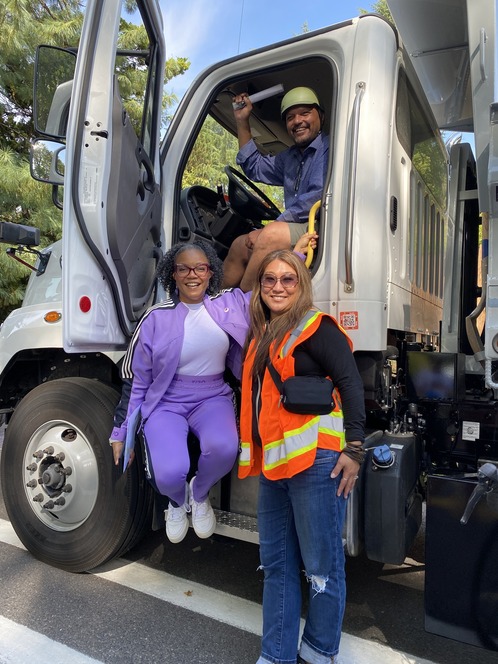
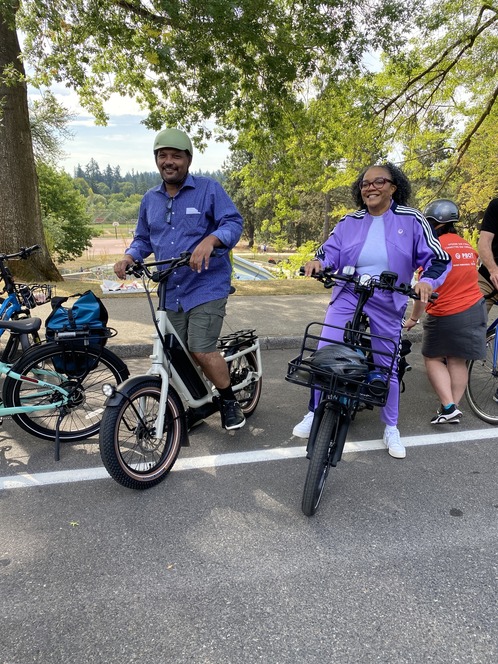
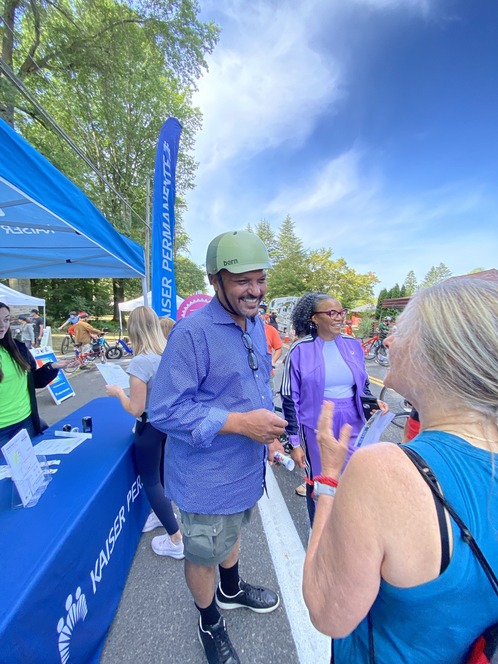
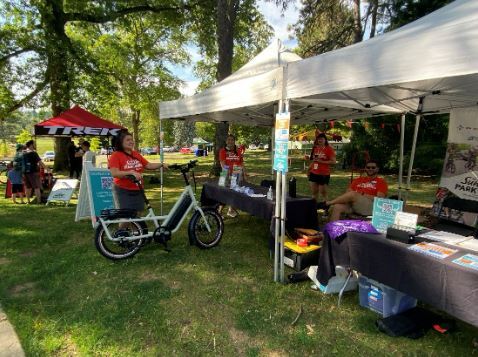
Congratulations to the Sunday Parkways team for another amazing event last weekend, this time in Southwest Portland. Director Williams and Commissioner Mapps were both in attendance, along with Mayor Wheeler, Commissioner Gonzalez, a lot of PBOTers, plus about 10,000 Portlanders. About a third of attendees were pedestrians, the highest percentage of the season.
Director Williams, Commissioner Mapps, and Stacey Lauer pose for a photo in the cab of a PBOT dump truck.
Commissioner Mapps and Director Williams pose on bikes.
Commissioner Mapps and Director Williams talk to constituents at the Kaiser booth.
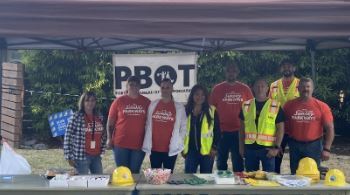
PBOTers Renata Tirta, Courtney Duke, Claire Bach, and Rob Hemphill gather at the PBOT booth.
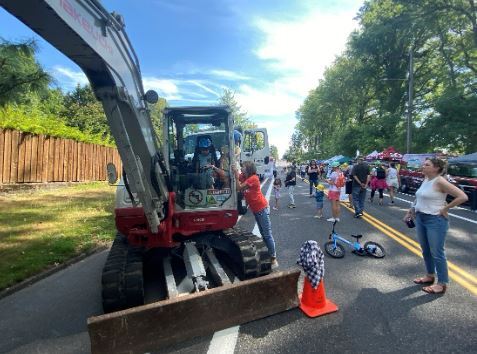
Kids and parents get to sit in the cab of an excavator and see PBOT equipment up close.
PBOT Maintenance Operations staff at Sunday Parkways.
Community members wrote to express gratitude for PBOTers who put on these events. We wanted to share a couple with you.
I am a 60-year-old almost lifelong resident of Portland. Over the years I have done probably 50 - 75% of the Sunday Parkways, usually with my children. We always had a great time. My children are now grown. One is a dedicated walker-cyclist-transit fan living in the Sunnyside Environmental School neighborhood. The other is still an emerging adult, living at home, and drives three blocks to Starbucks. But we are working on that.
This summer I did all of the Sunday Parkways, either with my wife, a sibling, or alone. Wow! These are great events. I had soooooo much fun. And I appreciate all the great work the Bureau of Transportation, Parks, and whomever else did to make these complicated events happen. I live in Multnomah Village. Even though my kids are grown and I am not yet a grandparent, I love Spring Garden Park, the new playground at Gabriel Park (where my wife and I have walked 3-4 times per week for 20 years), the new Capitol Highway, and other improvements.
Please pass along my appreciation and virtual fist bumps to whomever might be encouraged by my unqualified praise.
These are tough times in many ways. Thanks to all for helping to build community.
I just wanted to write and say THANK YOU. Our family just returned from the Southwest Sunday Parkways and it was absolutely fantastic!
I have lived in Portland since 2010 and have never made it to one of the Sunday Parkways - now I understand how much fun I have been missing. Today's event blew me away. It was safe. It was fun. It was interesting.
My 7-year-old biked the entire loop from Spring Garden Park to Gabriel Park - and back. This was her first big bike ride on her own bike instead of riding in our cargo bike and it has skyrocketed her biking confidence. Even my 4-year-old got about 1/2 mile in on his balance bike before getting back into the cargo bike and felt so grown up to ride on the road.
I know a lot of work goes into events like this. On behalf of me and my family - thank you all so much for your efforts. What a fun celebration of our neighborhood!
“Each Sunday Parkways event is an opportunity for PBOT to show how mobility can transform people’s lives,” said Renata Tirta. “Based on early feedback we’ve received, I think we showed up well and as a unified bureau. Thank you all.”
What data do we have at PBOT? Who uses it? What is it used for? Who should you contact to gain access? And how do you know if it is right for the work you are doing? The PBOT Catalog can answer these questions and more.
This bureau-wide tool aims to provide an inventory of data assets. It uses metadata to allow users to find data resources, evaluate whether it’s fit to use in a specific instance, and practice good data governance.
PBOT’s Catalog is also the system of record for our Performance Framework. Use this tool to search and understand the outcomes we want to achieve as a bureau, the measures we use to track progress toward these outcomes, and how these outcomes connect to one another to support our strategic goals.
Join us for one of our training sessions Sept. 19, 25, and 27 via Teams. Look for calendar attachments in the Scoop. Using a computer connected to the city network, access the PBOT Catalog here. We’ve also built a PBOT Catalog User Guide to get started.
Thank you to everyone who took the time to fill out the latest installment of PBOTers’ Picks! Some new favorites have risen to the top since we did this last year. Voting is now closed. Winners were places that got the most responses.
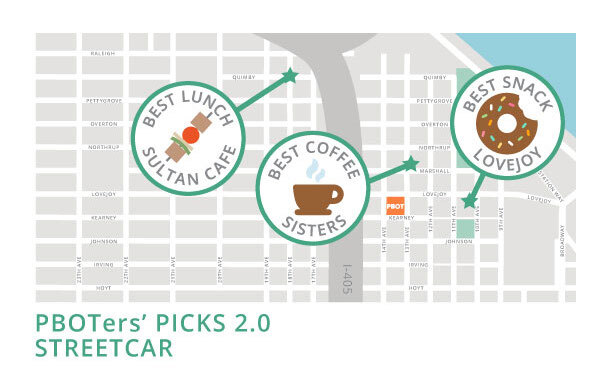
For Portland Building, Sixth + Main, and 1900 building employees, the resounding winner for favorite coffee or tea spot was Less and More. Honorable mentions go to 40 LBS and Café Umbria, which also received a fair number of votes from Portland Building PBOTers. For our colleagues in the Pearl District at Streetcar, Sister’s Coffee is the number one spot. And on the east side of the river, Maintenance employees chose Euko as a top pick. Kalesa and Grand Central were runners up.
Let’s talk lunch favorites. The reigning champ of the downtown buildings, Love Belizean, was dethroned by Luc Lac for Portland Building PBOTers. Love Belizean dropped into runner-up position with Addy’s Sandwich Bar. Meanwhile, Sixth + Main employees have crowned Whole Bowl as their winner; the 1900 Building chose a great banh mi spot: Best Baguette. At Streetcar, last year’s number two pick, Sultan Cafe, was this year’s winner. Then at Maintenance, PBOTers picked the food cart Smokin’ Fire Fish off Interstate.
When you’re near the end of your day and need a treat to make it to the finish line, PBOTers have a few ideas about where to go. Portland Building employees prefer Elephants Deli. The seasonal, Wednesday Farmers Market at Shemanski Park and Coco Donuts followed up. At Sixth + Main, PBOTers are snacking at Kure Juice Bar. Some 1900 building employees are also grabbing a snack at Kure, but Plaid Pantry is their favorite snack spot. In the Pearl, our Streetcar colleagues picked Lovejoy Bakers as their favorite snack while Maintenance PBOTers picked New Seasons as their favorite snack spot.
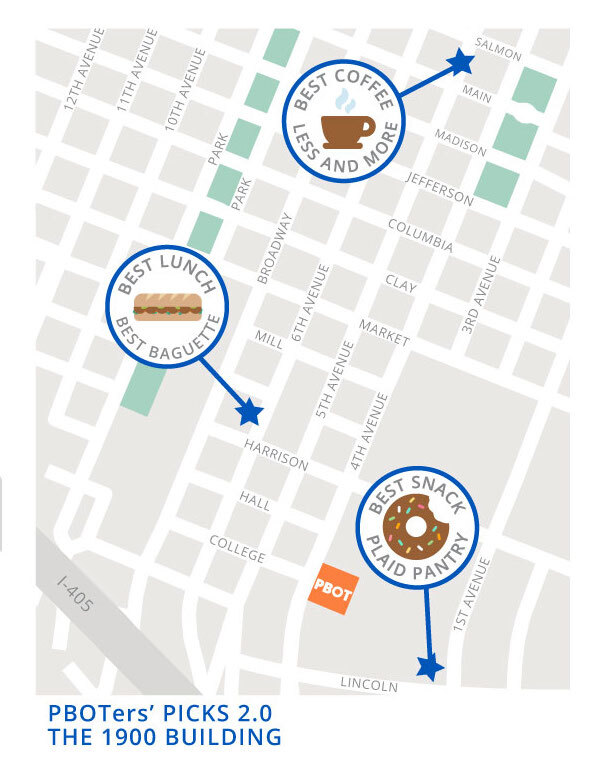
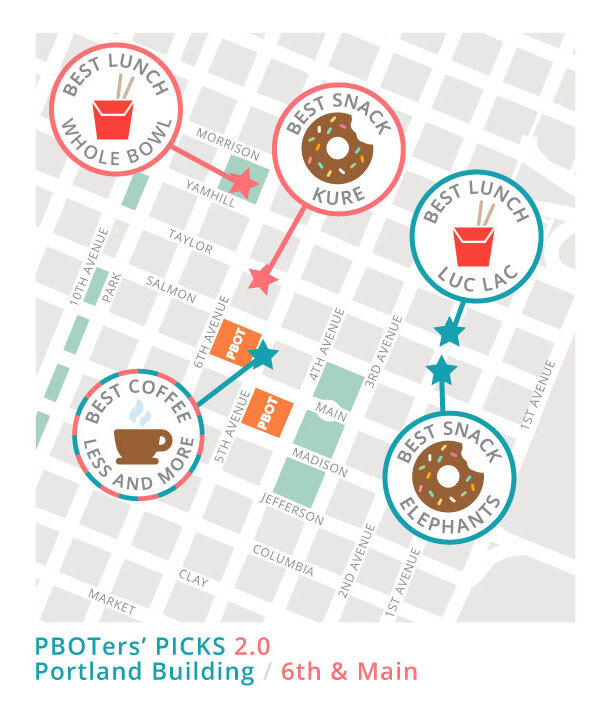
Take a look below where we've mapped the favorites for each PBOT building. Scrolling further down you'll find Google Maps versions of every pick!
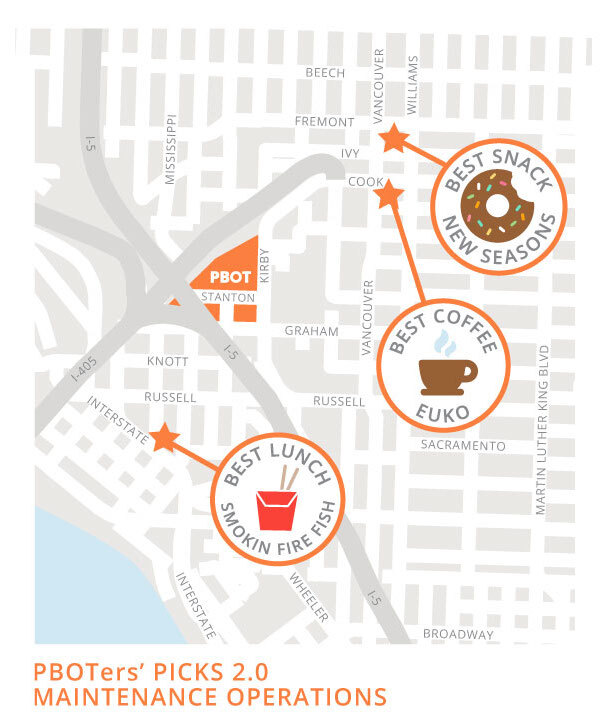 |
PBOTers' Picks 2.0: Maintenance Operations map shows the top three spots for the N Portland area. Coffee: Euko, Snack: Kulfi, Lunch: Smokin Fire Fish
PBOTers' Picks 2.0: 1900 Building map shows the top three favorite spots. Coffee: Less and More, Lunch: Best Baguette, Snack: Plaid Pantry.
PBOTers' Picks 2.0: Downtown map shows the top three favorite spots fof the Portland Building and 6th + Main building. Coffee: Less and More, Lunch: Luc Lac and Whole Bowl, Snack: Kure and Elephants.
PBOTers' Picks 2.0: Streetcar map shows the top three favorite spots in the Pearl. Coffee: Sisters, Lunch: Sultan Cafe, Snack: Lovejoy Bakers.
Find all the spots that folks submitted on Google Maps here:
Coffee Talk is an employee engagement program that helps you meet and connect with folks around the bureau. Sign up for a three-month commitment. Each month, you’ll be assigned one person to meet and have a conversation with. How long you meet and what format you meet in is up to you! This round will run in October, November, and December. Sign-ups close at 8 a.m. Monday, Oct. 2.
PBOT’s Parking Operations team is working on a parking management plan with the Boise neighborhood community. They need to hear from folks who live, work, or visit the area.
Please share this survey and project link with your networks:
You’re going on vacation, great! Or you’re under the weather, not so great. Either way, you want to rest and make sure urgent matters are addressed quickly while you’re out. For this reason, it’s CRITICAL to have a thorough out-of-office message with your assigned designees.
An out of office message should include:
-
Duration of absence
-
Designee name
-
Designee contact information
For example: “I will be out of the office starting [date] through [date], returning [date]. If you need immediate assistance during my absence, please contact [name(s)] at [email address]. Otherwise, I will respond to your emails as soon as possible upon my return. Thank you!”

September is National Suicide Prevention Month. From the National Alliance on Mental Illness:
Suicidal thoughts, much like mental health conditions, can affect anyone regardless of age, gender, or background. In fact, suicide is often the result of an untreated mental health condition. Suicidal thoughts, although common, should not be considered normal and often indicate more serious issues.
September is Suicide Prevention Awareness Month —a time to raise awareness of this stigmatized, and often taboo, topic. We use this month to shift public perception, spread hope and share vital information to people affected by suicide. Our goal is ensuring that individuals, friends, and families have access to the resources they need to discuss suicide prevention and to seek help.
If you or someone you know is struggling or in crisis, help is available. Call or text 988 or chat by going to 988lifeline.org.
Stress is the physical and emotional pressure, tension and strain people feel when they experience difficult and frustrating situations in their lives. Stress can be triggered by large events such as the death of a loved one, an automobile crash, problems at work, or natural disasters. But seemingly small events can also create stress. Being stuck in traffic, unsolicited phone calls interrupting your dinner, your neighbor's dog barking, or even waiting in a slowly moving line at the store can increase the amount of tension and anxiety we feel.
Stress is the body’s natural response to any situation that requires change, both positive and negative. To a certain degree, feeling stressed is a normal, healthy response to life’s events and challenges. Over time, the body’s continued response to regular stress can lead to an increase in blood pressure and heart rate, heightened anxiety, and an overall strain on the system. Unrelieved tension builds up, provoking an array of unhealthy symptoms. Research shows parents, people of color, and people in the LGBTQIA2S+ community are more likely to have higher stress. GuidanceResources offers a comprehensive Stress Resource Guide, from problem-solving strategies to resilience in stressful times. For more resources, check out their Coping With Stress compilation.
-
Aches and pains
-
Chest pain or a feeling like your heart is racing
-
Exhaustion or trouble sleeping
-
Headaches, dizziness, or shaking
-
High blood pressure
-
Muscle tension or jaw clenching
-
Stomach or digestive problem.
-
Weak immune system
To determine if you have an unhealthy amount of stress in your life, our GuidanceResources offers a helpful Stress Questionnaire.
Next month we will learn about a special type of work-related stress called burnout.
Reminder: there are no copay/coinsurance for outpatient office visits for mental health care for all City of Portland medical insurance plans.

By Abby Hauth
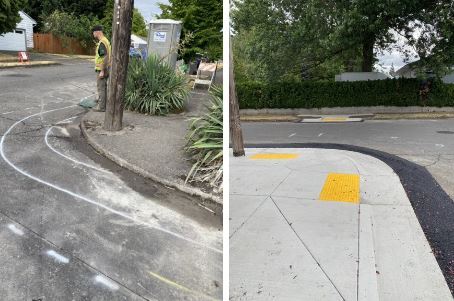
How does a curb go from the photo on the left to the photo on the right?
On the left, a sidewalk corner with spray-painted lines outlining where crews will install a curb ramp. On the right, a completed corner ramp which has contrasting light gray cement and bordered by dark gray asphalt. Across the street, another completed ADA ramp.
I spent a few mornings with curb ramp crews in East Portland recently to find out. Multiple crews were working along NE 113th Avenue, between Glisan and Stark streets, each at various stages in the process of making curbs compliant with the Americans with Disabilities Act (ADA).
This ongoing work is partly because of a 2018 settlement between PBOT and the Civil Rights Education and Enforcement Center (CREEC) where the city agreed to build 15,000 ramps over 12 years. PBOT engineers and planners use GIS to map corners without ramps as well as ramps that don’t meet ADA standards. Then, over the course of the year, crews construct (or reconstruct) about 1,500 new ADA-compliant curb ramps.
First an engineer visits the site, outlining how to orient the new ramp and where crews will have to remove pavement.
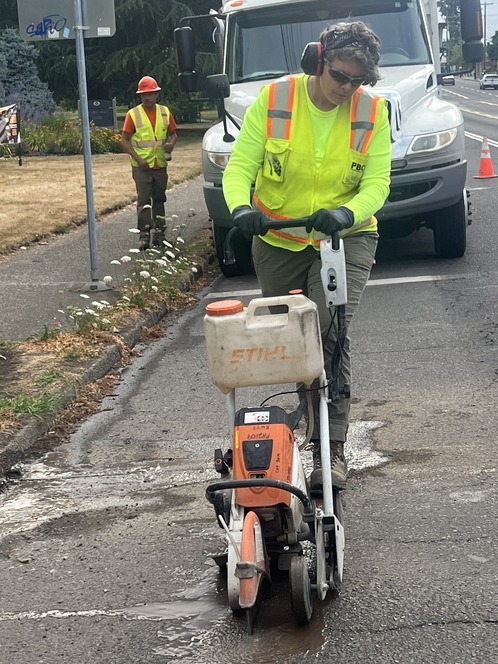
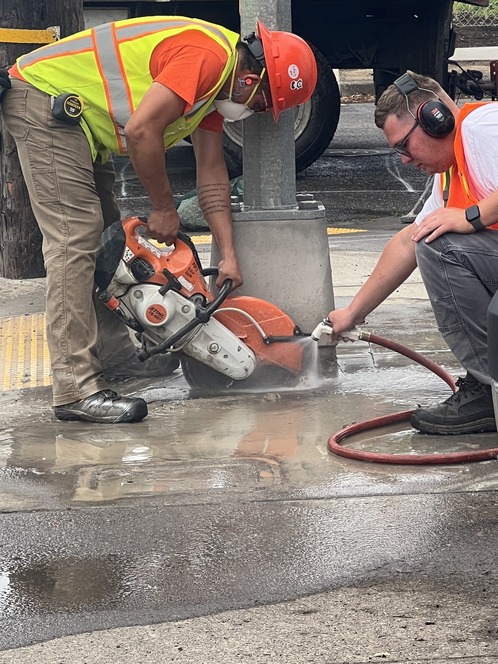
Crews then cut the concrete or asphalt to make it easier for an excavator to break up the pavement the next day.
Kimber Cruse wears a yellow safety vest, sunglasse,s and ear protection while cutting pavement with a saw.
Above, Kimber Cruse uses a cart saw to cut through a few inches of concrete. While the blade moves, water flushes the area to prevent dust. For this curb (on SE Stark Street and 113th Avenue) crews carefully worked around the base of a pedestrian signal crossing.
Two maintenance workers wear protective gear. One holds a circular saw to cut the sidewalk, while the other person sprays water on the work area.
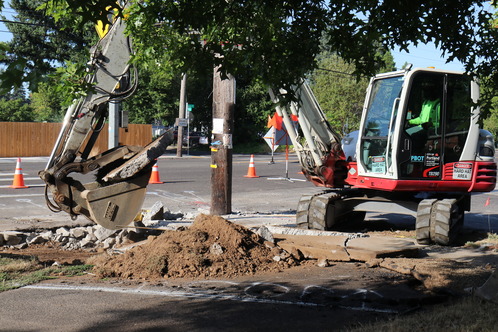
The next day was spent breaking up the sidewalk. Crews use a bucket attachment on an excavator to strike large pieces of concrete into smaller fragments. The machine does most of this work, but teams may use sledgehammers and shovels to break the concrete even more.
A red and white excavator scoops concrete from a large pile or dirt and concrete pieces.
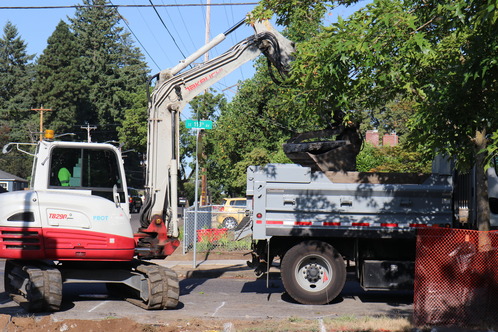
In the pictures here, the excavator operator scoops up broken pieces of concrete to put in a dump truck that takes the concrete to Sunderland Yard for recycling.
Crew member operating an excavator at left, dumping concrete into the back of a truck, right.
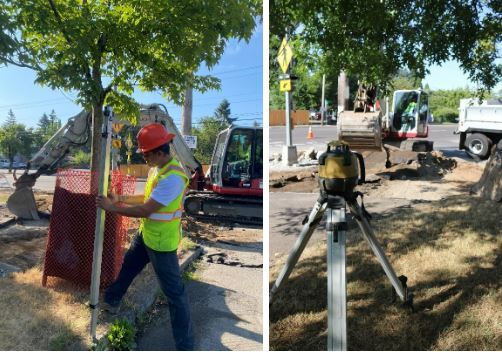
Throughout this process, Omar Elizalde Ceballos, crew lead, checks to make sure the now-exposed soil is correctly graded. Using a stationary laser calibrated with a yardstick-looking probe, Omar’s able to measure depth. In the picture below, he’s calibrating the two instruments. If the laser (at right) is moved, they then have to recalibrate the measuring instrument.
Two side-by-side images of tools used for grading. On the left, Omar wears a hard hat and yellow safety vest while he holds a long pole resting on the grass. On the right, a laser instrument on a tripod set up on the grass.
Soon after these pictures were taken, crews removed all the pavement material, leaving a layer of soil. Omar will then measure different parts of the site and make sure they match the drafted plan. Crews then handle slight differences in grade by shoveling, raking, and smoothing the soil in place.
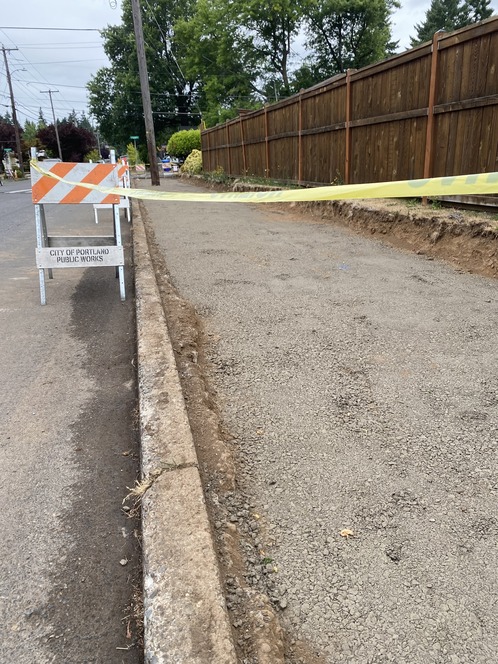
Once that is done, and before the concrete mixer arrives, crews spread a layer of gravel to ensure the concrete has something to bond to properly.
Sidewalk filled with gravel before pouring concrete. Area is marked off with caution tape and A-boards.
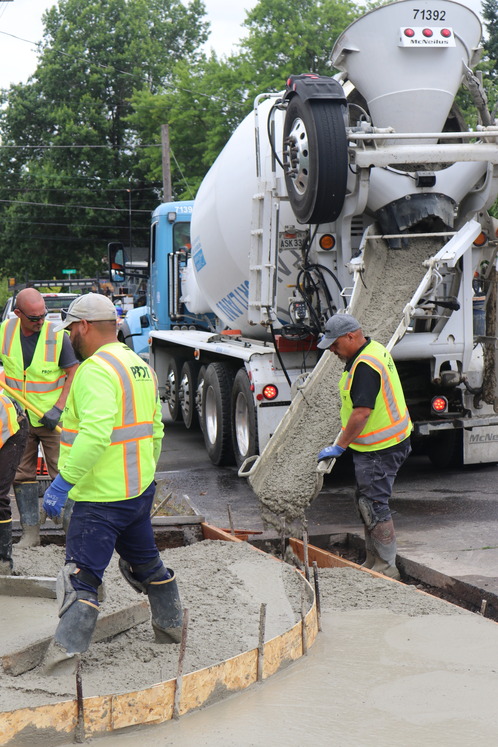
Further north on NE 113th Avenue, at Davis Street, crews begin the last step in the curb-making process. Crews work with a variety of tools to rake, scatter, and smooth cement into wooden and steel forms.
Crew member, at right, guides a chute for concrete into a wooden form on the sidewalk corner. Other crew members, in boots and gloves, left, stand in wet concrete to help form and spread.
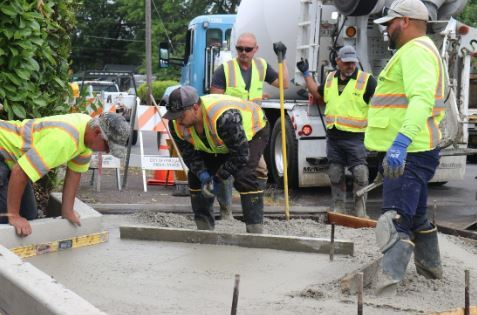
After crews have poured the cement and got it level, they give special attention to getting the correct angle on the ramp. Crews use a level and adjust the angle as needed by adding more concrete or smoothing it over.
Crew members in safety gear look at a level to measure the slope of the fresh concrete. Some stand in wet concrete, others off to the side.
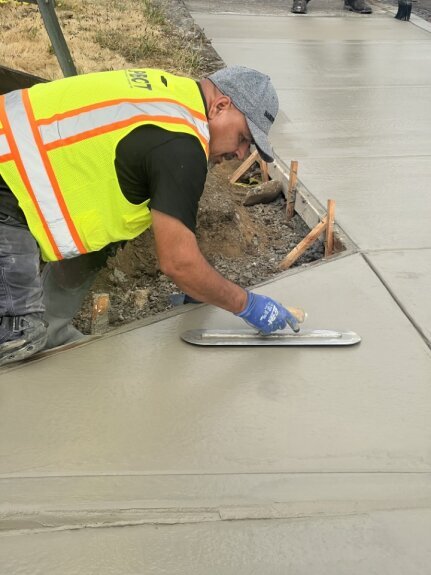
After crews have used the larger shovels and rakes to do the bulk of the job, they use smaller, hand-held finishing tools for the final detail work and to get a precise, smooth surface.
A crew members in safety gear and a baseball hat crouches over wet concrete, using a tool to smooth out the grey concrete.
Nearing the end of the process, crews use a long tool with a spike sticking out of it to create the indented lines you see and which mark off the various curb and sidewalk segments. By moving this along the cement, it creates a uniform indentation.
In the foreground, a crew member in safety gear uses a tool with a long handle to make indentations in the wet concrete without stepping in the now-smooth concrete. Another crew member kneels to do some final detail work while other crew members surround and watch.
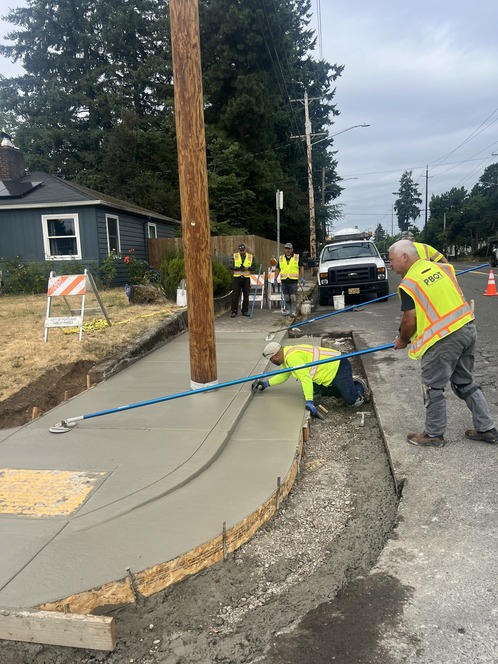
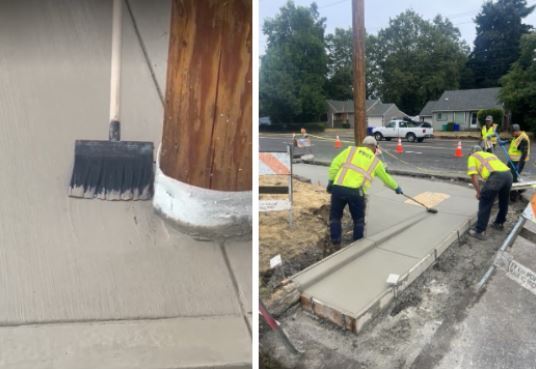
Finally, crews use a small broom-like tool that adds texture to the sidewalk to ensure it doesn’t get slippery when wet.
Two side-by-side pictures. On the left, a close-up image of a brush sweeping on fresh concrete around a utility pole. On the right, a zoomed-out look at crew members using this brush tool on the sidewalk corner.
All the concrete pouring and smoothing work takes crews about three hours. It takes anywhere from two to seven days for the work to dry (depends on weather), then the new ADA-compliant curb ramp is ready to roll!
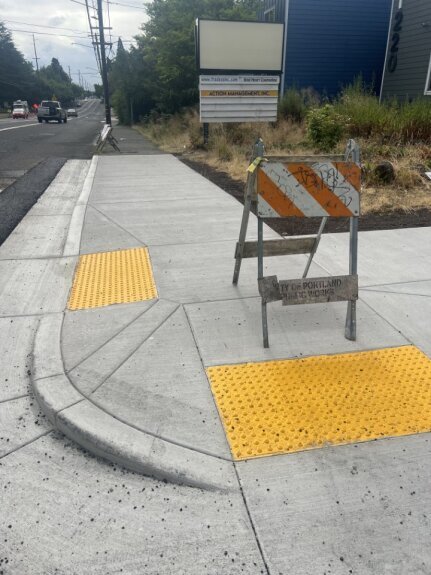
A new ADA-compliant corner ramp on NE Glisan Street with an orange-and-white striped caution A-board still in place after the work.

By Spencer Mann, PBOT Communications Summer Intern
The streets we walk, cycle, drive, and take the bus, MAX, or Streetcar along are one of Portland’s most valuable resources. They take us to work, to school, and around our neighborhoods daily. The condition our streets are in has a profound impact on the everyday lives of Portlanders. In spite of this, the critical work of our maintenance crews, engineers, and planners to assess and repair these streets is not easily understood by those not directly involved in it. In learning about the systems through which our city maintains our streets, we better understand the challenges we face and develop solutions to overcome them together.
Like most things on our planet, the pavement on our streets is affected by the seasons, temperature, and the elements, not to mention the consistent stress vehicles place on it daily. Although at a microscopic level, pavement is actually flexible—it bends under the weight of all those vehicles—it still decays over time.
Led by Engineering Supervisor Scott Bryan and Chief Engineer Todd Liles, PBOT’s Pavement Management team assesses street conditions as they deteriorate and coordinates maintenance to ensure we apply the “right treatment to the right road at the right time.”
PBOT’s engineering technicians with the Pavement Management team include Zac Brown, Zim Zimmerman, Waylan Eells, and Shawn Brink. They walk streets around the city regularly to assess the condition of different stretches of pavement. Pavement condition is graded using a grade on the Pavement Condition Index (PCI) scale. New pavement in perfect condition scores a 100 on the PCI whereas dysfunctional pavement gets a zero.
PBOT also uses statistical modeling in the StreetSaver database. This system measures the expected rates of decay for over 28,500 different stretches of pavement, depending on their level of use. Equivalent single axle load (ESAL) is the key factor determining how much stress and wear a single vehicle will cause on a stretch of pavement. As you might imagine, streets with a lot of heavy vehicle traffic deteriorate much more rapidly. The heavier weight of trucks and busses is the dominating factor in pavement design, not lighter passenger vehicles. For example, a single bus trip causes as much stress to a road as 10,000 car trips.
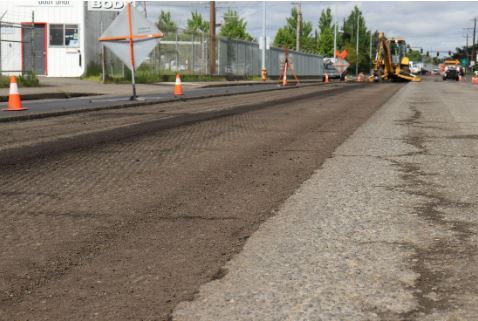
A long strip of road where pavement is ground down a couple inches on the left side. The right, intact side of the street has large cracks running through it.
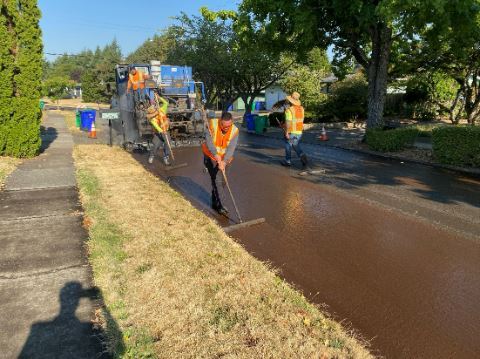
Crews in safety gear are applying a micorsurfacing treatment to the street with long broom-like tools. Grass and trees border the street.
Pavement is in good condition is relatively inexpensive to fix when PBOT can addresses problems early. This includes treatments like crack-sealing and micro-surfacing. Without intervention, pavement starts to deteriorate more quickly and the costs to repair it rises exponentially. Now you’re talking more expensive repairs such as a grind-and-pave or base repair. Potholes are a sign that the roadway is becoming significantly damaged.
Here’s our dilemma. The overall condition of Portland’s road network has a PCI score of 55. That means simpler, less expensive repairs are no longer viable. In fact, the cost to rehabilitate or reconstruct these roads—in other words, our asset backlog—is a staggering figure: $3.8 billion.
This backlog is not due to any one budget cycle, but due to long-term constraints. To illustrate this, right now, the team has resources to inspect each road every 5-6 years at the most, rather than an ideal target of every two. Furthermore, we tend to focus on major roads like arterials which have more industrial traffic and thus the quickest rate of decay. This means we don’t inspect or maintain many local, residential streets as much as we should. Residential streets account for two-thirds of our total network, so not addressing them has a big impact on our citywide network rating.
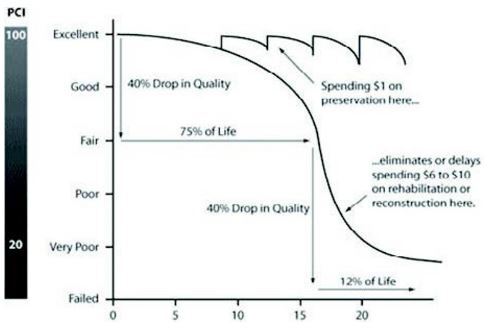 |
An illustration of the pavement deterioration curve showing the pavement condition index (PCI) on the vertical axis, from zero/failed at bottom to 100/excellent at top, and years on the horizontal. The curve illustrated shows a steady and then rapid decline, but also how spending $1 on preservation in earlier interventions eliminates or delays spending $6-10 on rehabilitation or reconstruction later on in the pavement’s lifespan.
PBOT must also recognize that state contracting guidelines as well as important federal rules related to the Americans with Disabilities Act (ADA), sometimes make pavement maintenance more expensive.
For instance, state contracting law limits what work PBOT can perform, requiring private contractors to do pavement work larger than a 2-inch grind-and-pave. This costs more than if PBOT were to perform the work itself.
Also, PBOT is required by federal rules to install or upgrade ADA curb ramps where we do pavement work, at least whenever we do work as extensive as microsurfacing. Building ADA curb ramps is already a critical part of the work PBOT performs, but this work doesn’t always align perfectly with pavement maintenance. For instance, there may be more critical places to upgrade ADA curb ramps than where we are microsurfacing. As a result, pavement maintenance projects can more than double in cost when they factor in ADA curb ramps into the project scope.
As we strive to maintain and improve our transportation system, we extend our thanks and appreciation to all those keeping the ground beneath our feet in good condition. Thank you to the Pavement Management team and to Scott Bryan and Todd Liles for their help with this article.
Scott Bryan, an engineering supervisor with PBOT, enjoys hiking and backpacking in the beautiful Pacific Northwest. He grew up in Woodstock, NY, and has lived in the Pacific Northwest for nearly 30 years. Todd Liles, a chief engineer with PBOT, is a lifelong Oregonian and enjoys hunting, fishing, skiing, and biking.
Want to share a PBOT story here in Street Cred? Limit your copy to less than 500 words, provide detailed captions for any graphics, and email kailyn.lamb@portlandoregon.gov by 5 p.m. Thursday the week before the edition goes out so we have time to copyedit and proofread. For longer featured articles please reach out to us first so we can target the best date for you.
Upcoming 2023 editorial deadlines:
-
Sept. 27 issue [deadline: Thursday, Sept. 21]
-
Oct. 11 issue [deadline: Thursday, Oct. 5]
-
Oct. 25 issue [deadline: Thursday, Oct. 19]
|