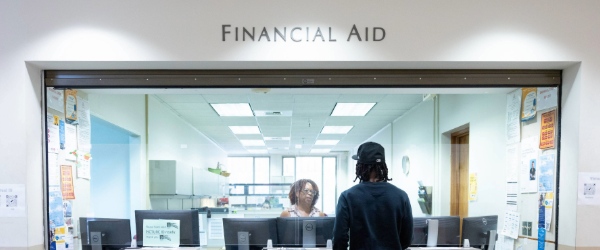
 Photo by Allison Shelley/Complete College Photo Library
Oregon Opportunity Grant Report Demonstrates Impact and Reach of Oregon's Largest Need-Based Financial Aid Program
The HECC's annual legislative report on the Oregon Opportunity Grant (OOG) demonstrates the extensive reach and positive impact of the grant in serving low- to moderate-income Oregonians, even while serious affordability gaps remain. The OOG is the state's largest need-based, state-funded grant program and the grant served nearly 40,000 Oregon students across public and private institutions in 2023-24. The HECC’s most recent report evaluates the program's outcomes from the 2023-24 academic year, including recent expansions to program eligibility and grant award amounts.
Over the last three years, the OOG has served a broader group of students from low-income backgrounds. Before 2021-22, the OOG served only the lowest income students; the Expected Family Contribution (EFC) threshold for the OOG was well below that of the federal Pell Grant at that time. By 2023-24, expanded eligibility to a higher EFC threshold than in years past resulted in a greater proportion of students receiving the grant, with nearly one in four Oregon students at public institutions receiving the OOG in 2023-24.
The report also describes the impact of recent changes in grant sizes, with the maximum OOG award criteria changing in 2023-24 to cover 75 percent of expected tuition at a public institution. This resulted in a large increase in the award size at public and private bachelor’s degree-granting institutions and a slight increase in the maximum award size at community colleges.
As in previous years, the OOG has strong links to student success. OOG recipients’ academic performance was generally as strong or stronger than that of other students, despite the greater barriers that low-income students face. The OOG also continues to disproportionately reach groups underrepresented in higher education—students of color, older learners, and students from rural counties.
While the OOG helps thousands to pay for costs of attendance (tuition, room, board, and more), Oregon still has extensive work to do to close the affordability gap. More than half of OOG recipients faced costs of attendance that exceeded their financial resources in 2023-24, even after accounting for public grants such as the OOG, their expected family contribution, estimated earnings, and most institutional aid. In 2023-24, the share of students facing unaffordable college costs, even after taking into account these resources, decreased at the public universities and increased slightly at the community colleges. Learn more in the full report below.
2026 Legislative Session Preliminary Outcomes and Previewing the 2027-29 Budget Development Process
Legislative and Budget Outcomes from the 2026 Short Session
Oregon’s short legislative session concluded on Friday, March 6, with several significant bills passing related to higher education and workforce training.
The HECC is pleased to share a preliminary summary of legislative and budget outcomes from the 2026 legislative session, and we will publish a full legislative summary on our website later this month. The Governor's signature decisions are still pending on some of the bills below at this time.
Despite the risk of adverse budget action at the start of the session, the Legislature did not make reductions to the state’s higher education and training budget. It took the following actions:
- Adopted House Bill 4124, appropriating $2.5 million to the HECC and directing the agency to complete a comprehensive report to evaluate the distinct missions of each category of postsecondary institution and identify opportunities for collaboration, restructuring, or integration in the postsecondary system.
- Put $15 million into a Special Purpose Appropriation to support cash flow needs this biennium at Southern Oregon University (SOU) and appropriated $500,000 to HECC for consulting support to SOU for a long-term sustainability plan.
- Adopted HB 4134, increasing the state transient lodging tax, which will result in funding for Oregon Conservation Corps (OCC), which is listed as a recipient of 0.1 percent of the new tax rate; this is anticipated to raise $7 million for OCC in the first full biennium (2027-2029).
- Made modifications to some capital construction budgets, including projects at Oregon State University-Cascades, Portland State University, and Western Oregon University.
In addition, the Legislature passed a bill requiring that students and staff be notified in case of federal immigration enforcement presence on public institution campuses (HB 4079) and updated the goals of the Prosperity 10,000 workforce development program (SB 1512).
2027-29 Budget Development Process Update
The HECC has been collecting and generating proposals to address needs of the higher education and workforce system and is considering plans for 2027 legislative concepts and budget proposals. Find more information about the typical budget development process on our webpage.
Under the budget development guidance to HECC and other agencies recently issued from the Chief Financial Office (CFO) of the Department of Administrative Services, policy option packages in the Agency Request Budget (ARB) for the 2027-2029 budget cycle are required to be cost-neutral and not require additional or new revenue, which could mean offsetting requests for new resources with reductions from within the HECC budget. Agencies can identify in their narratives a need for future investments tied to the goals and objectives in the agency’s strategic plan. The Commission will provide additional information at its public meeting in April, once initial staff consideration occurs.
With Oregon Opportunity Grant Changes for 2026-2027, Students Attending Less than Half-Time May Receive Funds
The HECC Office of Student Access and Completion (OSAC) recently announced updates to the Oregon Opportunity Grant (OOG), implementing House Bill 3025, which was signed into law during the 2025 legislative session. The changes simplify processes and expand eligibility in order to remove barriers to student success. These changes will go into effect starting in the 2026–2027 academic year. Key changes under HB 3025 include:
-
Flexibility in Award Amounts: The Oregon Opportunity Grant will have the flexibility to award amounts at the per-credit level, better meeting students’ financial needs. Previous award amounts were required to be awarded at full-time and half-time amounts. The restriction for minimum enrollment at half-time has been removed.
-
Clearer Definitions: The law clarifies eligibility requirements, including residency, which is now defined as 12 months prior to enrollment. It also clarifies that an academic program that is less than a year in length is eligible for the OOG.
Please visit the OOG web page below for additional information and eligibility requirements.
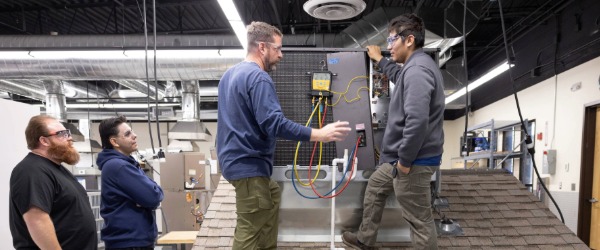 Photo by Allison Shelley/Complete College Photo Library
WIOA Title I Programs and Workforce and Talent Development Board Will Transfer from the HECC to the Oregon Employment Department
The HECC is working closely with the Oregon Employment Department (OED) on a Governor-approved plan to transfer to OED several HECC-administered workforce programs that are focused on connecting adults, dislocated workers, and youth with essential career services. The changes are detailed in OED’s Customer Service and Workforce Strategies Action Plan announced in OED’s March 5, 2026 press release, a plan developed in response to Governor Kotek’s priorities for improved customer service and for more efficient, coordinated workforce services statewide.
At the Governor’s direction, OED conducted a review of the customer experience across the state’s public workforce systems. OED received input from thousands of customers and partners and used that feedback to develop a comprehensive set of actions, including the program transfers from HECC.
Specifically, the Workforce and Talent Development Board (WTDB) board and staff support, and several grants to local workforce development boards—programs that are currently housed in HECC’s Office of Workforce Investments (OWI)—will be transferred from the HECC to OED at a date to be determined, with a current target date of summer 2026.
This change builds on an already existing partnership. OED and HECC already partner closely to deliver services to Oregon’s job seekers through co-location of WIOA Title I-B and Title III staff and services in WorkSource Oregon centers statewide. Moving all of Title I-B funding administration and programming from HECC to OED is intended to improve alignment across programs and support more efficient use of funding. Moving WTDB board support to OED will support the board in its focus on accountability and performance of the WIOA funding strategies, among other benefits.
Other parts of the HECC Office of Workforce Investment portfolio—including Future Ready Oregon grant programs, Industry Consortia, and more—will continue at the HECC, and the agency will continue our work to ensure the postsecondary education and training system is a driver of innovation, workforce development, and economic development for the state. The HECC and OED are working closely with staff, programs, and partners impacted by these changes, and questions about HECC-OWI programs may be directed to Julia.Pontoni@hecc.oregon.gov.
Strategic Plan Implementation Continues
The HECC’s Strategic Plan, adopted in October 2024, describes the vision, mission, goals, and strategies that the Commission intends to guide its work over the next three to five years. In recent months, the agency has initiated numerous activities to advance toward these goals. Updates on implementation of the strategic plan are provided at public meetings of the HECC. The most recent public document on the strategic plan implementation, presented at the February 12, 2026 public HECC meeting, is also available below. The agency launched eight new and changed activities in mid-2025. An additional set of recommendations is under consideration.
Coming Soon: Opportunities for Engagement on Belonging in Postsecondary Education
Among other goals and priorities in the HECC's strategic plan, we have prioritized a goal of belonging, focused on elevating learner voices, and supporting inclusivity and belonging in postsecondary education settings. To inform this work, we are pleased to announce that HECC has partnered with Oregon’s Kitchen Table (OKT) to invite Oregonians across the state to share what helps create a sense of belonging for them and learners in their community, with a focus on students and learners. These conversations are intended to generate actionable insights to strengthen inclusivity and belonging across all Oregon institutions. This spring, OKT will share numerous opportunities for Oregonians to share what would help create a sense of belonging for learners in college and training programs across the state, including an upcoming survey, community conversations, and toolkit to invite input. Please stay tuned for more news from HECC on ways to participate, beginning in April!
For more information, contact Sarah Giles (sagiles@pdx.edu) at OKT or Anthony Medina (Anthony.D.MEDINA@hecc.oregon.gov) at HECC.
Oregon Continues Collaborative Work to Develop New Postsecondary Education Goal
The HECC is continuing to lead a collaborative effort to develop a new Oregon postsecondary educational attainment goal, and appreciates the work of an Oregon steering committee that is advising staff on this work.
For more than a decade, Oregon has been working toward two state education goals: the ambitious statewide 40-40-20 goal for young adults, and the more recently adopted adult attainment goal, focused on credential attainment. The HECC and partners are working to develop a proposal for a new draft goal by June 2026.
We appreciate the close engagement of partners, which includes representatives from the Oregon Legislature, community colleges, universities, K-12 education, workforce partners, economic development leaders, business and community leaders, partner agencies, and others.
In the steering committee's first convenings, the group considered analysis of current goals, their progress, history, and challenges; heard an overview of Oregon’s goals for K-12 education, particularly high school education; delved into data on postsecondary attainment and employment trends; and discussed possible purposes and approaches to goal setting. They have also benefited from analysis and expertise of national partners through Lumina Foundation. In November, Oregon joined 12 other states in Lumina Foundation’s State Attainment Collaborative effort. Lumina’s national goal is for 75 percent of the U.S. labor force to have a credential of value by 2040, and while most states have an attainment goal, there are numerous state approaches to goal setting and to defining credential value. The steering committee and Lumina work will continue through spring 2026 as the HECC works toward a proposal.
Further updates will be provided at public meetings of the HECC, where we welcome public comment.
State Awards Grants to Build Workforce Pathways in the Semiconductor Industry
In a recent press release, the HECC announced that it has offered $8.5 million in grants from Oregon’s Semiconductor Talent Sustaining Fund (STSF) to eight grantees to build workforce pathways in the semiconductor industry and support the growth of this sector in Oregon. The funds were allocated to the STSF by Governor Tina Kotek and awarded to seven higher education institutions and one nonprofit organization that are active members of Frontiers of Advanced Semiconductor Technology (FAST), a partnership led by Oregon State University and consisting of 95 cross-sector partners. These investments will connect Oregonians to high‑wage, high‑demand careers and further strengthen the state’s semiconductor talent pipeline.
The STSF, administered by the HECC, was established by the Oregon Legislature in 2024 (HB 4154) to provide education, training, and research that support semiconductor innovation and productivity, as well as credentials for careers in semiconductor‑related fields. Governor Kotek directed a one‑time investment of $10 million in Oregon CHIPS Act funding (state General Funds) to the STSF, and the $8.5 million in awards announced this month are from that investment.
The grantees, all participants in FAST, are Chemeketa Community College, Mt. Hood Community College, Oregon Institute of Technology, Oregon State University, Oregon STEM, Portland Community College, Portland State University, and University of Oregon, and their project descriptions are summarized below. Led by Oregon State University, FAST is a partnership of 95 organizations—spanning industry, higher education, government, and non-profits—that is working to promote semiconductor innovation and economic growth in Oregon.
With Grant Support, Youth will Help Shape the Design of a Direct Admissions Program for Oregon
The HECC has been awarded a grant from Meyer Memorial Trust to support youth engagement in the design of Oregon’s statewide direct admissions program, a statewide initiative underway that aims to simplify and promote college access for high school students statewide. When the direct admissions initiative is implemented statewide, academically qualified Oregon high school students will be directly informed of their eligibility for admission to Oregon’s 24 public institutions and participating private institutions. Open Doors Oregon (and in Spanish, Abriendo Puertas Oregon) will ultimately be the program names that students and families see when they receive news of Oregon’s direct admissions opportunity.
The HECC is working closely with partners to design and ultimately implement the program statewide. The $65,000 grant, awarded as part of the Meyer Memorial Trust’s Our Empowered Youth funding, will ensure that the design of Oregon’s future direct admissions program is shaped by the young people it is designed to serve.
The grant project, including the youth engagement, is being led by Mariana Zaragoza, direct admissions academic policy specialist. To learn more, contact Mariana.Zaragoza@hecc.oregon.gov.
Registration is Open for the Oregon Talent Summit on May 19, 2026
Oregon’s Workforce and Talent Development Board (WTDB) and the Higher Education Coordinating Commission (HECC) will be hosting the 2026 Oregon Talent Summit on Tuesday, May 19, 2026 from 8 a.m. to 6 p.m. in person at the Salem Convention Center.
Since 2018, the Oregon Talent Summit has convened leaders to explore critical trends, challenges, and solutions in workforce and talent development.
The 2026 Summit theme is Bridging Vision and Action: Forging Oregon’s Path Forward. Registration is free and now open. This year’s in-person Summit focuses on turning strategy into action through collaboration, data, and practical solutions. A core focus of the Summit is presenting the findings of the 2026 Oregon Talent Assessment – the biannual analysis of Oregon’s workforce that identifies in-demand industries and occupations, evaluates supply-demand alignment, assesses job quality, and provides regional and equity insights.
In addition to engaging keynotes, the Summit will feature four breakout tracks focused on critical workforce topics:
- Business Leadership & Economic Development: Aligning Employers, Talent & Growth
- Data to Action: Driving Policy & Outcomes
- Work-Based Learning: Connecting Education & Work Experience
- Youth Workforce Development: Pathways to Opportunity & Career Success
Learn more and register at the links below.
|