|
 |
|
In this issue: |
|
|

OHA and county public health officials are investigating a case of measles in an adult who recently returned to Oregon following international travel. The individual is not vaccinated against measles.
"We're here to tell you that measles is now in Oregon, and if you’re not vaccinated, you are susceptible,” said Paul Cieslak, M.D., medical director for communicable diseases and immunizations at OHA’s Public Health Division.
The individual was hospitalized in the Portland metro area June 19 with a rash and conjunctivitis and was discharged June 21. County public health officials and hospital staff believe no patients were exposed. The person is recovering.
People might have been exposed if they were in any of these areas during these times:
- Flight UA1832/SN8869 (Brussels Air Operated by United Airlines) on Tuesday, June 17 (economy cabin); departed Chicago O’Hare International Airport at 4:01 p.m. CDT, arrived at Portland International Airport at 6:29 p.m. PDT.
- Portland International Airport arrivals and baggage claim between 6:30 p.m. and 8:30 p.m. on Tuesday, June 17.
- Safeway at 401 A Ave., Lake Oswego, in Clackamas County, between 11:30 a.m. and 3 p.m., on Sunday, June 22.
▶Watch OHA press conference held June 24.
Check out our Q&A blog with Dr. Ceislak: Measles: what you should know
|
|

A federal budget bill passed by the U.S. House of Representatives in May could have serious implications for everyone in Oregon, if it becomes law. The bill contains large cuts to federal Medicaid funding, which Oregon relies on to cover health care for 1.4 million Oregon Health Plan (OHP/Medicaid) members, including half of all children in Oregon. A decrease in funding and fewer people enrolled in Medicaid would reduce payments to clinics, hospitals and providers, causing reduced access to care for everyone in Oregon, as well as possible clinic or hospital closures across the state.
The U.S. Senate is making modifications to the bill and is expected to hold a vote in the coming days or weeks. If passed by the Senate, the bill will go back to the House. The House and Senate must agree on the bill’s final language before it goes to the White House to become law.
You can learn about potential changes to OHP in the document Impact of Federal Requirements & Funding Cuts to Oregon Health Plan (OHP/Medicaid), which covers the following topics:
- Work requirements
- Health care statewide, beyond OHP members
- Rural health care
- Costs for OHP members
- Eligibility checks
- Reproductive and gender affirming care
OHA continues to monitor these and other federal changes for potential impacts to people in Oregon. You can follow our Federal Response webpage for updates.
|
|
|
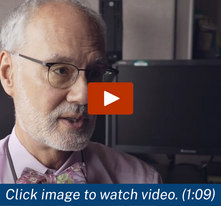
National data show rates of hepatitis C in Oregon are among the highest in the nation, according to new data from the Centers for Disease Control and Prevention (CDC).
People in Oregon are 2.7 times more likely to die from hepatitis C than people who live in other U.S. states, making it the leading cause of preventable death from reportable disease in Oregon.
Hepatitis is liver inflammation, most commonly caused by a virus. In the U.S., the most common hepatitis viruses are A, B and C. Each produces similar symptoms, but only B and C can cause chronic (long-term) infection. Chronic hepatitis C can lead to cirrhosis, liver cancer and death. Effective vaccines exist for hepatitis A and B. There is no vaccine to prevent hepatitis C, which is most common in people ages 20-29, but it can be cured with medication.
▶ WATCH VIDEO to hear Dr. Paul Cieslak, OHA’s medical director for communicable diseases and immunizations, explain why hepatitis is a significant public health threat.
State health officials are emphasizing a need for increased community-based screenings and prevention and treatment services in populations most affected by hepatitis C. This includes people who use illicit drugs and members of the Black, American Indian and Alaska Native populations.
|
|
|
 |
|
Health notes |
|
|

Every Thursday at noon, parents, caregivers and family members in Oregon are invited to participate in “A Time for Families”—a free online discussion designed to help OHA understand the challenges and questions Oregon families have about behavioral health services for children, youth and young adults.
“Hearing people’s stories helps keep us grounded in reality,” said Chelsea Holcomb, co-host of the meetings and director of OHA Child and Family Behavioral Health (CFBH). “Issues we’ve heard about during A Time for Families meetings have directly influenced where we’ve focused energy and influenced policy development.”
Issues discussed at A Time for Families have included:
- How to access treatment services, especially for those with high mental health needs.
- The need for better step-down services after residential or intensive treatment services.
- The difficulty parents have finding support if their youth is aggressive.
- The loneliness felt by caregivers as they try to find help and support for their child.
A representative from the Reach Out Oregon Parent Warmline also attends the meetings and is available for follow-up with specific immediate concerns.
Details for A Time for Families:
-
WHEN: Each Thursday, noon to 1 p.m.
-
HOW: Join via Zoom HERE (no advanced registration required). Or join by phone at 1-669-254-5252 (Meeting ID: 161 147 2732 | Passcode: 148750).
-
COST: Free
If you have questions about accommodations or need any assistance to participate, please contact Hilary Harrison at hilary.harrison@oha.oregon.gov or 503-209-1949 (voice/text). All relay calls accepted. We welcome non-English speakers and request two to three days’ notice to ensure we have interpretation services in place.
|
Oregon has improved access to behavioral health care with the recent opening of two new treatment facilities, one in Corvallis and another in Portland.
Governor Tina Kotek, along with state and federal officials, cut the ribbon for the new Benton County Crisis Center in Corvallis. The facility will support individuals experiencing mental health crises by offering therapy, life-skills training, case management and referrals to long-term care.
The Benton County Crisis Center was made possible through state and federal funding totaling $7.7 million. This includes $5.45 million allocated by the Oregon Legislature in 2022 and $1.1 million from OHA in 2023.
A new facility also opened last week in Portland, providing residential treatment for individuals facing severe mental health challenges.
Ebony Clarke, director of the Behavioral Health Division at OHA, spoke at the grand opening of Treeline, a new 10-bed residential treatment facility in Southeast Portland operated by Cascadia Health. It will provide 24-hour care for individuals managing severe mental health conditions.
Funding for Treeline is part of a broader effort to expand community-based behavioral health services across the state. OHA contributed $2.4 million from House Bill 5024, which passed in 2021 and allocated $130 million to increase access to licensed residential facilities and supportive housing for those living with serious mental illness.
These new facilities mark significant progress in Oregon’s commitment to expand behavioral health housing and residential treatment capacity across the state. They represent another important step forward toward a stronger, more connected system of recovery.
OHA is seeking public input about a proposed business deal between Providence Home Health & Hospice in Oregon and Compassus—a national hospice, palliative and home health provider based in Tennessee. The deal proposes Compassus acquire 50% of Providence Home Health & Hospice, which means Compassus would take over management of Providence’s Oregon home health and hospice agencies which operate in Beaverton, Hood River, Medford, Newberg, Oregon City, Portland, Salem, Seaside and Silverton/Mt. Angel.
OHA’s Health Care Market Oversight (HCMO) program is reviewing this proposed deal to understand how it could affect people in Oregon, including its potential impact to health equity, health care costs and access, and quality of care.
You can learn more about this proposed deal here.
As part of this review process, OHA seeks public comment from patients and caregivers of patients who have received home health or home hospice services from Providence. We want to hear about people’s experiences with Providence and thoughts about the proposed deal with Compassus.
You can email your thoughts to hcmo.info@oha.oregon.gov, or fill out the online public comment form, or leave a voicemail at 503-945-6161. Make sure to include the word “Compassus” in your comment.
Comments will be posted to OHA’s website. Please do not include information that you do not want publicly shared. HCMO will accept comments throughout its review of this proposed deal, which is expected to run through September.
|
|
 |
|
OHA answers your questions |
|
|
Questions are answered by experts at OHA, other state agencies or community partners.
Q: Is measles a concern yet in Lebanon, Oregon? Vaccinations for COVID-19 is low in this town so I assume vaccination against measles will also be low. I deliver Meals on Wheels to seniors. I know measles is spreading in many states and am wondering if I need to get another vaccine? – Wenche, Lebanon
A: Thank you for your volunteerism!
As you may have heard earlier this week, Oregon has reported its first measles case of 2025, in Multnomah County. The infected adult was hospitalized from June 19-21 and is now recovering at home. You can read more about that, including potential exposure locations, here.
Public health officials are definitely concerned about this (though not terribly surprised), largely because Oregon has traditionally had one of the lowest rates of measles vaccination (MMR) in the country, and it’s getting lower. For the 2024-2025 school year, only 90.5% of Oregon’s kindergarteners had received the required two doses of MMR vaccine—a significant drop from about 94% a decade ago. (Experts believe that about 95% of people need to be vaccinated to reach “herd immunity” to measles.)
Linn County is above the state average, with 93.1% of kindergartners being up to date with MMR vaccination (two doses) for the 2024-2025 school year. Looking at all K-12 students in Linn County, 94.2% received two doses of MMR. (OHA does not track MMR vaccination rates for adults who may have moved here from elsewhere.)
Regarding your vaccination status, if you were born before 1957, have had measles, have had a blood test showing anti-measles antibodies, or have had two doses of the MMR vaccine, you are considered immune to measles for life. If you can’t remember if you’ve been vaccinated, or if you’ve received only one MMR dose and believe you’ve been exposed, we recommend getting a single MMR dose.
You can learn more about MMR vaccination and measles on our blog.
If you have questions about health topics in Oregon, submit your question here. Although we are unable to answer every question, we try to address those of interest to a broad audience. Please understand that we are unable to provide specific medical advice for personal medical conditions.
|
|
|
|
|