Important Dates
- June 29, 2022: April 2022 Claim due
- June 30, 2022: State Match Funds transfer due
- June 30, 2022: NSLP/SBP/SSO waivers for School Year 2022 expire
- June 30, 2022: Local School Wellness Policy Triennial Assessment Due (Oregon has received a waiver extending this due date, however, sponsors are encouraged to complete this by the listed due date)
Community Eligibility Provision (CEP) 101 Webinar
ODE Child Nutrition Programs is hosting a Community Eligibility Provision (CEP) webinar on June 9th, 2022.
The webinar will provide an overview of the Community Eligibility Provision, the Oregon Community Eligibility Provision Incentive and include information on how to successfully complete the application process. The presentation will include time to answer questions.
The webinar is appropriate for sponsors who are interested in electing the Community Eligibility Provision for the first time or for renewing sponsors renewing who are interested in a refresher.
Hosts: Jon Mabale and Kun-Yin Kwan
Date: June 9, 2022 Time: 2:00 - 3:00 pm
Please register in advance here: Community Eligibility Provision 101 Webinar
After registering, you will receive a confirmation email containing information about joining the meeting.

Breakfast After the Bell Announcement
On May 25, 2022, a Breakfast After the Bell (BAtB) announcement was emailed to sponsors who have sites that are required to implement Breakfast After the Bell in school year 2022-2023. Please see the SY 2022-23 Breakfast after the Bell Required Site List.
The Oregon Student Success Act (SSA) includes a requirement that school districts, public charter schools, and education service districts must make breakfast accessible to all students at no cost, after the start of the school day, at certain school sites with 70% or more students eligible for federal free or reduced price meals.
The BAtB equipment grant is available to support the BAtB implementation. The equipment grant is a noncompetitive grant available after July 1, 2022 to sponsors/sites who are required to implement and are operating BAtB in SY 2022-2023. The BAtB equipment grant in the amount of $3574.47 for each eligible site, is to assist sponsors with equipment costs required to provide breakfast after the beginning of the school day. The BAtB equipment grant covers equipment purchased, renovated, or repaired as well as installation and improvement costs (OAR 581-051-0605). A BAtB equipment grant notification and grant agreement will be sent at a later date.
ODE Breakfast After the Bell web page and Breakfast After the Bell At a Glance provides information on different BAtB models, BAtB implementation and helpful resources.
|
NSLP Equipment Assistance Grant Awardees
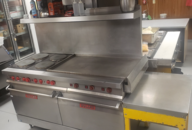
Good News: FY 2021 NSLP Equipment Assistance Grant awardees have been notified by ODE Procurement and grant agreements put in place.
NSLP Equipment Assistance Grants are competitive grants with independent evaluators who score all complete applications. ODE Procurement oversees this process to ensure integrity.
Thank you to all the sponsors who submitted equipment grant applications for Fiscal Year 2021.
Those sponsors who were not awarded have been notified by ODE Procurement. ODE encourages those sponsors to consider submitting applications for the FY 2022 NSLP Equipment Assistance Grant.
USDA generally notifies states around July for the next year’s state awards. Once Oregon School Nutrition Programs have been notified by USDA, we will include information in the SNP newsletter concerning FY 2022 NSLP Equipment Assistance Grant availability and deadline.
For a list of FY 2021 NSLP Equipment Assistance Grant Awardees, please visit the SNP Grant Opportunities Webpage.
|
Preparing for Summer 2022 and School Year 2022-2023 Meal Service
With the rapidly approaching expiration date of several USDA issued waivers, many sponsors are facing the challenging question: What can we do to support families and prepare for the changes coming our way?
There are some things that schools and school districts can do proactively to help ensure this change will be a positive experience for students and families.
Communication: Communicating early, often, and in a variety of ways will help families plan for upcoming meal service changes.
- Encourage families to think ahead to summer and school year 2022/23 by applying now for free/reduced-price meals. As a reminder, any application approved before July 1, will allow for a 30 day carryover into the new school year, but a new application is required after July 1;
- Highlight upcoming changes to the meal service options for the summer months and next school year; and
- Provide information regarding SNAP benefits and encourage families who may qualify to apply. Income eligibility requirements have increased allowing more families to get additional support. A great website to support family’s access to resources is Partners for a Hunger-Free Oregon.
How you communicate with your families and community will play a major role in the success of your meal service operation as it transitions back to normal National School Lunch Program (NSLP) operations. The COVID-19 waivers have allowed schools and school districts flexibilities to operate outside of the normal status quo, e.g. Seamless Summer Option has allowed meals at no-cost. Returning to paid meals could have a significant impact on family budgets. Providing an explanation for the change and plenty of time to make adjustments, will help ease this transition.
Eligibility: Families can begin applying for school year 2022/23 as early as July 1.
- Run direct certification lists at the end of the school year in order to qualify as many students as possible this school year so that eligibility will carry over 30 days into the next school year. Any household determined eligible would require eligibility notification.
- Distribute applications for school year 2022/23 early (Starting July 1) and begin processing them during the summer to get a jump start on next year’s eligibility determinations.
- Avoid uncollectable meal charges by communicating early and often. Encourage families to plan ahead for the upcoming school year and to complete the free and reduced-price meal application.
Schools and school districts should ensure that students and families are aware of how they can apply for free and reduced-price meal benefits, to include using the ODE CNP Online Free and Reduced Meal Application.
Ensuring that multiple communication methods are used and that parents and families have plenty of time to make adjustments will be key to a successful partnership between schools, families and the community throughout the transition to ‘normal’ NSLP operations. ODE CNP would like to thank each of you for the efforts you have put into ensuring Oregon’s students are fed.

Establishing Area Eligibility for Summer Programs
On April 11, 2022, USDA announced that in addition to using Census Data and Community Eligibility Provision (CEP) Data, 2019 School Data for Free and Reduced-Price Eligibility could also be used to qualify Site Eligibility for Seamless Summer Option (SSO) sites in the absence of available school data from 2020-2022.
The 2019 Free and Reduced Price Eligibility of Oregon Public Schools List includes a list of all Oregon Schools and the Free and Reduced Price eligibility percentage from October 2019. The 2019 data can only be used this Fiscal Year (Summer 2022) and eligibility using this data can only be extended through June 30, 2025.
At this time, SSO Sponsors have 4 different ways to qualify a site to meet Site Eligibility Requirements of 50% or more Free and Reduced Price percentages.
-
Census Data using the FNS Area Eligibility Map. This is one of the preferred methods and will allow site eligibility to be extended for 5 years.
-
Community Eligibility Provision (CEP) data for individual schools using the CEP Area Eligibility Data This method is also recommended, since it will also allow site eligibility to be extended for 5 years.
-
School Data from School Year 2019-2020 using the 2019 Free and Reduced Price Eligibility (FRP) of Oregon Public Schools List. This method is a snapshot of October 2019 and will only allow site eligibility to be extended through June 30, 2025.
- Sponsors must submit the 2019 Free and Reduced Price list to your assigned Child Nutrition Specialist with the qualifying school(s) highlighted. If the school is not located at a qualifying site, include an attendance boundary map or letter from the school district showing that the site is within the attendance boundary of the qualifying school.
-
School Food Authorities – While this method is similar to #3, there are additional flexibilities where School Food Authorities may review all months within School Year 2019-2020 and use any qualifying month within that year. To use this method, review the 2019-2020 monthly claim information for the site in question on the School Nutrition Programs section in CNPweb (purple puzzle piece). This method will only allow site eligibility to be extended through June 30, 2025.
To qualify, Claim Eligibility Information for the month must have at least 50% Free and Reduced Price Eligible Students out of Total Eligible Students. For more information on qualifying a site using this method, contact your assigned Child Nutrition Specialist.
|
Preparing for Carryover for School Year 2023
As mentioned in the May 17, 2022 SNP newsletter, Oregon applied for a waiver opportunity regarding the carryover eligibility period for the beginning for School Year 2022-23. USDA notified ODE CNP on May 24, 2022, that this waiver has been approved.
This flexibility waives the requirement that carry over eligibility is based on determinations made during the preceding year. It allows sponsors the flexibility to use the most recent application or Direct Certification information for each student to establish carry over eligibility for School Year 2023.
In preparation for this potential waiver approval, ODE CNP is encouraging sponsors to communicate this information with current eligibility software providers to explore how previously expired eligibility may be activated for the 30 day carryover.
As a reminder, If your school or school district did not download direct certification files in SY 2020, 2021 and/or 2022 they must do so.
Under this waiver, for example, if a student was directly certified this year, then that information must be used for carry over in School Year 2023. However, if the most recent information that a school has for a child is from School Year 2020 or 2021, then the school can use that eligibility determination for that child for carry over into School Year 2023.
Should you have additional questions pertaining to this waiver, please contact your assigned Nutrition Specialist. Full waiver details can be found on the Oregon Child Nutrition Programs COVID-19 Response Webpage.
Preparing for Fueling Students for Success Initiatives Implementation
Oregon Department Education School Nutrition Program expects full implementation of the Student Success Act on July 1st of this year.
ODE has developed several resources to assist sponsors in successfully implementing the Fueling Students for Success school nutrition initiatives.
The Introduction to the Student Success Act in School Nutrition Programs training, provides an overview of the Student Success Act School Nutrition Program provisions including the Community Eligibility Provision Incentive Reimbursement Program, the Oregon Expanded Income Guidelines Reimbursement Program and Breakfast after the Bell.
The ODE SNP Student Success Act webpage also has several new resources available including:
CEPI at A Glance
Oregon Expanded Income Guidelines Chart 2022-23
Oregon EIG At A Glance
Oregon EIG Application Tip Sheet
Oregon Breakfast after the Bell At a Glance

Culinary Institute of Child Nutrition Webinar
This installment of the Culinary Institute of Child Nutrition (CICN) Webinar Series will introduce the Institute of Child Nutrition (ICN)'s upcoming Shaking It Up worksheet series. These worksheets provide tangible, practical guidance for school nutrition professionals to implement sodium reduction best practices and strategies in their school food service operations. The webinar will also feature strategies to help reduce sodium levels while adding quality and flavor to your meal service.
Learning Objectives:
- Identify tools and strategies that help reduce sodium levels in school nutrition menus.
- Select at least one sodium reduction strategy to implement in a school nutrition program.
Date: Thursday, June 2, 2022
Time: 12:00 - 1:00 pm (Pacific Time)
Register Here
|
Institute of Child Nutrition (ICN) Virtual Training Sessions
The Institute of Child Nutrition (ICN) is offering virtual training sessions during the summer of 2022. There are topics available for school nutrition professionals and Child and Adult Food Care Program (CACFP) operators. Many topics are scheduled for new child nutrition directors and lessons from Introduction to School Nutrition Leadership (ISNL).
These sessions will fill quickly, so don't wait!
Register Here
|
USDA Foods Updates
Value of Commodities Received (VCR) Reporting
Every June ODE’s USDA Foods team publishes a memo on how to gather all reports to compile VCR reports. Pay close attention as reports from multiple sites may be required. As usual, ODE will provide a summary report on the USDA Foods Distribution Program website at the beginning of July. It will detail each agency’s spending by program. Prior year reports are available now.
USDA DoD Fresh Fruit and Vegetable Program end of school year instructions
The final week to place orders in FFAVORS for SY2022 is the week of June 20th. Last delivery day is Thursday, June 30th, or ealier according to your assigned delivery day.
By June 30th, end of fiscal year, all orders must be received and receipted in FFAVORS. NSLP Orders receipted after June 30th will count towards SY2023 spending.
USDA DoD Fresh for SFSP is available as soon as the school year ends in each location. Banks have been loaded in FFAVORS for USDA Foods SFSP agencies that opted in. Remember to select the SFSP or Summer Feeding toggle in FFAVORS to access that budget when placing an order.
|
 For assistance with placing orders, accessing funds or processing receipts, please consult the FFAVORS Customer User Manual.

Procurement
Writing Clear, Thorough Specifications:
When drafting specifications for food items, schools should consider many characteristics, including grade standard, size, quantity, quality, cleanliness, packaging, food safety and delivery. Remember, the more specific the request, the more schools may pay for the product. School Food Authorities (SFA) should be conducting market research and consider a pre-bid meeting to discuss with vendors or producers the types of products the school is looking to purchase. Below is a list of characteristics you should include in your specification:
Product Name and Variety: SFAs can be as specific as they want in terms of product and variety. If an SFA is procuring apples, they might specify a range of varieties or just one variety.
Buy American Provision: SFA must ensure specification language includes the requirement for domestic agricultural commodities and products that comply with the Buy American Provision. SFAs may include the following statement in the specification process: “We require bidders to certify that ___ (insert product name) ___ was processed in the U.S. and contains over ____ (insert % of weight or volume) of its agricultural food component from the U.S.," with space for the supplier to fill in the name of the product and its percentage of the domestic agricultural food component (by weight or volume) contained therein.
Grade: Depending on the intended use for a product, it might be important to specify a U.S. Grade Standard. However, local producers may or may not be familiar with U.S. Grade Standards. The SFA should review the grade standard for desired quality and condition of the product that best fits its needs. Upon selecting the grade, include in the specification descriptive words such as “well-formed” or “well-colored” that explain the attributes desired. This will prevent the district from paying for higher quality product than necessary.
Size: SFAs should include the approximate size of the product where applicable. Size may be expressed by count or number per standard case size, ounces per unit, diameter, etc. Size is also important relative to meal contribution, consistency, yield and labor cost.
Quantity: Quantity should be included in a specification to inform seller how much product the SFA intends to purchase. Generally, the higher the quantity the better the price. Farmers and SFAs sometimes speak different languages. School districts generally order in cases or pounds, but farmers sell in bushels and pecks. SFAs should refer to a conversion charts to help identify the unit of issue and quantity needed. Further, stating a product in just pounds may lead to a larger quantity of smaller product, thus increasing labor.
Quality: Quality descriptors are included in U.S. Grade Standards. Again, the SFA should review desired attributes of quality and condition to include in specification. Also, specifying number of hours or days from harvest or ripeness of the product may improve the quality of the item received.
Cleanliness: SFAs should indicate their expectations regarding the product’s cleanliness. Consider stating product should be clean with no visible signs of dirt or pests.
Packaging: SFAs should designate size and/or weight of packaged product. Large, heavy containers may be unsafe and unmanageable by employees. Inner packaging may not be necessary if the outer package is sufficient. The district should determine if new packaging is required, otherwise farmers may repack product in used containers. Some SFAs receive local products in reusable containers, also known as reusable plastic containers (RPCs). Be sure RPCs are cleaned and sanitized between uses.
Food Safety: SFAs should always purchase food from reliable, reputable sources that follow GAPs and good handling practices (GHPs). USDA does not require school nutrition programs to purchase from GAP certified farms. In some instances, school districts or States may require schools purchase only from GAP certified farms. Food safety requirements should be clearly outlined in the bid proposal. Ultimately, it is up to the buyer to determine and document purchases are coming from a safe source.
Farm Practices and Characteristics: SFAs are free to specify farm characteristics and practices, as long as they do not limit competition.
Delivery: SFAs should establish delivery criteria. Allow flexibility in harvesting and delivery due to weather, where applicable. Product harvested in wet fields could lead to problems with product cleanliness.
|
 Fresh Fruit and Vegetable Program (FFVP) Update
Please continue to submit claims to FarmtoCNP@ode.oregon.gov according to the SY 2021-2022 FFVP timeline. April 2022 claims are due Wednesday, June 29, 2022.
Please complete the mandatory annual FFVP training before submitting your first FFVP claim.
If you use up your initial FFVP award funds, please contact us at FarmtoCNP@ode.oregon.gov to inquire about additional funds.
Extra! Extra! Read all about it. Newsletters will be distributed during the following weeks. (During the summer, newsletters will be distributed once a month) We encourage you to access previous newsletters on the School Nutrition Memos Page:
- Mid-June 2022
- Beginning of July 2022
School Nutrition Program Contacts
Civil Rights
In accordance with federal civil rights law and U.S. Department of Agriculture (USDA) civil rights regulations and policies, this institution is prohibited from discriminating on the basis of race, color, national origin, sex (including gender identity and sexual orientation), disability, age, or reprisal or retaliation for prior civil rights activity.
Program information may be made available in languages other than English. Persons with disabilities who require alternative means of communication to obtain program information (e.g., Braille, large print, audiotape, American Sign Language), should contact the responsible state or local agency that administers the program or USDA’s TARGET Center at (202) 720-2600 (voice and TTY) or contact USDA through the Federal Relay Service at (800) 877-8339.
To file a program discrimination complaint, a Complainant should complete a USDA Program Discrimination Complaint Form which can be obtained online at: Filing a Program Complaint as a USDA Customer webpage, from any USDA office, by calling (866) 632-9992, or by writing a letter addressed to USDA. The letter must contain the complainant’s name, address, telephone number, and a written description of the alleged discriminatory action in sufficient detail to inform the Assistant Secretary for Civil Rights (ASCR) about the nature and date of an alleged civil rights violation. The completed AD-3027 Complaint form or letter must be submitted to USDA by:
- mail:
U.S. Department of Agriculture
Office of the Assistant Secretary for Civil Rights
1400 Independence Avenue, SW
Washington, D.C. 20250-9410; or
- fax:
(833) 256-1665 or (202) 690-7442; or
- email:
program.intake@usda.gov
This institution is an equal opportunity provider.
|