|
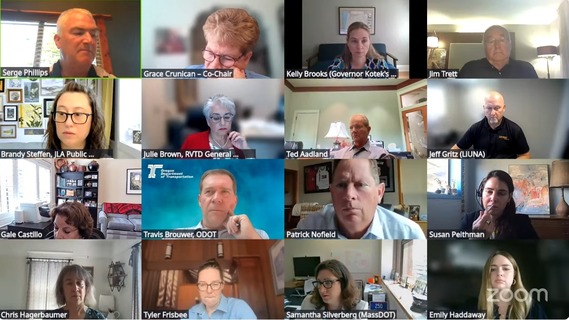
On Aug. 7, Gov. Tina Kotek’s Rebuilding our Transportation Vision Workgroup invited transportation experts from other states to share their approaches to funding, accountability and long-term transportation needs. You can watch the full meeting here.
Officials from Minnesota, Massachusetts, Colorado and Utah joined the meeting to share how their transportation departments manage state and local roads and transit systems. A lot of the conversation focused on the revenue options they use to pay to fund transportation.
Many of the revenue options discussed are not utilized in Oregon currently, including:
- Indexed gas tax with automatic inflation/Construction Cost Index adjustments to avoid erosion over time. (Colorado)
- Portion of state or regional sales tax dedicated to highways or transit (Massachusetts, Minnesota, Utah)
- Retail delivery/e-commerce fees (Colorado, Minnesota)
- Rental car fees (Colorado)
- Tolling, congestion pricing, managed lanes/express lanes to raise revenue and help to manage demand (Colorado)
- Progressive income/millionaires' tax dedicated to transportation (Massachusetts)
- Industry Fees (Colorado per-barrel oil and gas production fees to fund clean transit and wildfire mitigation)
Oregon transportation agencies rely on three main sources to fund the maintenance of roads and bridges:
- A 40 cent per gallon tax on motor fuels, including gas tax and diesel tax.
- Taxes on heavy trucks, including the weight mile tax and truck registrations.
- Driver and vehicle fees, including licenses, vehicle titles and registration.
Starting in 2027, electric and hybrid vehicles that pay no or little gas tax will start paying a 2 cent per-mile road usage charge or an annual flat fee.
These fees make up the State Highway Fund and revenue is split between the state (50%), counties (30%) and cities (20%). While this structure has supported the state’s transportation system for a long time, the State Highway Fund can no longer keep up with today’s costs as cars become more fuel-efficient, electric vehicle use increases, and costs continue to rise.
Other state transportation funding in Oregon includes:
In a panel discussion with the Workgroup’s subgroup chairs, Duncan Wyse, who chairs the funding subgroup, highlighted that Oregon’s network of city, county and state transportation funding and management is struggling.
“We've really got a challenge on our hands if we're going to maintain the system for the next 10, 20, 30 years or so given how we're running it today,” said Wyse.
His subgroup is working on a report for the Workgroup to identify finance and funding options for raising revenue to address transportation needs identified by the other subgroups. The finance and funding scenario subgroup report will provide an overview of existing and new potential options for consideration that will include an exploration of funding mechanisms that have been successful in other states.
The subgroups are digging into six key focus areas to help inform the Workgroup’s final recommendations to the governor, including:
- Finance and funding scenarios
- Maintenance, operations, preservation and emergency response
- Community livability and safety programs
- Major project funding and delivery
- Transit and passenger rail
- Freight mobility
Rising costs and insufficient funding were common themes expressed by the Workgroup’s subgroup chairs in the Aug. 7 panel discussion, as well as a need to prioritize work based on community needs and available funding. Additionally, the subgroup chairs recognized that their subject areas have at least one other overlapping need: safety.
“We are not a safe state to drive in, walk in, bike in,” said Thomas Baker, chair of the Community Livability and Safety subgroup. “It’s not safe for rural users. It’s not safe for urban users. We have one of the highest rates of traffic deaths per vehicle miles traveled.”
“As funding declines, safety becomes harder to guarantee,” said Anthony Castaneda who chairs of the subgroup on maintenance, operations, preservation, and emergency response. He focused on how declining funding for roads, bridges, and other transportation infrastructure will impact everyone relying on the transportation system in Oregon.
The Workgroup also discussed a public survey to hear from Oregonians about their transportation priorities. They worked with ODOT to make changes to the survey before it was launched publicly today, Aug. 14.
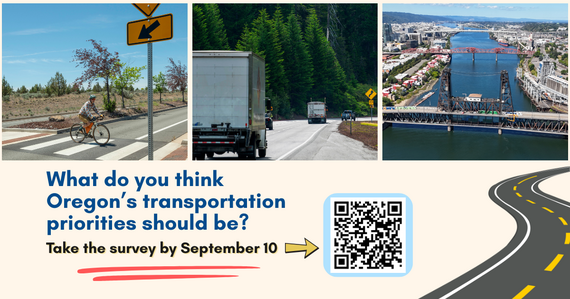
The survey will help inform the upcoming recommendations from the Workgroup that will be delivered to the governor in December.
A recording of the meeting is available on YouTube. Visit the Workgroup home page to learn more and stay up to date.
|