Year-to-Date Confirmed Fatalities, Current vs 2025 Fatalities
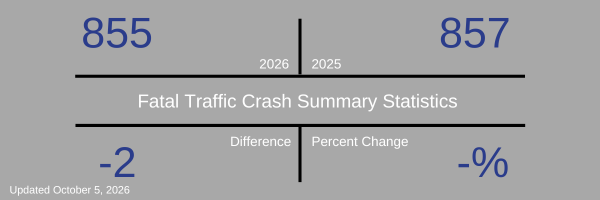 FATAL CRASHES 2026 MAP can be found here.
OSTATS CRASH DASHBOARD can be found here.

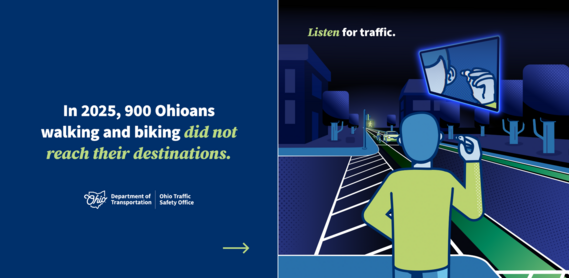 At some point in the day, everyone is a pedestrian. October is Pedestrian Safety Month — a great opportunity to include and increase pedestrian safety messaging across all platforms.
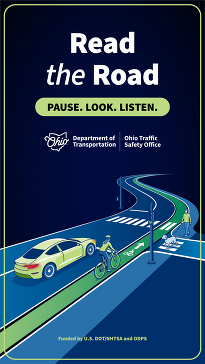
As part of an integrated response to increasing bicycle and pedestrian crashes on Ohio's roadways, the Ohio Department of Transportation (ODOT) and its partners recently launched a new statewide safety effort called Read the Road: There's space for all of us, aimed at reducing crashes and saving lives through education and awareness.
After declining from a peak in 2021, fatal and serious injury crashes involving bicyclists and pedestrians are again on the rise. There were 900 Ohioans walking or bicycling who did not reach their destinations last year.
The safety effort is focusing on documented crash causes with educational messages that reinforce safe driving behaviors:
- Yielding for pedestrians
- Obeying the speed limit in areas with high levels of pedestrian and bicycle activity
- Remaining alert and visible while walking or bicycling
- Sharing the road responsibly
While there are fatal and serious bicycle and pedestrian crashes in all of Ohio’s 88 counties, a recent crash analysis highlights that the state’s urban areas rank among the highest — Franklin, Cuyahoga, Hamilton, Montgomery, and Lucas counties. The Read the Road safety effort has a particular focus on these and other high-crash locations across Ohio. Those other locations include Holmes County, as traditional forms of transportation (walking and biking) are frequently used among the Amish population.
More information on Read the Road including free downloadable safety materials are available on ODOT's website.
|
 |
|
Motorcycle Ohio Presents 'Saved by the Helmet' Awards |
Motorcycle Ohio recently presented three “Saved by the Helmet” awards in northeast Ohio. The recognition is given throughout the year to riders who survive serious crashes while wearing a helmet. "Saved by the Helmet" riders receive an official certificate of recognition and a brand-new replacement helmet courtesy of Motorcycle Ohio.

Two riders were recognized in partnership with Franklin County Safe Communities at Euro Bike Night in Columbus on Sept. 22.
-
Christopher Merz of Columbus was struck by a teen driver on July 28, 2025. He was thrown over his handlebars and hospitalized for 6 days but sustained zero head injuries thanks to his helmet. The teen driver only had his temporary permit and was driving unsupervised, and he was cited for a temporary permit violation.
- On August 23, 2025, Yash Patel of Grove City was hit when a driver in an SUV made an illegal u-turn, trapping Patel underneath the vehicle. He suffered serious injuries, but believes wearing his helmet saved his life.
Hashem Baharoon of Parma was honored at the ArtiFlex Manufacturing annual health and wellness fair on Oct. 1.
Baharoon was involved in a hit and run crash while riding on I-71 in Cleveland on April 16, 2024. He was traveling southbound near I-90 when a driver in a black pickup truck ahead of him braked suddenly for unknown reasons. Baharoon applied the brakes causing the back of his motorcycle to lift into the air before he hit the back of the pickup truck. He was thrown over his handlebars, landing in the roadway. He was taken to the hospital for treatment and believes he survived thanks to his helmet. The driver of the pickup truck left the scene and has not been located.
|
Motorcycle Ohio hopes that acknowledging riders who wear protective gear will help to promote and increase awareness of the life-saving value of motorcycle helmets.
If you know a rider who was "Saved by the Helmet" contact the Motorcycle Ohio office at 1-800-837-4337 or visit motorcycle.ohio.gov.
 |
|
Plan an Event for WDoR 2026 |
Each year in November, communities around the world come together for World Day of Remembrance for Road Traffic Victims (WDoR) to remember those killed and seriously injured in traffic crashes, and to advocate for proven strategies to prevent future crashes. This year’s WDoR takes place on Sunday, November 15, 2026. The Ohio Traffic Safety Office is inviting its partners statewide to join with safety champions across the United States to organize an event to demonstrate the scale and impact of traffic deaths and injuries in their communities, and to advocate for change to end these preventable tragedies.
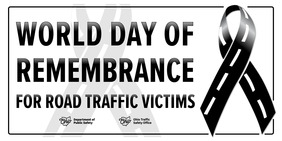
The Ohio Traffic Safety Office is offering free vinyl banners (left) and black ribbon lapel pins to support WDoR events in Ohio.
*Current OTSO grantees should contact their planner regarding any grant revisions or questions about grant-supported WDoR events.
-
CLICK HERE to register your event and request free materials.
- Check out our media toolkit with sample press release, and social media posts with customizable graphics to add your agency's logo
- Help us spread the word about your event! OTSO is creating an online event calendar with all WDoR events in Ohio. To add your event to the calendar WITHOUT requesting materials, please e-mail trafficsafety@dps.ohio.gov.
|
 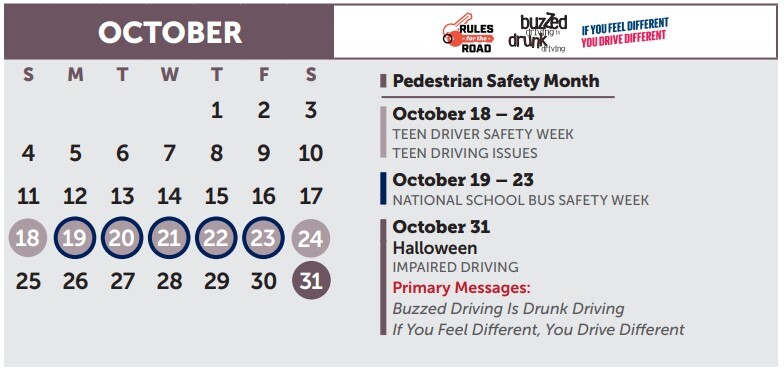 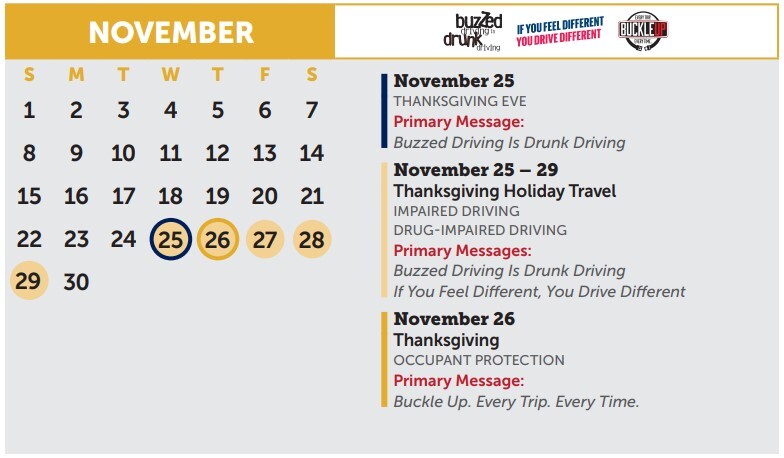 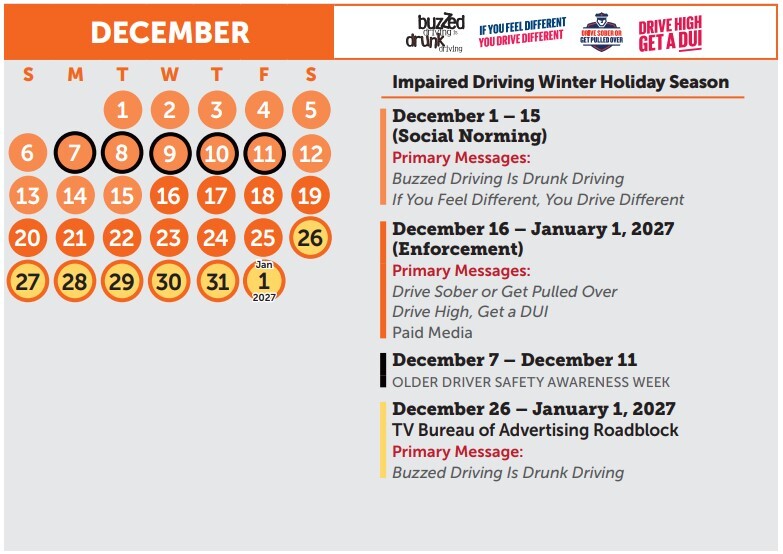   Teen Driver Safety Week
Key Dates:
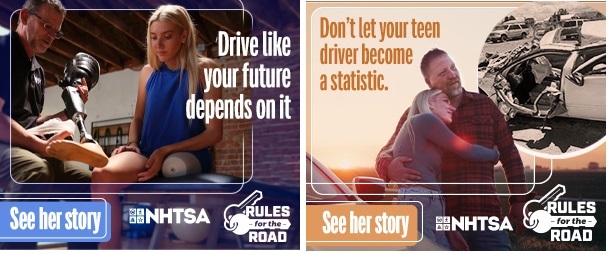
A teen’s inexperience behind the wheel makes them more susceptible to crashes, so including teen safety messaging in a traffic safety communication plan is important. Specific risk factors for teens behind the wheel include: alcohol and drug use, not wearing a seat belt, distracted driving, additional passengers, speeding, and drowsy driving.
NHTSA's ad campaign focuses on the story of Kennedy Littledike, a teen from Idaho who was 16 years old when she lost her leg in a reckless driving crash in 2021. She launched her popular social media channel to share her journey and inspire others.
Many communication resources from NHTSA come in two versions, one speaking to the teen driver and the other speaking to their parents.
Sample News Release, Social Media Posts & Graphics are available now.
Click here for NHTSA campaign materials.
National School Bus Safety Week
Key Dates:
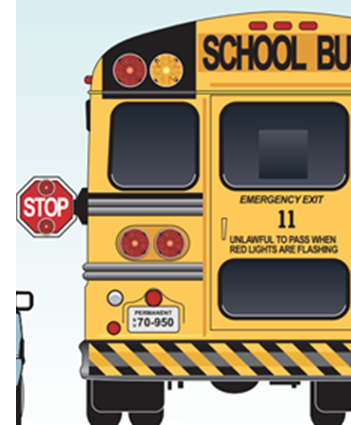
Millions of children across the nation ride on a school bus every day – that’s why school bus safety is important in every community. Use this material from NHTSA to educate the public about student loading/unloading safety, school zone speed enforcement and motorist compliance with school bus stop-arm laws.
OTSO has a promotional toolkit with social media assets available for anyone to use to remind drivers about Ohio's school bus traffic safety laws.
Order "Stop Means Stop" printed materials from OTSO's Online Materials Order Form
- OTS1010 School Bus Stop Means Stop Flyer
- OTS1011 School Bus Stop Means Stop Poster
|
 Halloween Impaired Driving Prevention
Key Dates:
- October 25-31, 2025 - Halloween Campaign
- October 31 - Halloween
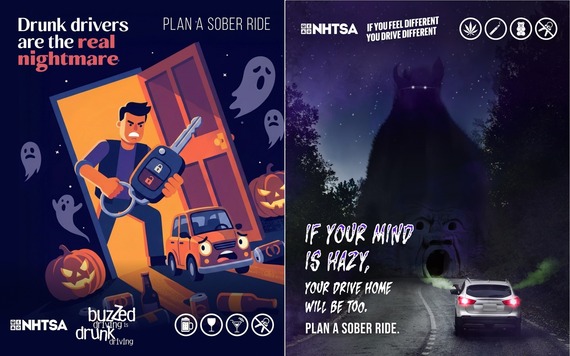
No Halloween villain is more frightening than a drunk driver. If alcohol or marijuana are part of your Halloween celebration, plan for a sober ride.
Relevant and seasonal messaging can help boost traffic safety communication efforts. Use this themed material to encourage people to not get behind the wheel while impaired by drugs or alcohol. Get Material Now
Key Messages:
- Buzzed Driving is Drunk Driving
- If You Feel Different, You Drive Different
  Cannabis Impairment Training Available for Law Enforcement
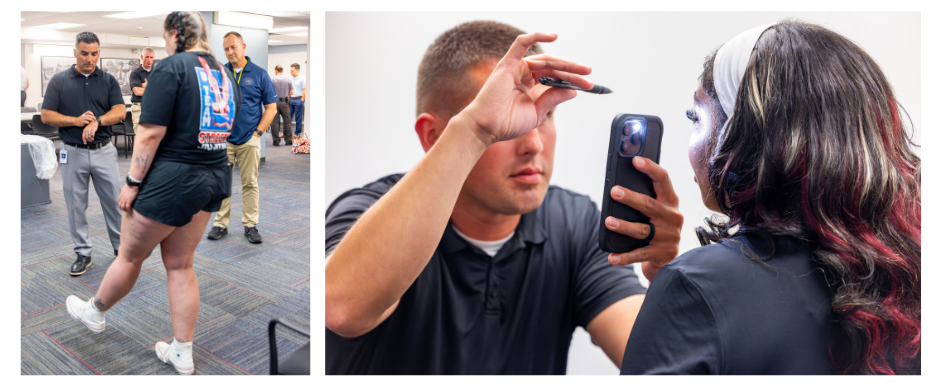
Advanced Cannabis Impairment Training (ACIT) is an 8-hour course that is designed to train law enforcement officers to observe, identify, and articulate the indicators of impairment related to cannabis. With the goal to reduce impaired driving incidents and crashes, participants will engage in classroom and practical instruction by Drug Recognition Expert (DRE) instructors.
Participants must be a commissioned law enforcement officer or have attended ARIDE.
The next ACIT opportunity is December 16, 2026. Training will be held at the Ohio State Highway Patrol Academy in Columbus. Advance Registration is required.
Reminder: Car Seat Basics for Law Enforcement - Free Online Course
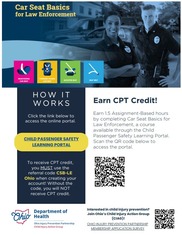
Many law enforcement officers report limited training on child passenger safety (CPS) and uncertainty about current Ohio CPS laws. When it comes to protecting child passengers, having quick access to accurate information is critical.
The Car Seat Basics for Law Enforcement online course was designed specifically for officers to build confidence in recognizing proper car seat use, understanding Ohio’s CPS laws, and knowing how to respond in the field. This convenient, self-paced training also offers CPT credit.
Take a proactive step to better protect the children in your community. Complete the training today!
-
CLICK HERE to download the flyer to post in your agency's briefing room
Access the free course here: Child Passenger Safety Learning Portal
|
 |
|
Important Update for Breath Test Operators: eLicense Now in Use |
Effective April 28, 2025 the Ohio Dept. of Health began to use eLicense to manage all Intoximeter DMT and I-9000 Permits. Operators will need to create a profile through eLicense to attend Basic Operator or Senior Operator Classes or conduct a renewal for your current Permit. Links to eLicense and a help aide to assist with creating an OHID are below:
If you have any questions with creating your eLicense account please contact the help desk at 1-855-405-5514.
Signing up for I-8000 classes will still be done using Eventbrite (links are provided in the description box of the class listed on the calendar).
Follow this link for the Training Calendar for all Classes and Proficiency Testing Sessions:

Drug Recognition Expert Program
The Drug Recognition Expert (DRE) Program is a traffic safety program that focuses on the detection, apprehension and adjudication of drug-impaired drivers.
A DRE is a law enforcement officer highly trained to recognize impairment in drivers under the influence of drugs other than, or in addition to alcohol.
For more information and how to apply for this free training, please view the DRE Application, School Information and Requirements by clicking here.
|
 |
Advanced Roadside Impaired Driving Enforcement (ARIDE) provides officers with general knowledge related to drug impaired driving and to promote the use of Drug Recognition Experts (DRE). Officers attending this course will receive an update/refresher of Standardized Field Sobriety Testing (SFSTs) and must successfully pass an SFST proficiency evaluation. This training also promotes interaction with representatives from the state's prosecution community who are encouraged to attend. The instructors for this course are all Ohio DRE certified instructors.
-
Prerequisite: Law enforcement officers must have had training in SFST (previously ADAP). This course is funded through an OTSO/NHTSA grant and is free for sworn Ohio law enforcement officers and prosecutors only. Tuition for out-of-state officers is $250.
IACP Annual Conference and Expo
- International Association of Chiefs of Police
- Orlando, FL
- October 24-27, 2026
- The largest and most impactful law enforcement event of the year – more than 16,000 public safety professionals come to learn new techniques, advance their knowledge and careers, and equip their department for ongoing success. The three tenants of conference are training, networking, and exposition hall education.
- https://www.theiacpconference.org/
Youth Transportation Safety Summit
- Texas A&M Transportation Institute
- San Antonio, TX
- November 20, 2026
- Attendees will gain valuable insights and knowledge on trends, strategies, and practical tools for developing outreach to effectively educate youth on navigating the roads safely and responsibly. This event provides a platform for attendees to connect with peers, traffic safety professionals, and youth leaders.
- Youth Transportation Safety Summit
 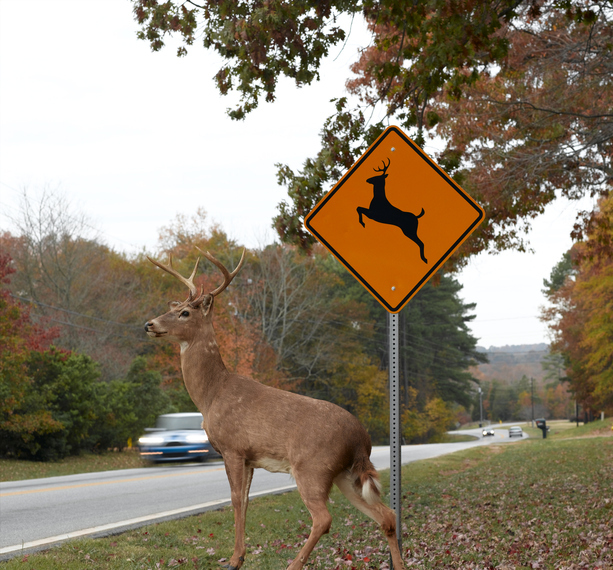
It's deer season... on Ohio's roadways.
Fall is peak time for deer-related crashes in Ohio. Since 2021, statistics from OSHP show there were 110,676 deer-related crashes on Ohio’s roadways. While 94% of deer-related crashes only resulted in property damage, 49 crashes resulted in fatal injuries.
- 42% of these crashes occurred in October, November, and December.
- The top 6 counties for deer related crashes are Stark, Richland, Williams, Hancock, Tuscarawas and Lorain.
- US-30, State Route 2 and I-71 are the top roadways where deer-related crashes occur in Ohio.
The Ohio Department of Natural Resources (ODNR) Division of Wildlife reminds drivers to stay alert for increased white-tailed deer movement and activity along roadways during the fall. October, November, and December are the peak months of the deer breeding season, and the frequency of deer-vehicle collisions rises during this time.
The white-tailed deer is perhaps Ohio’s best-known wildlife species. It is seen in the state’s wildlife areas, parks and nature preserves as well as in the backyards of rural and suburban residents. It is the state’s only big game animal and can be found in a variety of habitats, including woods, farmlands, brushy areas, dense thickets, and edges.
White-tailed deer are more active during the fall breeding season. The breeding season, known as the rut, may cause deer to unexpectedly dart into roadways with little caution. Additionally, deer may move around more frequently, across wider areas, and at all hours of the day at this time of year. All these factors increase the risk of deer-vehicle collisions.
How to avoid animal collisions:
-
Keep your focus on the roadway to provide as much time as possible to spot a deer.
-
Slow down without swerving out of your lane.
- If you do spot a deer, keep in mind they often travel in groups. Seeing one deer on the roadway may indicate others are nearby.
-
Use your high beam headlights when there is no oncoming traffic to make spotting deer alongside the road easier. Watch for reflections from a deer’s eyes.
- Be extra cautious while driving at dawn and dusk.
-
Watch for deer where the road intersects fencerows, riparian corridors (a riparian corridor is a stream, river, or ditch lined with trees or other vegetation), and forested habitats.
-
Always wear a seatbelt and remain awake, alert, and sober:The chances of getting injured when hitting an animal are much higher if you don’t have your seatbelt on. If you’re distracted or drowsy, you’re not properly scanning the road for deer and could end up spotting them too late.
What to do if you hit a deer:
- Following the collision, call law enforcement to file a crash report.
- Avoid making contact with the deer/animal. A frightened and wounded animal can be dangerous and pose a threat when approached or might further injure itself.
- Activate the vehicle’s hazard lights whether it’s light or dark outside.
- If possible, move the vehicle to a safe location out of the roadway, and wait for help to arrive.
- Drivers should contact their insurance agent or company representative as quickly as possible to report any vehicle damage.
|
 

OTSO offers materials for numerous traffic safety campaigns, including impaired driving, restraint usage, distracted driving, speeding and motorcycles. Utilizing these free materials can make an impact that can reach beyond your community.
CLICK HERE to order online!
Outdated forms sent via fax or e-mail will still be accepted, but this online link will be updated when new materials are added to our inventory. More items coming soon!
|
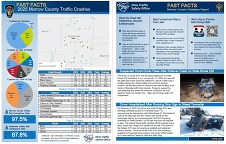
Fast Facts is an educational tool to help inform drivers about local level crash risks and data trends. Each county-specific bulletin includes the latest crash statistics, timely safety talking points, and stories of real crashes.
All 88 bulletins are available publicly for driving instructors, Safe Communities, employers, and law enforcement to use for presentations and to display at public events. Parents of teen drivers may also find them useful for the required 50 hours of in-car practice.
OTSO extends its thanks to the Ohio State Highway Patrol for the collaboration on the Fast Facts bulletins.
CLICK HERE to download the current "Fast Facts" bulletin for your County!
|
|


