 Governor DeWine Visits DBH Central Office Staff
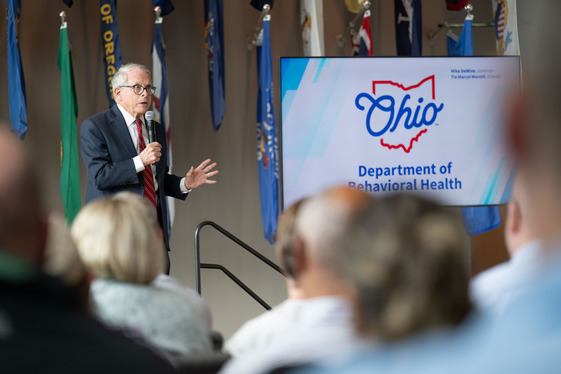
This week, Governor Mike DeWine visited DBH staff during the department's annual Central Office All-Staff meeting, which was held at the National Veterans Memorial and Museum in Columbus. The governor thanked employees for their dedicated service and commitment to helping the Administration work toward achieving its goals of helping Ohioans impacted by mental illness and substance use disorders live up to their full potential.
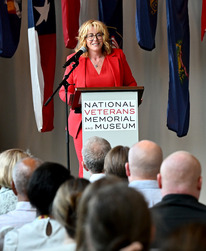
Governor DeWine highlighted the impact of key Administration initiatives and discussed Ohio's future and the importance of preparing the youth of today for the jobs of tomorrow. He then focused on key achievements in the behavioral health space, including the Administration's concerted effort to promote greater access to mental health and substance use disorder prevention, treatment, and recovery support services; the launch of the 988 Suicide and Crisis Lifeline; the impact of capital investments (including funding for the new Miami Valley Behavioral Healthcare hospital); and the recent statewide expansion of Mobile Response and Stabilization Services (MRSS).
The Governor's special message followed opening remarks from DBH Director Tia Marcel Moretti, a recap of programming highlights from Chief Operating Officer Carrie Kuruc, and the presentation of employee recognition and service awards.
|
New Funding Opportunities
DBH is pleased to announce two new funding opportunities. Click the buttons below for more information and application instructions.
RFA 107 – Clubhouse Technical Assistance
The DBH Office of Community Services, Bureau of Recovery Supports has released a Request for Applications (RFA) for the purpose of soliciting applications from one organization to provide technical assistance to grantees who are developing, implementing, and/or expanding a Peer-Run Organization using the Clubhouse model at their organization. This RFA seeks to select one grantee. “Technical assistance” is defined as providing education, support, and consultation towards achieving outcomes and goals for that RFA. Applications must be submitted electronically to peerservices@dbh.ohio.gov by 3:00 p.m. on June 30.
RFA 109 — Ohio’s State Opioid and Stimulant Response (SOS) 4.0
The DBH Bureau of Grants Administration has released an RFA for the purpose of soliciting applications from eligible Ohio Alcohol, Drug Addiction, and Mental Health (ADAMH) Board, non-profit, and for-profit community organizations that provide prevention, opioid overdose reversal medications (OORM) and approved lifesaving overdose prevention and response services, treatment, and recovery support services to apply for State Opioid and Stimulant Response (SOS) 4.0 Grant funding. The responsibilities of the selected applicants will include providing prevention, OORM, treatment, and/or recovery support services specifically aimed to address opioid use disorder, stimulant use disorder, and concurrent substance use disorders aligned with Ohio's SOS 4.0 goals, population of focus, and intended outcomes. Applications must be submitted electronically to SOS4@dbh.ohio.gov by 3:00 p.m. on June 24.
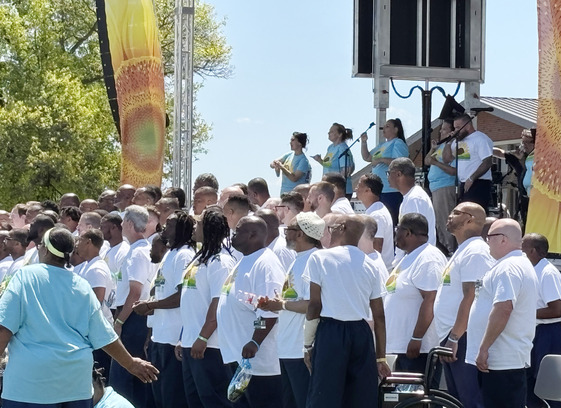 Sunflower Arts and Music Festival Brings Music, Hope, and Healing to Ohio Reformatory for Women
The Ohio Reformatory for Women (ORW) in Marysville, hosted the Fourth Annual Sunflower Arts and Music Festival on June 2. Hosted by the Ohio Department of Rehabilitation and Correction (ODRC) and the Harmony Project, the event showcased the transformative power of the arts within Ohio's prison system.

The festival brought together performers from three state correctional institutions for a full day of music, spoken word, and community engagement centered on hope, healing, and human connection. The Harmony Project choirs from ORW, Pickaway Correctional Institution, and Madison Correctional Institution included several participants from DBH Recovery Services and Therapeutic Communities.
"Today is about hope and purpose and humanity," said ORW Warden Erin Maldonado. "All the people in this room have taken the chance of being a part of the Harmony Project, and what that means is they're accepting that where they are does not define who they are. They've made mistakes, they accept mistakes, they take accountability, but then they make choices to move forward."
|
Wood County Promotes 988 Lifeline in Local Parks
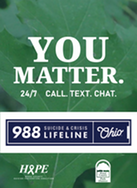
This week, the Wood County Suicide Prevention Coalition launched a major mental health awareness campaign, placing dozens of potentially lifesaving signs in local parks. The signs prominently display the 988 Suicide and Crisis Lifeline, which provides free, confidential 24/7/365 support via call, text, or chat. The initiative is a collaboration between the Wood County Alcohol, Drug Addiction and Mental Health Services (ADAMHS) Board, Wood County Parks District, and the City of Bowling Green and Rossford parks departments. |
|
 |
IMPORTANT LICENSURE UPDATE:
LICDC License Holders With the Clinical Supervisor (CS) Endorsement Must Update Their License After June 18
The Ohio Chemical Dependency Professionals Board issued the following notice for LICDC License Holders who also hold the Clinical Supervisor (CS) endorsement:
On June 18, elicense will recognize your active (or inactive-lapsed/inactive-escrow) LICDC with the Clinical Supervisor (CS) endorsement as a new license type within their system. Your current LICDC license number will remain the same, however it will be listed as LICDC-CS. Your LICDC will show as “Closed, Advanced.”
For those who bill Medicaid, you will need to update your professional license in PNM within 30 days of this change. Click the button below for guidance to update your license.
Note: You will not be able to update in PNM until after June 18, 2026, and you will have a 30-day grace period to do so. If you have issues with updating in PNM after following the guidance document above, please contact ODM Integrated Help Desk at 800.686.1516 or email ihd@medicaid.ohio.gov.
Thrive Peer Recovery Services and The Centers Announce New Collaboration to Expand Peer Support Services

Thrive Peer Recovery Services has announced a new collaboration with The Centers Glick Recovery Campus to expand peer support services at the Glick Recovery Campus in Cuyahoga County, launching September 2026. The collaboration represents a significant step forward in expanding access to peer-led recovery support in crisis care settings while also creating new workforce opportunities for individuals with lived experience.
As part of the launch, Thrive will lead the recruitment and training of a dedicated workforce to support the new program, including Peer Recovery Supporters and leadership roles needed to help establish 24/7 coverage at the crisis center. Community partners, workforce development organizations, and local referral networks are encouraged to help share the employment opportunities and amplify awareness of the new collaboration. By working together, Thrive and The Centers aim to build both immediate staffing momentum and longer-term awareness of the important role peer support plays in crisis care and recovery.
|
HHS Calls For Urgent Action To Reduce Harmful Screen Use And Protect Children Online
The U.S. Department of Health and Human Services (HHS) Office of the Surgeon General recently released the Surgeon General’s Warning on the Harms of Screen Use: An Advisory and Toolkit on How to Protect Children and Adolescents, which raises national awareness about the growing risks associated with excessive and harmful screen use among young people.
The Surgeon General’s advisory highlights the growing evidence linking excessive screen time to sleep disruption, mental health challenges, and other negative health outcomes among children and adolescents. National estimates show adolescents spend an average seven to nine hours a day on entertainment screens, and most report using their devices right before bed. What they encounter online and the excessive, and sometimes compulsive, use of screens is increasingly linked to real-world harm.
Click HERE to see how leaders, advocates, and the media are responding to the advisory and toolkit.
|
New SAMHSA Resources
The Substance Abuse and Mental Health Services Administration (SAMHSA) has released several new resources. Click the links below for more information.
Healthy Starts: Postpartum OUD Care Transitions for Mother and Infant: This publication summarizes information about the postpartum period, presents an innovative program as a case study, and offers practical advice for care teams on comprehensive, collaborative perinatal care.
Associations Between Maternal Opioid Use Disorder Treatment and Pregnancy Outcomes: Opioid use disorder (OUD) during pregnancy can pose serious risks for both mother and child. This study of Medicaid records from 29,193 women found that pregnant women who received OUD treatment, including medication, talk-based therapies, or both, had significantly better pregnancy outcomes than those who received no treatment. This study underscores that receiving treatment for OUD is significantly associated with better pregnancy outcomes.
Revised Regulations for Opioid Treatment Programs — Establishing a Baseline to Measure Progress Over Time: This report and webinar from SAMHSA's Center for Financing Reform and Innovation (CFRI) examines the extent to which states and opioid treatment programs (OTPs) adopted changes after the revisions to 42 CFR part 8 were put into effect. The updated regulations promote increased access to evidence-based medications for opioid use disorder, greater retention in care by promoting practitioner's professional judgment in providing patient-centered care and reducing barriers to services. View the report, webinar, and webinar slides on SAMHSA’s CFRI web page.
Improving Housing Stability for People with Behavioral Health Needs Through the CCBHC Model: This resource discusses how CCBHCs across the U.S. can work with specific groups to prioritize stable housing, and to explore collaborations with national, state, and local partners to build a network of support for homeless individuals.
Impact and Opportunities for CCBHCs in Rural Communities: This resource describes how CCBHCs are currently impacting access and quality of care in rural areas, as well as the potential role of CCBHCs in rural areas.
|
Pharmacy Research News
Understanding Post-traumatic Stress Disorder
and Why Good Sleep Matters
By: Jin Gyu Kim
PharmD Candidate 2026 | The Ohio State University
PTSD Close to Home
Post-traumatic Stress Disorder (PTSD) can affect anyone who has experienced or witnessed a traumatic event, such as a serious accident, assault, fire, disaster, or military combat.1,2 Trouble sleeping, flashbacks, irritability, and feelings of fear or guilt are common signs that the body and mind are still reacting to trauma.3 About 8 million adults in the U.S. live with PTSD each year.4 For many Ohioans, those experiences do not simply fade with time. When trauma and poor sleep combine, daily life can become difficult to manage, affecting relationships, work performance, and overall well-being.

How Trauma Disrupts Sleep
PTSD is more than emotional distress — it changes how the brain and body react to perceived danger.4 The body’s natural “fight-or-flight” alarm system remains active even after the threat has passed.5 Many people with PTSD experience insomnia, nightmares, or frequent awakenings because the brain begins to associate the bed with anxiety and alertness — a process called conditioned arousal.5,6 Without restorative sleep, mood, memory, and concentration suffer, reinforcing the cycle of stress and exhaustion. Restoring healthy sleep patterns allows the brain to process memories and regulate emotions more effectively, making sleep a critical part of PTSD treatment.
The Role of Sleep in Overall Health
Sleep is not just rest; it is recovery. During quality sleep, the brain organizes memories, the heart rate slows, and hormones that control growth, immunity, and healing are released. Chronic sleep loss can affect nearly every system in the body.7 For those living with PTSD, insufficient sleep intensifies anxiety, slows recovery, and heightens vulnerability to depression and substance use. Treating insomnia in conjunction with trauma therapy improves overall outcomes and resilience5,6
|
 DBH 40-Hour Peer Recovery Supporter Training
Registration for the DBH 40-hour Peer Recovery Supporter (PRS) Training is now open for July-December 2026. The DBH 40-hour PRS Training is a live, interactive training that teaches prospective Certified Peer Recovery Supporters (CPRS) who self-identify as being in recovery from a mental health or substance use disorder, how to use their experience to help their peers with the same lived experience. Prospective CPRS will engage in role-play activities and learn the skills necessary to offer high quality peer support. Upon successful completion of PRS training, prospective CPRS will be eligible to apply for Adult Peer Recovery Supporter Certification in Ohio. Questions? Email cprstraining@ohio-pro.com.
Upcoming Problem Gambling Training Opportunities
Upcoming MACC Trainings — Summer 2026
Signature Health 2026 Problem Gambling Training Symposium — June 26

Signature Health will host its 2026 Problem Gambling Training Symposium on June 26 from 8:00 a.m.-5:00 p.m. at Tri-C Corporate College East in Warrensville Heights. This one-day, in-person training is designed to strengthen knowledge and skills to better support individuals impacted by problem gambling. The symposium offers practical tools, emerging insights, and collaborative learning opportunities to help professionals better identify, prevent, and treat gambling-related harm. The training is approved for 5.75 CEUs. Cost is $10 and includes CEUs, breakfast, and lunch.
|
2026 Peer Recovery Summit — July 8-9

Ohio Peer Recovery Organizations (OhioPRO) will host the 2026 Peer Recovery Summit: Connection Creates Recovery: Healing Happens Together on July 8-9 at the Hyatt Regency in Columbus. Time is running out to register. Join the hundreds of peers, recovery leaders, advocates, and organizations from across the state who have registered for an unforgettable experience centered on connection, growth, and recovery. Click HERE to register and HERE to learn more about sponsorship opportunities. Questions? Email OhioPRO Executive Director Michael J. Krause at mkrause@ohio-pro.com.
|
The Center 4 disABILITY Empowerment Annual Banquet — July 9
Join the Center 4 dis-ABILITY Empowerment (CdE) on July 9 for an evening of celebration, reflection, and community at its annual banquet. The Center will celebrate the the launch of its reimagined brand identity, honor the 26th anniversary of the signing of the Americans with Disabilities Act (ADA), highlight the rich history of the Independent Living Movement, recognize the progress made toward disability rights and inclusion, and share details of its 2027 dis-ABILITY Pride Campaign. The event will be held from 5:00-9:00 p.m. at Vue Columbus. ASL interpretation, CART captioning, large-print materials, and accessible seating are available upon request. Space is limited. RSVP by June 25.
|
Suicide Prevention with Deaf Individuals — July 13
The Ohio Suicide Prevention Foundation (OSPF), in partnership with the University of Findlay, will host Suicide Prevention with Deaf Individuals: Why Traditional Models Can Fall Short on July 13 at noon. This webinar will provide practical guidance for adapting suicide prevention efforts to better serve Deaf and hard-of-hearing individuals. Participants will learn how communication barriers and systemic factors can affect suicide risk and explore strategies for more accessible, culturally responsive assessment, intervention, and crisis response.
|
Upcoming Substance Use Deflection Technical Assistance Sessions
2026 Addiction Studies Institute — Aug. 5-7
The Ohio State University Wexner Medical Center will host the 2026 Addiction Studies Institute on Aug. 5-7 at the Nationwide and Ohio State Farm Bureau 4H Center in Columbus. The conference will deliver the latest trends and evidence‑based practices in substance use disorders, featuring knowledgeable and dynamic speakers and opportunities to earn CEU credits. Participants may attend virtually or in-person on Aug. 5-6, and virtual-only on Aug. 7. Click HERE to view the agenda and HERE for speaker bios.
|
Third Annual Ohio Health Policy Summit — Aug. 26

The Health Policy Institute of Ohio (HPIO) will host the third annual Ohio Health Policy Summit on Aug. 29 at The Ohioan Hotel and Event Center in Lewis Center. The 2026 Summit builds on HPIO’s mission to inform data-driven policymaking that improves health, health equity, and the value of health care spending in Ohio. The theme this year is “Meeting the Moment: Using Data for Policy Progress.” This action-oriented convening will include plenary sessions featuring national experts and breakout sessions focused on solutions to rising health care costs, taking mental health supports upstream, child health and well-being, and strategies for using data effectively. Alexandra Spratt, who leads health care policy efforts at Arnold Ventures, will provide keynote remarks. Questions? Email aclarkkirk@hpio.net.
|
Together Forward: Action, Engagement, and Advocacy in Suicide Prevention — Sept. 1
Earlybird registration is now open for Together Forward: Action, Engagement, and Advocacy in Suicide Prevention, taking place virtually on Sept. 1. This global virtual gathering brings together clinicians, community leaders, peer specialists, first responders, educators, policymakers, veterans, and individuals with lived experience to engage in courageous conversations and advance suicide prevention through action, engagement, and advocacy. Featured speakers include The Ohio State University Head Football Coach Ryan Day and University of Dayton Men's Basketball Head Coach Anthony Grant, who will discuss the importance of athlete mental health, the unique pressures faced by student-athletes, and the role that connection, support, and culture play in protecting mental well-being both on and off the field. Cost is $49 before July 1 and $59 after July 1.
|
ICJA 2026 Research Conference — Aug. 30-Sept. 2
The International Community Justice Association will host its 2026 Annual Research Conference on Aug. 30-Sept. 2 at The Ohioan Hotel and Event Center in Lewis Center. This year's theme is "Grounded in Experience, United for Impact." Sunday, Aug. 30, will feature a pre-conference session led by Steven Shook, Ph.D. This highly interactive pre-conference experience will help participants better understand themselves and the people they serve through engaging activities, reflection, discussion, and practical application. Attendees will explore how personality influences communication, how values shape decision-making, how mindset impacts resilience and adaptability, and how emotional intelligence strengthens relationships and leadership. Click HERE to view a schedule of events.
|
 Gov. DeWine among honorees at Faces of Resilience fundraiser
WSYX-TV, June 11, 2026
Reading Resiliency Initiative launches in Ohio
Youngstown Vindicator, June 11, 2026
Lawmakers approve bill providing for safe firearm storage options to help prevent suicide
Cleveland.com, June 11, 2026
For better or worse, young people are turning to AI chatbots for emotional support
CNN, June 11, 2026
$3.7B budget funding state infrastructure, local projects in Ohio goes to DeWine
The Statehouse News Bureau, June 10, 2026
OU researchers expand OUD treatment with nearly $4M grant to improve rural access
Ohio University News, June 10, 2026
A promising first for researchers probing mental illness
The Harvard Gazette, June 10, 2026
How stable housing can affect a person's mental health
WBNS-TV, June 9, 2026
More daily steps translates to improved MH, better sleep among college students
News-Medical.net, June 9, 2026
Proactive brain training builds community resilience before crisis hits
EurekAlert!, June 9, 2026
New grief recovery program aims to address overlooked MH challenges facing caregivers
Cleveland.com, June 8, 2026
Pathways of Central Ohio details rising local demand for 988 crisis services
Crawford County Now, June 8, 2026
Behavioral health interventions for justice-involved youth
American Psychological Association, June 8, 2026
Wright State University, Premier Health receive $2.5M grant to expand street medicine
SpectrumNews1, June 7, 2026
Scientists reveal surprising benefit of laughter: 'It's a mental workout'
Fox News, June 7, 2026
Opinion: How Ohio parents can protect kids from sports betting
Columbus Dispatch, June 6, 2026
988 Suicide and Crisis Lifeline awareness campaign to launch in local parks
BG Independent, June 6, 2026
Mercy Health launches 'Protocol 99' for first responder mental health
Springfield News-Sun, June 6, 2026
Integrated care model may offer benefits for adults with developmental disabilities
EurekAlert!, June 5, 2026
Coleman Health Services opens 24/7 Portage Crisis Center
Weekly Villager, June 5, 2026
Finding beauty in imperfection: How pottery and addiction recovery take shape in Wooster
Ideastream, June 5, 2026
|