OhioMHAS Welcomes New Chief Medical Officer
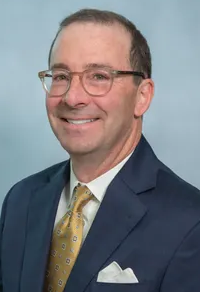
Dr. John Kennedy has been named the new Chief Medical Officer (CMO) for OhioMHAS. Dr. Kennedy spent a decade at The Ohio State University, completing medical school, graduate school, and his psychiatry residency. He then continued his training in forensic psychiatry in New York, working in a maximum-security forensic unit upon graduation.
In 2000, he returned to Ohio to serve as the Director of the Institute for Psychiatry and Law at the University of Cincinnati College of Medicine, integrating the Forensic Psychiatry Fellowship into Summit Behavioral Healthcare and serving as the Director of Forensic Services at Summit. For the past 20 years, Dr. Kennedy has held CMO and VPMA positions in university, psychiatric, and general medical hospitals, with oversight of the medical staff office, quality, accreditation, case management and graduate medical education, and outpatient mental health programs.
Dr. Kennedy joins will start his new role on March 12.
|
OhioMHAS Awards $400,000 to PreventionFirst! for Ohio Campus and Community Partnerships Initiative
The OhioMHAS Office of Community and Family Resiliency has awarded a $400,000 grant to PreventionFirst! to support the Ohio Campus and Community Partnerships Initiative. This initiative will strengthen collaboration between Ohio colleges, university campuses, and community-based agencies to enhance student behavioral health and wellness.

By fostering multi-sector partnerships, this initiative will help develop sustainable and impactful behavioral health programs that address the evolving needs of students. It will also improve system capacity by providing professional development and training opportunities to campus professionals, equipping them with the tools needed to enhance student well-being. Additionally, the initiative will help facilitate stronger connections between campus communities and community-based agencies, ensuring a more coordinated approach to supporting student behavioral health.
PreventionFirst!, a nonprofit organization dedicated to promoting healthy behaviors through evidence-based prevention strategies, education, and community engagement, will lead this initiative. With a strong history of supporting campuses and communities, PreventionFirst! will establish and facilitate a Learning Community where Ohio colleges and campuses collaborate to develop, implement, and evaluate data-driven, evidence-based, and culturally responsive strategies tailored to their unique campus needs. Through this effort, the initiative aims to drive meaningful, long-term improvements in student behavioral health support systems across Ohio.
|
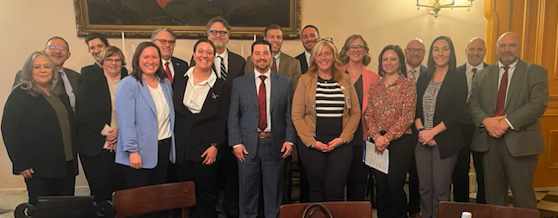 Ohio Institute of SUD Excellence Hosts Advocacy Day
The Ohio Institute of SUD Excellence (OISE) recently held an Advocacy Day at the Ohio Statehouse to meet with various members of the Legislature to rally support for Governor Mike DeWine's proposed executive budget for SFY 2026-27.
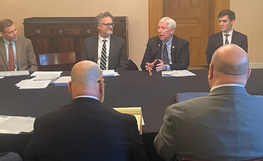
Led by CEO Jonas Thom, OISE is a provider-led Substance Use Disorder (SUD) improvement collaborative committed to enhancing Ohio’s outcomes and resources in the fight against addiction. The organization promotes accountability, transparency, and evidence-based care. OISE membership includes: BrightView, Thrive Peer Support, Integrated Services for Behavioral Health, Riveon, Meridian, Basecamp Recovery, OneFifteen, Boulder Care, Catholic Charities of Cleveland, Talbert House, and Stella Maris. Together, those provider organizations serve more than 80,000 Ohioans, including veterans and military families.
"We strongly support Governor DeWine’s proposed mental health and addiction priorities within the budget," wrote Thom in a letter of support shared with OhioMHAS. "We are sure that by investing in behavioral health, Governor DeWine is directly fostering a healthier, more productive, and resilient Ohio.”
|
New Research Shows Sources of Strength Program Creates Healthier School Cultures, Reduces Suicides by 29%
Peer leadership and meaningful connections can save lives. According to a new study funded by the Centers for Disease Control and Prevention and published in the American Journal of Preventive Medicine, Sources of Strength's (Sources) prevention model helps reduce suicide attempts among high school students by an astonishing 29%.
For nearly 30 years, Sources has empowered both youth and adults to build resilience, promote mental well-being, and prevent suicide. By training diverse student leaders and leveraging peer influence, Sources transforms school environments and fosters cultures of hope and support.

Sources of Strength Ohio (SourcesOH) is an initiative of the Ohio Suicide Prevention Foundation (OSPF) and PreventionFIRST! with funding and support from OhioMHAS. Considered one of the first suicide prevention programs to demonstrate effectiveness using peer leaders, SourcesOH has been implemented in 62 Ohio counties and 399 Ohio schools since December 2020 and has reached 174,000 Ohio students, including 218 middle and high schools.
Key findings from the study include:
-
29% Fewer Suicide Attempts: The program helped reduce suicide attempts among high school students by nearly a third.
-
Students Create Big Change: By empowering students to foster healthy and protective cultures, the program builds stronger, more connected schools where students feel seen, valued, and supported.
-
Innovative Public Health Approach: According to the CDC, suicide is the second-leading cause of death among young people aged 10–24, making it a pressing public health issue. This approach is promising for being able to reduce suicide at a population level.
-
Support for Students Facing Trauma: The study was funded to examine Source’s potential impact on sexual violence and harassment prevention. A cautious interpretation of the evidence suggests that Sources may not prevent suicide attempts among students who have recently experienced sexual violence, highlighting the need for additional intervention support for this high-risk group.
An independent evaluation of Sources Secondary Program conducted in Ohio schools during the 2023-2024 school year showed that nearly half of the students felt equipped to recognize the warning signs of suicide and step in to help a friend in need; fewer students experienced prolonged periods of sadness, many used the coping strategies learned through Sources; and the number of students involved in physical fights on school property decreased from 8.7 to 4.8%.
|
March is Problem Gambling Awareness Month
March is Problem Gambling Awareness Month (PGAM) — a nationwide grassroots campaign that seeks to increase public awareness of problem gambling and promote prevention, treatment, and recovery services. This year’s theme, “Seeking Understanding,” focuses on increasing awareness of problem gambling as a serious but often misunderstood mental health condition. The campaign seeks to foster greater awareness and empathy, break down barriers to treatment, and provide support for individuals and families impacted by gambling-related harm. To help spread awareness, the National Council on Problem Gambling (NCPG) has created a toolkit of social media assets, answers to FAQ's, and guidelines to create branded announcements from your agency announcing your support.
Deadline Extended: TIC Mini-Innovation Grants
The OhioMHAS Office of Community and Family Resiliency has released a Request for Applications (RFA) soliciting applications from qualified non-profit organizations, governmental entities, schools, and local ADAMHS and Recovery Services Boards to provide trauma-informed care (TIC) services that reach families, organizations, communities, and/or regional levels with new innovative, scalable TIC approaches, best-practices, and prevention and intervention programs or ideas. This RFA seeks to select six to 10 grantees. Selected applicants will be responsible for providing trauma-informed care supports, services, applications, professional development opportunities, and/or programming to one of the six Ohio Trauma-Informed Care Collaborative Regions (see map); and increasing knowledge, awareness, and impact of trauma-informed care (TIC) work to facilitate possible future scaling. OhioMHAS will award funding only to qualified non-profit organizations or governmental entities that provide trauma-informed best practices at regional levels, increasing TIC services, awareness, education, knowledge, and/or implementation practices. NOTE: The deadline to submit an application has been extended to 3:00 p.m. on March 14.
 988 Suicide and Crisis Lifeline Requirement For Schools
Ohio law to require certain schools to share Lifeline information with students
Beginning April 9, Ohio law requires city, local, and exempted village school district, chartered nonpublic school, community school, STEM school, and college-preparatory boarding schools serving students in grades 9-12 to include the 988 Suicide and Crisis Lifeline telephone number on student identification cards, planners, and electronic portals, if provided or used by the school. The Lifeline is available 24/7 for all Ohioans to call or text “988” to reach a trained specialist for help and support during a mental health crisis.
The Ohio Department of Education and Workforce's webpage includes more information about this requirement. OhioMHAS also provides resources that may help schools meet this requirement, including the 988 Toolkit and Materials Generator.
Email 988ohio@mha.ohio.gov for questions about the Suicide and Crisis Lifeline or prevention@education.ohio.gov for questions about the new requirements.
Exploring Xylazine Misuse and Prevention — March 11
The Community of Practice Rural Community Opioid Response Program (CoP- RCORP) will host an Exploring Xylazine Misuse and Prevention webinar on March 11 from 3:00-4:00 p.m. This presentation will focus on the rising misuse of Xylazine, exploring current trends, and the ongoing efforts to tackle this public health crisis both in Ohio and nationwide. Participants will gain valuable insights into the scope of the issue and leave with actionable strategies to help combat Xylazine misuse within their communities. CEUs have been applied for.
|
Utilizing HUD 811 Rental Assistance — March 11
Join the Corporation for Supportive Housing Ohio and OhioMHAS on March 11 from 10:00-11:00 a.m. to learn about the HUD 811 rental subsidy program and how to integrate this opportunity into your Moving On efforts for supportive housing residents ready to transition. The HUD 811 program ensures affordability for low-income residents with disabilities aged 18-62 for qualifying properties funded with Low-Income Housing Tax Credits.
Topics covered in this webinar include:
- How the HUD 811 program works
- Eligibility criteria
- Becoming a HUD 811 referral agent
- Utilizing the HUD 811 program as part of your Moving On strategy
- Key components of a Moving On strategy
Youth Vaping Prevention ECHO | Quit for Good: Evidence-Based Resources for Cessation — March 12
The Ohio Center of Excellence for Behavioral Health Prevention and Promotion invites those working in youth vaping prevention to join us for our upcoming ECHO session, Quit for Good: Evidence-Based Resources for Cessation, on March 12. This session will explore evidence-based universal, selected and indicated resources, programs, and initiatives that can be used by the entire community to reduce youth vaping. Sessions are interactive and are a great place to share your successes or “workshop” your ideas with subject matter experts and colleagues. CEs for Prevention, Social Work, Health Education, Nursing, and Psychology will be available.
|
Insights Into Gambling Disorder — March 14

In recognition of March as Problem Gambling Awareness Month, the Zepf Center will present an Insights Into Gambling Disorder webinar on March 14 from noon-1:00 p.m. Participants will review DSM-V criteria for gambling disorder, learn about warning signs and symptoms, review Ohio Gambling Survey prevalence data, review the screening and referral process, and identify state and national resources. Questions? Call 419.841.7701 Ext. 6189 or email mpoliquin@zepfcenter.org.
|
EFT Tapping for Stress, Anxiety Relief — March 27
Carve Your Own Path, Inc., is hosting an EFT Tapping for Stress, Anxiety Relief webinar on March 27 from 7:00-10:15 p.m. Evidence-based Emotional Freedom Technique (EFT), commonly called "Tapping," is a self-regulation tool that offers rapid results and easy application. Gently tapping acupuncture meridian points on the face and upper body helps ground a person, establishes calmness, and re-engages the thinking brain. This skill-building course is designed in a straightforward manner to enable the immediate use of Functional Tapping (FT), an abbreviated form of EFT. Questions? Call 330.426.7885 Ext. 2 or email Amanda Kosture at amanda@cyopinc.org.
A Seat at the Table: Advocacy and Prevention Networking – April 15
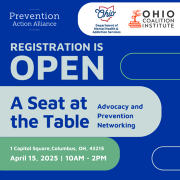
Prevention Action Alliance (PAA), in partnership with the Ohio Coalition Institute, will host “A Seat at the Table: Advocacy and Prevention Networking!” on April 15 at the Ohio Statehouse. This free advocacy event, made possible through funding from OhioMHAS, provides a valuable opportunity for preventionists and state elected officials, along with their staff, to connect, exchange insights, and hear from inspiring speakers on shaping policies that strengthen community health and well-being. CEUs will be offered. PAA will provide bus transportation from the PAA office to the Statehouse on the morning of the event. Seats are available on a first-come, first-served basis. If you plan to depart from the PAA office and ride the bus, please indicate this in your registration.
|
Upcoming Suicide Prevention Trainings
National Council on Problem Gambling Annual Conference — July 16-18

Save the Date! The National Council on Problem Gambling (NCPG) will host its annual conference in Columbus on July 16-18. The conference brings together world-class presenters to deliver powerful and insightful messages about problem gambling and responsible gambling. Registration opens April 9.
Scholarships Available
The Problem Gambling Network of Ohio, with support from Ohio for Responsible Gambling, is providing up to 50 scholarships for behavioral health professionals to attend the 2025 conference. Click the button below for more information and to apply.
|
In the News...
Project Blackbird aims to shed shame on mental health at upcoming WSU event
Dayton Daily News, March 5, 2025
Goodwill provides help after incarceration
Lima News, March 5, 2025
Middletown HS suicide prevention program scores donation from Bengals' Joe Burrow
Hamilton Journal-News, March 4, 2025
NAMI Columbiana County returns with mental health support, education
Lisbon Morning Journal, March 4, 2025
$1.7M to help local students build resilience, prevent mental health crises
WYSO 91.3, March 3, 2025
Dayton Children's expands mental health services in Springboro
SpectrumNews1, March 3, 2025
Mental health crisis mobile response to start back soon in Montgomery County
Dayton Daily News, March 3, 2025
Local doctor offers tips for dealing with seasonal affective disorder
Dayton Daily News, March 3, 2025
'Springing forward' comes with mental health price for some
USA Today, March 2, 2025
Workshop trains adults to provide youth mental health first-aid
Springfield News-Sun, March 2, 2025
Local Women's Hope Tea raises funds for mental health services in Lima area
WLIO-TV, March 1, 2025
Ohio Gambling Telehealth Network braces for March Madness surge
Gambling Insider, February 28, 2025
Rhodes State College helps Heir Force students build mental health resilience
WLIO-TV, February 28, 2025
Operation Better Together enhances MH access for students in rural Ohio schools
WSYX-TV, February 27, 2025
|