North Carolina Public Schools - School Social Work January Update
North Carolina Public Schools sent this bulletin at 01/15/2025 11:50 AM EST
 |
 |
 |
As we welcome 2025, remember our SSW theme for this school year: Lead with Relationships. The power of a trusted relationship cannot be underrated in fueling a student's success. Take a look back at this call to action from my August update. ~Pachovia |
January is Human Trafficking Prevention Month

Connecting the Dots. Strengthening Communities. Preventing Trafficking.
The theme for Human Trafficking Prevention Month 2025 highlights the importance of a holistic approach to preventing human trafficking, recognizing its intersection with other forms of violence and social issues.
Connecting the dots between human trafficking, online harassment and abuse, interpersonal violence, and other forms of violence can disrupt multiple forms of exploitation. Understanding the role of economic mobility, desires for connection, technology, and market dynamics can prevent some of the most predictable recruitment schemes into human trafficking. Building healthy relationships and strengthening the resilience of communities and industries can protect against vulnerabilities to human trafficking.
We can address the root causes by decreasing known risks and increasing protective factors against trafficking.
This theme calls for collective action to strengthen prevention at every level—individual, relational, community, and societal. Our goal is to prevent exploitation before it occurs. It encourages cross-sector collaboration, including partnerships with individuals who have experienced trafficking. Together, we can strengthen our efforts to keep everyone safe from human trafficking.
What is Human Trafficking?
Human Trafficking involves the use of force, fraud, OR coercion to compel someone to perform sexual acts or labor for profit or gain. Commercial sex involving a minor is ALWAYS human trafficking, no matter the circumstances.
Types of Human Trafficking
Sex trafficking: Victims are pressured, tricked, or forced against their will to engage in sexual acts. Commercial sex involving a minor is always a crime.
Labor Trafficking: Victims are forced to work for little or no pay. They are often trafficked to manufacture or produce products we use every day. Debt bondage and child labor trafficking are also forms of human trafficking. Anyone of any age who is forced, fooled, or coerced to provide labor is a victim of labor trafficking.
Domestic Servitude: Victims work in homes as nannies, maids, or domestic help for very little or no pay and limited personal freedom.
Child and Youth Sex Trafficking: Minors involved in any commercial sex act. Youth age 18 and older who are pressured, forced, or tricked into exchanging sexual acts for something of value. A third party is usually involved, but not always.
Resources
School-Based Human Trafficking Prevention: Key Components and Implementation Considerations for Educators, Staff, and School Leaders
The purpose of this brief is to summarize important considerations for educators, school staff, and school and district leaders who are interested in delivering human trafficking prevention education activities in their schools.
|
NC Trafficking: Mandated Reporting & Agency Response |
National Human Trafficking Hotline
If you or someone you know is in immediate danger, call 911. |
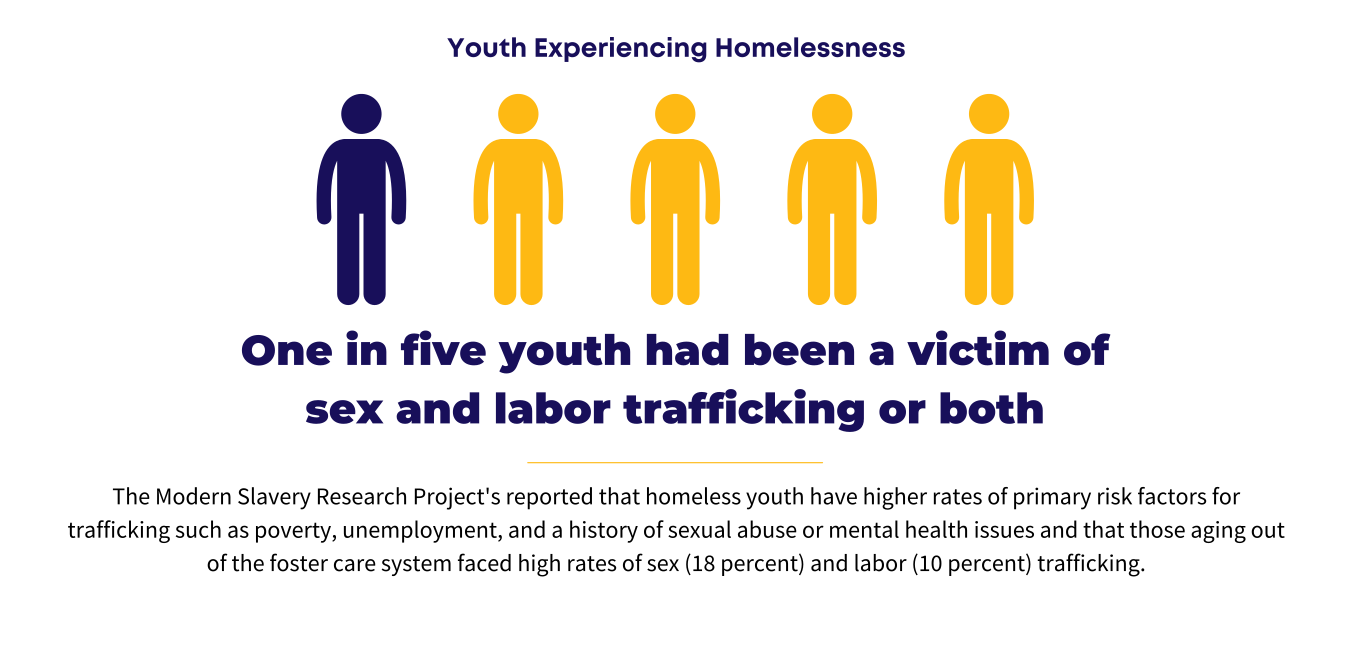
Youth Experiencing Homelessness
|
One in five runaway and homeless youth are a victim of human trafficking- inclusive of sex and labor trafficking. LGBTQ youth and youth who have been in foster care experience trafficking at higher rates than other youth. Survivors of childhood sexual abuse experiencing homelessness are at particularly high risk for sex trafficking |
|
HUMAN TRAFFICKING ASSESSMENT FOR RUNAWAY & HOMELESS YOUTH
Free Training Seats Available!
In partnership with The School Health Training Center at ECU, NCDPI still has available training seats free for any interested PSU. The two trainings offered by Darkness To Light are below.
Stewards of Children® teaches adults practical actions they can take to reduce instances of child sexual abuse in their organizations, families, and communities.
Protecting Children From Sex Trafficking teaches you about the root cause of commercial sexual exploitation and why preventing sexual abuse is important to reducing the risk of children being sexually trafficked.
For more information, please contact ncshtc@ecu.edu.
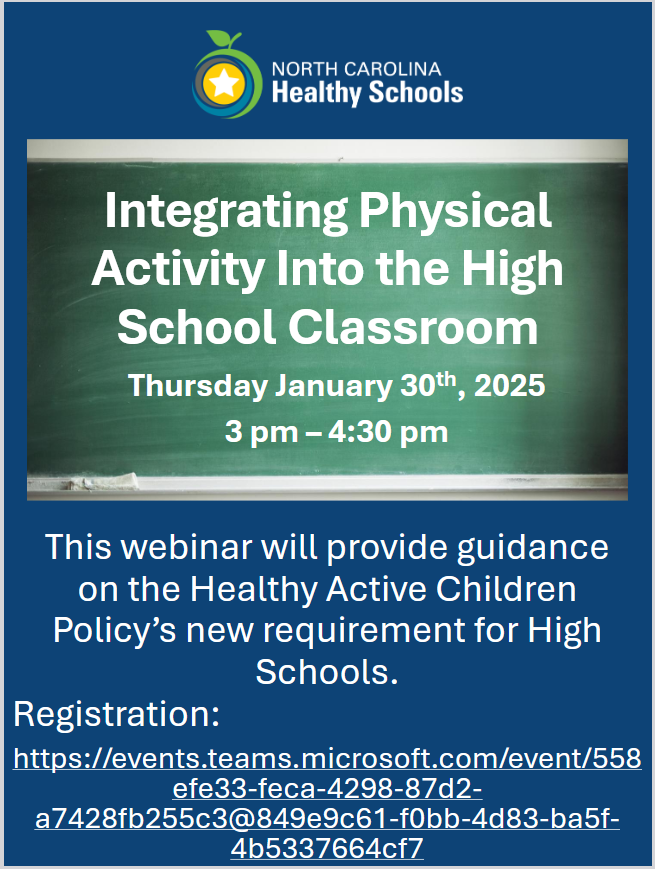
Compliance Tools: HAC & SMH Policy- PA Requirement
 |
Re: Policy SHLT-003: School-Based Mental Health Initiative
To help PSUs prepare for integrating physical activity into the school day, the first webinar addressing this new requirement will be on Jan. 30th. Additional webinars, toolkits, and technical assistance will also be available in the coming weeks. |
Coming Soon
Be on the lookout next month for an updated school mental health plan template to reflect the policy changes.
NPR Features: Helene Impacts
A series of NPR stories have been released on the impacts of Helene. Pachovia Lovett and others in Western NC are featured in these segments.
Legislative Updates
 |
View the K-12 Education Office of Government and Community Affairs Update from Friday, January 10, 2025. |
Additionally...
The State Board of Education met for the first time with Mo Green present as the state's new superintendent of public instruction. In his remarks, Green presented his wish list for requests to the legislature:
- Raising teacher pay
- Reinstating higher pay for teachers with master’s degrees
- Increased state funding for the state health plan to alleviate anticipated premium raises
- Granting schools calendar flexibility
- Redesigning school performance grades
- Extension of free meals to more students through federal programs
- Expansion of the advanced teaching roles model to more schools
- Funding more school psychologists, social workers, and nurses to bring their ratios to students closer to national recommendations
- Conducting a statewide assessment on the condition of school buildings
NC DHHS Updates
Of Interest: Student Cell Phones In Schools
The U.S. Department of Education’s Office of Educational Technology has released Planning Together: A Playbook for Student Personal Device Policies. This playbook is intended for school districts and school leaders to use to develop or revise their policies about the presence and use of personal devices (also known as cell phones and mobile devices) in schools. It features a four-step process and contains examples and resource materials. Questions to consider include, but are not limited to
-
When can students have access to phones?
-
When is phone use not permitted, where, and how are phones stored?
-
How are emergencies or dangerous circumstances handled? How do parents and children communicate?
-
How do policies vary with the ages of students?
-
Who is responsible for monitoring and enforcing policies?
-
What is the best approach to rolling out new policies?
-
How can school districts and schools assess whether policies are working and how to refine them?
Recruitment for Medicaid Learning Collaborative - Cohort II
Rural Opportunity Institute is actively recruiting school districts and charter schools for their 2025-2026 Medicaid Learning Collaborative (MLC) Cohort II. The goal of the MLC is to build capacity related to Medicaid reimbursement for School-Based Services including Behavioral Health Services. Please review the Recruitment Flyer which links to an interest form for the 25-26 cohort.
For additional information, please contact La’Shanda Person, Innovation Program Manager, with Rural Opportunity Institute at la'shanda@ruralopportunity.org
Educational Practices to Identify And Support Students Experiencing Homelessness
Evidence-based practices are central to school social work services. The EdResearch for Action Overview Series summarizes the research on key topics to provide K-12 education decision-makers and advocates with an evidence-based base to ground discussions about how to best serve students. Authors – leading experts from across the field of education research – are charged with highlighting key findings from research that provide concrete, strategic insight on persistent challenges sourced from district and state leaders.
Please view the new brief below that answers the key question: What evidence-based practices can schools and districts implement to identify and support students experiencing homelessness?
SSWAA National Conference
|
|
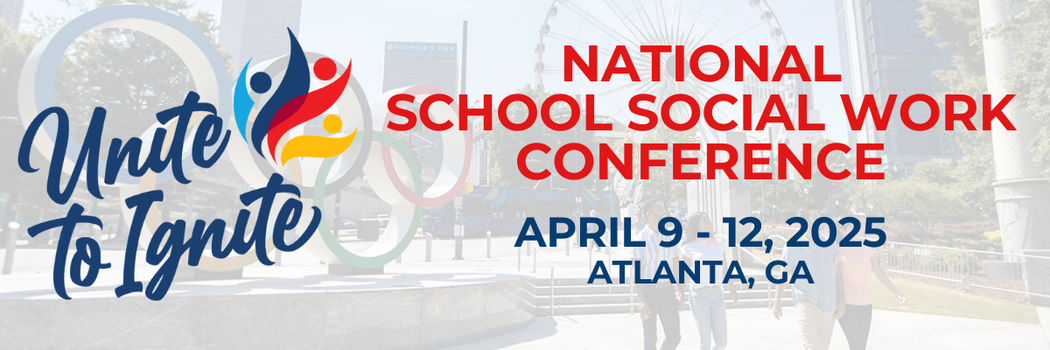
National Conference Registration is 75% Full! April 9-12, 2025 Atlanta, GA |
|
Registration for the National School Social Work Conference is open and we’re thrilled to announce that we are 75% full! Due to high demand, our hotel block is currently full, but SSWAA has secured additional room blocks at overflow hotels. Don’t wait to register—secure your spot today! |
|
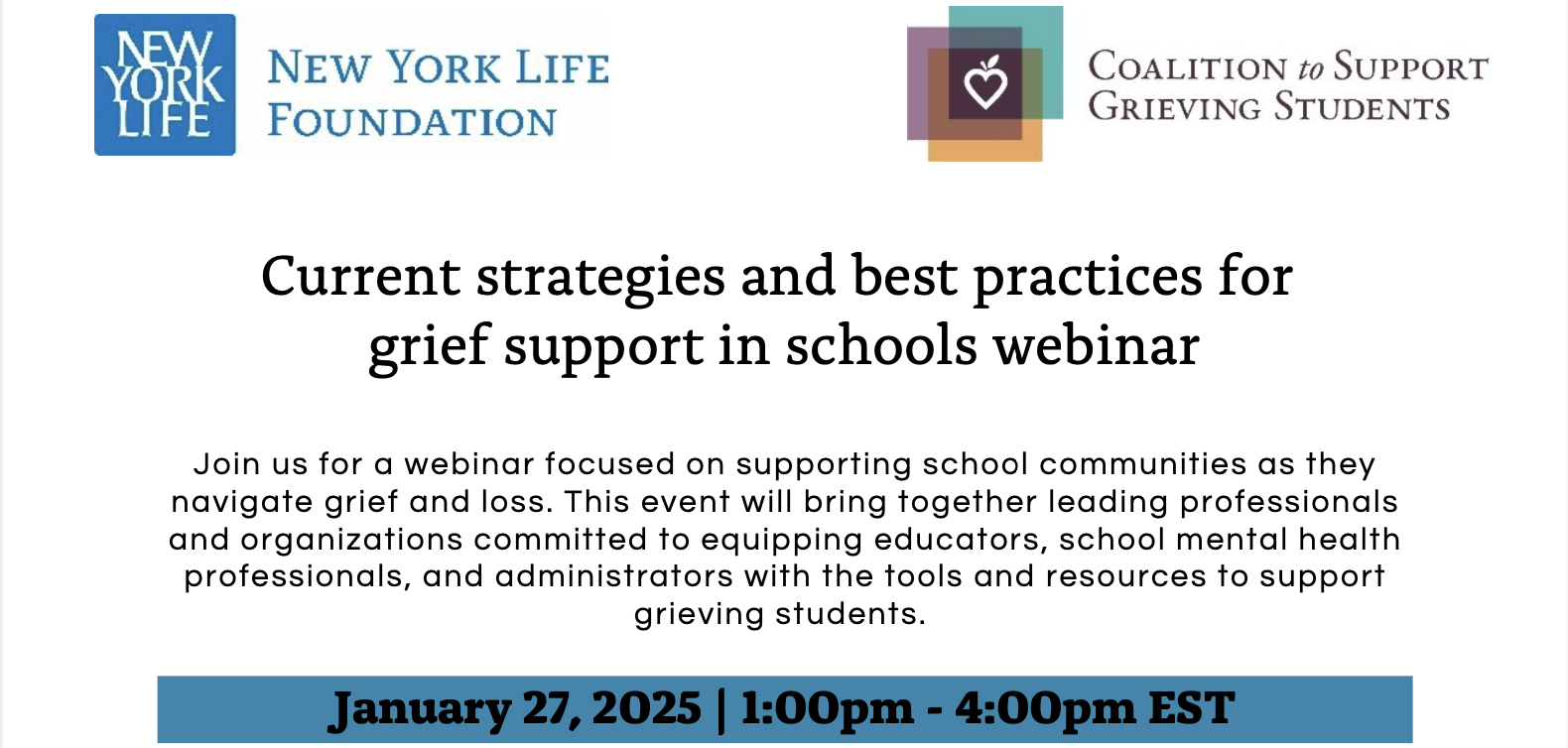
Current Strategies and Best Practices in Supporting Grieving Students in Schools |
|
|
Please join us for an impactful webinar focused on supporting school communities as they navigate grief and loss. This event will bring together leading professionals and organizations committed to equipping educators, school mental health professionals, and administrators with the tools and resources to support grieving students. Through engaging panels and discussions, participants will gain valuable strategies and insights to help foster a grief-supportive school environment. |
Receiving this as a forward?
Subscribe to this NCDPI School Social Work newsletter here.
Enter your email, then advance to the next screen that will give you a list of subjects and scroll down to find School Social Work.
The links on this page will bring you to third party websites, owned and operated by independent parties, over which NCDPI has no control. Any link you make to or from these 3rd Party Websites will be at your own risk. Any use of these 3rd Party Websites and any information you provide will be subject to and governed by the terms of the 3rd Party Website, including those relating to confidentiality, data privacy, and security.
Unless otherwise expressly agreed in writing, NCDPI is not in any way associated with the owner or operator of any of the 3rd Party Websites or responsible or liable for the goods and services offered by them or for anything in connection with such 3rd Party Websites. NCDPI does not endorse and makes no warranties, representations, or undertakings relating to the content of any 3rd Party Website.
|
Stay Connected with North Carolina Public Schools: |
|||||||
 |
 |
 |
 |
 |
|||
|
|
|||||||