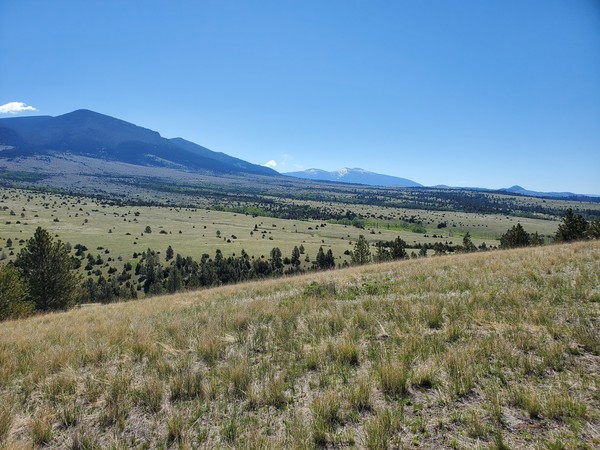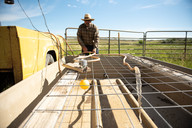
The 2021 Montana Range Tour is September 8th & 9th in Malta, MT. The tour is featuring virtual fencing project and many other opportunities to see up close regenerative rangeland practices producers are using to improve rangelands in Montana. Click here to register.
|
Megan Van Emon, Extension Beef Cattle Specialist, Montana State University
Mike Schuldt, Custer County Extension Agent, Montana State University
Due to the extended drought in Montana, water availability in many areas has become severely limited. Reservoirs have dried up and in many instances are now covered in weeds. Due to the severe drought, weeds have become prevalent across pastures. Many producers are limited in their cattle movement this year due to the severe drought.
Although weeds can be high in protein and energy for your livestock, caution should be used
when cattle are grazing weedy areas or are fed weedy hay. Many weeds in these areas, kochia, prostrate knotweed, Rocky Mountain Goosefoot, and Lambs Quarter, accumulate nitrate. Due to the severe drought, these weeds may be the only green feed available, and livestock often gravitate to these areas to graze.
Recently, Mike Schuldt, Custer County Extension Agent, and Megan Van Emon, Extension Beef Cattle Specialist, were called to investigate a weedy reservoir and collect samples for nitrates. When analyzed through the Nitrate Strip Test, offered in many county Extension offices, the Rocky Mountain Goosefoot had approximately 50,000 ppm and the Lambs Quarter and knotweed had approximately 10,000 ppm of nitrate. These levels are extremely high and should not be fed to livestock.
“These weeds were extremely worrisome due to their ability to accumulate nitrates, and this
became more apparent after we watched a cow grazing in the area and eating the Rocky
Mountain Goosefoot,” Van Emon said. The producer indicated that these weeds are normally not present and when traveling through the pasture, the Goosefoot and Lambs Quarter were not observed anywhere other than the dried reservoir.
The least risk for feeding nitrate containing feedstuffs is less than 1,500 ppm of nitrate. As the concentration of nitrate increases, more risk is associated with providing those feeds to livestock. The recommendation for concentrations over 10,000 ppm nitrate is to not provide that feed to livestock.
“The recommendation to the producer was to remove the cattle from the area of concern or fence off the reservoir to reduce the risk of the cattle grazing the weeds, “Schuldt said. “Nitrate concentrations at that level are concerning and symptoms and death can occur rapidly,” he continued. Symptoms of nitrate toxicity include labored breathing, muscle tremors, weakness, and staggering gait. If these symptoms are observed, remove the nitrate containing feed or move the cattle out of the pasture and contact your veterinarian for a treatment plan. When moving cattle from a high-nitrate feed area, move them slowly, moving the livestock too quickly can exacerbate the symptoms.
The Rangeland Improvement Loan Program was started in 1979 as part of the Rangeland Resource Program (MCA 76-14-111). It makes low-interest loans available to Montana's farmers and ranchers for rangeland improvements and development, and provides low-interest loans as an incentive for private landowners to undertake range improvement practices.
-
Current interest rate = 1.5%
-
Maximum loan amount = $75,000
-
Repayment is scheduled for a maximum of ten years with annual installments
Loan applicant must apply initially to the local conservation district where the application is reviewed along with the conservation plan. The application is then reviewed by the Montana Department of Natural Resources and Conservation (DNRC), before being forwarded to the Rangeland Resource Committee. The Director of DNRC has final approval authority.
To apply click here.
Aquatic Invasive Species Grant Cycle Now Open
DNRC and MISC are currently accepting AIS grant applications.
Applications are due November 3 by 5 p.m. to fund aquatic invasive species projects. Log on to Submittable to apply.
AIS Grant Program Guidelines and application instructions can be found here.
Please contact Stephanie Criswell with any questions about the program, the grant and application, or for technical support.
|
Department of Livestock Asks Montanans to Stay Alert of Feral Hogs
June 30, 2021
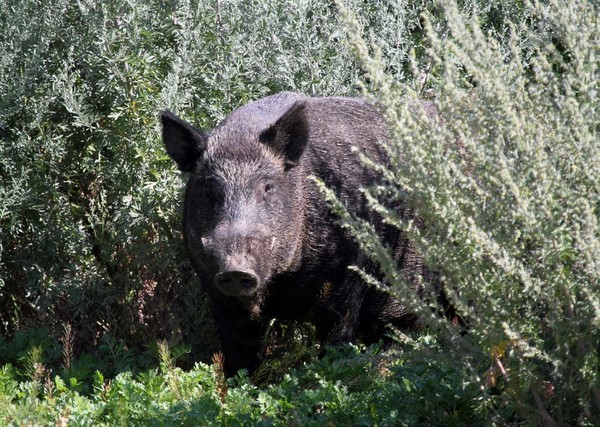
The Montana Department of Livestock (MDOL) is asking residents to remain vigilant about the presence of feral swine. Though there have been no confirmed sightings in Montana, populations are spreading and the risk of introduction to Montana is high.
Feral swine are an invasive species that damage crops, pastures, and waterways, and these animals can carry diseases that spread to livestock, people, and wildlife. The biggest risk of introduction to Montana is swine crossing the border from Canada. With at least 39 U.S. states reporting the presence of feral swine, the risk of illegal imports (intentionally introducing feral swine) for the purposes of hunting, is very concerning.
Montana’s laws defining feral swine include any hog, boar, or pig that appears to be untamed, undomesticated, in a wild state, or appears to be contained for commercial hunting or trapping. MDOL has received several calls from Montana landowners recently, reporting suspect feral swine sightings, though all have been determined to be privately-owned animals.
Read more here.
Reports can be directed to the Squeal on Pigs hotline at 406-444-2976.

Montana Historical Society - Branding
August 2021
By the time that the first cattle were brought into Montana in the 1840s, the practice of branding livestock to show ownership was hundreds of years old.
Intended in large part to thwart theft, brands took on additional significance during the open-range era when herds belonging to different owners were grazed together on public lands. In response to the new territory's burgeoning livestock industry, Montana's 1871-72 Legislative Assembly created a "general office" for recording brands and marks, and mandated that the records be kept in a "book suitable for the purpose, which shall be free to the inspection of all persons interested."
On Feb. 10, 1873, the Poindexter and Orr Ranch in Beaverhead County registered the Square & Compass (a traditional symbol of the Masons). It was the first Montana brand to be recorded.
Today, the original Brand Books, in use since 1873, continue to be held in trust by the Montana Department of Livestock Brand Division
|
Soil Builders' Network Newsletter
August 2021
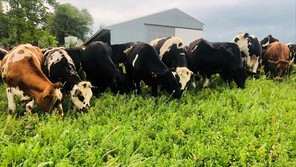
The Soil Health Team is so happy to be back to running their summer events. This summer has already been packed full of amazing content — they've had field days and pasture walks with Thousand Hills, Martin Larsen, Jordan and Rachelle Meyer, and Chris Gunderson. And they're not close to done yet — click HERE for a list of their future events, soil health resources, farmer spotlight and their latest videos! It has been a busy summer, but a wonderful one, and they couldn't have done it without engagement from all of you. They would love to hear from you, whether that means showing up to one of their events or giving them a call or sending an e-mail. Hope the season is going well for you all!
|
Hurry, and get on the bus! The Montana Chapter of the Soil and Water Conservation Society (SWCS) is sponsoring the Soil Health Bus Tour to showcase farms and ranches in the Dakotas that have moved to the next level with the health of their soils. The tour provides a unique opportunity to see what others have done to drastically improve the health of their soils and economics.
Find the agenda and registration on the MT SWCS webpage.
For information, contact: Mark Henning at 406-853-5452, Marni Thompson at 406-596-1195, or Ann Fischer at 701-523-6953.
Montana Stock Growers Association Weekly Update
Week of August 16 2021
Click HERE to read more on tax deferral options available on Drought HUB, Fish Wildlife and Parks open houses and the opportunity to run for MSGA Board of Directors!
Tax Deferral - Includes IRC 451(G) and IRC 1033(E) Elections, plus explanations, examples and statement templates to use.
FWP Open House - Montana Fish, Wildlife & Parks director, deputy director and members of their staff will be visiting regional offices during a tour of the state in August and September. See schedule in full article.
Board of Directors - Candidates are currently being sought for the MSGA Board of Directors in three districts: Western, North Central and Northeastern.
|
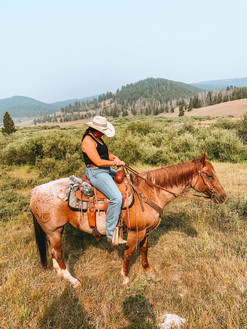
By: Abby Brett
Jumping into the agriculture community without having been raised around it can be incredibly intimidating; however, opportunities like the Working Lands Internship are providing perfect ways to get your foot in the door. My name is Abby Brett and I will be graduating from Montana
State University this fall with a bachelor’s degree in Rangeland Ecology and Natural Resources.
I grew up in western Montana but quickly fell in love with the open, grassy landscapes of central and eastern Montana and decided to pursue a career managing lands in the area. Throughout this internship, I have been able to attain hands-on experiences working alongside ranchers and land stewards. Aside from the basic ranching chores, I've developed an understanding of how every ranch manages their land in a way that provides the best possible productivity. I’ve also been able to compare and contrast different operations and recognize how each place is specific to their management based off differing climates, locations, size, etc.
|
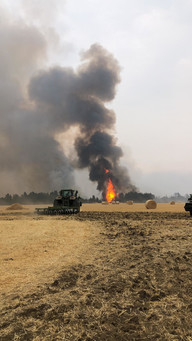
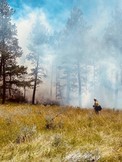
My final host ranch was located just south of Winifred, and I arrived one day after the Taylor Fire had started. Their ranch was located in the heart of the fire and I immediately jumped into help where I could. We passed out lunches and drinks to the crews fighting the fire, as well as helped mop-up hot spots. To be right there in the thick of it and see how much of the native land, cropland, and pasture was being burnt was horrifically incredible. With that being said, I had an amazing opportunity to talk with my ranch hosts about what their plans for the future will be. We discussed new grazing strategies and ideas for next spring to ensure rest for the burned areas.
The fire burned up much of the fall grazing pastures, so we needed to locate an area with adequate forage for the herd to finish out the summer. For a day and a half, we installed new
fence around a neighboring property that would provide the cows with plenty of forage until the calves went to sale. Although the fire brought many hardships to local ranchers and farmers, there are silver linings as well. The fire will enrich the soil in many areas which will allow for good native grass production. The fire also burned lots of encroaching juniper and this will allow for strong regrowth of desirable grasses.
In addition to the environmental benefits of the fire, I was able to see the social benefit as well. In a matter of hours, I became part of the Denton/Winifred community. It was incredible to see how quickly people came together to help anyone and everyone in need. From providing meals, to passing out cold waters and Gatorades, to offering up extra bedrooms - every person I met was so incredibly selfless and willing to give. Being a Montana native, I am proud to see that kind of strength in a community and I was very blessed to have been able to be a part of it. Without this internship, I would have never been given the opportunities and experiences that I took part in, and my life has been forever changed because of it.
|
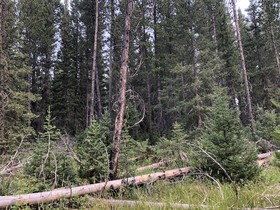
Forest Health- a report and perspective.
By: Gillian Rowe
As an intern with the DNRC Rangeland Resources Program, I was tasked with learning more about Montana forest health, specifically how forest management impacts statewide rangelands. I began my search by looking into the background of the US national forests. National forests make up 193 million acres of land in the US. National forests existed well before the Forest Service we know today was established. The General Land Law Revision Act of 1891 created the first forest reserve, Yellowstone Forest Reserve. Since this act did not authorize any funds for managing the forest reserves, the General Land Office issued a regulation that prohibited the driving, feeding, grazing, pasturing or herding of cattle sheep or other livestock within any reserve, including Yellowstone. Then came the Organic Administration Act of 1897 which recognized that the forest reserves were established for three main reasons: to improve and protect the forest, to secure favorable conditions of water flow and furnish a continuous supply of timber. The passage of this act resulted in regulations that allowed cattle grazing in forest reserves as long as it didn’t injure forest growth. The Transfer Act of 1905 transferred the administration of the forest reserves from the Department of Interior to the Department of Agriculture. It was here the Forest Service was born.
The US Forest Service was established by Congress in 1905 as a federal agency charged with managing public lands in national forests and grasslands. The USFS is the largest forestry research organization in the world and provides both technical and financial assistance to state and private forestry agencies. Originally the Forest Service was established to provide quality water and timber for the nation’s benefit. As time went on, the public began to demand more from the USFS. Today, the Forest Service manages national forests for multiple uses and benefits as well as the sustained yielded of renewable resources such as water, forage, wildlife, wood and recreation.
As grazing was recognized as a legitimate use, the Forest Service began to conduct rangeland management as long as grazing did not injure forest growth. When livestock grazing management first became the Forest Service’s responsibility, grazing activities remained largely uncontrolled and unregulated. In 1906 the Forest Service announced that fees would be imposed on ranchers for livestock grazing on National Forest lands. These fees are based on a formula reflecting annual changes in cost of production. Forest Rangers also controlled grazing by establishing dates for livestock entering and leaving specified rangelands.
An interesting point in history to look at when it comes to the importance of livestock grazing is World War one. During this time livestock grazing on public rangelands increased dramatically when the US entered the war. This is because federal agencies, like the Forest Service, were under great pressure to help increase the supply of red meat, wool and leather. At this time grazing was even allowed in Yellowstone and Glacier National Parks! Since it was difficult for the Forest Service to remove excess livestock numbers after the war, they did not allow for the same amount of grazing during WWII although the demand for product was just as high.
In my next report I will further discuss the Forest Service in Montana, grazing permits, why forest management has changed in the last 40 years, how this relates to the Equal Access to Justice Act and forest fire fuel loads as well as what conservation districts in the state are doing in response.
|
 |
Drought Update
August 5, 2021
Check out the USDA August 2021 drought update to learn more about these topics:
- RMA Extends Deadlines, waives interest deferral for emergency drought relief
- FAS offers drought impacted Montana farmers and ranchers disaster assistance
- Important Montana FSA program dates
- Disaster assistance for 2021 livestock forage losses in 47 Montana counties
- ELAP covers losses from additional cost of transporting water to livestock
- USDA CRP Grasslands signup
- USDA emergency haying and grazing eligibility
- USDA announces pandemic assistance for timber harvesters and haulers
- USDA to provide pandemic assistance to livestock producers for animal losses
- PSA offers safety net programs for honeybee producers
- Biden administration to invest $67 million to help heirs resolve land ownership and succession issues
- Guaranteed conservation loans
- Emergency loans available in Montana
- Montana farm and ranch stress resource clearinghouse
View full newsletter here.

August Weed Post
August 2021
As drought continues to worsen and forage is scarce, a lot of hay is moving from one place to another, which poses the risk of introducing new weeds and other pests. The August Weed Post discusses short- and long-term practices for preventing weed invasion from hay shipments.
|
Aug 23, 2021 3:51 PM
Deadline to apply is September 1
HELENA – FWP has released a decision notice and final environmental assessment that supports proceeding with emergency haying and grazing leases on select wildlife management areas. The primary purpose of these leases is to enhance wildlife habitat and to benefit local producers.
FWP invites parties who may have an interest in one or more of the leases to review the final EA documents and request further information on specific leases by sending an email to: fwpwld@mt.gov (preferred) or by contacting 406-444-2612.
Producers are only eligible for lease opportunities that occur in their county or, in some cases, adjacent counties. If there is an absence of interest within eligible counties, producers from surrounding counties will be given consideration. Most counties do not have a lease opportunity. All lease opportunities require services in place of a cash rent payment, which may include supplying and erecting electric fence, establishing a water tank and hauling water, repairing fences, clearing haying sites, ongoing fence maintenance and livestock containment.
To view the decision notice and EA, visit the public notices section of the FWP website or click here.
After reviewing the information packet and associated responsibilities, producers who wish to participate further will be asked to fill out an online form no later than 5 p.m. Wednesday, Sept. 1. Lessees will be selected randomly on Sept. 2. All participants will be notified of results.
On Land, now on the go.
The On Land podcast will bring you thoughtful conversations with the people who are living and working on the land and shaping the future of stewardship in the American West.
Season 1 is out, with Episode 1 "Feeding the Community with Kelsey Scott" now available everywhere you get your podcasts*.
You can find all podcast episodes, and related content, at our new On Land Podcast home page HERE.
*They're still waiting for approval from Apple Podcasts, but should be up there shortly! Stay tuned. Meanwhile, follow the pod on Spotify or subscribe on Overcast, two of our favorite places to listen to On Land!
September 2021
September 8th & 9th, Montana Range Tour- Malta
September 14th, Riparian Grazing Workshop- Helena
September 14-16, 2021 Soil Health Bus Tour 2021
September 15-17, Watershed Tour - Montana Watershed Coalition Council
Stacey Barta, State Coordinator for Rangelands
220 W. Lamme, Suite 1A
Bozeman, MT 59715
(406) 594-8481
SBarta@mt.gov
Rangeland Resources Committee:
Diane Ahlgren, Chair
John Hollenback, Vice Chair
Sigurd Jensen
Jim Anderson
Leah Lewis
Ron Devlin
|